Tax-Free Strategies for New Immigrants to Canada: Step 1 – Open a TFSA

Having just arrived in Canada and still adapting to life here, what comes to mind? Maple leaves, cold weather, hockey, and baseball? Or perhaps the high cost of living and heavy tax burden?
Canada is often dubbed the "land of myriad taxes." Just how exaggerated is this reputation? Surveys indicate that, on average, Canadian households...allocate 45% of their income to taxes,and 35% to essential expenses such as food, clothing, and housing*. Beyond high tax rates, Canada’s tax system is complex, encompassing personal income tax, consumption tax, property tax, real estate tax, and various taxes on investment returns.
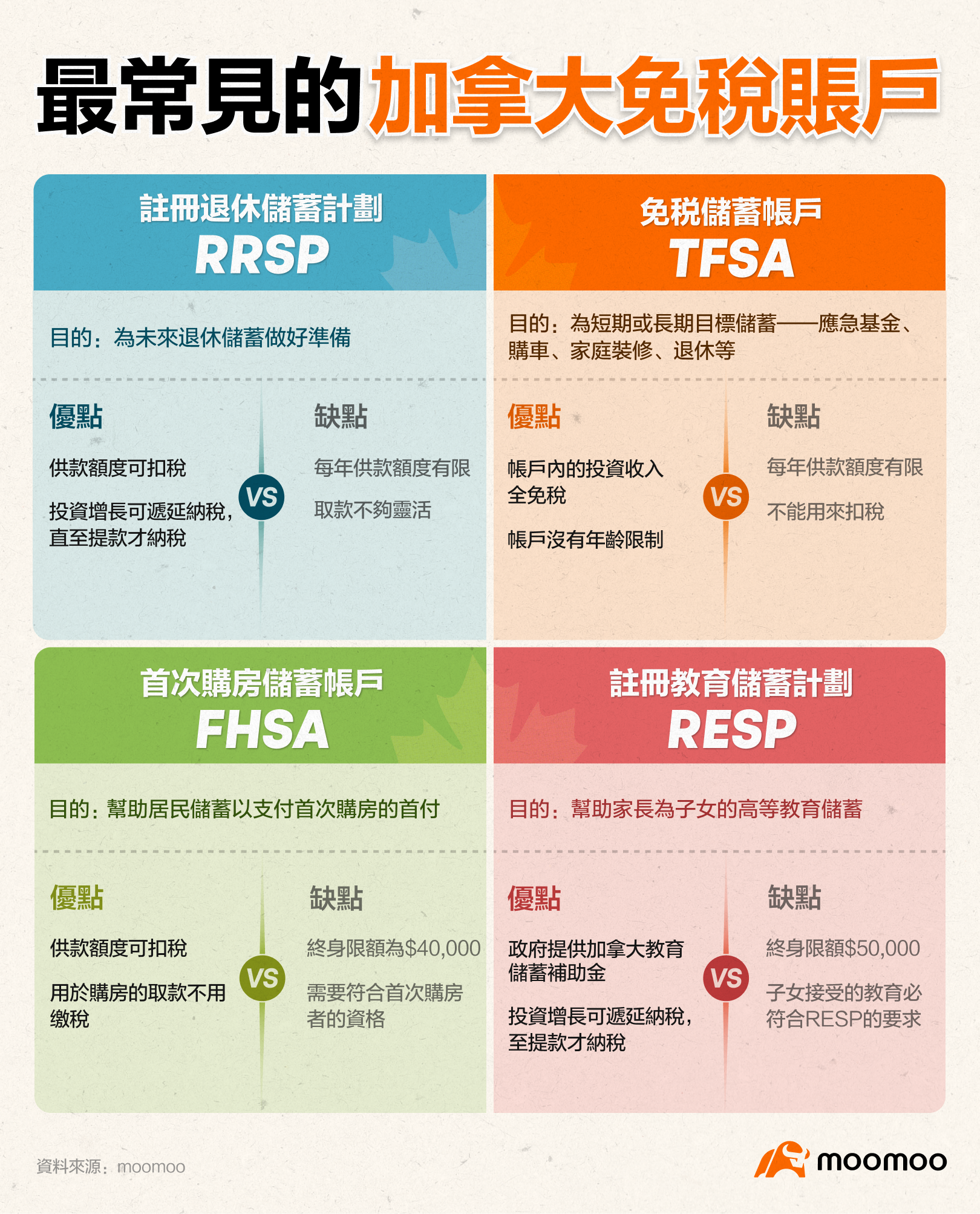
Nevertheless, the Canadian government has established several registered accounts to help residents optimize their tax savings while saving, investing, and achieving various life goals. These accounts include:Registered Retirement Savings Plan (RRSP), Tax-Free Savings Account (TFSA), First Home Savings Account (FHSA), and Registered Education Savings Plan (RESP).
Newcomers may feel confused or have only a partial understanding of these accounts. However, there is no need to worry! Proper utilization of these accounts can not only significantly reduce your tax liability but also help secure an ideal retirement and achieve various life milestones.
This article provides a quick overview of commonly used registered tax-advantaged accounts in Canada, highlighting the most popular options and explaining why new immigrants are advised to open them.
Most Common Tax-Advantaged Accounts in Canada
The most common tax-advantaged accounts in Canada include: Registered Retirement Savings Plan (RRSP), Tax-Free Savings Account (TFSA), First Home Savings Account (FHSA), and Registered Education Savings Plan (RESP). Please refer to the chart below for a detailed comparison:
TFSA: A Popular Tax-Free Account
Each registered tax-advantaged account has its unique features. Among the four main types, the Tax-Free Savings Account (TFSA) and the Registered Retirement Savings Plan (RRSP) are undoubtedly the most popular. The choice between a TFSA and an RRSP depends on two key factors: financial objectives and income level.
Retirement Planning and High Income: RRSPs are suitable for long-term retirement savings, but they are not ideal for achieving short- or medium-term goals. Except for specific purposes such as home purchases or tuition payments, withdrawing funds from an RRSP before retirement generally incurs significant tax liabilities. Therefore, RRSPs are designed to encourage withdrawals during retirement. Additionally, since RRSP contributions are tax-deductible, high-income individuals tend to prefer RRSPs because the tax benefits are more substantial, providing immediate tax relief.
Short-Term Goals and Lower Income: TFSAs excel in flexibility. Funds held in a TFSA can be withdrawn at any time without tax penalties or fees. Canadians typically use this account for investment and savings, withdrawing funds as needed to achieve short- or medium-term goals, such as vacations, car purchases, or wedding expenses. Another key advantage of the TFSA is that all investment returns within the account—including interest, dividends, and capital gains—are tax-free. This is particularly beneficial for lower-income individuals, as it allows their savings to grow without being eroded by taxes.
Due to its high flexibility, the TFSA has become the most popular tax-advantaged account in Canada. Statistics show that in 2020, the participation rate of Canadian households in TFSAs reached a record high of 39.4%, doubling since its introduction in 2009. Furthermore, the TFSA has surpassed the RRSP to become the account with the highest participation rate.
New Immigrants Are Better Suited to Open TFSA Accounts
For new immigrants who have recently arrived, the first few years are often an adjustment period. Many need to find new employment, and even if employed, their initial income may be modest. Consequently, liquidity and flexibility are relatively important. The high flexibility of the TFSA is particularly crucial for new immigrants.
A TFSA is a savings account that allows for withdrawals at any time to meet the various needs of new immigrants. You can also use a TFSA for investment growth to accumulate wealth. More importantly, all investment income within the account is completely tax-free. In contrast, if you save in a regular bank account, half of the interest income may be subject to taxation based on your personal income tax rate, whereas investment returns in a TFSA are entirely tax-exempt.

TFSA: Accelerating Wealth Growth Through Investment Savings
Compared to standard savings accounts, the primary advantage of a Tax-Free Savings Account (TFSA) is that investment income is tax-exempt, allowing your savings to grow at a faster rate.
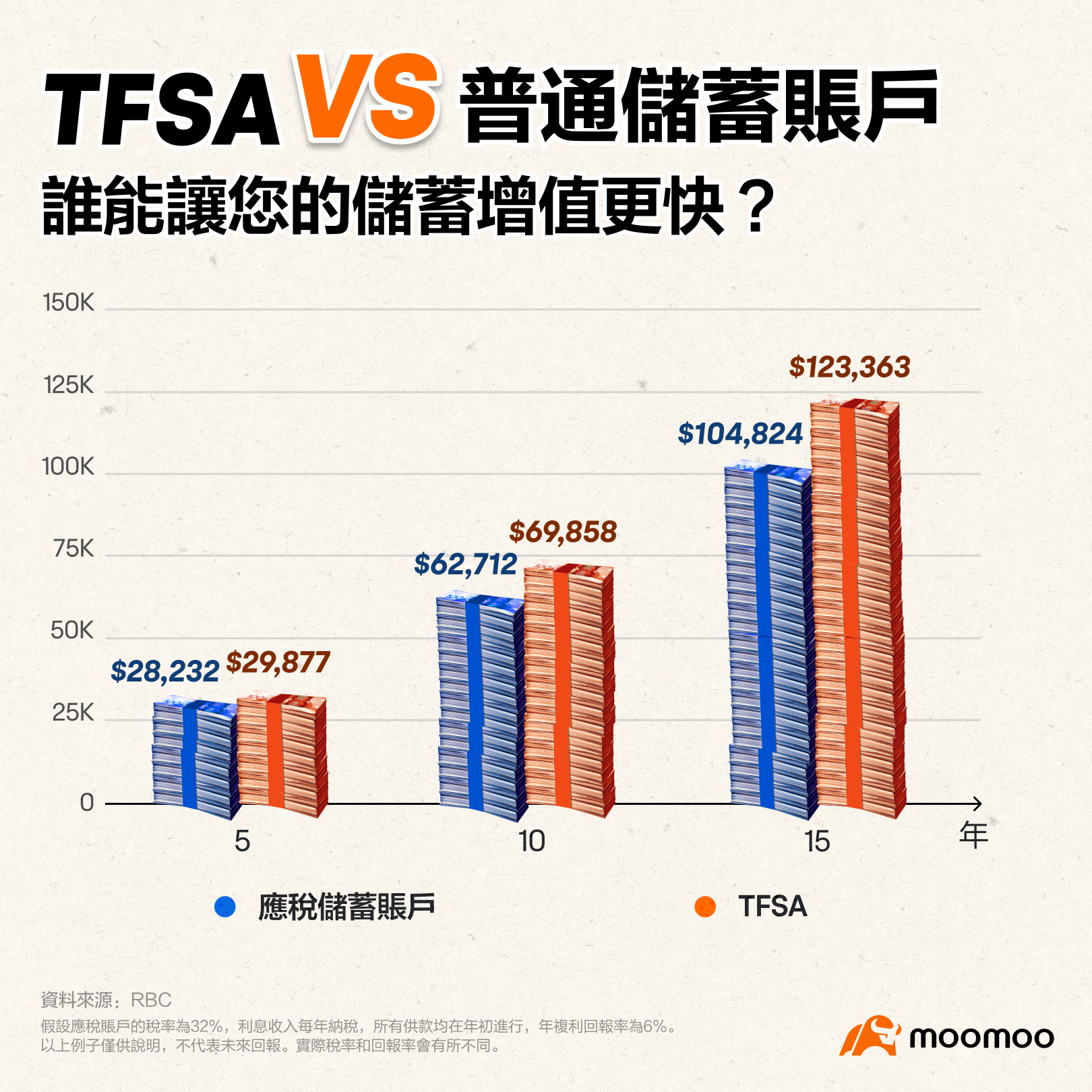
For example, if you plan to save $5,000 annually and earn 6% interest, the interest earned in a regular account is fully taxable as personal income. In contrast, interest earned within a TFSA is tax-free.
The chart below compares the asset performance of standard savings accounts and TFSAs after 5, 10, and 15 years. It demonstrates that assets in a TFSA appreciate more rapidly, with the advantage becoming increasingly pronounced over longer contribution periods.
Assuming an annual beginning-of-year contribution of CAD 5,000, an annual return of 6%, and a tax rate of 32%, your TFSA balance after 15 years would be$123,362, whereas the total assets in a taxable regular account would amount to only 104,824. This illustrates that leveraging the tax-free growth potential of a TFSAcan generate nearly $20,000 in additional earnings.!
Strategic Use of TFSAs Can Yield Significant Returns
Another benefit of the TFSA is the flexibility to invest in various asset classes, allowing you to access returns generated within the account at any time.
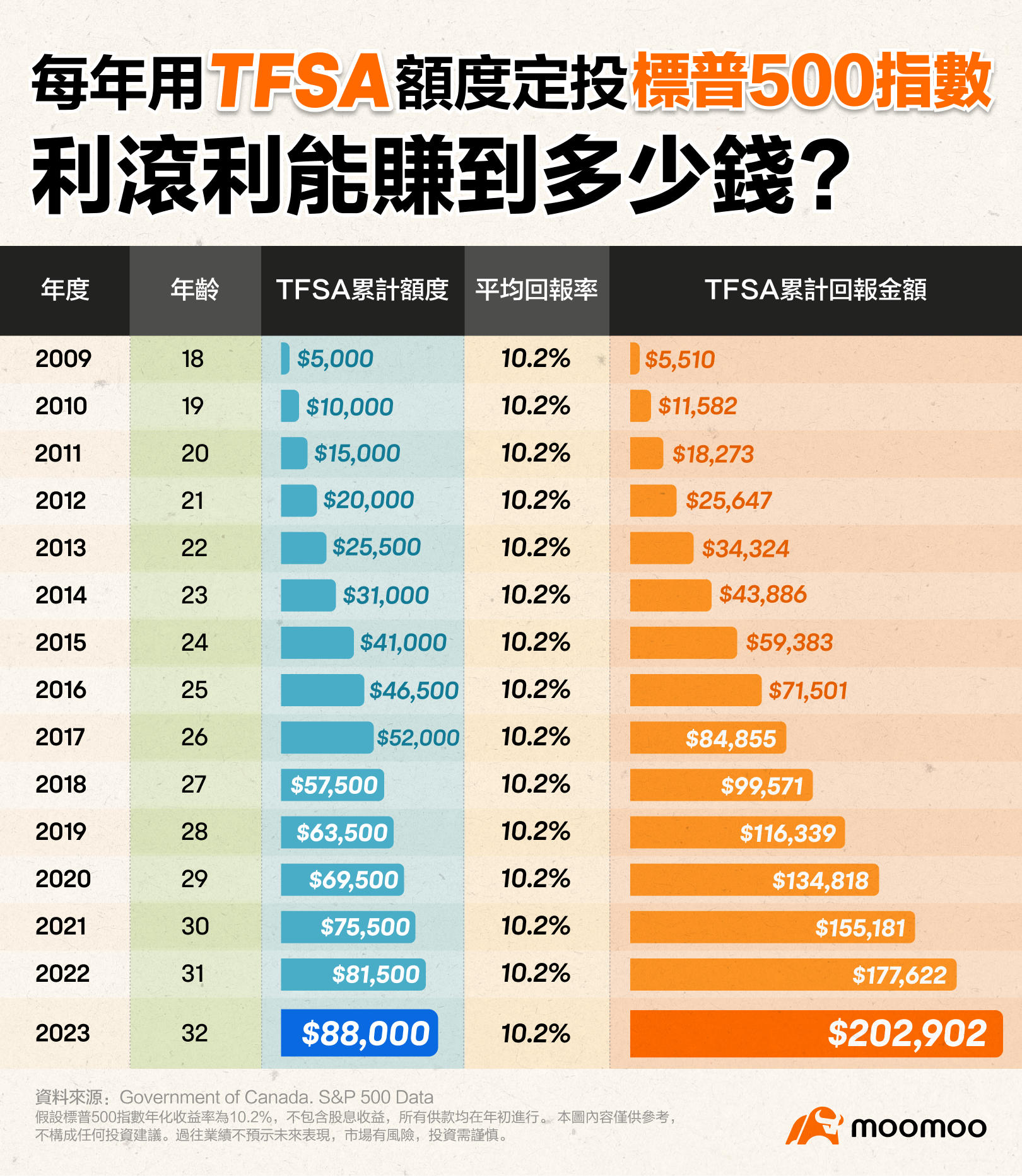
Suppose you began contributing to a TFSA in 2009, maximizing your contribution limit each year and implementing a systematic investment plan for the deposited funds.S&P 500 Index ETF, how much profit can be earned after 15 years?
As shown in the chart below, by making maximum annual contributions to a TFSA from 2009 to 2023, your total cumulative principal investment amounts to$88,000. The S&P 500 Index has averaged an annual return of 10.2% over the past 20 years (excluding dividends)*. If all contributions were fully invested in the S&P 500 Index, through 15 years of compounding, your savings would accumulate to$202,902, meaning that the total investment return over the 15-year period reaches1.3 times!
Of course, in actual market conditions, stock prices fluctuate and it is impossible to maintain a consistent rate of return every year. However, the stock market generally trends upward over the long term. Therefore, with sufficient holding periods, a TFSA has the potential to generate substantial returns.
What products are suitable for investment within a TFSA?
TFSAs offer high investment flexibility, allowing you to purchase various investment products—such as stocks, bonds, and exchange-traded funds (ETFs)—based on your risk tolerance and investment objectives.
A TFSA account is best utilized forMedium- to long-term investment, investors mayconsider investing in U.S. equities, Canadian blue-chip stocks, high-dividend stocks, and broad-market index ETFs, among others.If you prefer a more conservative portfolio with stable income, consider high-dividend blue-chip stocks, high-dividend ETFs, or even government bonds and bond ETFs. If you are younger and require a more aggressive portfolio, consider investing in U.S. equities and U.S. equity ETFs. However, note that holding U.S. equities and ETFs within a TFSA is not entirely tax-free; you are still subject to a 15% U.S. dividend withholding tax levied by the IRS on Canadian investors.
Additionally, please be reminded not to engage inexcessively frequent trading within your TFSA account, as this may attract scrutiny from tax authorities, potentially resulting back taxes and penalties.
In summary, the Canadian government has established various accounts to help citizens achieve different life goals, each with its own advantages and disadvantages. Although the TFSA has contribution limits, its flexibility makes it an ideal choice for new immigrants, offering agile capital management and tax-free growth. This helps new immigrants adapt more quickly to their new lives and achieve their financial objectives. Opening a TFSA account is overwhelmingly beneficial for new immigrants.
By using a moomoo TFSA account to invest in U.S. equities, you have a greater opportunity to significantly reduce your investment costs. Open a moomoo account now and deposit funds to receive exclusive benefits! Quick account opening.

*Source: Fraser Institute, 24 Facts for 2024—Canadians should understand the impact of government policies.
#Source: Statistics Canada, Recent trends in families' contributions to three registered savings accounts.
*Source: Investopedia, S&P 500 Average Return and Historical Performance
This presentation is for informational and educational use only and is not a recommendation or endorsement of any particular investment or investment strategy. Investment information provided in this content is general in nature, strictly for illustrative purposes, and may not be appropriate for all investors. Read more