What Are Midterm Elections: A Midterm Election Playbook for U.S. Investors
Midterm elections are the U.S. contests held halfway through a president's four-year term. Voters use them to choose the full House, part of the Senate, and, in many states, governors and legislatures, while the sitting president remains in office. This playbook covers what are midterm elections, the midterm meaning, what is the purpose of midterm elections, and how the tape around the vote can be read: headlines as results land, short interest in policy-sensitive names, and large options trades into the event.
What Are Midterm Elections?
What are the midterm elections? They are the congressional elections that fall between presidential elections, plus a large set of state and local races on the same day.
Midterm meaning
Midterm meaning is a timing word. A presidential term lasts four years; halfway through, voters return for Congress. USAGov describes midterm congressional elections as the elections halfway between presidential elections. Election Day this cycle is Tuesday, November 3, 2026, during President Donald Trump's second term. Winners begin the 120th Congress on January 3, 2027.
The phrase what is midterm election points to that calendar label. Representatives serve two-year terms, so every voting House seat is up every two years, including in presidential years. Senators serve six-year staggered terms, so about one-third of the Senate is up each cycle. "Midterm" marks the cycle in which the presidency stays off the ballot.
What Is the Purpose of Midterm Elections?
What is the purpose of midterm elections? To give voters a midway say over who writes federal laws, who chairs committees, and who votes on nominations for the rest of the term.
All 435 voting House seats are up, because the chamber renews every two years. A new majority changes committee gavels, which bills reach the floor, and how spending debates open. Five of the six non-voting delegate seats are also up in 2026.
The Senate ballot has 35 of 100 seats: the 33 regular Class II seats, plus two special elections to finish terms previously held by Marco Rubio in Florida and J.D. Vance in Ohio. Senators share lawmaking power and confirm nominees. With 65 seats off this ballot, Senate control can hold even if the House changes hands.
Governorships in 36 states, plus territorial races, share the calendar with legislative seats and ballot measures. Election night produces results; January 3 seats the new Congress. A lame-duck session in between can still act under the outgoing majority.
Why Markets Pay Attention to the Midterm Calendar
For markets, the calendar is a possible change in the path for taxes, federal spending, regulation, energy policy, healthcare rules, and financial oversight. Those themes are often repriced as polls move and as courts rule on district maps, before outlets call a chamber.
The president's party has often lost House seats in past midterms, with clear exceptions. That record describes earlier cycles, and 2026 stands on its own. Close races can stay uncalled overnight, with early headlines updated as later ballots are counted.
Three clocks keep the research specific:
Before the vote: positioning, and how much event risk already sits in options prices.
Election night and the days after: which headlines change control of a chamber, and which counts are still incomplete.
From the lame-duck session through January 3: whether the majority that takes office matches the policy path markets had been trading.
When Midterm Results Hit the Market
Chamber calls, concessions, and legal challenges can post while the cash session is closed. Futures, then the next pre-market, are often the first prices to reflect them. The research task in that window is to separate a headline that names a company, a committee, or a statehouse from a national banner the stock may barely track.
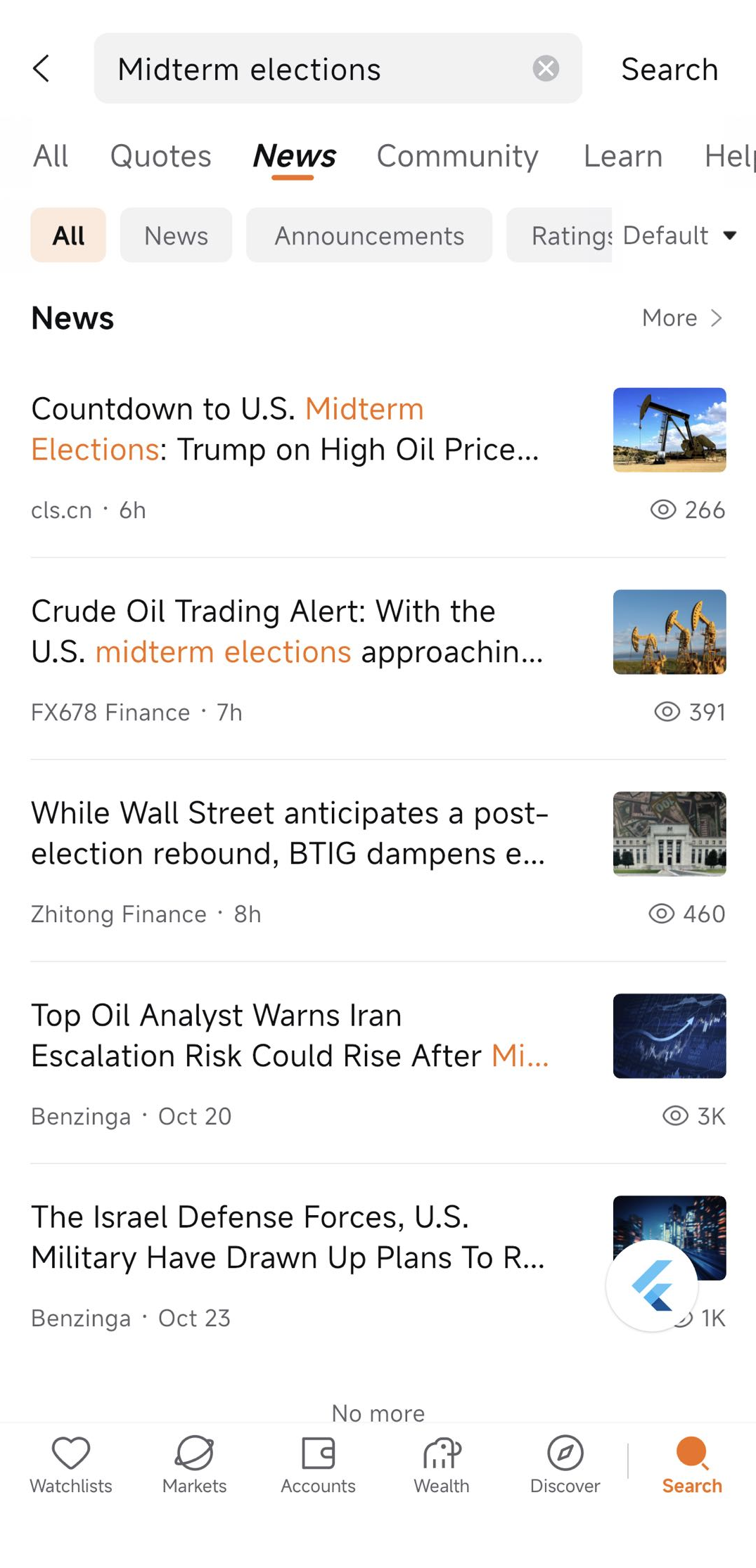
moomoo's News tab carries 24/7 headlines from sources including Bloomberg, Dow Jones, and Reuters. The tab can sit in the bottom Dock, one tap from quote screens. On a stock, related headlines appear with the quote, so that company-versus-banner check happens in one view. Opening the moomoo app, pinning News, and reading one policy-sensitive name beside its chart is a direct way to learn the screen before November 3. Outlets revise copy, and any price impact remains the reader's judgment.
Crowded Shorts Ahead of the Vote
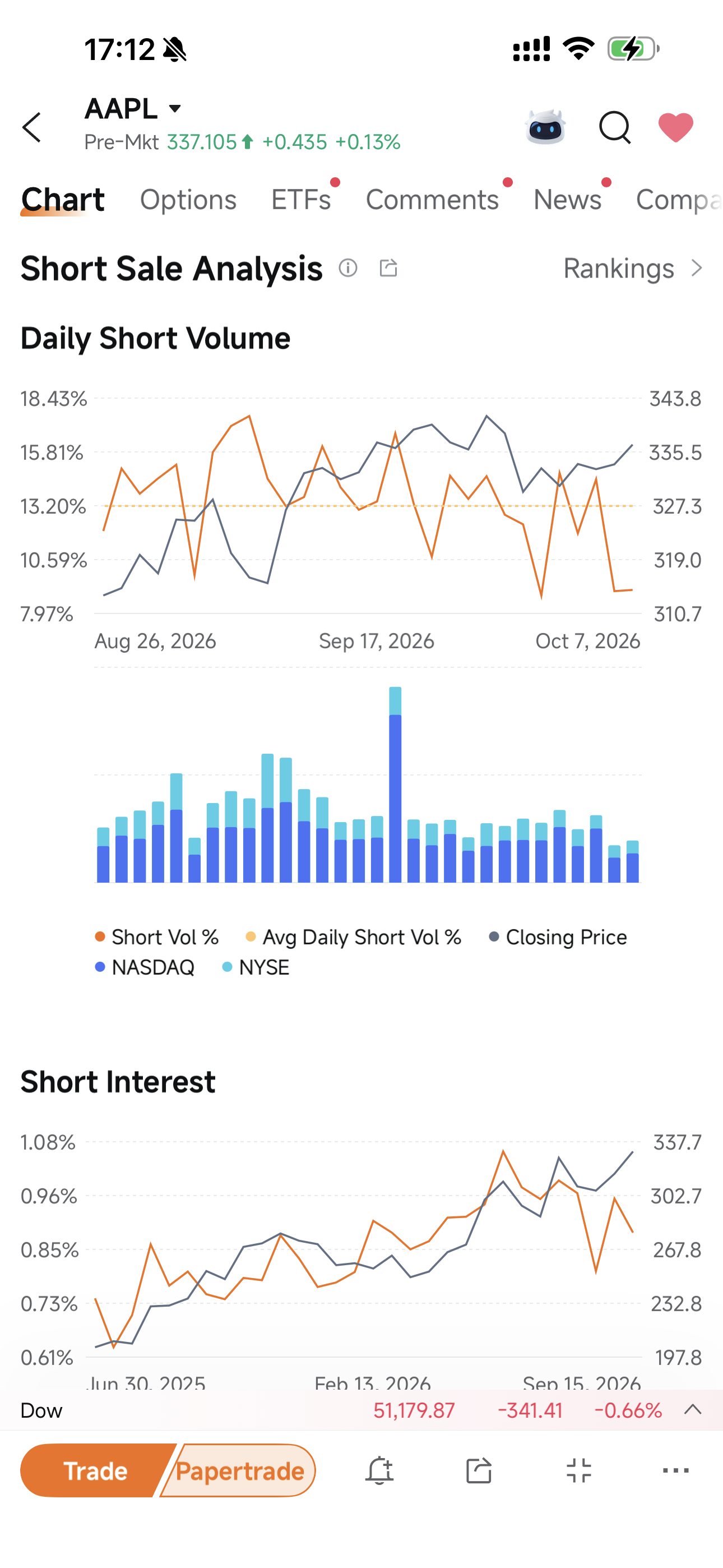
Elevated short interest into a political event can reflect a weaker fundamental view, a hedge against other exposure, or both in the same name. The figure counts shares sold short. What price does next still depends on the result, liquidity, and the rest of the tape.
On moomoo, open a stock's Detailed Quotes, tap Chart, and scroll to Short Sale Analysis. A long-press shows a chosen date. The panel places daily short volume beside short interest, a short-interest ratio, and days to cover, which compares short interest with recent average volume. U.S. short interest is generally published every two weeks. Daily short volume updates more often and still belongs next to price, news, and liquidity. Short Sale Rankings lists names across the market, with filters such as unusual short volume, and the ranking date can be changed.
Readers can download the moomoo app and open Short Sale Analysis on a liquid watchlist name to see how crowded the short side looks before a headline lands. Pair the figure with the news item and the price.
Options Positioning Into the Vote
Into a dated event, listed options are one place large risk transfers show up. A print may target an expiration, hedge stock, or form one leg of a spread. Size is useful once expiration, strike, and surrounding flow are checked together.
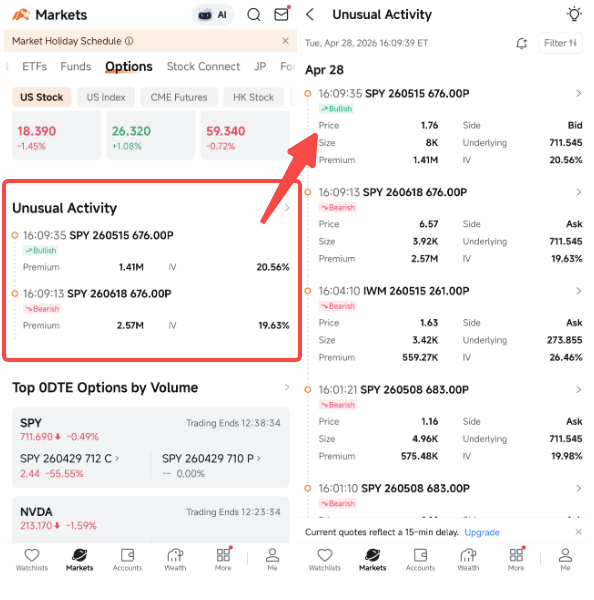
moomoo's Unusual Options Activity tracks unusually large options trades of 1,000 contracts or more. For one stock, go to Quotes, then Options, then Unusual Activity. For the broader market, open Markets, then Options, and swipe up to Unusual Activity. Tap a row for trade details and a simulated performance view. Filters and the bell-icon alert can limit the stream to a watchlist.
Options involve substantial risk and are not suitable for every investor. Simulated performance is a model, and a large print can be a hedge or a package. On an options-approved moomoo account, the list shows where size is trading into the vote, ready to set beside the headline and the short-interest snapshot.
From the Vote to the New Congress
News moves in minutes. Daily short volume follows the session. Short interest follows a biweekly release. Unusual options prints appear as they trade. Read together, they show whether a headline, a crowded short, and a burst of large options trades are landing on the same names. A split is information too: a loud political story can arrive while positioning stays quiet.
From November 3 through the January 3 seating of the 120th Congress, moomoo keeps News, Short Sale Analysis, and Unusual Options Activity in one workspace. Walking a watchlist across those three screens is practice in reading the event. Any order stays a separate decision under a personal risk limit.
FAQ About Midterm Elections
What are the midterm elections deciding in 2026?
Control of the House, 35 Senate seats (33 Class II seats plus two special elections), governorships in 36 states, and a wide set of state and local races. New congressional terms begin January 3, 2027.
What is the purpose of midterm elections?
To let voters reset who legislates, who runs committees, and who confirms nominees midway through a presidency. Election-night results and the majority that can still pass bills in a lame-duck session answer two different questions.
What does midterm mean?
"Midterm" means midway through the presidential term. Congressional elections also occur in presidential years. Those cycles include the race for president, so they carry a different name.
How can moomoo fit midterm research?
News offers 24/7 headlines from sources such as Bloomberg, Dow Jones, and Reuters, including headlines on a stock quote. Short Sale Analysis shows daily short volume, short interest, and days-to-cover style readings, with Short Sale Rankings for a market list. Unusual Options Activity flags options trades of 1,000 contracts or more, with detail, simulated performance, filters, and alerts. The three support research around the vote. Availability depends on account type and eligibility.
This presentation is for informational and educational use only and is not a recommendation or endorsement of any particular investment or investment strategy. Investment information provided in this content is general in nature, strictly for illustrative purposes, and may not be appropriate for all investors. Read more