SK Hynix ADR (SKHY) 2026 Listing: U.S. Investor's Guide to Memory Stocks
The global semiconductor landscape is experiencing a seismic shift, and at its epicenter is the insatiable demand for memory driven by the artificial intelligence revolution. The recent listing of SK Hynix's American Depositary Receipt (ADR) on a major US stock exchange marks a pivotal moment for investors. This move not only provides direct access to one of the world's most critical memory chip manufacturers but also signals a new chapter for the entire storage sector. For US investors asking, "With the SK Hynix US ADR online, how should I invest in the storage sector?" this guide provides a comprehensive roadmap for 2026.
Key Takeaways
- SK Hynix US ADR Listing Simplifies Access: The launch of SK Hynix's American Depositary Receipt (ADR) allows US investors to easily invest in a global memory leader without navigating foreign exchanges.
- AI-Driven Memory Demand Fuels Growth: SK Hynix's dominance in High-Bandwidth Memory (HBM), critical for AI servers, positions it as a key beneficiary of the AI revolution and storage sector up-cycle.
- Investment Strategies for US Investors: Options include directly investing in SK Hynix's ADR, diversifying with a basket of memory stocks like Micron, or gaining broad exposure via semiconductor ETFs like SMH or SOXX.
- Risks and Opportunities: While SK Hynix offers high growth potential, investors must consider semiconductor market cyclicality, geopolitical risks, and competition from players like Samsung and Micron.
- SK Hynix US ADR Listing Simplifies Access: The launch of SK Hynix's American Depositary Receipt (ADR) allows US investors to easily invest in a global memory leader without navigating foreign exchanges.
- AI-Driven Memory Demand Fuels Growth: SK Hynix's dominance in High-Bandwidth Memory (HBM), critical for AI servers, positions it as a key beneficiary of the AI revolution and storage sector up-cycle.
- Investment Strategies for US Investors: Options include directly investing in SK Hynix's ADR, diversifying with a basket of memory stocks like Micron, or gaining broad exposure via semiconductor ETFs like SMH or SOXX.
- Risks and Opportunities: While SK Hynix offers high growth potential, investors must consider semiconductor market cyclicality, geopolitical risks, and competition from players like Samsung and Micron.
SK Hynix US ADR Listing: What Does It Mean for US Investors?
The arrival of SK Hynix on the US stock market is more than just another IPO; it's a gateway for American investors to directly participate in the growth of a semiconductor titan without the complexities of trading on an overseas exchange. This event unlocks new opportunities and warrants a closer look at its implications for building a tech-focused investment portfolio within the US financial ecosystem.
What is a US ADR? Why Did SK Hynix Choose to List Now?
For many investors, the term ADR might be unfamiliar. Simply put, an American Depositary Receipt (ADR) is a certificate issued by a U.S. bank that represents a specific number of shares in a foreign company's stock. It trades on U.S. stock exchanges just like a regular stock, such as Apple or Microsoft.
The benefits for US investors are significant:
Ease of Trading: You can buy and sell ADRs in US dollars through your standard brokerage account. Following its listing on July 10, SK Hynix will be available for direct trading on Moomoo.
Transparency: ADR issuers are subject to SEC regulations, providing a level of financial reporting and transparency that US investors expect and are already familiar with under existing federal securities law.
Currency Convenience: It eliminates the need to deal with foreign currency conversions and international brokerage complexities, allowing you to transact entirely within the US dollar system.
Tax Familiarity: For US investors, ADR dividends and capital gains are reported through standard IRS forms, making tax filing straightforward within the existing US tax framework. Investors should note that ADR dividends may be subject to foreign withholding tax, which can often be claimed as a foreign tax credit on your federal return — a meaningful consideration for tax-efficient portfolio management.
So, why did SK Hynix choose 2026 for its US ADR listing? The timing is strategic. The company is capitalizing on the unprecedented AI-driven semiconductor boom. By listing in the US, SK Hynix aims to:
Tap into Deep US Capital Markets: Accessing the world's largest pool of investment capital to fund its ambitious expansion and R&D efforts, particularly in next-generation memory. The US equity market, with its unmatched depth and liquidity across the NYSE and NASDAQ, makes it the natural destination for any global company seeking large-scale capital.
Enhance Global Brand Visibility: A US listing elevates the company's profile among investors, customers, and potential talent.
Align with Key Partners: With major customers and technology partners like NVIDIA, AMD, and major cloud providers based in the US, a local listing strengthens these crucial relationships.
The SK Hynix US ADR listing is a clear signal of confidence in its future and a direct invitation for US investors to be part of its growth story.
Join the community discussion with 30M+ users :SK Hynix ADR Is Coming: A Better AI Memory Trade Than Micron?
In-depth Analysis: The Core Investment Value of SK Hynix
To understand how to approach an investment in the storage sector, we must first analyze the company at the center of this news. SK Hynix is not just another chipmaker; it is a dominant force with a distinct technological edge that positions it perfectly for the AI era.
SK Hynix's Position and Technological Advantages in the Global Storage Market
SK Hynix is one of the "big three" global memory manufacturers, holding a significant market share in both DRAM (Dynamic Random-Access Memory) and NAND flash storage. However, its true investment appeal in 2026 lies in its undisputed leadership in a niche but explosive market: High-Bandwidth Memory (HBM).
HBM is a type of high-performance memory essential for training and running large AI models. It acts as the super-fast short-term memory for AI accelerators like NVIDIA's GPUs. In this critical field, SK Hynix has established itself as the market leader, supplying the majority of HBM3 and next-generation HBM3E chips to the industry's top players. This technological supremacy in HBM is the company's crown jewel and primary growth driver — and it is a key reason why US institutional investors, from major asset managers on Wall Street to technology-focused hedge funds, have been closely watching this ADR listing.
SK Hynix Financial Overview & Growth Prospects
The financial performance of SK Hynix reflects its strong market position and the surging demand for AI memory. After navigating the cyclical downturn of 2023, the company has entered a period of hyper-growth.
Metric | 2024 (Actual) | 2025 (Actual) | 2026 (Latest Results & Outlook) | Growth Drivers |
Revenue | KRW 66.19 Trillion (Approx. $46.0 Billion) | KRW 97.15 Trillion (Approx. $63.8 Billion) | Exceptionally Strong Q1 2026 alone surpassed KRW 52.6 Trillion (Approx. $34.5 Billion). | Surging demand for High Bandwidth Memory (HBM) for AI servers and steady recovery in conventional server DRAM. |
Operating Profit | KRW 23.47 Trillion (Approx. $16.0 Billion) | KRW 47.21 Trillion (Approx. $31.0 Billion) | Continued Margin Expansion Q1 2026 operating profit reached KRW 37.6 Trillion. | HBM revenue doubled YoY; high-margin premium products absolutely dominate the sales mix. |
CapEx & R&D | Massive investment to support capacity scaling. | Approx. KRW 27.5 Trillion (Full-Year 2025 CapEx) | Committed KRW 45.5 Trillion by 2030 for new domestic production facilities in South Korea. | Continuous push for mass production of HBM3E and next-gen HBM4, solidifying the technological moat in AI memory. |
Authoritative Data Sources & References:All financial data is sourced from official SK hynix earnings reports (FY2024–FY2025) and the Q1 2026 earnings briefing.
The data tells a clear story:
Explosive Revenue Growth: Driven by both higher prices and massive volume increases for its premium memory products.
Expanding Profit Margins: The shift towards high-value HBM is significantly more profitable than traditional memory, leading to a dramatic improvement in profitability.
Aggressive R&D: Continued investment ensures SK Hynix stays ahead of the technology curve, a critical factor for long-term success in the semiconductor industry.
The outlook for the coming years remains exceptionally bright, directly tied to the continued build-out of AI infrastructure worldwide.
Opportunities and Potential Risks of Investing in SK Hynix's US ADR
A balanced investment decision requires weighing the potential upside against the inherent risks.
Opportunities (The Bull Case):
AI and HBM Dominance: SK Hynix is the primary beneficiary of the explosive growth in AI accelerators. As long as the AI trend continues, demand for its HBM products will likely remain robust.
Direct US Market Access: The new ADR makes it easier than ever for a broad base of US investors — from individual retail investors using self-directed brokerage accounts to institutional players managing large portfolios — to add this key international player to their holdings.
Favorable Memory Cycle: The storage sector is in a strong up-cycle, with demand outstripping supply, leading to higher prices and profitability for manufacturers.
Potential Risks (The Bear Case):
Market Cyclicality: The semiconductor industry is famously cyclical. An eventual slowdown in AI spending or an oversupply of memory chips could lead to a sharp downturn in revenue and stock price.
Geopolitical Risks: As a South Korean company, SK Hynix is exposed to regional geopolitical tensions and global trade policy shifts. US investors should be particularly attentive to developments in US-China trade relations and any export control regulations issued by the US Department of Commerce, which can directly affect semiconductor supply chains.
Intense Competition: While currently leading in HBM, SK Hynix faces fierce competition from giants like Samsung and US-based Micron Technology, who are investing heavily to catch up.
How to Prepare for the SK Hynix ADR Step by Step
Phase 1 : Open and Fund a US Brokerage Account
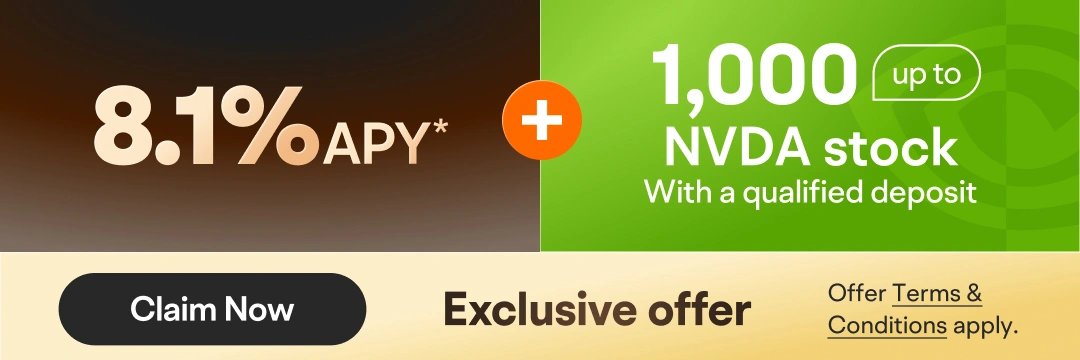
The first step is to have a funded brokerage account with a US-registered broker. Investors who want access to IPO shares at the offering price should check whether their broker offers IPO participation. Not every brokerage provides retail IPO access, and even when it does, allocations are not guaranteed.
Common broker considerations include IPO access, account minimums, research tools, trading fees, customer support, and order types such as limit orders.
Phase 2 : Understand IPO Allocation Rules
Getting IPO shares before the stock begins public trading is often difficult, especially for a high-demand company like SK Hynix.
Brokerages may prioritize clients based on account size, relationship history, assets under management, trading activity, or other internal criteria. Some IPO opportunities may be available only to certain eligible investors, and demand often exceeds supply.
It is important to distinguish between IPO allocation and pre-IPO investing. IPO allocation means receiving shares at the official IPO price through a brokerage before trading begins. Pre-IPO investing usually refers to buying private-company exposure before the IPO, often through secondary markets, venture funds, or SPVs. Pre-IPO deals are generally more restricted and may require accredited investor status.
Your brokerage plays a vital role in securing IPO allocations for retail investors. Through platforms like moomoo, eligible U.S. investors can indicate their interest in purchasing shares at the offering price. Familiarizing yourself with this process now—before the excitement of an actual IPO announcement—ensures you won't be scrambling to figure out the mechanics when time is of the essence.
Although Moomoo does not have an allocation for this SK Hynix ADR offering, you may want to keep an eye on other upcoming IPO opportunities.
Here are the steps to apply for IPO on moomoo:
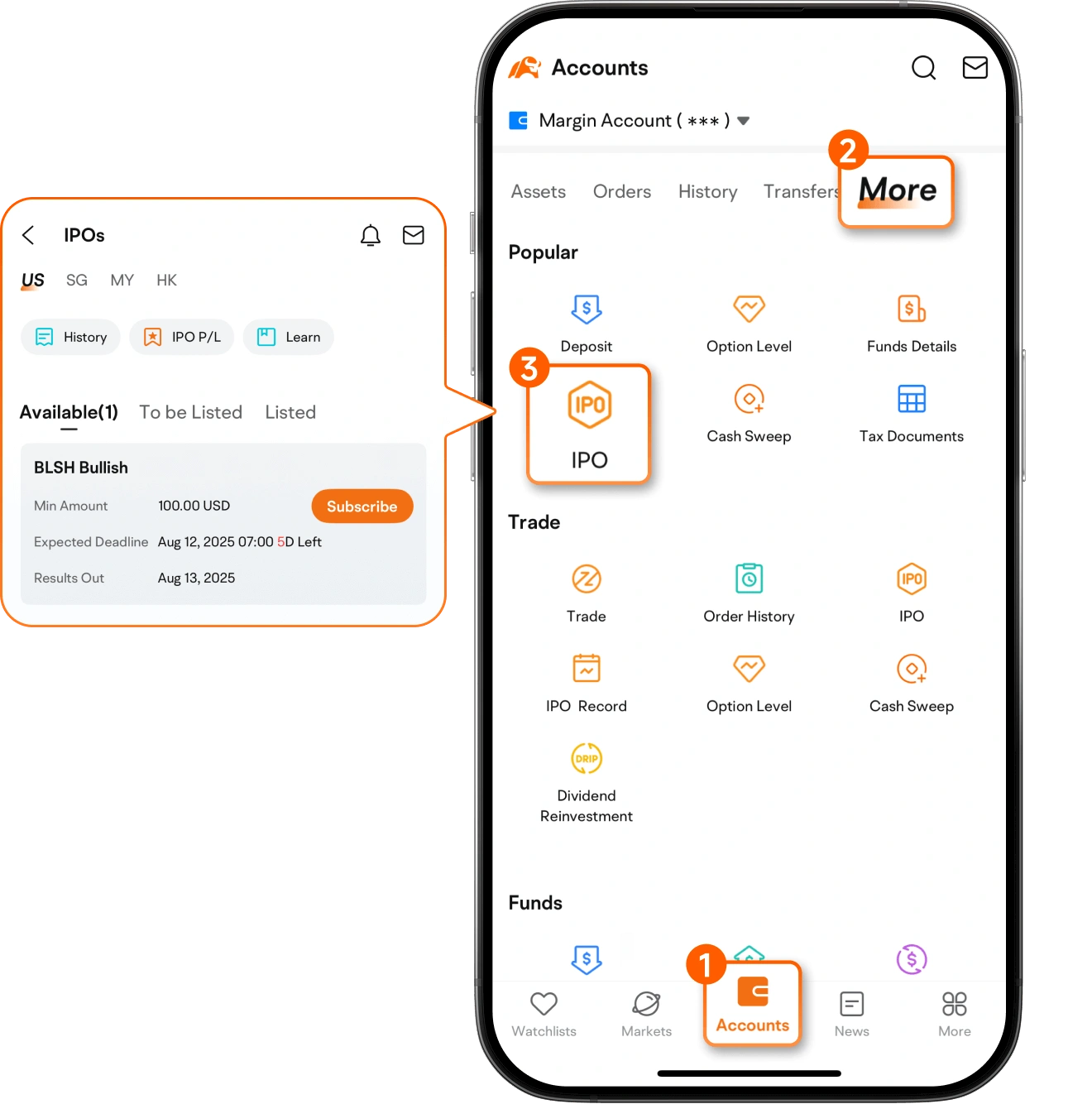
Step 1: Download moomoo app and navigate to Accounts> More> IPO. All available IPOs for subscription will be listed under the "Available" tab.
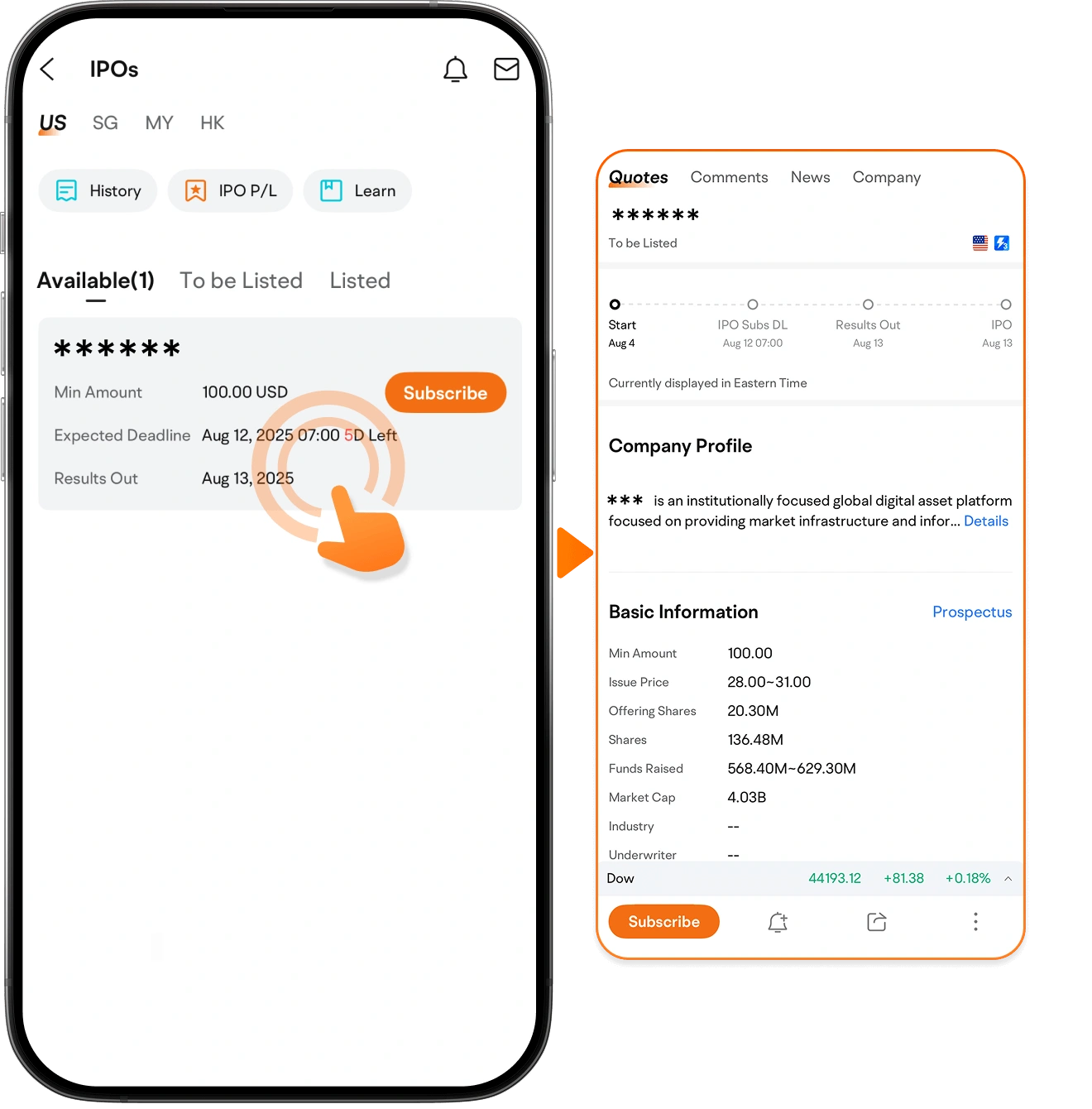
Step 2: Select an IPO you're interested in, tap to view its full details, terms, and offering information.
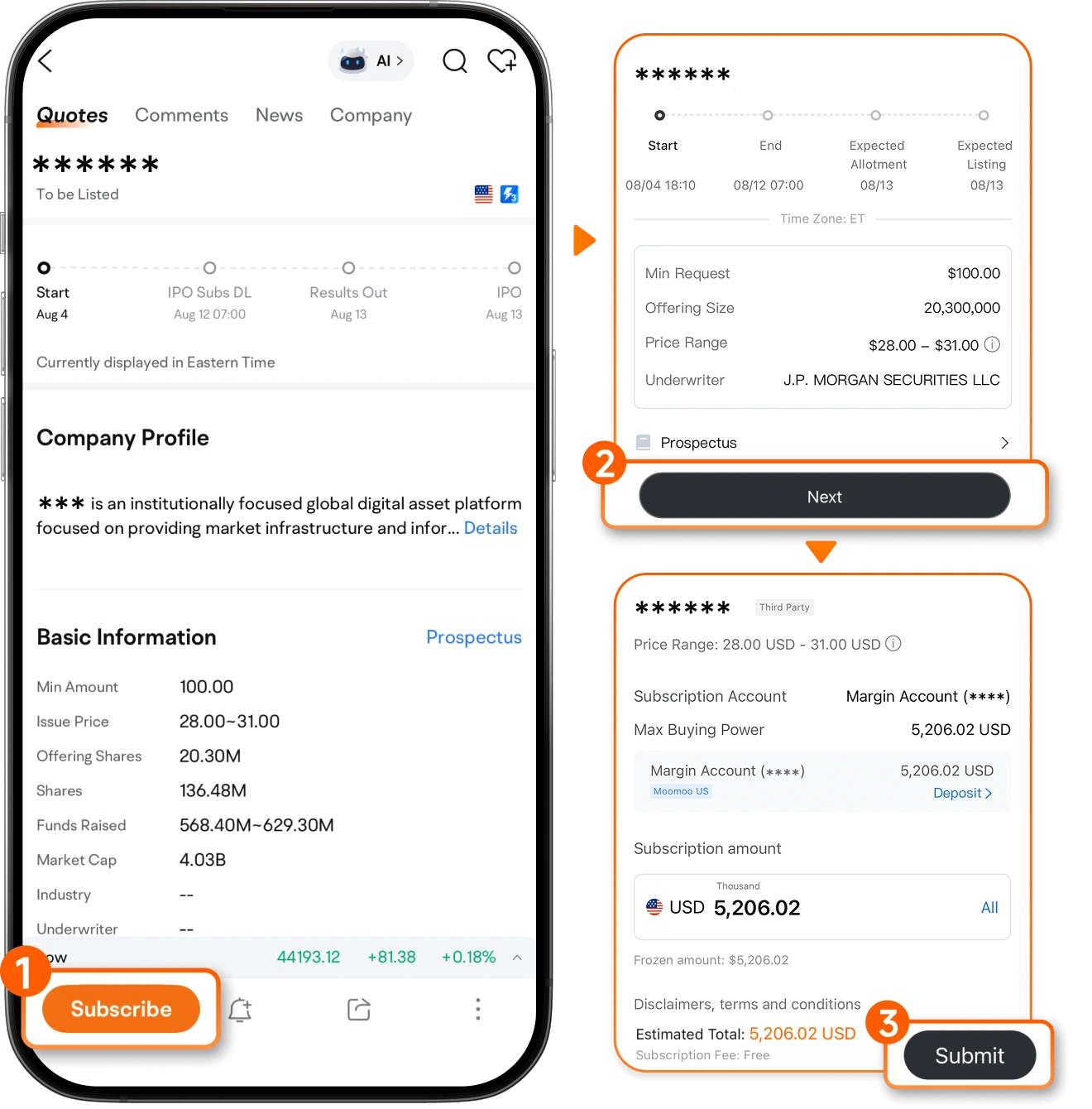
Step 3: Tap "Subscribe", enter your desired subscription amount, then submit. Results will be sent via email and in-app alerts on allotment day.
Phase 3: Monitor the Public Regulatory Filing (F-1 / ADR Registration)
The prospectus or registration filing is one of the most important documents investors should review before deciding whether to invest in the newly listed ADR.
For SK Hynix, investors should pay close attention to:
Revenue growth and sales mix, particularly the adoption rate of High Bandwidth Memory (HBM) versus conventional DRAM
Gross margins and operating profit expansion, reflecting pricing power in the current memory cycle
Capital expenditures (CapEx) for new fabrication plants (fabs) and R&D costs for next-generation HBM4
Customer concentration, especially reliance on key AI accelerator designers like NVIDIA
Inventory levels and vulnerability to memory sector cyclicality
Competitive risks from Samsung Electronics and Micron Technology in the advanced memory race
Geopolitical risks, supply chain constraints, and the impact of global semiconductor trade regulations (e.g., export controls)
Use of proceeds (if new capital is being raised) and the broader allocation strategy
ADR conversion ratio, fee structure, and foreign exchange rate risks
This public filing will provide the first detailed look at SK Hynix’s U.S. listing structure, financial condition, and specific risk profile within the memory semiconductor market.
Phase 4: Plan Your Exit Strategy Before the IPO Starts Trading
Getting IPO shares can feel like the hard part, but deciding how you will manage the position after listing is just as important. Newly listed stocks can move sharply during their first trading sessions, especially when market attention is high. Prices may rise quickly after the open, then reverse just as fast once early buying pressure fades.That is why investors should think through their exit strategy before trading begins.
Order types play a role in this process. For example, a trailing stop limit order may help investors manage IPO volatility by adjusting the stop trigger as the stock moves higher, while also setting a limit price for the sell order if the stock reverses. This type of order does not remove risk, but it can help investors follow a more disciplined exit plan.
How Trailing Stop Limit Orders Can Help With ADR Listing Volatility
magine SK Hynix (SKHY) prices its US ADR at $158 per share. On the first trading day, AI memory enthusiasm drives the stock up 50%+ to $237. At this point, you're facing a critical decision. Traditional approaches lead to three scenarios:
You sell immediately: then the stock drops—perfect timing
You hesitate: miss your window, and the stock falls—profits diminish
You sell immediately: then the stock soars higher—leaving money on the table
Most traders experience scenarios 2 or 3. Moomoo's Trailing Stop Limit Order eliminates this guesswork by automatically tracking the stock's upward movement while maintaining your downside protection.
Practical Example:
Continuing with the example above, SK Hynix (SKHY) reaches $237 (a 50%+ gain), and you want to protect at least a 40% profit. You may set a trailing stop with a 10% trailing ratio and a $2 limit offset:
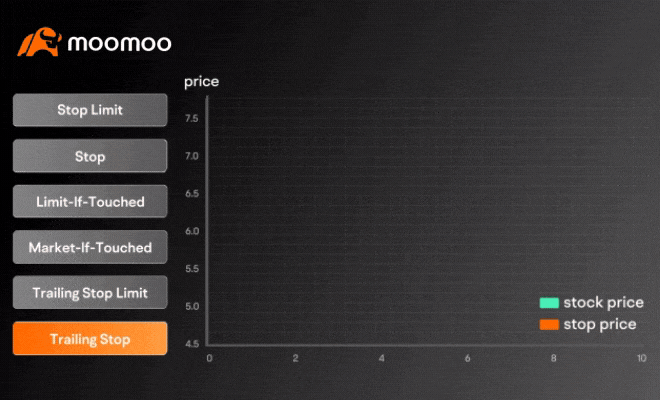
Scenario 1: Stock Continues Rising to $300, Then Pulls Back to $270
- Stock hits $220: Stop price automatically adjusts to $198 (220 × 90%)
- Stock rises to $300: Stop price moves up to $270 (300 × 90%)
- Stock drops to $270: System triggers a limit order at $268 (applying the $2 offset)
- You lock in $110 profit per share ($268 - $158)
- Stock hits $220: Stop price automatically adjusts to $198 (220 × 90%)
- Stock rises to $300: Stop price moves up to $270 (300 × 90%)
- Stock drops to $270: System triggers a limit order at $268 (applying the $2 offset)
- You lock in $110 profit per share ($268 - $158)
Scenario 2: Stock Reverses and Drops (From Initial Pop)
- Stock at $240: Your stop price is $216 (240 × 90%)
- Stock falls to $216: System triggers a limit order at $214 (applying the $2 offset)
- You secure $56 profit per share ($214 - $158), avoiding further losses
- Stock at $240: Your stop price is $216 (240 × 90%)
- Stock falls to $216: System triggers a limit order at $214 (applying the $2 offset)
- You secure $56 profit per share ($214 - $158), avoiding further losses
Download moomoo app today to explore the Trailing Stop Limit Order feature! Stop worrying about selling too early or failing to protect your IPO gains—let advanced order types work for you automatically.
2026 Global Storage Sector Market Environment and Trend Outlook
Investing in the SK Hynix US ADR is a bet not just on the company, but on the entire storage sector. Understanding the broader market environment is crucial for any investment strategy.
AI Wave Driven Storage Demand: DRAM and NAND Market Analysis
The AI revolution is fundamentally reshaping storage demand. Previously, demand was driven by PCs and smartphones. Today, the biggest driver is the data center — and the United States sits at the heart of this transformation, home to the world's largest hyperscale cloud operators, including Amazon Web Services, Microsoft Azure, and Google Cloud, all of which are aggressively expanding their AI infrastructure.
DRAM Demand: AI servers require exponentially more DRAM than traditional servers. A single high-end AI server can be equipped with over a terabyte of DRAM, compared to a few hundred gigabytes for a standard server. This, combined with the need for high-performance HBM, is creating a supply crunch and driving prices upward. Market analysts project the AI server DRAM market to grow at a compound annual growth rate (CAGR) of over 30% through 2028.
NAND Demand: While DRAM provides speed, NAND provides mass storage. The vast amounts of data generated and used by AI models require massive, fast, and reliable NAND-based solid-state drives (SSDs). From training data to model storage, the need for enterprise-grade NAND is exploding.
Join the community discussion with 30M+ users :Samsung and SK Hynix Eye Massive Investment Plans: Which Companies Deserve Attention?us
Interpreting the Storage Sector Cycle: Which Stage Are We In Now?
The memory chip industry has historically followed a boom-and-bust cycle. This cycle is driven by the interplay of supply (new factory capacity) and demand.
Up-Cycle: Demand exceeds supply, prices rise, and profits soar.
Peak: Companies invest heavily in new capacity to meet demand.
Down-Cycle: New capacity comes online, creating oversupply. Prices crash, and profitability plummets.
Trough: Companies cut production, and the market slowly rebalances, setting the stage for the next up-cycle.
As of mid-2026, the consensus is that the storage sector is in a powerful and potentially prolonged up-cycle. Unlike previous cycles driven by consumer electronics, this one is fueled by the structural, long-term build-out of AI infrastructure. While a downturn is inevitable eventually, many experts believe the current AI-driven demand is more sustainable than in past cycles. For US investors, this cycle dynamic is particularly relevant given the Federal Reserve's broader interest rate environment, which influences how growth-oriented technology stocks are valued across US equity markets.
Comparison of Major Storage Sector Players: SK Hynix, Samsung, and Micron
When considering a storage sector investment, it's essential to understand the competitive landscape.
Top 3 Memory Manufacturers at a Glance (Mid-2026)
Company | HQ | Key Advantages | Key Weaknesses | Stock Code |
SK Hynix | South Korea | HBM market leader; highly focused pure-play memory business. | Smaller economies of scale compared to Samsung. | 000660.KS SKHY (US ADR) |
Samsung Electronics | South Korea | Largest industry scale; highly diversified across memory, foundry, and consumer electronics. | HBM market share trails SK Hynix; conglomeration risks distracting core focus. | 005930.KS |
Micron Technology | USA | US-based industry leader; strong positioning in advanced DRAM/NAND; heavily backed by government funding (The CHIPS Act). | Historically ranked third in the HBM race, though aggressively catching up. | MU |
This comparison highlights that while all three are excellent companies, they offer different investment profiles. An investment in the SK Hynix US ADR is a focused bet on HBM leadership. An investment in Micron (MU) is a bet on a US-based pure-play memory leader that additionally benefits from domestic policy tailwinds, including CHIPS Act funding designed to strengthen American semiconductor manufacturing. An investment in Samsung is a more diversified bet on the entire technology ecosystem.
US Memory Sector Investment Strategy: How to Build a Portfolio Framework
If SK hynix ADR (SKHY) begins trading as expected on July 10 (subject to official confirmation), U.S. investors may have an additional way to access the memory theme. The framework below is for educational purposes only and is not personalized investment advice. The most appropriate approach depends on each investor’s objectives, risk tolerance, time horizon, and financial situation.
U.S. investors may use different account types (such as taxable brokerage accounts, Traditional IRAs, and Roth IRAs), each with different tax considerations. Tax treatment varies by investor, so consider consulting a qualified tax professional.
Strategy 1: Single-Name Exposure (Higher Concentration Risk)
Who may consider this approach:
Investors with high conviction in a specific company thesis and a higher tolerance for volatility.
Illustrative approach:
Use a limited allocation to one memory-focused name (for example, SK hynix ADR, if listed and available through your broker).
Potential advantages:
More direct exposure if the specific thesis plays out.
Potential risks:
Higher company-specific risk, including execution risk, product-cycle risk, and valuation volatility.
Investors with high conviction in a specific company thesis and a higher tolerance for volatility.
Illustrative approach:
Use a limited allocation to one memory-focused name (for example, SK hynix ADR, if listed and available through your broker).
Potential advantages:
More direct exposure if the specific thesis plays out.
Potential risks:
Higher company-specific risk, including execution risk, product-cycle risk, and valuation volatility.
Strategy 2: Multi-Stock Basket (Balanced Exposure)
Who may consider this approach:
Investors who want memory-sector exposure while reducing single-name concentration.
Illustrative approach:
Build a basket across relevant names (for example, memory manufacturers and related ecosystem companies), with position limits per name.
Potential advantages:
Diversification across companies may reduce single-issuer event risk.
Potential risks:
Returns may be more moderate than a successful concentrated position; sector drawdowns can still impact the full basket.
Investors who want memory-sector exposure while reducing single-name concentration.
Illustrative approach:
Build a basket across relevant names (for example, memory manufacturers and related ecosystem companies), with position limits per name.
Potential advantages:
Diversification across companies may reduce single-issuer event risk.
Potential risks:
Returns may be more moderate than a successful concentrated position; sector drawdowns can still impact the full basket.
Strategy 3: ETF-Based Exposure (Broad Diversification)
Who may consider this approach:
Investors seeking diversified semiconductor exposure with a simpler implementation process.
Illustrative approach:
Use established semiconductor ETFs (for example, broad funds such as SMH or SOXX).
Where available, some investors may also evaluate more targeted memory-related funds.
Potential advantages:
Broad diversification, easier portfolio management, and reduced single-name dependence.
Potential risks:
ETF performance reflects both leaders and laggards in the index; broad funds may dilute pure memory upside.
Investors seeking diversified semiconductor exposure with a simpler implementation process.
Illustrative approach:
Use established semiconductor ETFs (for example, broad funds such as SMH or SOXX).
Where available, some investors may also evaluate more targeted memory-related funds.
Potential advantages:
Broad diversification, easier portfolio management, and reduced single-name dependence.
Potential risks:
ETF performance reflects both leaders and laggards in the index; broad funds may dilute pure memory upside.
Practical Risk Controls (Applicable to Any Strategy)
Set maximum position sizes before entering a trade
Use staged entries instead of all-at-once execution
Define review frequency (for example, weekly news check, monthly thesis check)
Predefine exit criteria if thesis conditions change
Important Disclosure::This content is provided for informational and educational purposes only and does not constitute investment advice, a recommendation, or an offer to buy or sell any security. Investing involves risk, including possible loss of principal. Availability of securities and ETFs may vary by broker and account type. Past performance does not guarantee future results.
Conclusion: US Investors Seizing New Opportunities in the Memory Sector from the SK Hynix ADR Listing
The listing of the SK Hynix US ADR is a landmark event for investors. It provides a direct and accessible way to invest in a company at the heart of the AI revolution — a leader whose technology is fueling the data centers of tomorrow. For the US investment community in particular, this listing bridges a gap that previously required navigating overseas exchanges, making a world-class memory manufacturer as easy to trade as any stock on the NYSE or NASDAQ.
As we've explored, this event opens up a compelling investment thesis for 2026. The memory sector, propelled by unprecedented AI-driven demand, is in a powerful up-cycle. SK Hynix, with its dominance in the critical HBM market, is uniquely positioned to capitalize on this trend.
Whether you choose a concentrated bet on the SK Hynix US ADR, a diversified basket of memory leaders that includes US-based Micron Technology, or a broad semiconductor ETF like SMH or SOXX held within a tax-advantaged IRA, the opportunity may be meaningful, but outcomes depend on cycle, execution, and risk control. The key is to align your strategy with your personal risk tolerance, investment horizon, and the tax considerations relevant to your specific US account structure. The AI era is here, and the memory chips that power it represent one of the most significant investment themes of the decade. The launch of the SK Hynix ADR has just made it easier than ever for US investors to be a part of it.
Frequency Asked Questions
When does SKHY start trading?
Based on your current plan, SKHY is expected to list on July 10. Listing timelines can change, so investors should verify the official exchange notice or broker announcement on the day of launch.
Is SKHY a better choice than buying a semiconductor ETF?
It depends on your objective. - If you want higher conviction and higher volatility, SKHY can offer more concentrated exposure. - If you want broader diversification and lower single-name risk, ETFs like semiconductor baskets may be more suitable.
How can I invest in memory stocks as a U.S. investor?
Most investors use one of three approaches: 1. Broad semiconductor ETF exposure 2. A diversified basket of memory-related stocks 3. A concentrated single-name position (such as SKHY) Your choice should match your risk tolerance and time horizon.
Why are investors focused on HBM and AI demand?
HBM (high-bandwidth memory) is a key component in AI compute systems. As AI data center spending rises, demand for high-performance memory can support pricing power and margins for well-positioned memory suppliers.
What are the biggest risks when investing in memory stocks?
Key risks include: - Memory cycle reversals (pricing pressure after supply expansion) - Competitive pressure from large peers - Macro volatility (rates, risk-off sentiment) - Geopolitical and regulatory changes affecting supply chains
Should I buy SKHY all at once on listing day?
Many investors prefer staged entries rather than all-in timing around one event. A phased approach can help reduce timing risk during high-volatility listing windows.
What should I monitor after opening a position?
Track a small set of thesis indicators: - Memory pricing trends (HBM/DRAM/NAND) - Company guidance and product ramp execution - AI infrastructure capex signals - Valuation versus growth expectations
This presentation is for informational and educational use only and is not a recommendation or endorsement of any particular investment or investment strategy. Investment information provided in this content is general in nature, strictly for illustrative purposes, and may not be appropriate for all investors. Read more