How to start ?
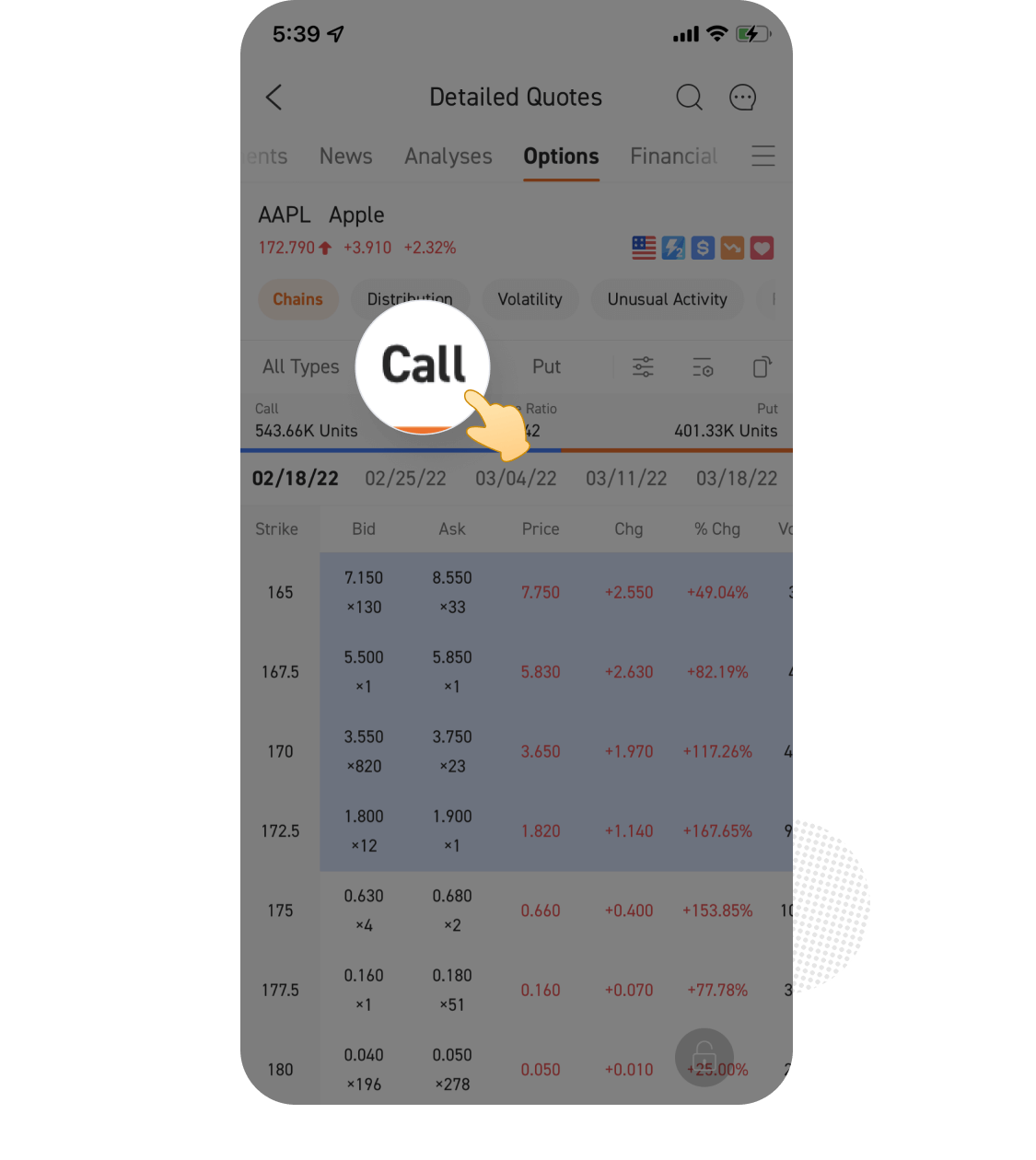
Step 1 Click【Call】to find all the call options of the stock.
Step 2 Select a strike price and an expiration date.
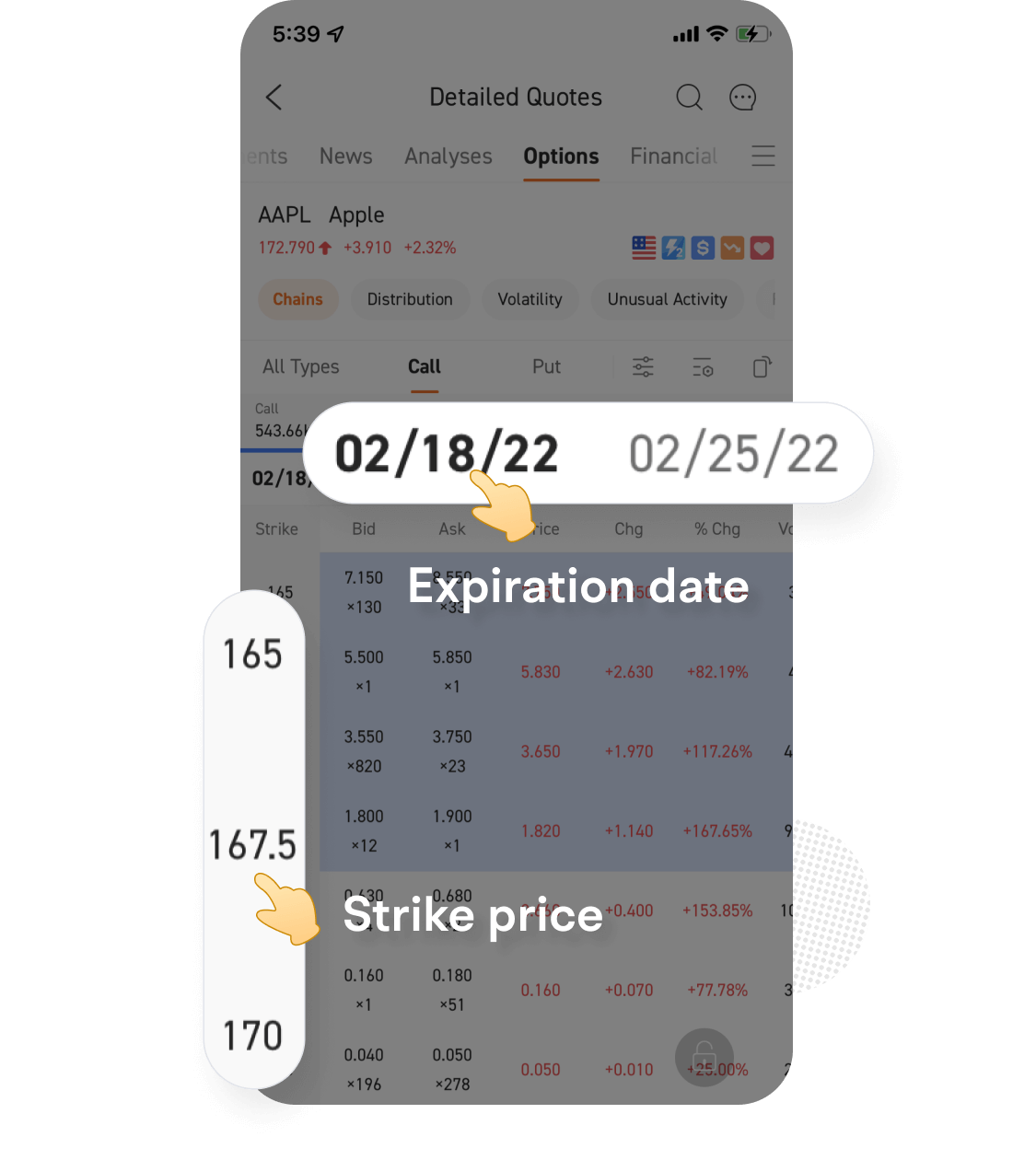
The expiration date is the last day the option can be exercised. The time value of an option naturally shrinks as the expiration date approaches. This makes it more favorable to sellers in a relatively calm market. Under normal circumstances, with a shorter expiration date, as compared to a longer expiration date, stock prices have a lower probability of hitting the strike price, so it is more beneficial to sellers. Of course, it is necessary to guard against possible adverse scenarios.
In addition, generally, and without considering other factors, the shorter the expiration date, the lower the option premium will be. You should set a suitable time to expiration based on your anticipation and strategy.
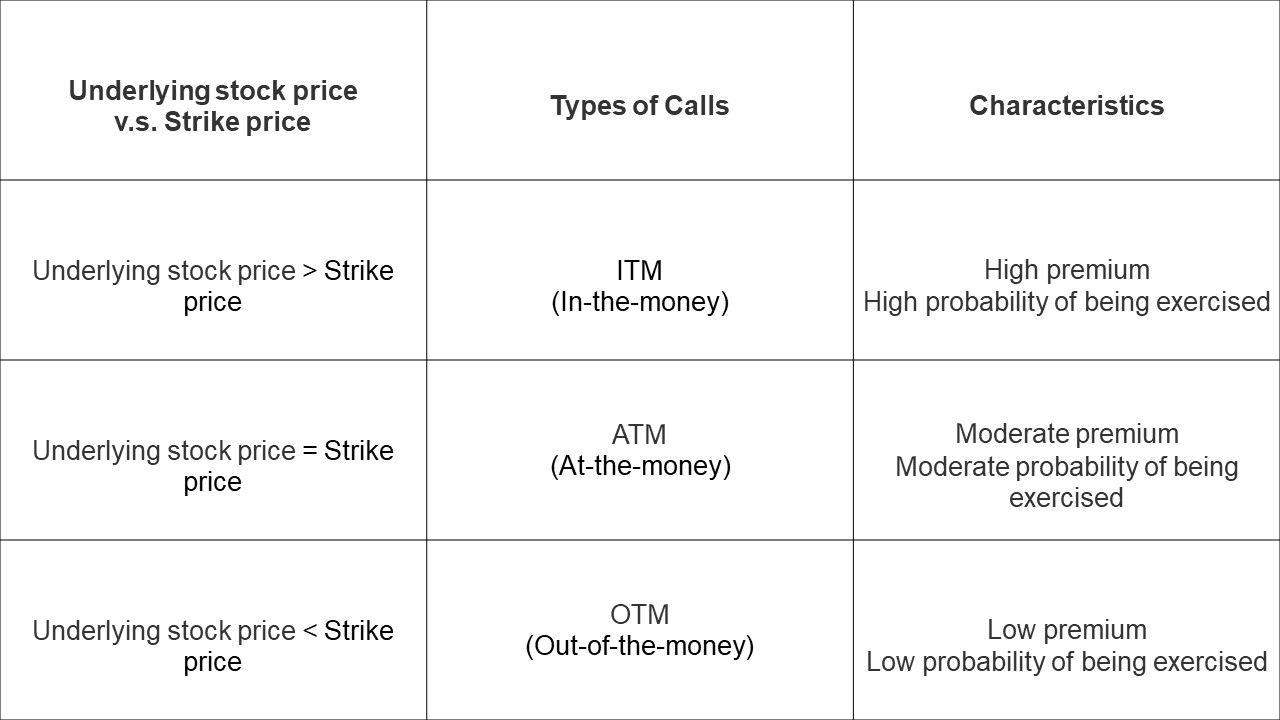
The strike price is the price at which an asset is bought or sold, as specified in the option contract. Based on the relationship between the market price and the strike price of a stock, call options can be divided into three types: in the money, at the money, and out of the money. When all other conditions are equal, the premium and probability of being exercised by the buyer for these three types of call options are as follows. You should set a reasonable strike price based on your actual situation.
In addition, when adopting a covered call strategy, one way to decide on the strike price is to set it at the price you would like to sell the stock. In that way, if the option is exercised, you may still sell the stock at your take-profit price while earning an additional premium.
Apart from the underlying stock price, the strike price, and the expiration date that we've mentioned, other factors, including implied volatility, risk-free rate, and dividend yield, may also affect the price of an option.
Step 3 Set your sell order for a call option.
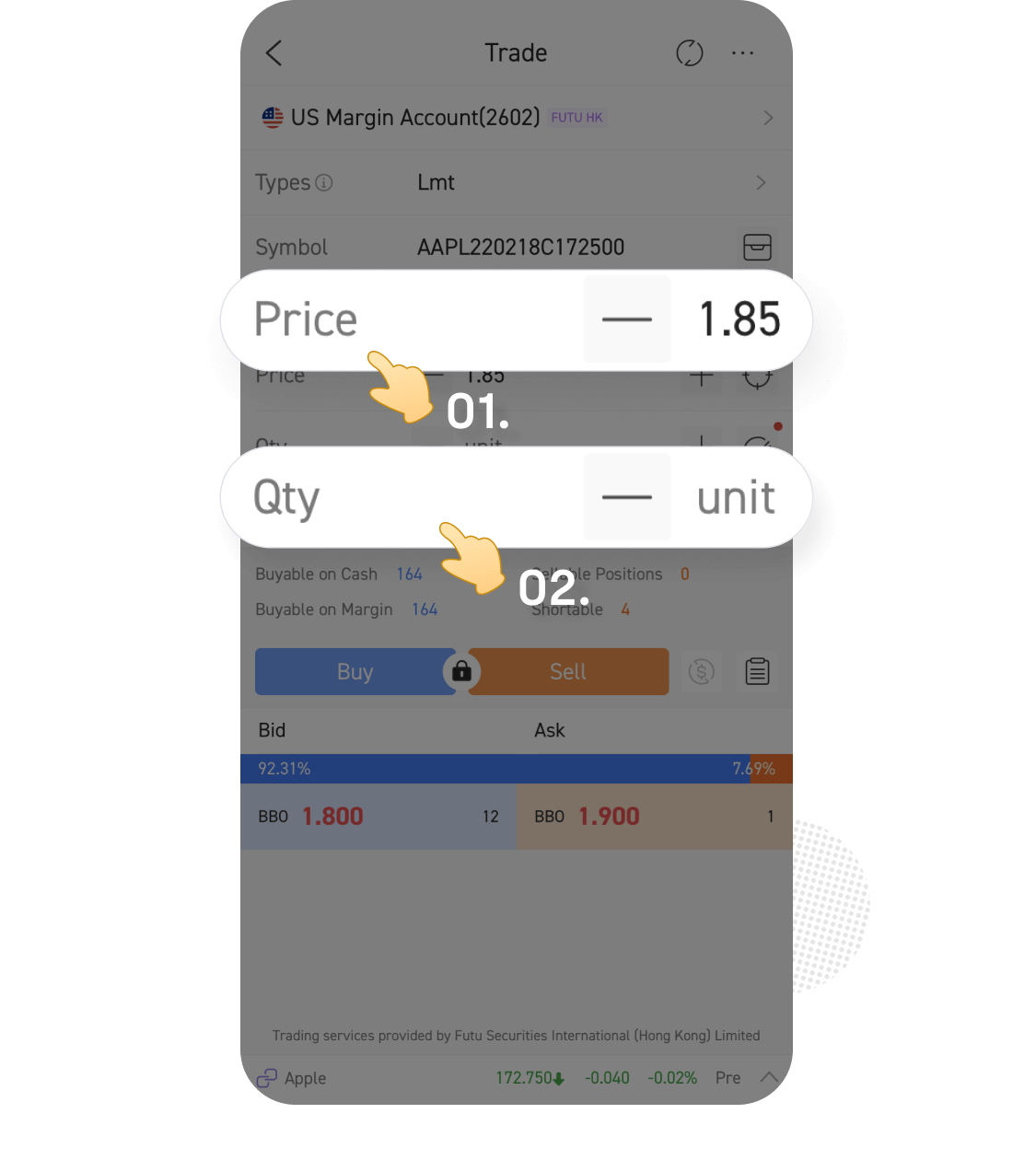
Tips: The quoted premium of an option pertains to one share of the underlying stock in the US market, and each option contract controls 100 shares of the stock.
This presentation is for informational and educational use only and is not a recommendation or endorsement of any particular investment or investment strategy. Investment information provided in this content is general in nature, strictly for illustrative purposes, and may not be appropriate for all investors. Read more