Dual paths to profit: How to long and short in trading
Have you seen the movie "The Big Short"? It's about a group of investors who saw the 2008 housing market crash coming. They used a strategy called short selling to make significant profits. It's a fascinating example of how this technique can work in real-world situations.
Let's take a closer look at short selling and see what we can learn from it.
Takeaways:
● When you short sell, you borrow stocks from your broker and sell them immediately.
● Short selling a stock includes two main steps: Setting up a short position and then closing it.
● Short selling is riskier than going long. This is because your profits are limited, but your losses could be unlimited.
1. What are long and short positions?
There are two main ways investors play the market: going long and going short. They reflect investors' different expectations on the market.
First up, we have "going long." This basically means you buy shares, if the stock price climbs as anticipated, you then sell them for a profit.
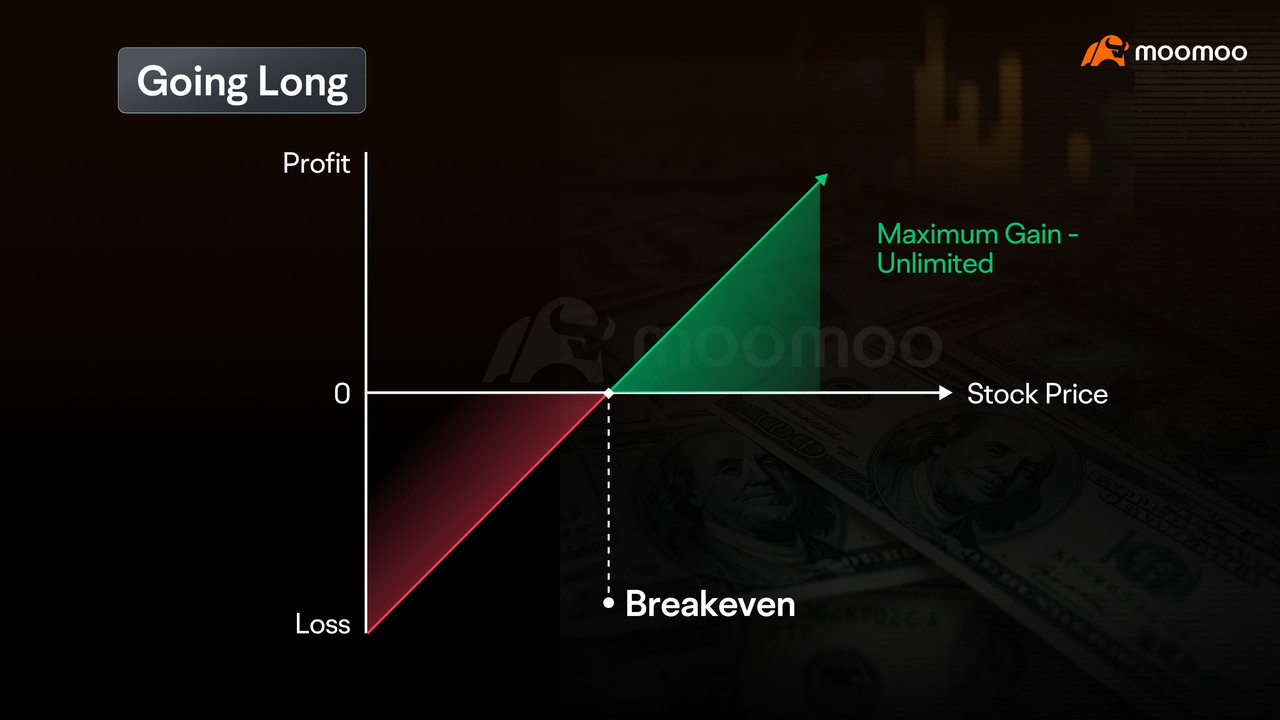
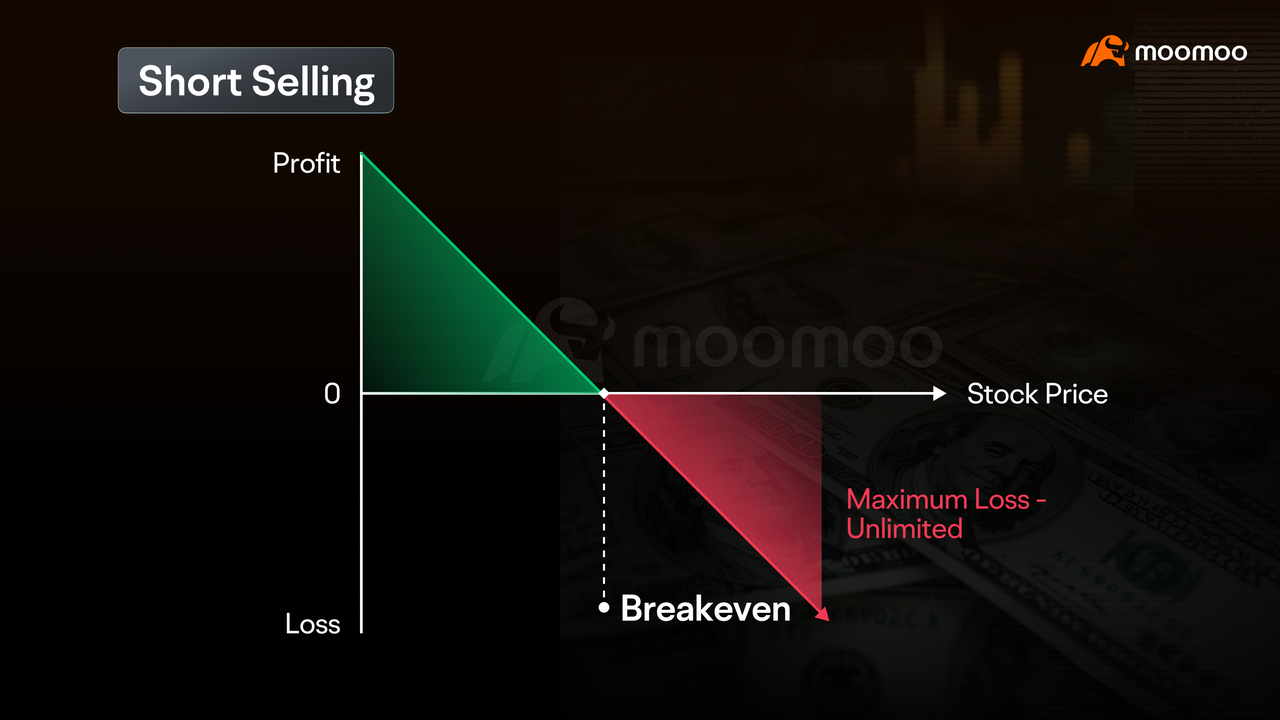
On the flip side, we have "going short" or "short selling." This one's a bit trickier. You borrow shares, sell them immediately, then hope to buy them back later at a lower price.
Short selling is available only to investors with a margin account because it involves borrowing.
When you short sell, you borrow stocks from your broker and sell them immediately. This process does two things: it creates a stock liability in your account (because you now owe those borrowed shares), and it increases your cash (from the sale of the borrowed shares).
With short selling, your gain or loss moves opposite to the stock price. If the stock price goes up, your liability increases, causing losses. If the stock price falls, your liability decreases, generating gains.
The short selling process goes like this:
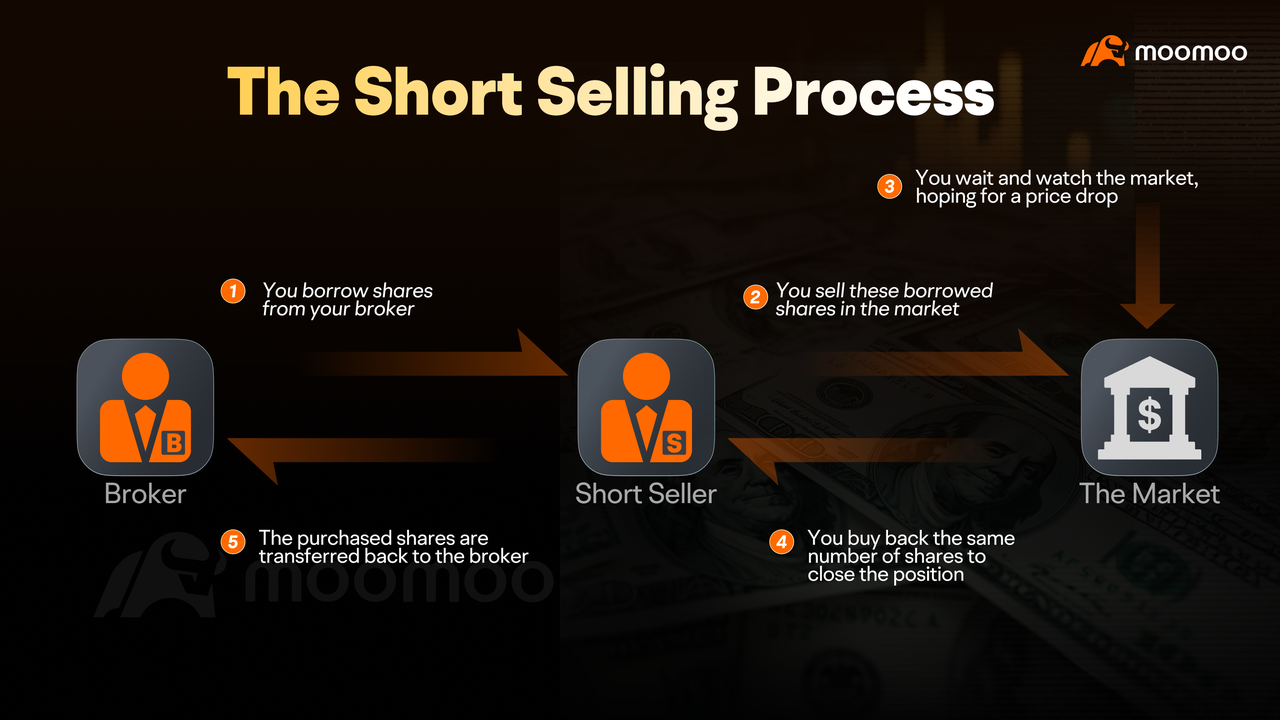
First, you borrow shares from your broker, let's say 100 shares.
Next, you sell these borrowed shares in the market, maybe at $100 per share.
Then, you wait and watch the market, hoping for a price drop.
Let's say the price falls to $90 as you expected, and you decide to buy back 100 shares to close the position.
Finally, the purchased shares are transferred back to the broker.
Short selling profits are straightforward: it's the difference between your selling and buying prices. In this example, excluding fees, selling at $10,000 and buying back at $9,000 would yield a $1,000 profit.
2. How do I short a stock using moomoo?
There are two main steps: setting up a short position and then closing it.
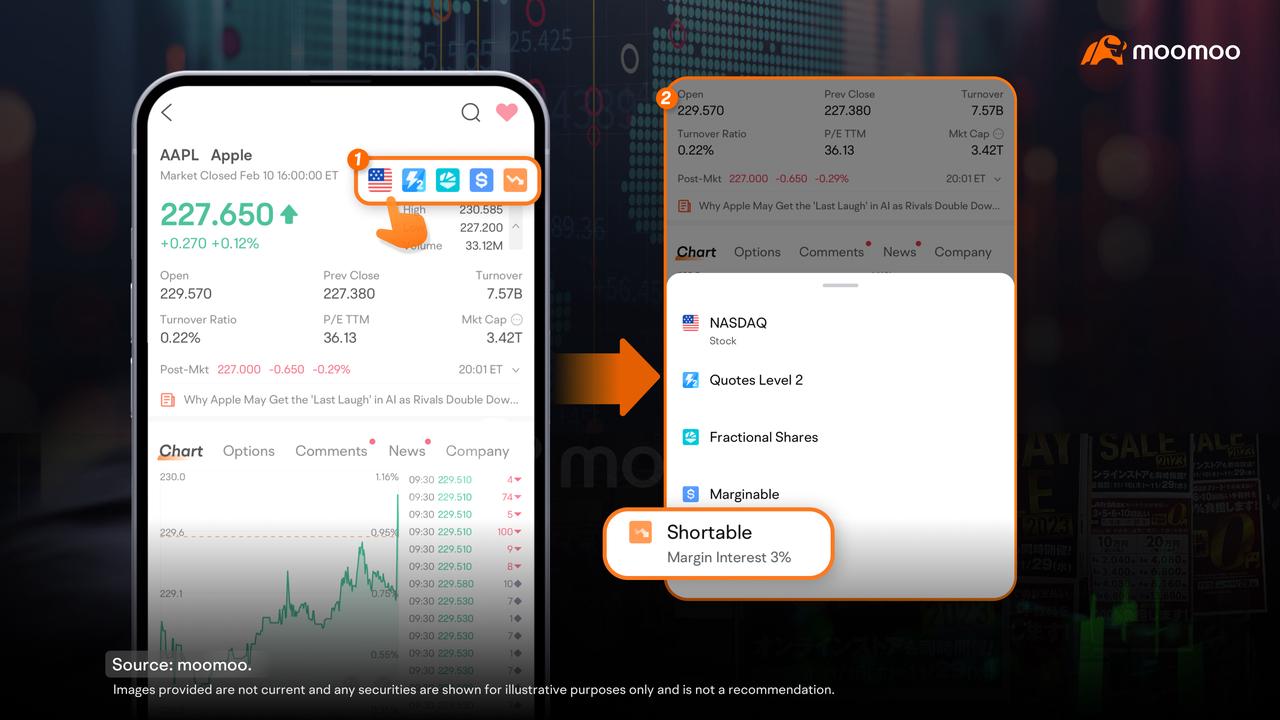
Before we start, remember two importance points. Remember, you need a margin account—cash accounts can't short sell. Second, not all stocks can be shorted.
To check if a stock is shortable, look for the "Shortable" icon in the top-right corner of the stock's Quotes page.
Tap "Trade," enter the Price and Quantity, then hit "Sell." You'll see a "Short Selling Risks" prompt—read it, then tap "Continue" to place your order.
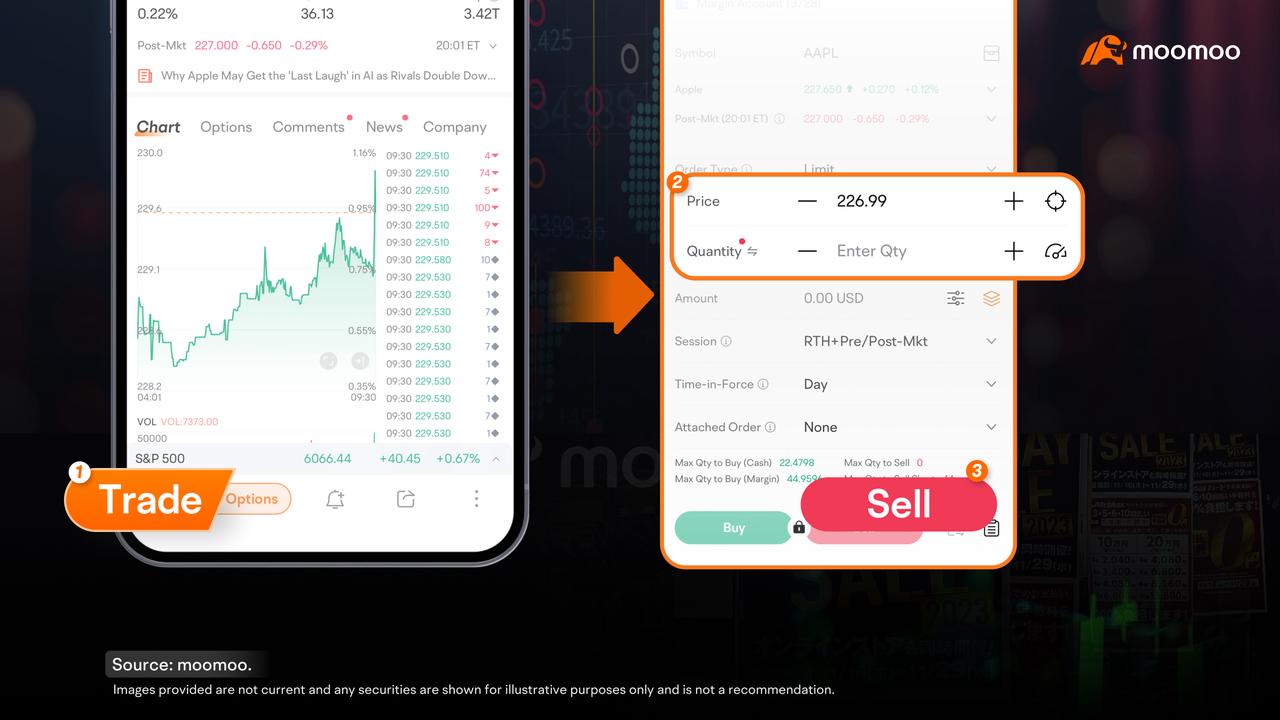
One thing to watch out for: make sure you don't have any existing long position in the stock. If you do, sell that first. Otherwise, your order will close the long position instead of opening a short one.
After your short sell order goes through, keep an eye on it. The Market Value and Quantity will show up as negative numbers—that's your stock liability.
And don't forget the last step—when the time is right, buy back the shares to close your position.
To close a short position, go to the stock's Quotes page and tap "Trade," you'll see the number of shares in your short position in the bottom-left corner, tap it to auto-fill the Quantity, and set the Price and tap "Buy."
After you've placed the order, you'll want to make sure it's gone through. Just scroll down on the stock's Quotes page and tap the "Orders" button. That'll show you all the info about your order.
3. Key considerations of short selling
Let's talk about how to manage your risks when short selling.
First up, short selling is riskier than going long. This is because your profits are limited, but your losses could be unlimited.
Think about it: when you go long, the most you can lose is 100% if the stock drops to zero. But with short selling, if the stock price keeps going up, your losses could go way beyond 100% or your original investment.
That's why it's prudent to avoid shorting stocks that are too volatile. One way to evaluate volatility is to look at the 52-week high and low prices.
Next up, let's talk about costs.
Short selling isn't free—you're paying interest every day you hold the position. And these costs can really add up over time. Plus, the interest rate isn't fixed. If a lot of people are shorting, the rates might go up.
So, have a solid plan, and stick to your profit and loss targets.
Third point, watch out for margin calls and potential forced liquidations.
Short selling creates stock liabilities, so you need enough margin in your account. As the stock price goes up, you'll need more margin. If you don't have enough to meet minimum capital requirements, you might face a margin call or forced liquidation.
A margin call is a request of extra funds or securities to be deposited into a margin account to bring it back up to the required level of maintenance.
Sometimes, if many short sellers are forced to close positions at once, it can cause a "short squeeze." This creates a cycle of rising prices and more short covering. It's more likely to happen with small-cap stocks or those with low trading volume.
So keep an eye on your risk level in the "Account" tab.
Lastly, there's the risk of stock recall.
Remember, you're borrowing shares to short sell. If those shares become unavailable and are recalled, you might have to close your position early.
You can check how many shares are available for shorting in the "Shortable" info on the Quotes page.
Okay, that wraps up our lesson. Remember, while short selling can be useful, most long-term market gains come from going long. The U.S. stock market tends to have longer bull markets and shorter bear markets. Short selling is not appropriate for everyone. So, think of short selling as one potential tool in your kit only. Thanks for tuning in, and see you next time!
Disclosure:
Short selling is the process of selling borrowed stock at the current price, then closing the trade by purchasing the stock at a future time. What this essentially means is that, if the price drops between the time you enter the trade and when you deliver the stock, you turn a profit minus any fees or expenses. Limit and stop orders do not guarantee that an execution will occur because the price may never reach your limit or stop price, or there are other orders ahead of yours.
There is no limit on the rise of a stock price so the potential loss is unlimited for short selling. Other risks include dividend risk and margin risk, this strategy is not appropriate for all investors.
Margin trading entails greater risk, including, but not limited to, risk of loss and incurrence of margin interest debt, and is not suitable for all investors. Please assess your financial circumstances and risk tolerance before trading on margin.
This presentation is for informational and educational use only and is not a recommendation or endorsement of any particular investment or investment strategy. Investment information provided in this content is general in nature, strictly for illustrative purposes, and may not be appropriate for all investors. Read more