Corporate Bitcoin Surge Ignited! Are You Missing Out on This Opportunity?
Key Takeaways
Companies Hold Bitcoin Differently: Some, like Strategy, buy large amounts of Bitcoin to grow their value, while others, like Tesla, hold smaller amounts to mix up their savings, but both approaches carry risks.
Bitcoin Has Benefits and Risks: Bitcoin can act as a hedge against inflation and grow in value, but its price can also potentially drop fast, and there are risks like theft or unclear rules.
Bitcoin Holdings can be Audited: Whether held by a company or an individual, Bitcoin reserves can be audited and verified by working with reputable accounting firms, adding transparency and credibility to the strategy.
Companies Hold Bitcoin Differently: Some, like Strategy, buy large amounts of Bitcoin to grow their value, while others, like Tesla, hold smaller amounts to mix up their savings, but both approaches carry risks.
Bitcoin Has Benefits and Risks: Bitcoin can act as a hedge against inflation and grow in value, but its price can also potentially drop fast, and there are risks like theft or unclear rules.
Bitcoin Holdings can be Audited: Whether held by a company or an individual, Bitcoin reserves can be audited and verified by working with reputable accounting firms, adding transparency and credibility to the strategy.
As we enter mid-2025, Bitcoin is no longer just seen as a risky bet for investors. It is now being used as a strategic asset by companies and even governments. Earlier this year, U.S. Treasury officials discussed how Bitcoin might one day be part of the country’s financial reserves. This led to excitement at the Bitcoin 2025 Conference in Las Vegas (May 27–29), where many companies shared new ways they are using Bitcoin.
One of the most talked-about speakers was Michael Saylor, Executive Chairman of Strategy (formerly MicroStrategy). He called Bitcoin the “ultimate asset for balance sheet resilience.” As more public companies, small-cap firms, and even overseas players embrace Bitcoin (BTC), a new financial trend is emerging. The big question: Are you ready to join or will you just watch?
1. What Are Corporate Bitcoin Holdings?
Corporate Bitcoin holdings refer to when a company decides to buy and hold Bitcoin as part of its financial reserves. Companies pursue this for various reasons: to protect themselves from inflation, to diversify away from traditional holdings like cash or bonds, or to potentially benefit from Bitcoin's long-term price growth. Some companies manage the assets directly, others rely on custodial services, or they might invest through regulated financial instruments like Bitcoin ETFs. In many cases, Bitcoin is viewed as digital gold, representing safety and innovation. The choice to hold Bitcoin often reflects the company's leadership outlook, industry dynamics, and financial goals.
2. Bitcoin Holdings by Public Companies
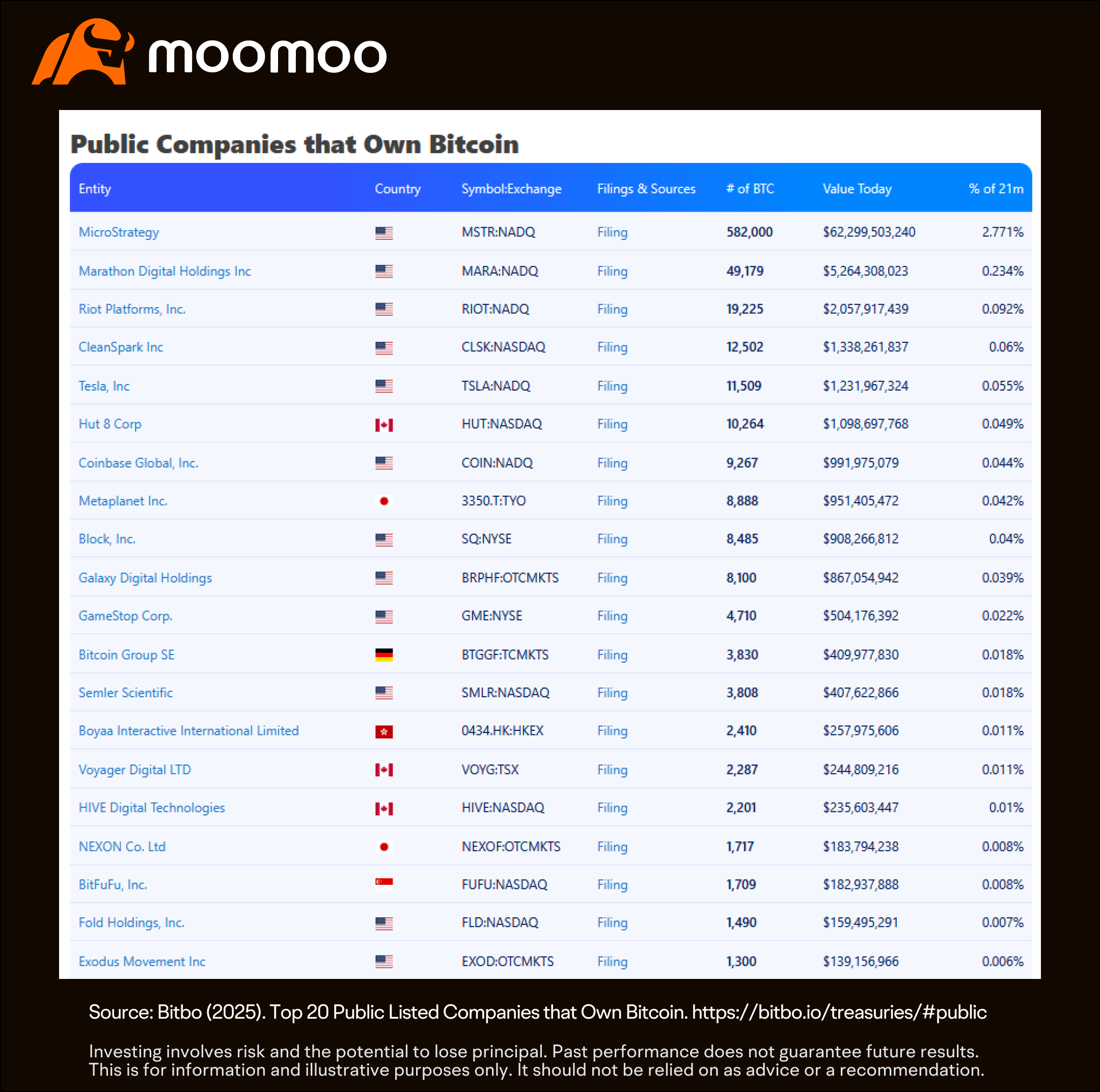
Public companies are increasingly embracing Bitcoin holdings, reflecting diverse industry involvement. MicroStrategy leads with 174,530 BTC valued at $9 billion, a testament to its aggressive strategy under Saylor’s leadership, with holdings growing from $36.47 billion to over $60 billion by mid-2025.
According to Bitbo (2025), over 20 major public companies now hold Bitcoin in their treasuries, and they tend to follow one of two strategies:
(a) Buy and Hold Bitcoin, a Flywheel Approach popularised by Strategy (previously known as MicroStrategy)
(b) Buy Bitcoin and Diversify Balance Sheet
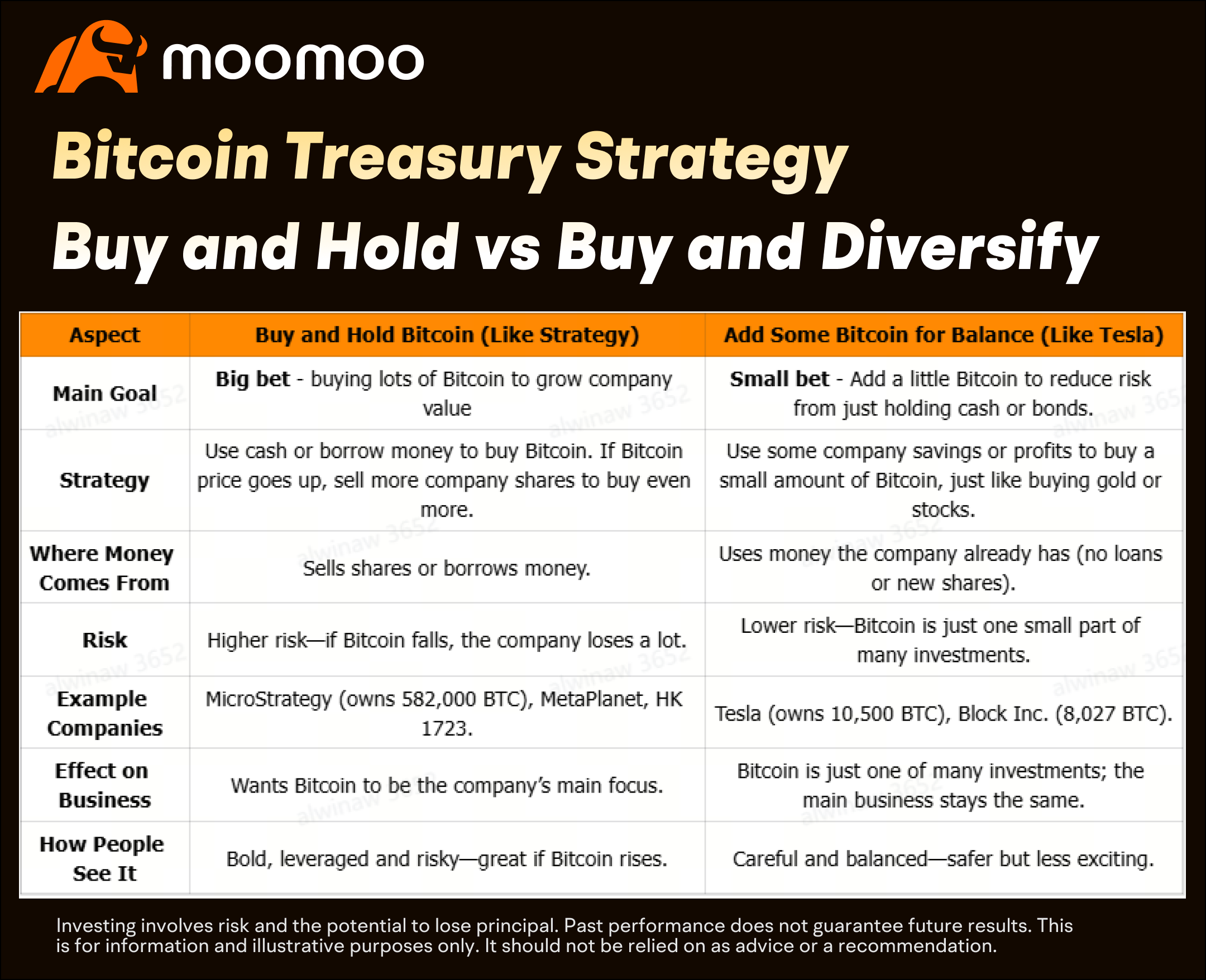
(a) Buy and Hold Bitcoin Approach – The MicroStrategy 'Flywheel'
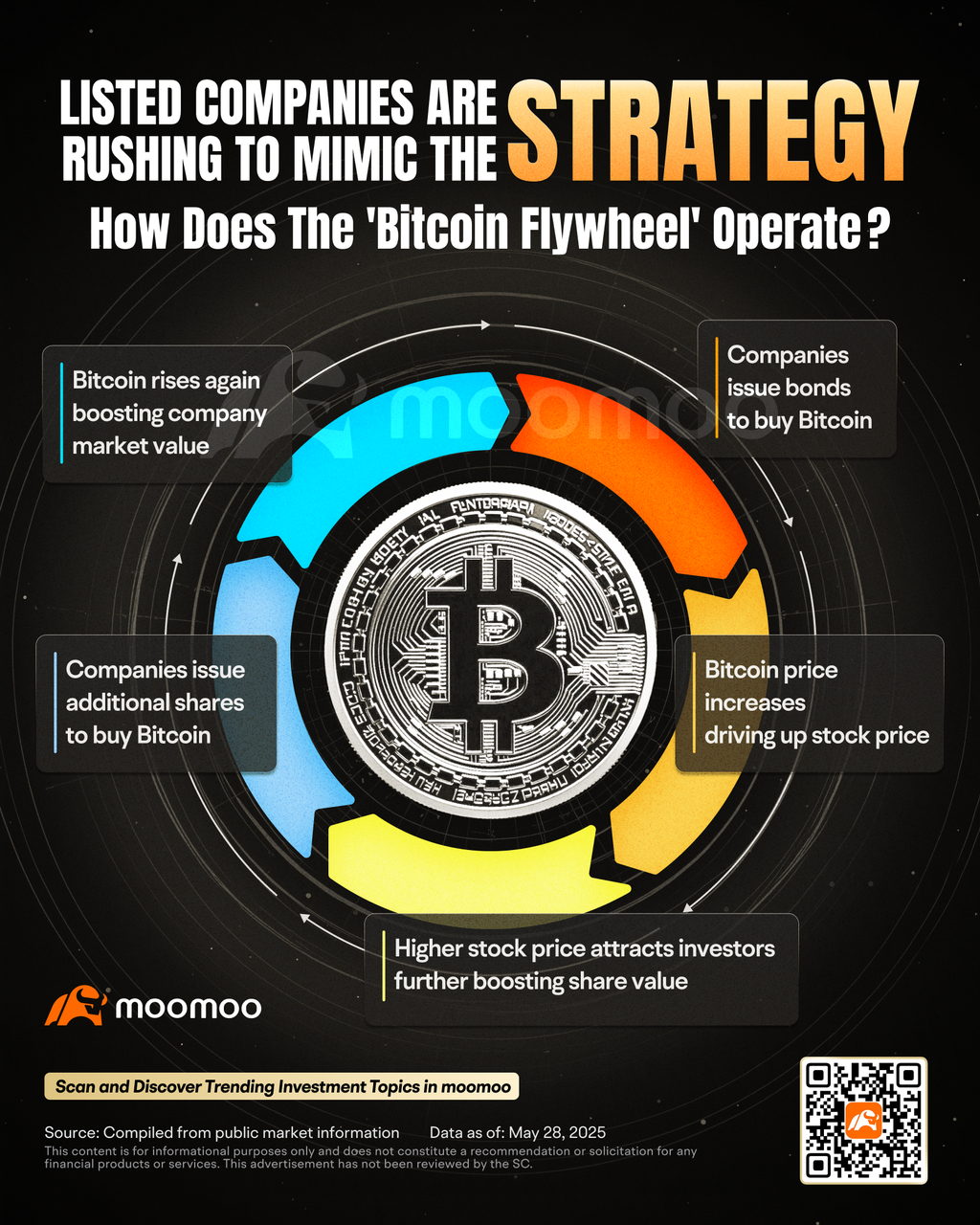
One prominent bitcoin treasury strategy is the "Bitcoin Flywheel", popularized by MicroStrategy. In this approach, a company raises funds by issuing bonds or selling shares, then uses that capital to buy Bitcoin. As the price of Bitcoin increases, the value of the company’s Bitcoin holdings, and often its stock price, also goes up. This makes it easier to raise even more capital, allowing for additional Bitcoin purchases. Over time, the company builds momentum in a cycle of growth and accumulation.
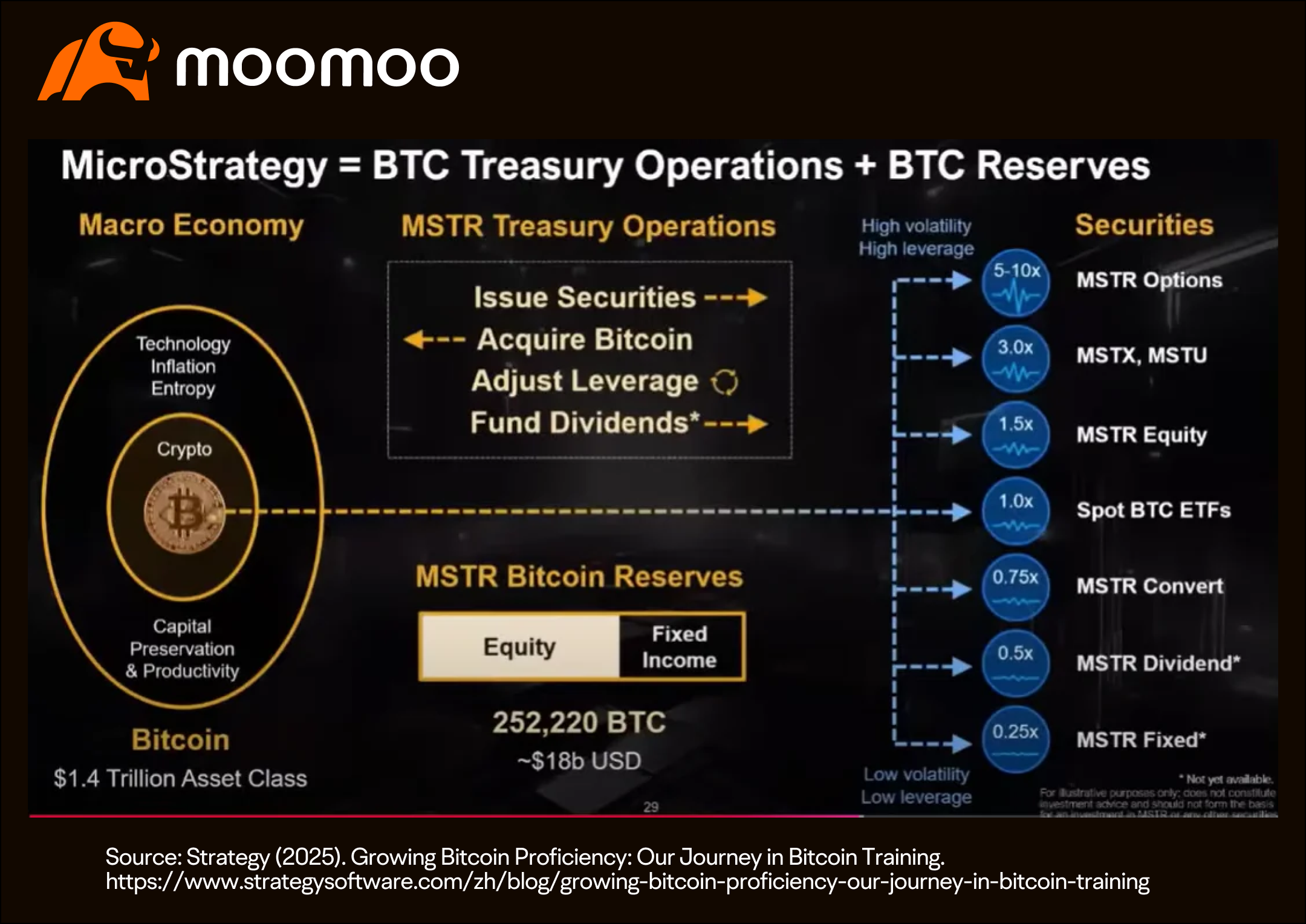
The MSTR flywheel is reshaping corporate treasuries, influencing Bitcoin prices and inspiring dozens of companies. Companies from around the world, like Metaplanet in Japan and HK 1723 in Hong Kong, are also following this idea. They believe Bitcoin's limited supply, growing support from regulators, and increasing popularity make it a good long-term asset.

Other cryptocurrencies are attempting to replicate the Bitcoin treasury model. For example, MemeStrategy (HK 2440) and Upexi (UPXI) are acquiring Solana (SOL) to support a similar treasury reserve strategy. Meanwhile, Ethereum-based platforms such as Sharplink Gaming (SBET), BTCS Inc. (BTCS), and Wellistics Health (WGRX) are building ETH-focused reserves. Additionally, Vivopower (VVPR) has taken a different approach by adopting XRP-based reserves.
However, Bitcoin’s maturity, deep liquidity, and broad regulatory recognition make its flywheel model far more sustainable at this stage compared to Ethereum, Solana, or XRP. Most alternative coin treasury strategies currently lack the scale, institutional trust, and legal infrastructure to match Bitcoin’s impact—at least for now.
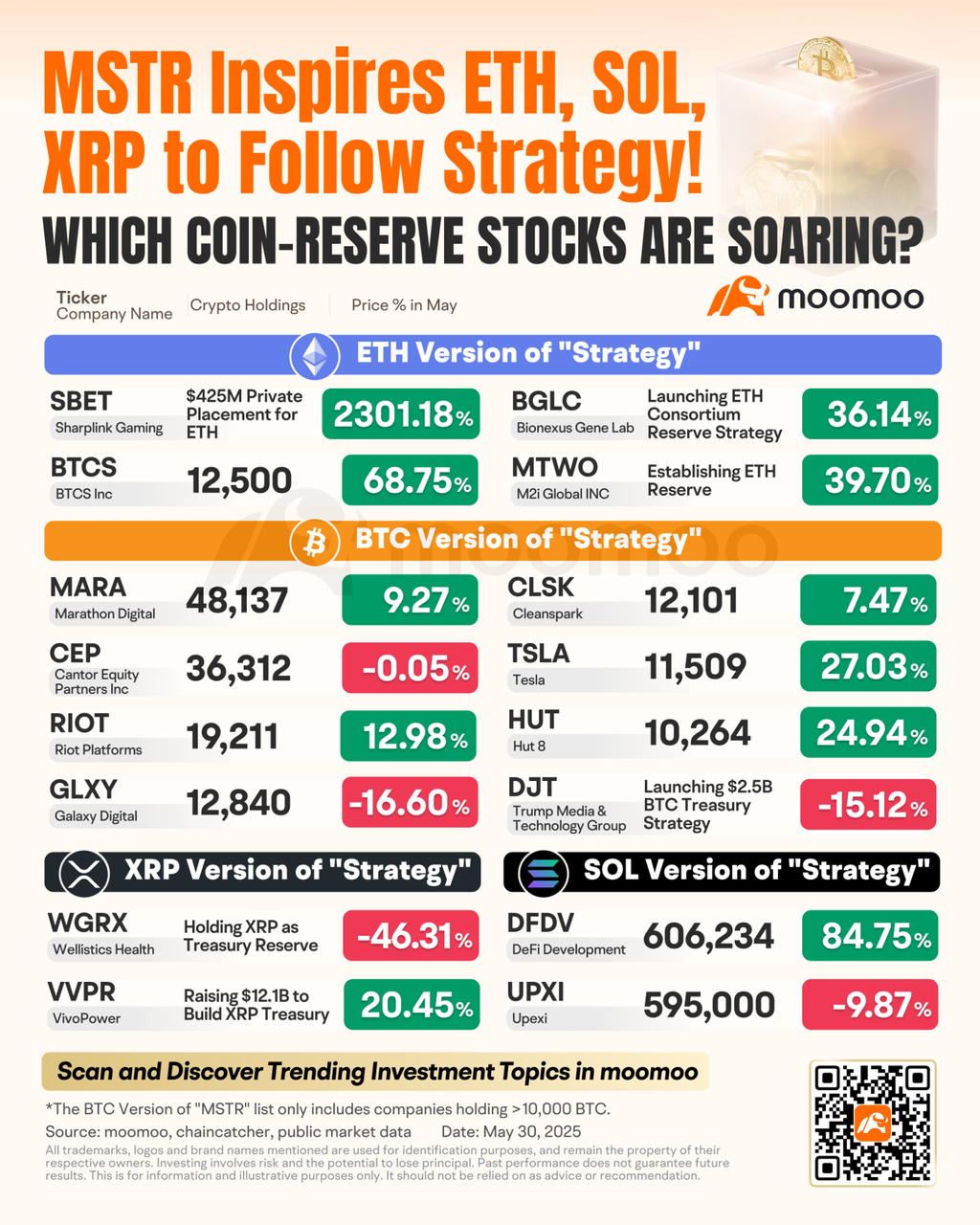
(b) Buy Bitcoin and Diversify Balance Sheet Approach – Risk Mitigation via BTC
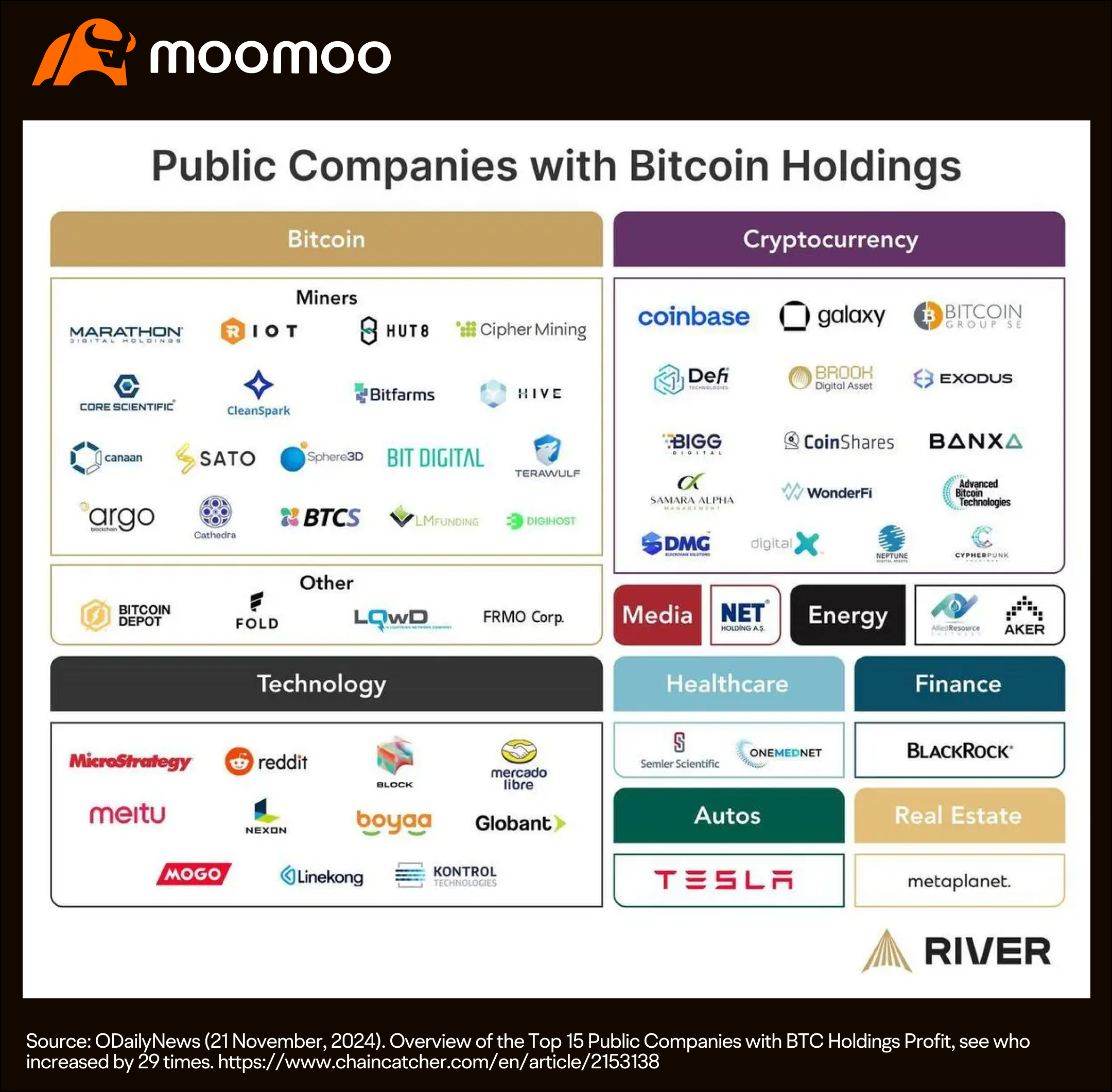
Another strategy is to use Bitcoin as a hedge or diversification tool. Companies in sectors like technology and biotech, such as Genius Group (GNS), Hoth Therapeutics (HOTH), Semler Scientific (SMLR), and LQR House, have added Bitcoin to their reserves. For instance, Genius Group purchased 372 BTC to enhance its financial flexibility. These firms may not yet be profitable, but they see Bitcoin as a symbol of innovation and a way to potentially grow shareholder value. Corporate leaders adopting this method are generally more cautious but still optimistic about Bitcoin's long-term potential.

Recent data highlights how this approach has attracted a diverse set of public companies aiming to balance risk and growth. Businesses like Block, Reddit, Mercado Libre, Globant, and Mogo represent the technology sector's interest in maintaining a modern balance sheet. In healthcare, firms like Semler Scientific and OneMedNet have included Bitcoin to hedge against economic volatility. Even large asset managers like BlackRock in the finance industry have taken exposure through regulated instruments. Notably, companies such as Tesla in the automotive sector have adopted this strategy to preserve value while aligning with future-focused investors. Some of these companies have reportedly seen significant returns, with the top performers achieving as much as a 29-fold increase in the value of their Bitcoin holdings as of mid-2025.
This demonstrates that a diversified balance sheet approach using Bitcoin is no longer a niche. It's becoming a respected part of corporate strategy across multiple industries.
3. Bitcoin Holdings by ETFs
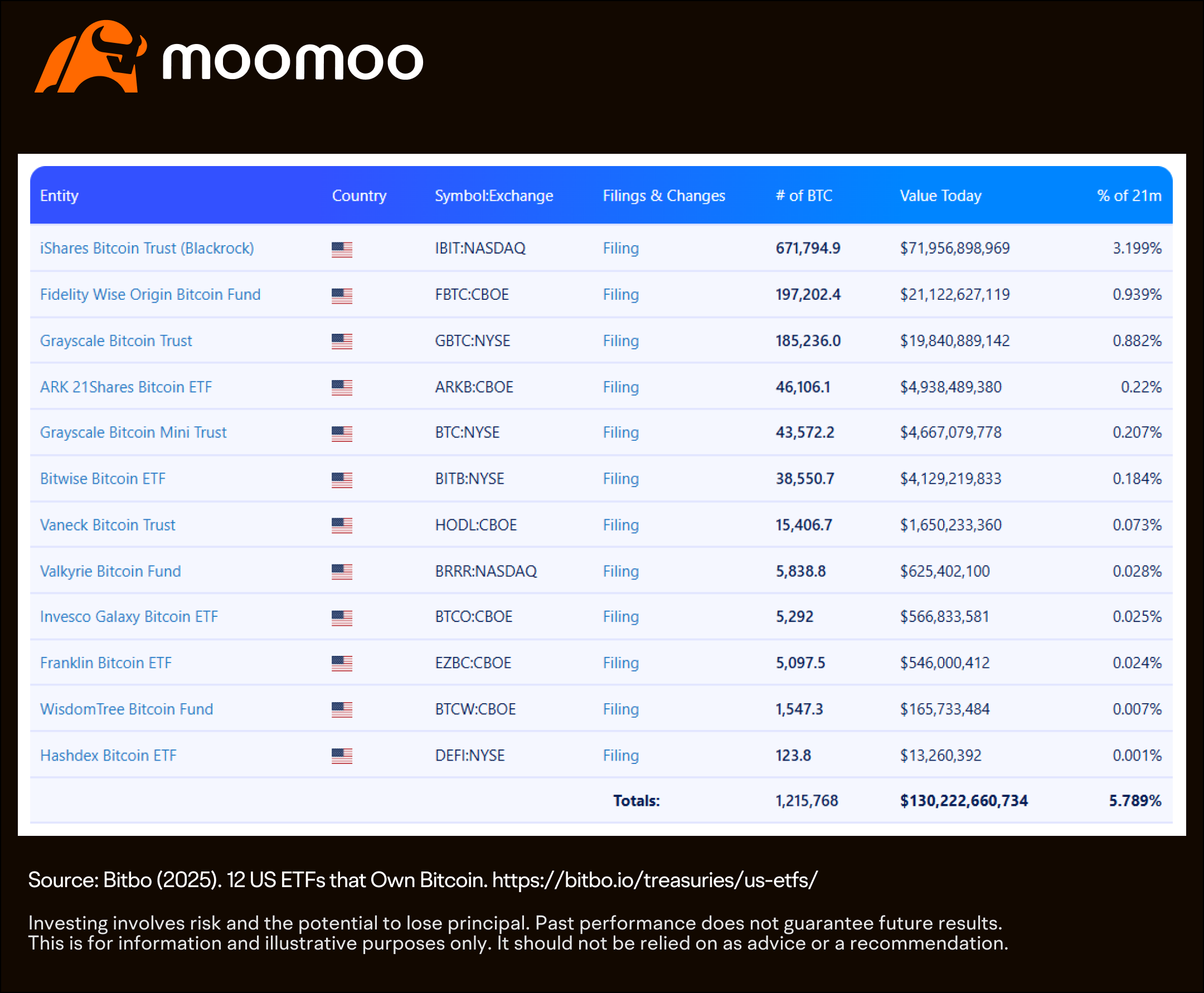
ETFs offer another avenue for corporate and institutional exposure to Bitcoin, providing investors with regulated access. BlackRock’s iShares Bitcoin Trust, one of the largest, tracks Bitcoin’s price and holds significant reserves, appealing to investors seeking indirect ownership without direct custody risks. Other notable ETFs, like the Grayscale Bitcoin Trust and Fidelity Wise Origin Bitcoin Fund, have attracted billions in assets, with inflows surging post-2024 halving as Bitcoin’s scarcity drove demand. These financial products allow companies and individuals to gain exposure without the operational overhead of mining Bitcoin or direct holding of cryptocurrencies, with BlackRock reporting a 15% asset increase in Q2 2025. For traders, ETFs provide liquidity and volatility opportunities, especially during corporate Bitcoin purchase announcements, heightening the urgency to engage as Bitcoin’s market cap approaches $2 trillion
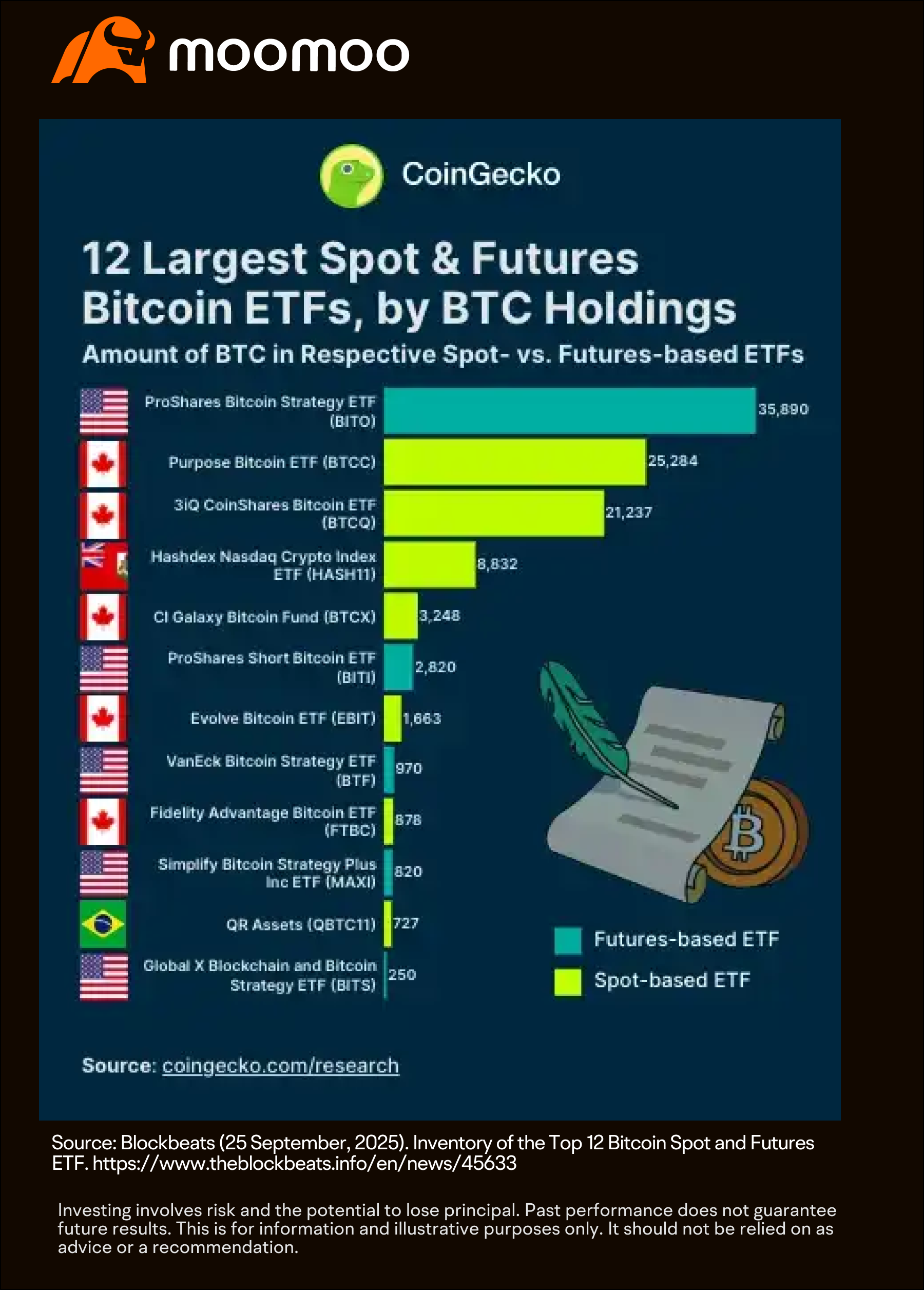
ETFs and ETPs outside the USA have been increasing their Bitcoin holdings in recent years, reflecting a growing interest that has sparked FOMO among investors eager to join a rapidly evolving market. Due to regular rebalancing, the amount of Bitcoin held by these funds tends to adjust in line with changes in its market price. The adoption of Bitcoin ETFs highlights a notable demand, offering investors a straightforward way to gain exposure to crypto without needing to master its technical complexities, simply by investing through regulated financial products. With Bitcoin’s market value currently estimated at approximately $1 trillion, the size of these ETFs represents a fraction of that total, suggesting potential for further development in this sector.
4. Benefits & Risks of Corporate Bitcoin Holdings
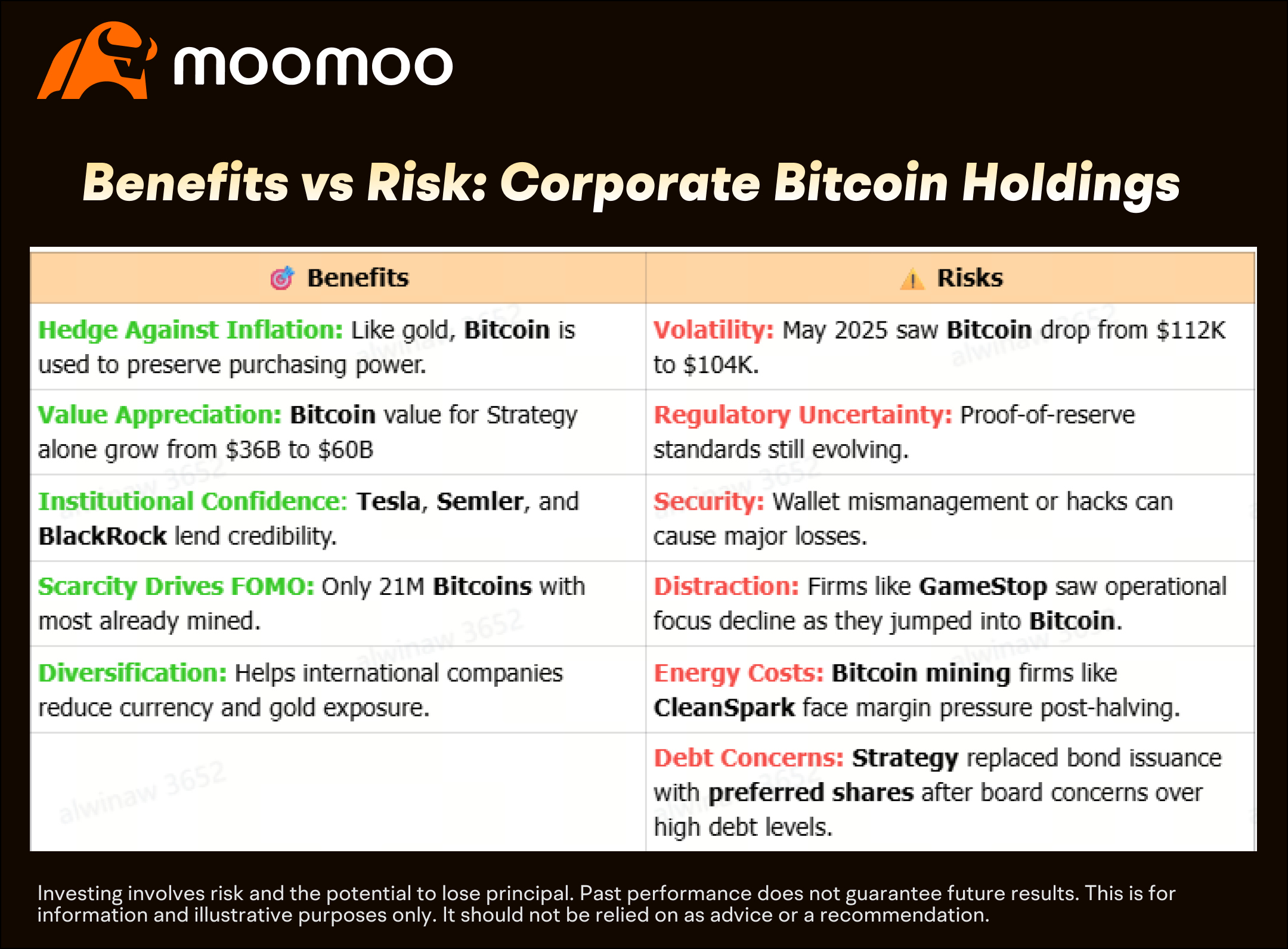
There are clear benefits for companies holding Bitcoin. It acts as a hedge against inflation, much like gold has in the past. When respected companies like Tesla, BlackRock, and Strategy invest in Bitcoin, it builds trust and credibility. Furthermore, Bitcoin’s limited supply of 21 million coins is a feature that supports long-term value appreciation. For international firms, Bitcoin can also reduce dependency on any single currency, offering greater financial flexibility.
However, these benefits come with significant risks. Bitcoin is volatile; for example, its price dropped from $112,000 to $104,000 in May 2025. Regulatory frameworks for holding Bitcoin are still being developed, which can expose companies to compliance uncertainties. Poor custody practices can lead to loss or theft. Additionally, companies that shift too much focus to Bitcoin might neglect their main operations. CleanSpark, a mining company, faces rising energy costs and reduced rewards due to halving events. In response to concerns about debt, Strategy changed its funding method from borrowing to issuing preferred shares, allowing it to continue investing while managing risk.
Michael Saylor’s Vision: Strategy, Not Speculation

At the Bitcoin 2025 conference, Michael Saylor made a bold statement: “Buy Bitcoin to 10x your company; use leverage to 100x—act now before the supply vanishes.” While compelling, this is his personal view, not financial advice. He encourages the use of Bitcoin ETFs for easier access and urges companies to work with reputable accountants for auditing and verification of their holdings.
Saylor also stated, “Bitcoin is not speculation. It’s strategy.” This quote reflects a broader shift among companies who are now viewing Bitcoin not as a gamble, but as a tool for long-term value creation. Still, it’s critical for businesses and investors alike to evaluate all potential risks and opportunities. Whether you’re a company or an individual, now could be the right time to think about how Bitcoin fits into your long-term financial plans.
Disclosure
Before investing in an ETP (Exchange-Traded Product), you should read both its summary prospectus and its full prospectus, which provide detailed information on the ETP’s investment objective, principal investment strategies, risks, costs, and historical performance (if any). You can find prospectuses on the websites of the financial firms that sponsor a particular ETP, as well as through your broker.Moomoo is a financial information and trading app offered by Moomoo Technologies Inc.
Cryptocurrency ETPs are speculative and involve a high degree of risk. An investor may lose all or substantially all of an investment in the Product. Cryptocurrency has historically exhibited high price volatility relative to more traditional asset classes, which may be due to speculation regarding potential future appreciation in value among other factors. The performance of these ETPs should follow cryptocurrency prices closely, minus fees and the fund’s trading costs.
Leveraged and inverse exchange traded products are not designed for buy and hold investors or investors who do not intend to manage their investment on a daily basis. The use of leverage by an ETP increases the risk and is not suitable for all investors and should be utilized only by sophisticated investors who understand leverage risk, consequences of seeking daily leveraged or daily inverse leveraged investment results and intend to actively monitor and manage their investment.
Investing in limited economic sectors involves greater risk and potentially greater return than investing in more diversified investment strategies. To the extent that the investment strategy is concentrated in a limited number of economic sectors, those investments may be subject to legislative or regulatory changes, adverse market conditions and/or increased competition affecting those economic sectors. The prices of the securities of companies in those sectors may fluctuate widely.
Diversification is an investment strategy that can help manage risk within your portfolio, but it does not guarantee profits or protect against loss in declining markets.
This presentation is for information and educational use only and is not a recommendation or endorsement of any particular investment or investment strategy. Investment information provided in this content is general in nature, strictly for illustrative purposes, and may not be appropriate for all investors. It is provided without respect to individual investors' financial sophistication, financial situation, investment objectives, investing time horizon, or risk tolerance. You should consider the appropriateness of this information having regard to your relevant personal circumstances before making any investment decisions. Past investment performance does not indicate or guarantee future success. Returns will vary, and all investments carry risks, including loss of principal. All participants shall be responsible for the comparison and consideration of any relevant fees, charges and costs involved before investing.
This presentation is for informational and educational use only and is not a recommendation or endorsement of any particular investment or investment strategy. Investment information provided in this content is general in nature, strictly for illustrative purposes, and may not be appropriate for all investors. Read more