What is XRP? Crypto Basics for Singapore Beginners
In the bustling world of crypto trading, XRP stands out as a unique and intriguing option for investors, particularly for those in Singapore who are just beginning to dip their toes into the crypto market. With its promise of fast transactions, low fees, and a growing global network, XRP has garnered significant attention in recent years.
On April 9, 2025, cryptocurrencies made a spectacular comeback. President Donald Trump's sudden decision to put tariffs on hold for 90 days triggered a worldwide upswing in risk-taking. This led to Bitcoin surging back above $82,000, while XRP experienced a sharp 13% increase.

But what exactly is XRP, and why should Singaporean beginners consider it as part of their investment portfolio? This guide aims to provide you with a comprehensive understanding of XRP, its origins, how it works, and why it might be worth exploring for your crypto journey.
What is XRP? Basics & Roles
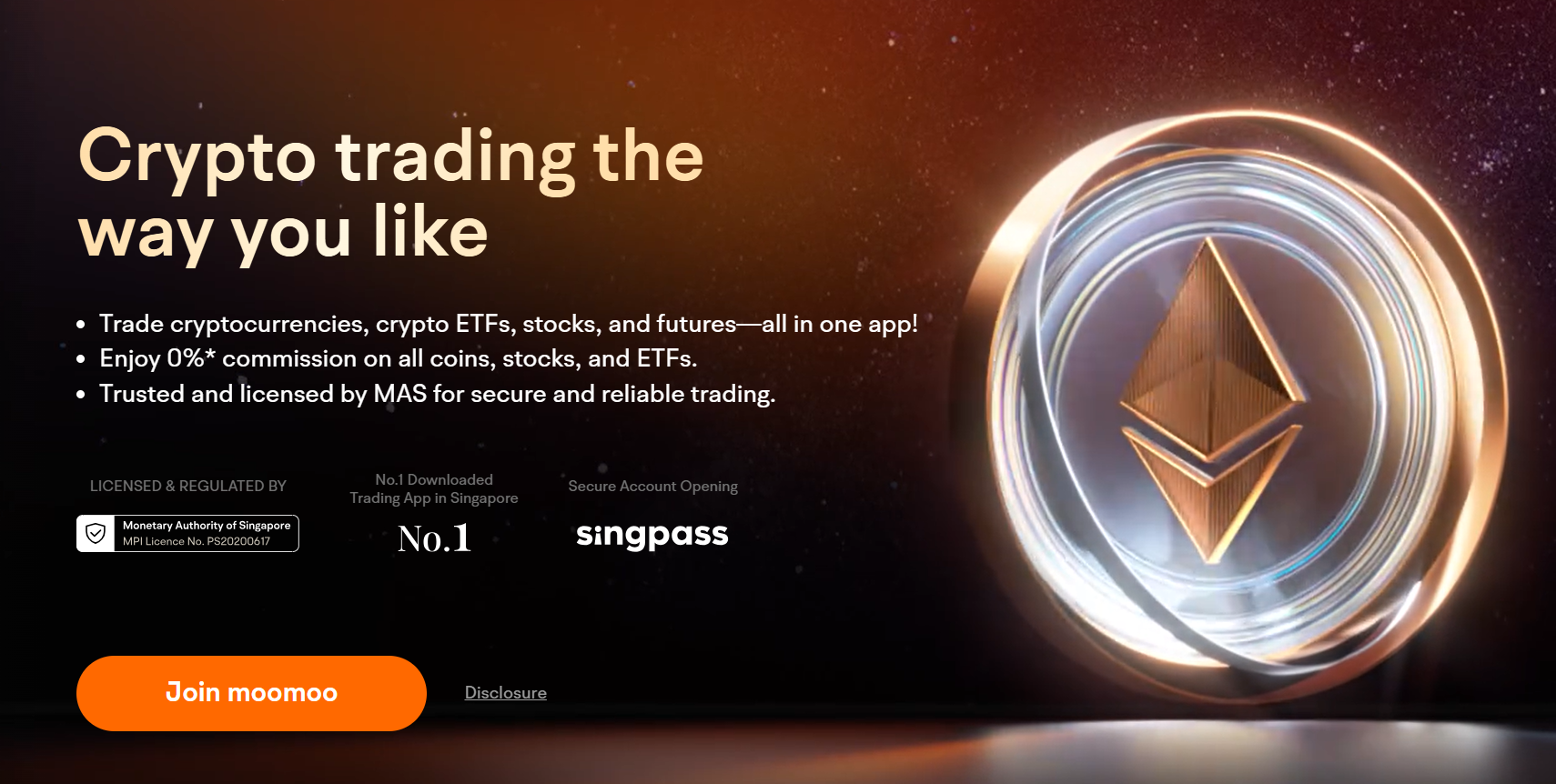
XRP is a high-performance digital asset, also known as cryptocurrency, developed by Ripple Labs (now simply known as Ripple) in 2012. Its inception marked a pivotal moment in the financial technology landscape, with Chris Larsen playing a crucial role in founding the company that developed Ripple, which has been instrumental in the evolution and adoption of XRP for efficient global transactions and partnerships in the financial sector. It is specifically engineered to facilitate rapid and cost-effective cross-border transactions. Operating on its native XRP Ledger (XRPL) - a decentralized blockchain platform - XRP utilizes an innovative consensus protocol that eliminates the need for energy-intensive proof-of-work mining.
This unique architecture enables fast transaction settlement while maintaining exceptional energy efficiency, positioning XRP as a sustainable solution for global payments.
What is Ripple?
Ripple is a pioneering fintech firm specializing in blockchain-based payment infrastructure for financial institutions. At its core lies RippleNet—a decentralized global network that revolutionizes cross-border transactions by delivering unprecedented speed and cost efficiency. By leveraging distributed ledger technology, Ripple eliminates traditional banking pain points, offering financial entities a seamless alternative to legacy systems like SWIFT.
What is the Relationship Between Ripple and XRP?
Ripple, the fintech company driving XRP's adoption, positions the digital asset as a next-generation bridge currency designed to revolutionize cross-border payments. Ripple offers financial institutions a compelling alternative to legacy systems like SWIFT, which often involve higher fees and slower processing times.
While XRP plays a central role in Ripple's payment solutions—including RippleNet and On-Demand Liquidity (ODL)—it operates as an independent digital asset that trades freely on global cryptocurrency exchanges. This dual nature gives XRP both institutional utility through Ripple's ecosystem and open-market accessibility for traders and investors.
XRP Market Performance Latest
Roles of XRP
Cross-Border Payments: XRP serves as an intermediary currency in cross-border transactions, enabling the instant conversion of different fiat currencies. This significantly reduces the time and cost associated with traditional international transfers, which can often take days and incur high fees. Additionally, XRP facilitates faster and cheaper bank transfers, making it a more efficient alternative to conventional methods.
Liquidity Management: Financial institutions can use XRP to optimize their liquidity management by reducing the need for pre-funded accounts, thereby enhancing their operational efficiency. XRP also helps banks manage liquidity more efficiently by providing a reliable and quick settlement mechanism.
Micro-payments: The low transaction fees associated with XRP make it suitable for micro-payment scenarios, such as in-game purchases, content subscriptions, and other low-value, high-frequency transactions. Moreover, XRP eliminates typical currency exchange fees, further reducing costs for micro-payments.

How does XRP work?
XRP functions on the XRP Ledger (XRPL), a decentralized blockchain that employs a distinctive consensus protocol—diverging from traditional proof-of-work or proof-of-stake mechanisms. Instead, a network of independent validators (operated by diverse entities) collaboratively authenticate and sequence transactions. This streamlined process achieves rapid settlement times with negligible fees (fractions of a cent), prioritizing efficiency without compromising security.
Characteristics of XRP: What You Need to Know
XRP stands out with its unique characteristics that address the inefficiencies of traditional financial systems. Its decentralized nature, combined with fast and efficient transactions, low fees, and scalability, makes it a compelling option for various economic applications.
XRP's market cap is a significant indicator of its financial standing in the cryptocurrency market, positioning it alongside major assets like Tether, BNB, and Ethereum.
Feature | Description |
Swift Transactions | Transactions on the XRP Ledger conclude within three to five seconds. This rapid settlement time outpaces Bitcoin and Ethereum significantly. The current value of XRP also plays a role in ensuring quick and cost-effective transactions. |
Low Transaction Fees | The cost of conducting transactions is usually just a tiny fraction of a cent, specifically $0.0002. This makes XRP an extremely low cost and economical option for payments. |
High Scalability | Engineered to manage up to 1,500 transactions per second, the XRP Ledger stands out among blockchain networks for its scalability. Instead of single transaction processing, it batches transactions when the channel closes, finalizing thousands simultaneously without straining the blockchain’s consensus mechanism. |
Energy-saving Performance | In contrast to Bitcoin, which depends on energy-guzzling mining for transaction settlement, XRP validates transactions via a consensus protocol. This approach makes it a more environmentally friendly and sustainable choice. |
Decentralized and Distributed | The XRP Ledger is an open-source system upheld by independent validators across the globe. This setup bolsters its security and transparency. |
How to Buy Crypto on Moomoo SG? XRP Trading Guide
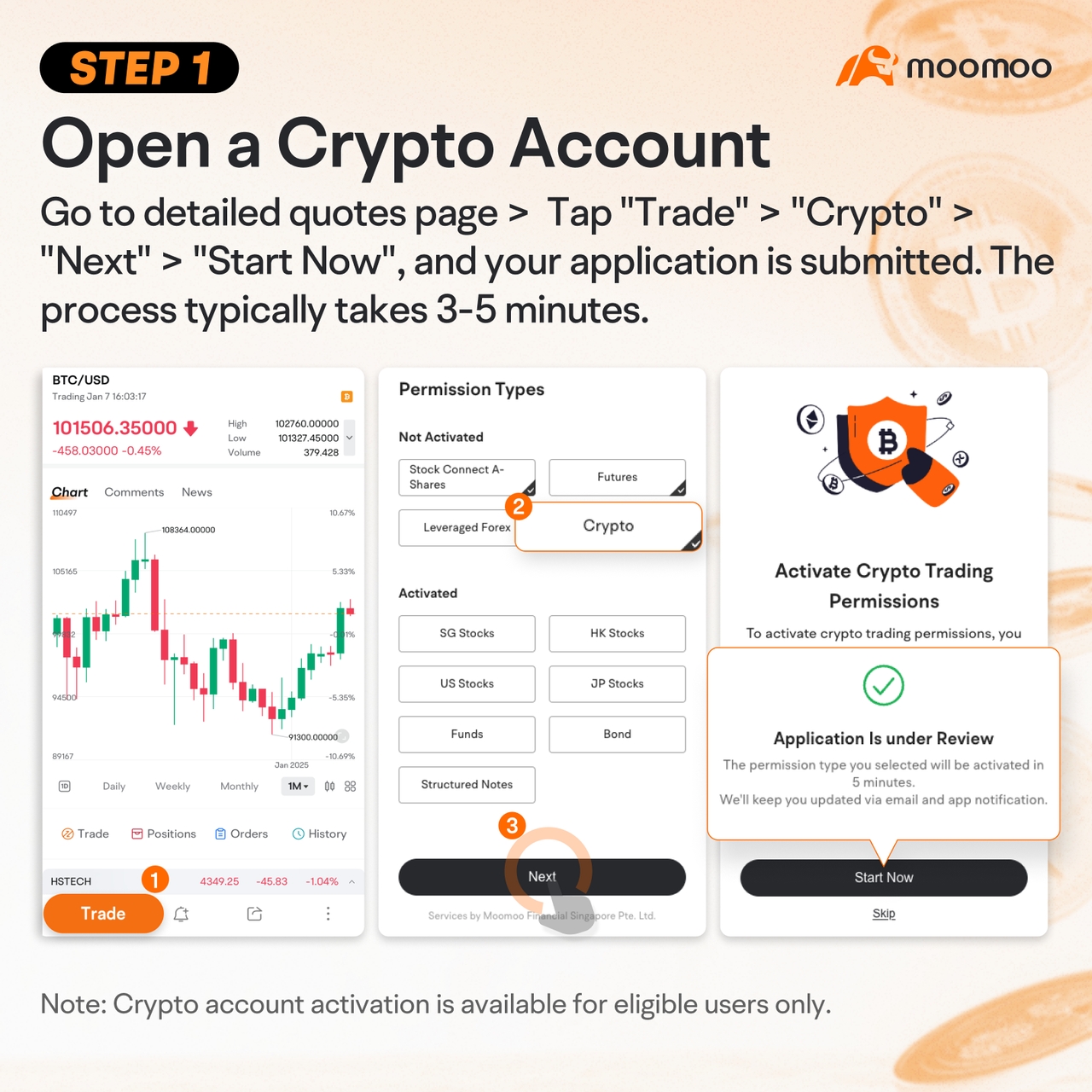
Step 1: Open a Crypto Account
Navigate to the cryptocurrency page. Tap on “Trade”, choose “Crypto”, and then tap “Next”. Conclude by tapping “Start Now” to submit your application. This procedure will be finalized within 3-5 minutes.
You can also click this link to open your crypto account directly!
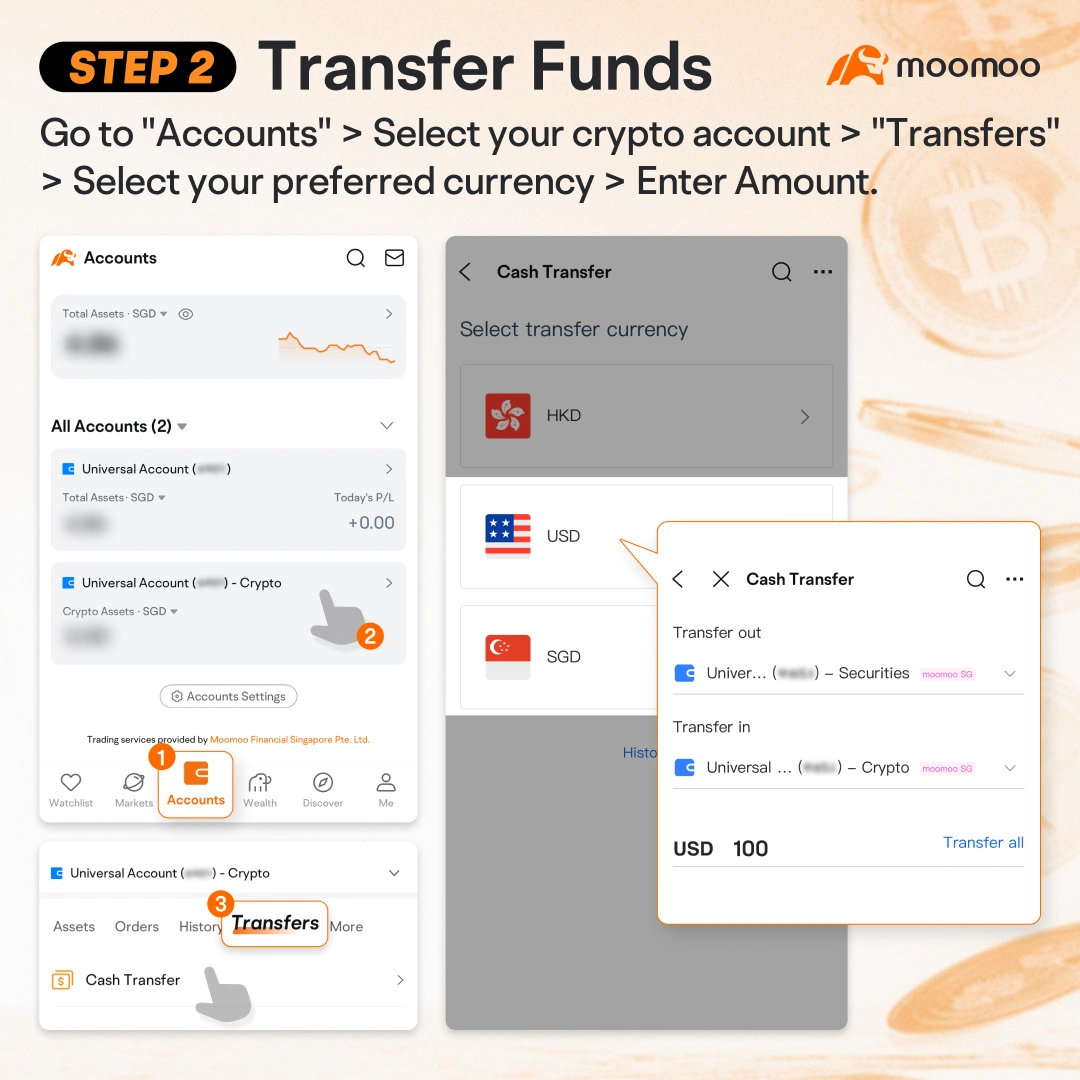
Step 2: Transfer Funds
Head to "Accounts", choose your crypto account (such as Universal Account – Crypto). Then, select "Transfer", pick your preferred currency (either USD or SGD), enter the amount you wish to transfer, and confirm the transaction.
>> Limited-Time Rewards: Hurry! Open an account now and get exclusive welcome rewards & transfer-in rewards!
Step 3: Commence Trading
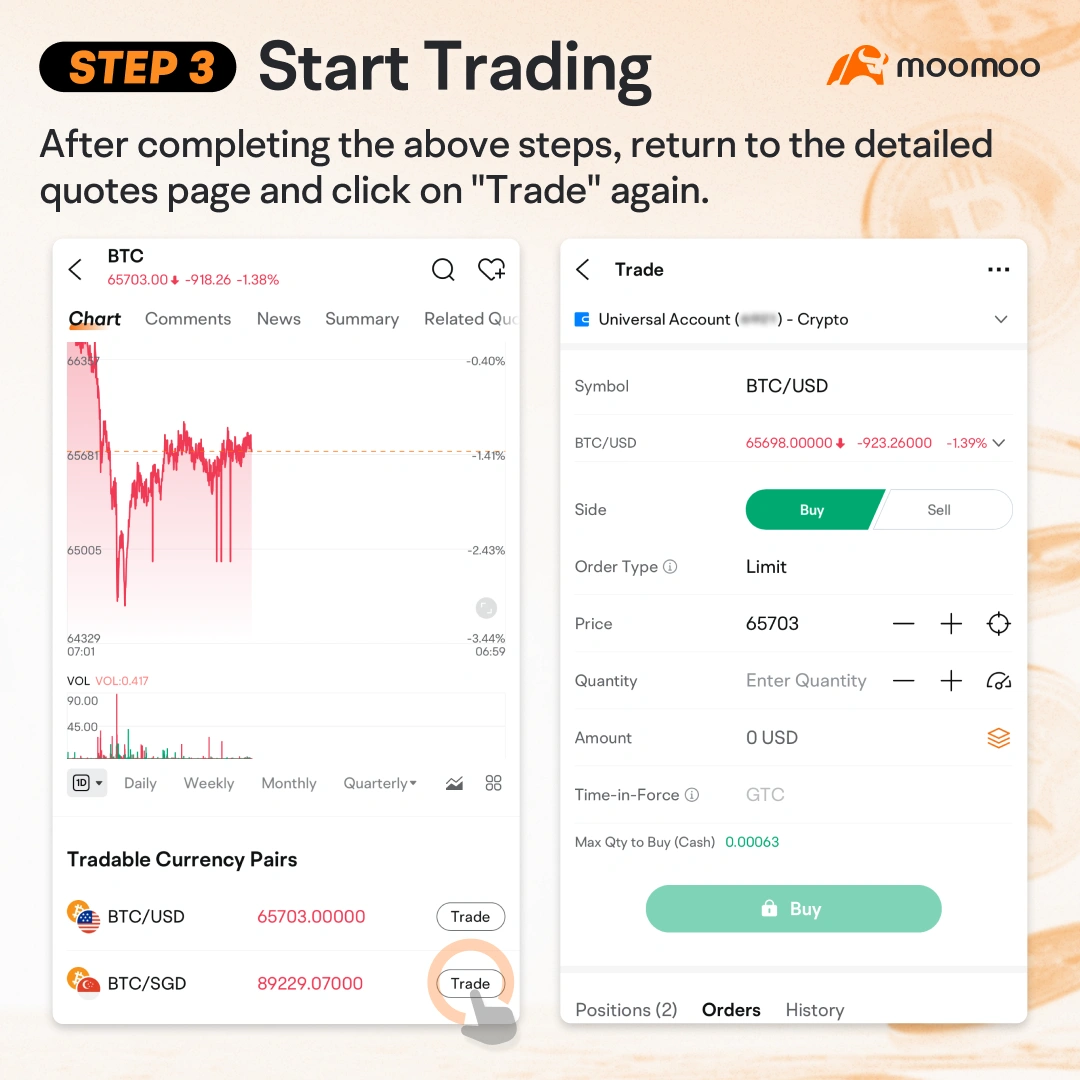
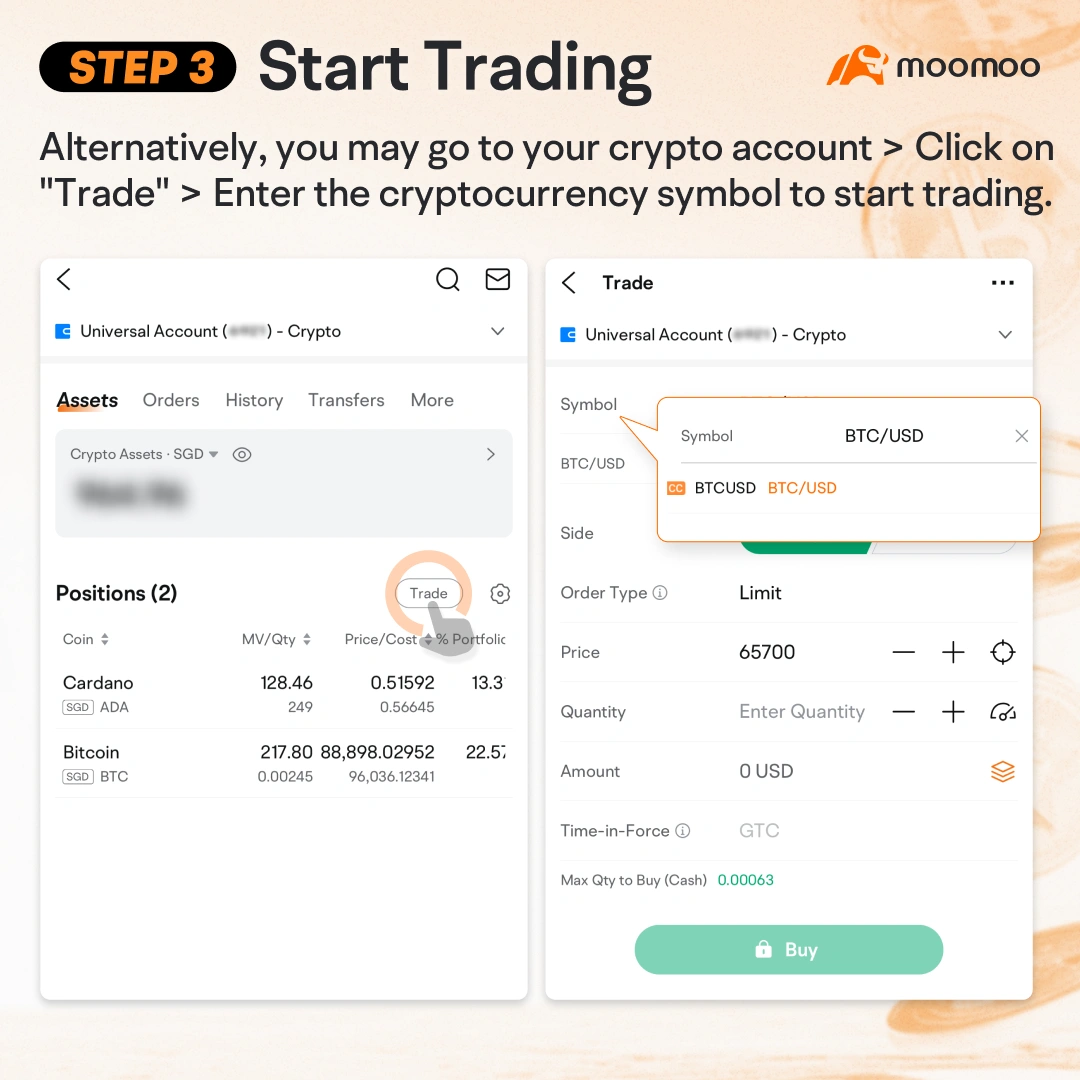
Return to the Detailed Quotes page and click "Trade" again. Alternatively, you can go directly to your crypto account, click "Trade", and enter the cryptocurrency symbol to start trading.
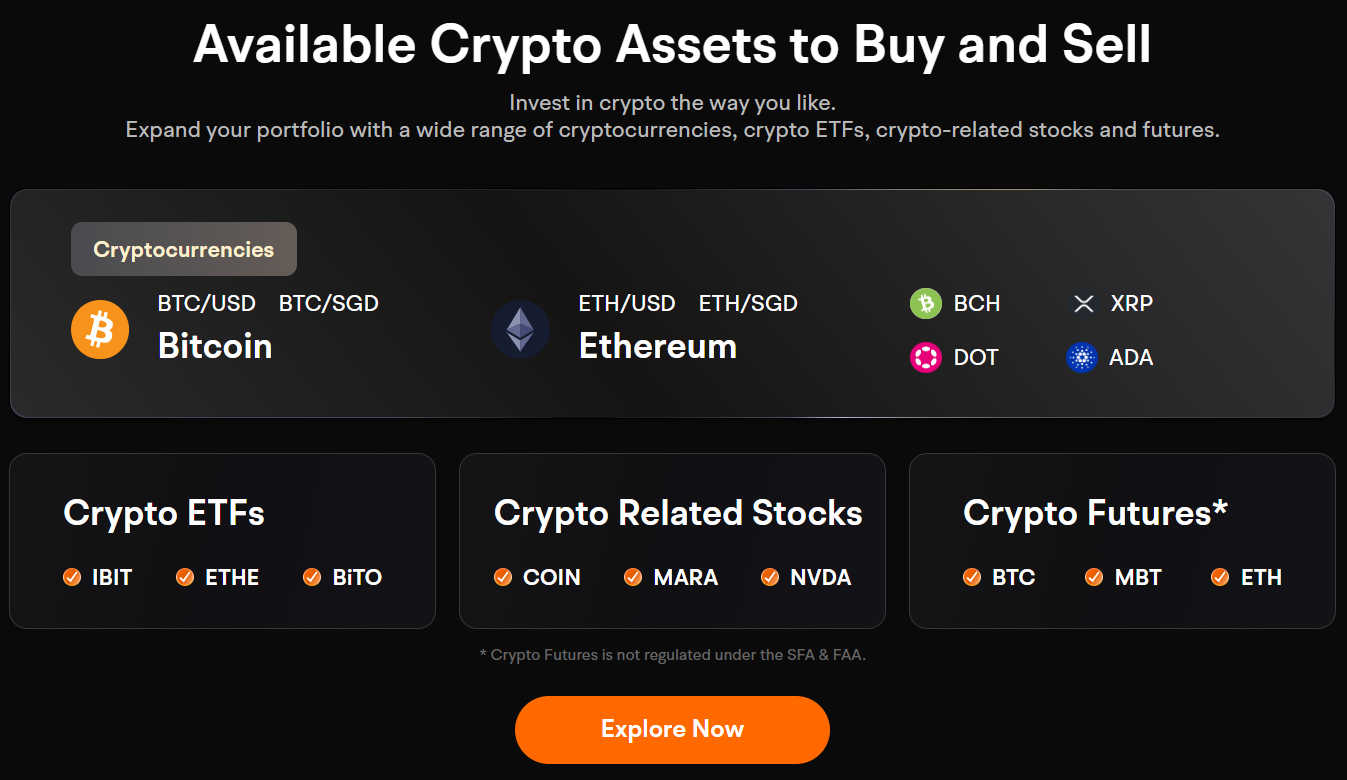
You have several options. You can choose a trading pair like BTC/USD, an ETF such as IBIT, a stock like COIN, or a futures contract like BTC.
Determine the quantity you want to buy or sell, and then confirm your order. This step is crucial as it executes your trading strategy.
XRP to SGD: Key Considerations for Traders
Trading XRP for Singapore Dollars (SGD) can be a lucrative venture for traders, but it’s crucial to understand the key considerations that can impact your trading decisions. Recently, the amount of XRP traded has seen significant fluctuations, with millions of dollars worth of XRP traded over the last 24 hours, impacting market dynamics and trading strategies.
Market Volatility: Cryptocurrencies, including XRP, are known for their volatility. Prices can fluctuate dramatically within short periods, presenting both opportunities and risks for traders. For instance, in the past week, the total amount of XRP traded has ranged from $50 million to $100 million daily, highlighting the importance of monitoring trading volume and price changes.
Regulatory Environment: Singapore has a clear regulatory framework for cryptocurrencies, which can impact the legality and security of your trades. Ensure you’re trading on a platform that complies with MAS regulations to avoid any legal complications.
Technical Analysis: Understanding technical indicators and chart patterns can help predict future price movements of XRP. The tools and resources available on Moomoo SG can assist in analyzing these trends.
Converting XRP to other currencies (e.g., Singapore Dollar)
Converting XRP to other currencies, such as the Singapore Dollar (SGD), is a straightforward process. You can use online conversion tools or cryptocurrency exchanges to convert XRP to SGD. The current conversion rate of 1 XRP to SGD is S$2.67, but this rate may fluctuate depending on market conditions. To convert XRP, simply select a reputable cryptocurrency exchange that supports XRP trading, enter the amount of XRP you wish to convert, and follow the platform’s instructions. Conversion tables can also help you determine the value of XRP in SGD for different trading amounts, making it easier to plan your transactions.
XRP vs. Bitcoin: What's the Difference?
Bitcoin was created as a decentralized substitute for traditional currency, setting out to operate outside the centralized financial framework. In contrast, XRP was developed to collaborate with banks, with the goal of enhancing and simplifying the current financial systems. The Ripple Protocol is an innovative payment system that enhances global money transfers by overcoming the shortcomings of traditional financial networks.
There are several key distinctions between Bitcoin and XRP. Ripple utilizes its own token, XRP, to facilitate quick and cost-effective currency exchanges for banks and financial institutions. This contrasts with traditional systems like SWIFT that are slower and more expensive.
Comparison Aspect | XRP | Bitcoin |
Transaction Speed | Completed in 3 to 5 seconds | Takes anywhere from 10 minutes up to an hour |
Transaction Cost | Usually incurs a cost of less than a cent | Transaction fees can be significantly higher, especially during high network traffic |
Consensus Mechanism | Depends on a consensus protocol with independent validators | Utilizes the proof-of-work system, requiring substantial resources for mining |
Supply Limit | Has a predefined supply of 100 billion coins, all pre-mined | Has a maximum supply of 21 million coins, gradually mined over time |
Energy Consumption | Energy-efficient as it doesn't involve mining | The system consumes an enormous amount of energy |
Understanding the History of XRP
In the early days of 2011, developers David Schwartz, Jed McCaleb, and Arthur Britto were intrigued by Bitcoin’s potential but deeply concerned about its energy consumption and scalability issues. They feared that as Bitcoin mining activities increased, energy consumption would skyrocket, and the network’s limited scalability could hinder its potential as an efficient global value transfer tool. Chris Larsen joined the team shortly after, playing a crucial role in founding Ripple and driving its mission forward.
In response to these challenges, Schwartz, McCaleb, Britto, and Larsen set out to create a more sustainable and efficient value transfer system, leading to the inception of the Ripple project. Ripple is not merely an open-source initiative. It also comprises a distinct consensus ledger known as the Ripple Consensus Ledger, a transaction protocol called the Ripple Transaction Protocol (RTXP), a network infrastructure, and a digital asset. Initially, this digital asset was referred to as “Ripple,” but to avoid confusion with the project name, the community later began calling it “XRP.”
In June 2012, after a year of hard work, Schwartz, McCaleb, and Britto finished coding the XRP Ledger and finalized its distributed ledger tech. The XRP Ledger was made to do fast, cheap, and safe transactions. It uses validator nodes to reach an agreement. These nodes gather transactions and decide together, and the ledger can confirm transactions in 3 - 5 seconds.
Though XRP is linked to Ripple, the XRP Ledger is an open-source blockchain not controlled by the company. Ripple helps by running nodes on the XRPL network, but it doesn’t directly control XRP holding, trading, or use.
Since its inception, XRP has become well-known in finance, especially for cross-border payments and remittances. This is because it has quick transaction times, low fees, and high efficiency. Now, XRP is the main asset to RippleNet, a global payment network. It helps financial firms and people make fast and cheap money transfers.

XRP Ledger and Technology
The XRP Ledger is an open-source, permissionless, and decentralized technology that was launched in 2012. Known for its efficiency, the XRP Ledger can process transactions at a cost of just $0.0002, making it one of the most cost-effective options available. It can handle up to 1,500 transactions per second, significantly outpacing many other cryptocurrencies. Additionally, the XRP Ledger is energy-efficient and carbon-neutral, making it an environmentally friendly choice. The ledger also features a decentralized exchange (DEX) and custom tokenization capabilities, allowing for a wide range of applications beyond simple transactions. These features make the XRP Ledger a versatile platform for various use cases, from financial services to digital asset management.
Is XRP Legal in Singapore? Crypto Regulations Explained
Singapore has taken a proactive approach to regulating cryptocurrencies, with the Monetary Authority of Singapore (MAS) serving as the primary regulatory body. MAS has implemented a framework that classifies digital tokens based on their characteristics and use cases, which directly impact their legal status and the regulatory requirements they must adhere to.
Moomoo SG is Licensed by MAS
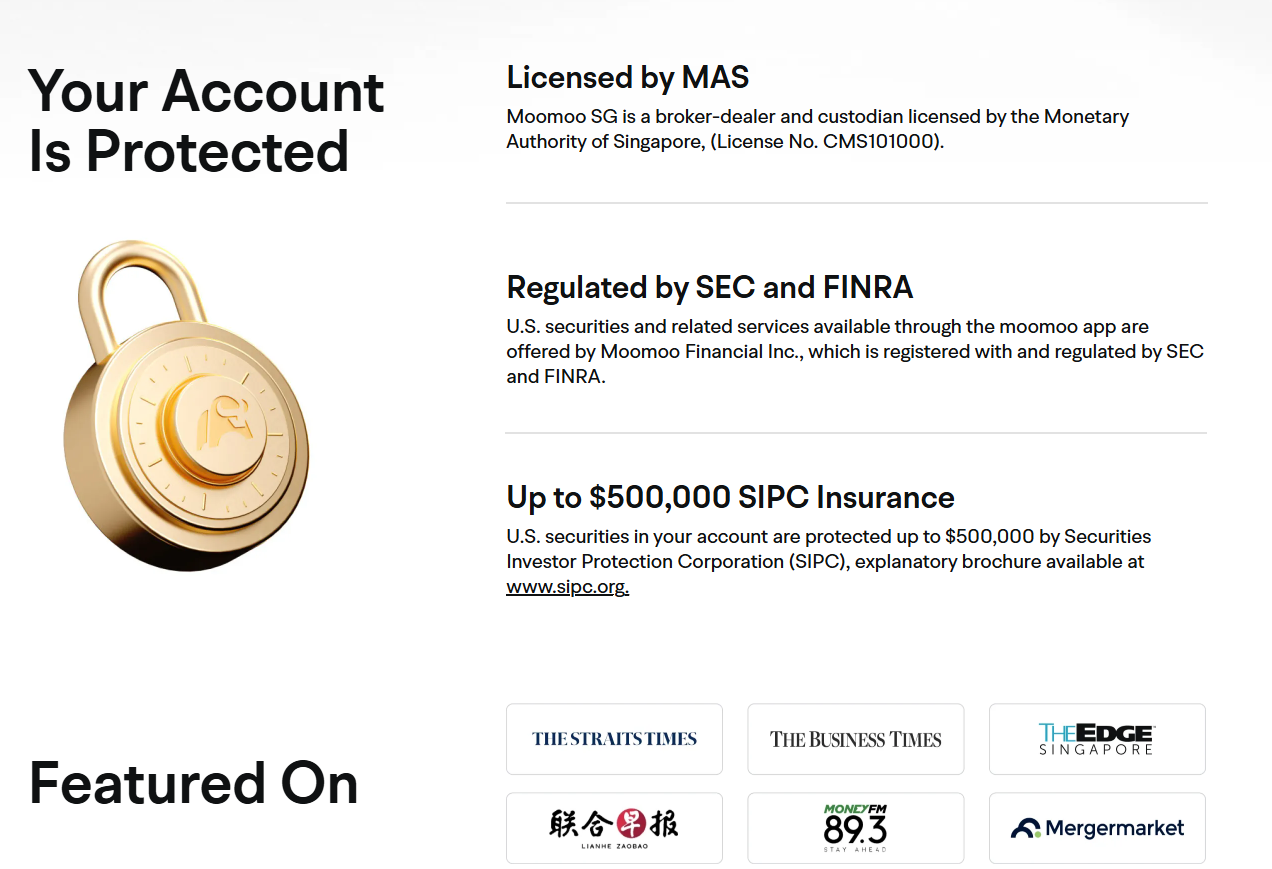
As a platform trusted and licensed by MAS, Moomoo SG is committed to providing a safe and secure environment for investors to explore the world of cryptocurrencies.
Pros and Cons of XRP
XRP offers blazing-fast transactions, ultra-low fees, and high scalability. This unique combination of speed, cost-efficiency, and enterprise-grade scalability makes it particularly valuable for cross-border settlements and institutional liquidity solutions.
Unlike proof-of-work networks that consume massive energy, XRP's innovative consensus protocol operates with less energy than traditional systems, offering an environmentally sustainable alternative. The cryptocurrency's fixed supply of 100 billion units-with transparent, scheduled escrow releases, provides monetary policy certainty absent in inflationary fiat systems.
Challenges Facing XRP
XRP continues to grapple with significant headwinds, chief among them persistent regulatory ambiguity. While Ripple secured a partial victory against the SEC (ruling XRP isn't a security for public sales), the ongoing legal saga has created a cloud of uncertainty—particularly regarding institutional use—that continues to deter some market participants.
The network also faces criticism over perceived centralization, stemming from Ripple's control of 45 billion escrowed XRP and its influence over validator selection. These concerns conflict with crypto's decentralization ethos, potentially limiting broader ecosystem support.
Market dynamics present additional challenges: Ripple's programmed release of 1 billion XRP monthly creates consistent sell pressure, while competition intensifies from agile stablecoin issuers, government-backed CBDCs, and next-gen payment blockchains.

Trading Hours: What's the Best Time to Trade XRP?
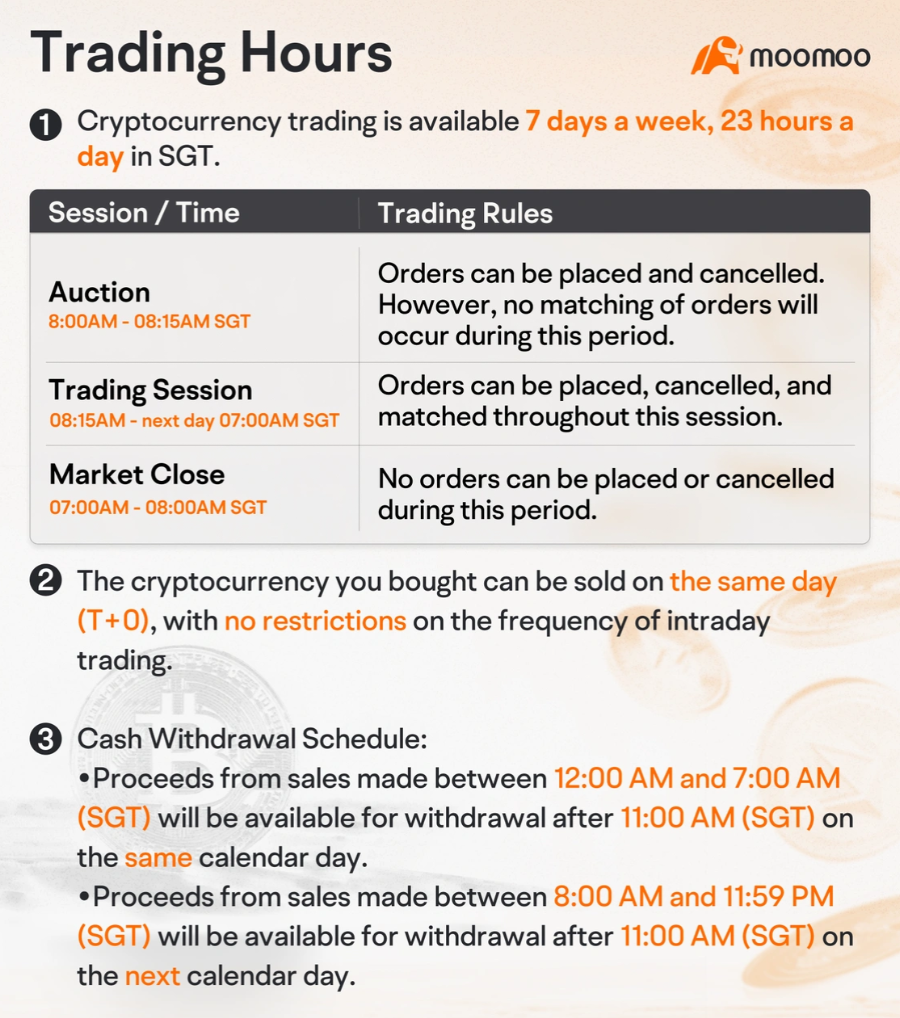
Crypto trading offers flexibility with its trading hours. In Singapore Time (SGT), cryptocurrency trading is accessible 7 days a week, 23 hours a day.
Session Details
Auction (08:00 AM - 08:15 AM SGT): During this short period, traders can place and cancel orders. However, it's important to note that orders will not be filled during the auction session. This serves as a preparatory phase for the trading day, allowing market participants to set up their positions and intentions.
Trading Session (08:15 AM - next day 07:00 AM SGT): This is the main window for active trading. Orders can be both placed and cancelled, and most importantly, they will be filled during this time. It provides an extended period for buying and selling cryptocurrencies, enabling traders to react to market movements and execute their trading strategies.
Market Close (07:00 AM - 08:00AM SGT): As the name suggests, during this hour, the market is closed. No orders can be placed or canceled. It gives the market a brief pause before the new trading cycle begins with the auction session.
Additional Rules
Same-Day Trading: One of the advantages of crypto trading is the T+0 settlement. This means that the cryptocurrency you purchase can be sold on the very same day. There is no limit on how frequently you can engage in intraday trading, allowing for quick profit-taking or risk-mitigation strategies.
Withdrawal Rules: The timing of cash withdrawals from cryptocurrency sales also follows specific rules. Generally, cash from selling between 12AM - 7AM (SGT) can be withdrawn after 11AM (SGT) on the same day. For sales made between 8AM - 11:59PM (SGT), the cash can be withdrawn after 11AM (SGT) on the next day. These rules help manage the liquidity and operational aspects of the trading platform while ensuring that traders have access to their funds in a timely manner.
Understanding these trading hours and associated rules is crucial for any crypto trader to make the most of their trading opportunities and manage their assets effectively.
Why Trade Crypto with Moomoo SG
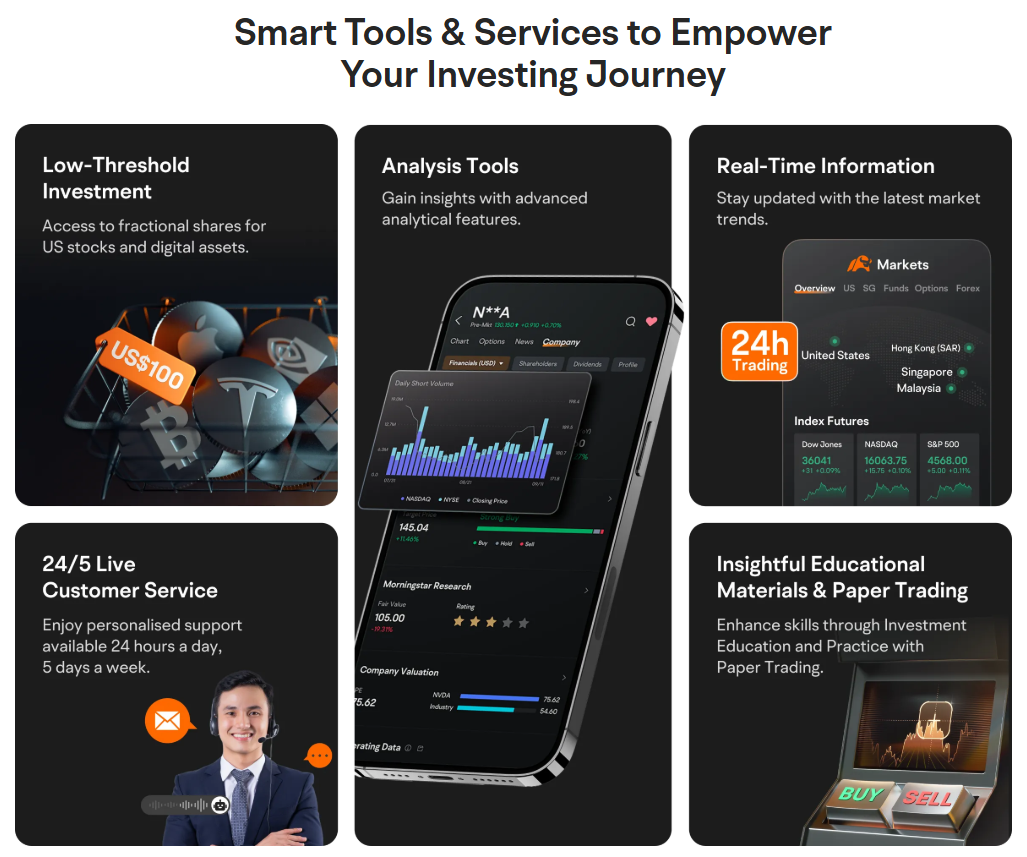
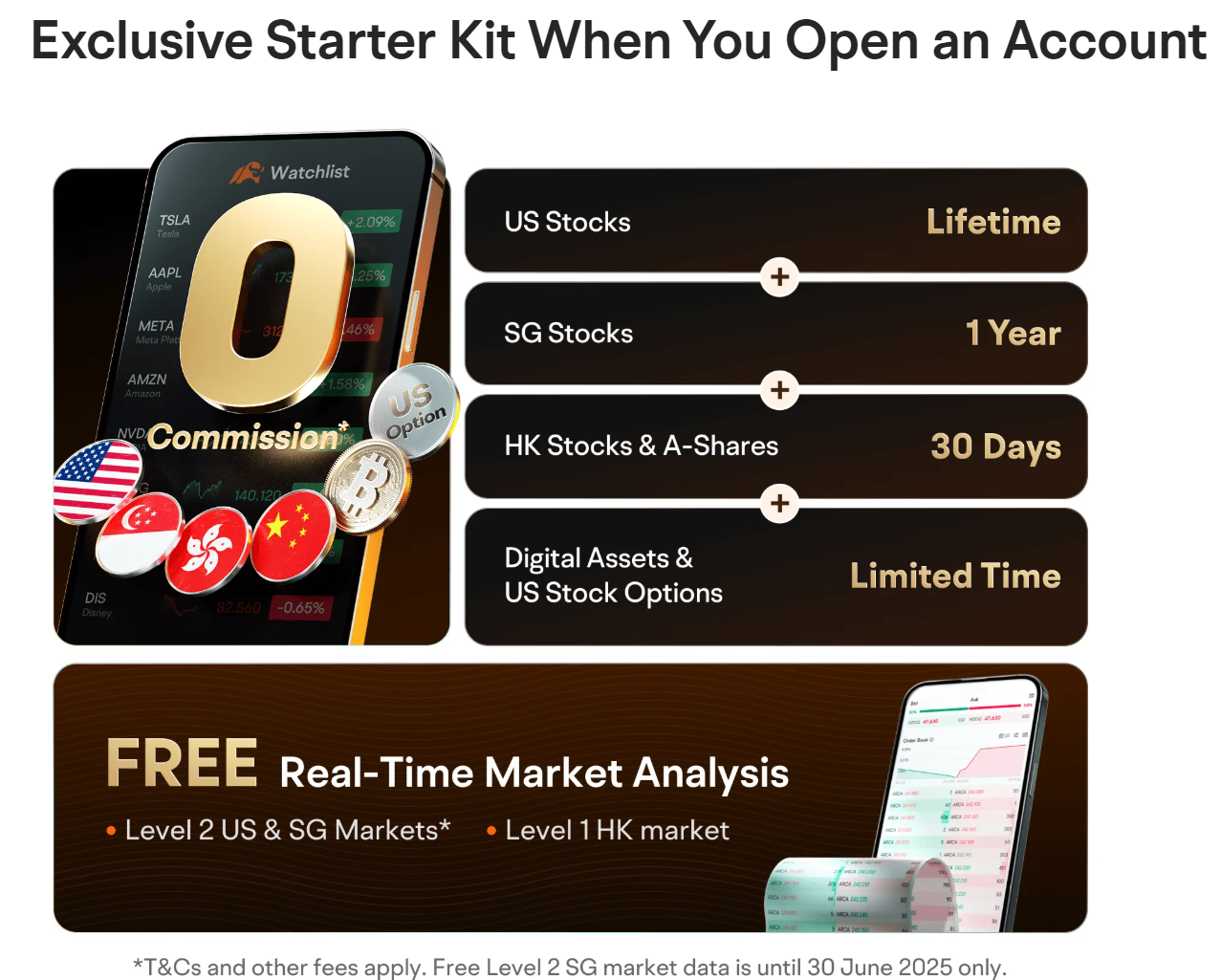
By choosing Moomoo SG as your trading platform, you gain not only access to a commission-free trading experience but also the assurance of trading on a regulated and secure platform, backed by round-the-clock personalized support.
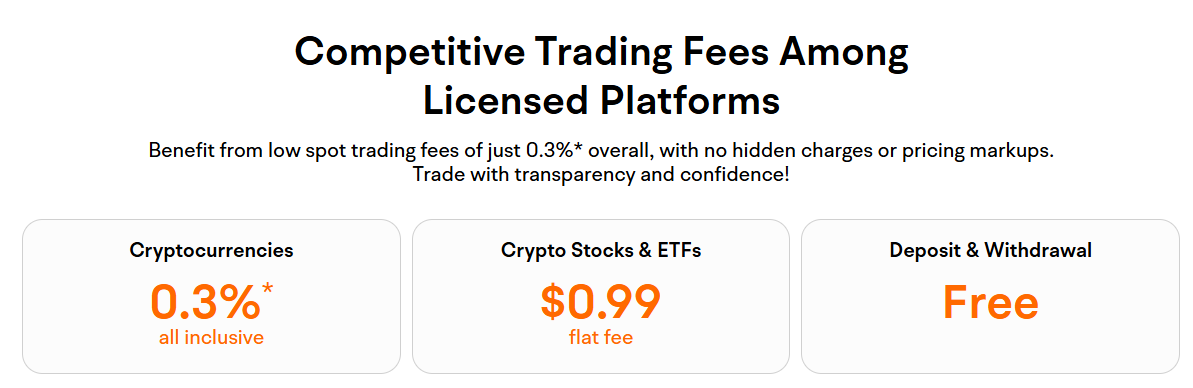
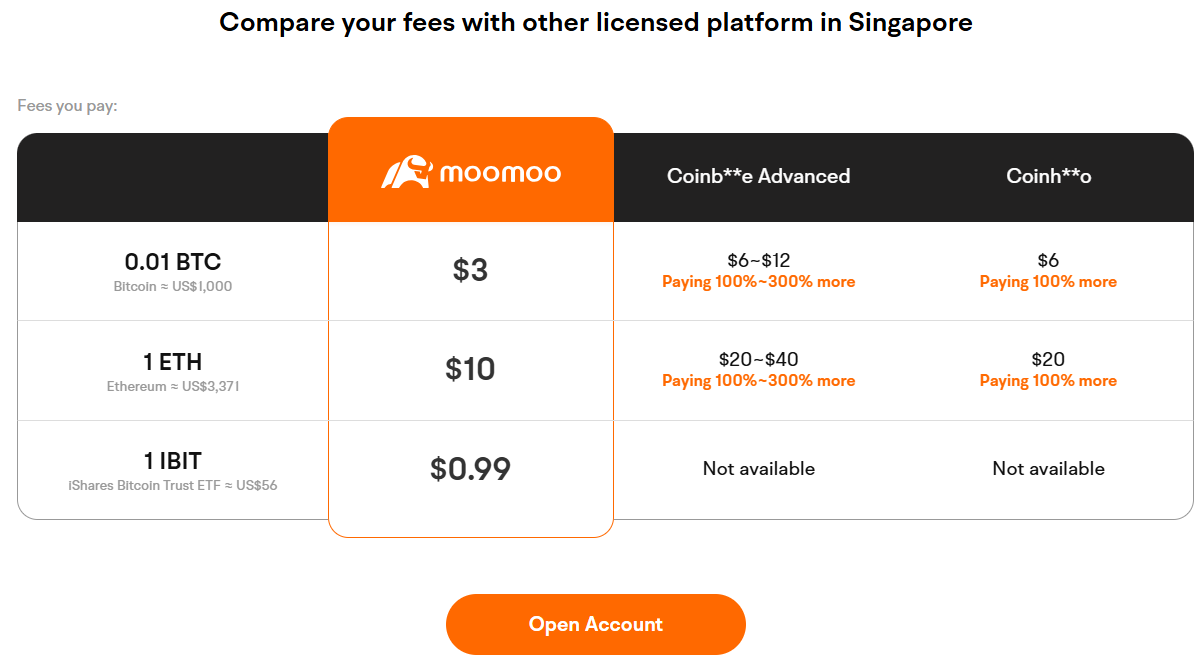
Enjoy 0%* commission on All Coins
Trading crypto with Moomoo SG means you can enjoy a unique advantage – zero commission on all your transactions, whether it's XRP, other cryptocurrencies, stocks, or ETFs. Moomoo SG's commission-free structure allows you to trade freely, experiment with different strategies, and grow your portfolio without worrying about the cost. (For detailed information about 0-Commission*, you can view Moomoo Pricing.)
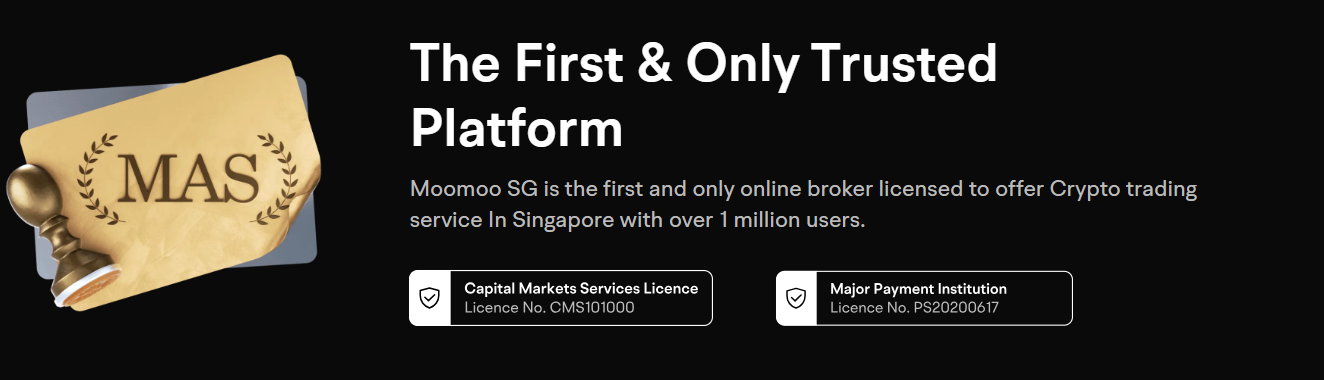
Trusted and Licensed by MAS
Moomoo SG is trusted and regulated by the Monetary Authority of Singapore (MAS). This regulatory oversight ensures that Moomoo SG operates with the highest standards of security, transparency, and fairness. When you trade XRP or any other asset on Moomoo SG, you can do so with confidence, knowing that your funds are protected and that the platform adheres to strict regulatory guidelines.
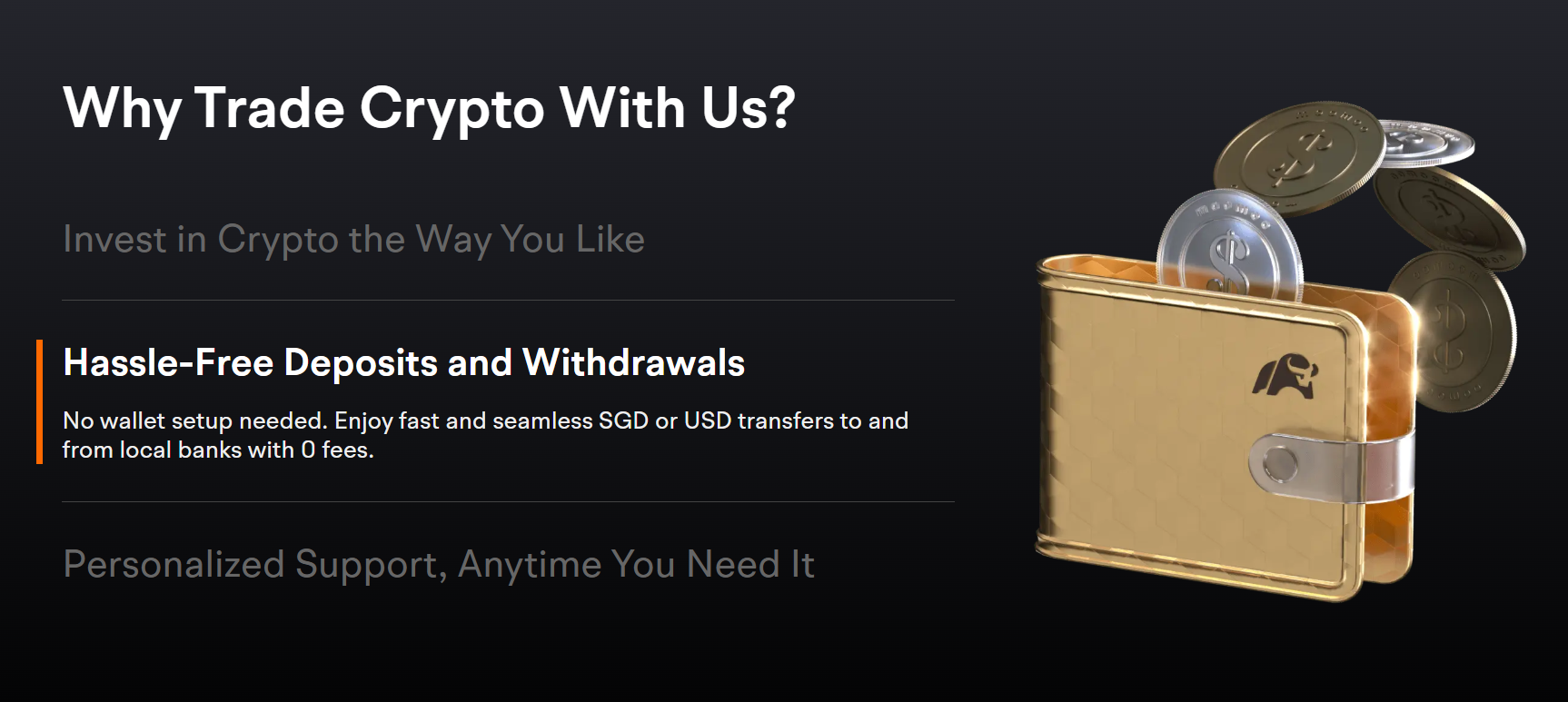
24-Hour Personalized Support
Whether you prefer to reach out online, through our app, or by phone, we've got you covered. During weekdays, Moomoo SG's support is available around the clock, ensuring that no matter when you need assistance, there's always someone ready to help. On weekends, from 9:30 AM to 9:30 PM SGT, the moomoo team remains accessible to address your queries and concerns. With Moomoo SG, you're never alone in your XRP trading journey!
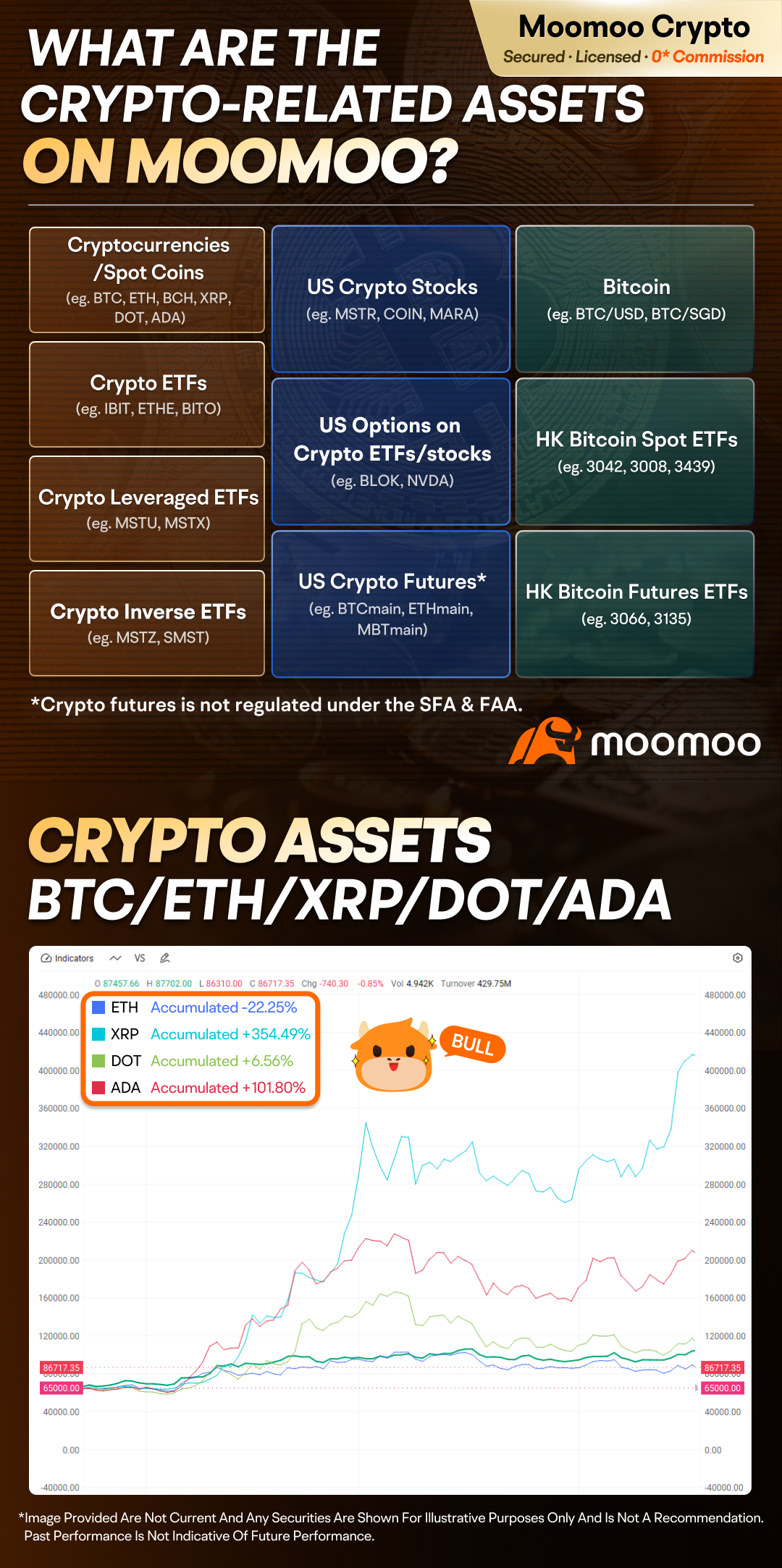
What Crypto-related Assets are Accessible on Moomoo SG?
In the dynamic realm of cryptocurrency trading, Moomoo has emerged as a popular platform. For those eager to explore the crypto market, a fundamental question often surfaces: What Crypto-related Assets are Accessible on Moomoo?
Conclusion
In conclusion, XRP offers a compelling proposition for Singaporean beginners in the crypto market. Its fast transaction speeds, low fees, and growing adoption make it an attractive option for those seeking to diversify their investment portfolio. As with any cryptocurrency, it's important to approach XRP with caution, conduct thorough research, and consider your risk tolerance before investing.

However, by understanding the basics and staying informed, you can position yourself to take advantage of the opportunities presented by this innovative digital asset. Remember, the crypto market is constantly evolving, so keep learning and stay ahead of the curve. With Moomoo SG as your trusted trading partner, you're well-equipped to embark on your XRP and crypto journey with confidence and ease.
*0 commission is subject to terms and conditions. Platform and other fees apply.
FAQs about XRP Basics
What are the Potential Use Cases of XRP?
XRP's core value proposition lies in enabling lightning-fast, low-cost value transfer across borders and markets. Its most transformative application is in cross-border payments, where it functions as a highly efficient bridge currency-allowing financial institutions to settle international transactions for fractions of a penny, while eliminating the need for pre-funded nostro accounts that tie up capital.
Beyond institutional payments, XRP's unique combination of speed, scalability, and minimal fees opens doors for diverse applications, including: real-time micropayments, affordable remittances, exchange liquidity pools, and DeFi platform interoperability, making it one of the most versatile digital assets for modern finance.
How Many XRP Coins are there in Circulation?
As of 2024, XRP maintains a fixed maximum supply of 100 billion tokens, all minted at its inception in 2012. Approximately 55 billion XRP currently circulate in the market, while the remaining 45 billion are securely held in Ripple's escrow system.
These reserved funds are strategically released at a controlled pace of roughly 1 billion XRP per month to support company operations, finance ecosystem development, and ensure sustainable growth.
How Safe is it to Invest in XRP?
Investing in XRP presents a unique risk-reward profile shaped by its technological advantages and evolving regulatory landscape. The cryptocurrency offers compelling utility through its rapid settlement times and minimal transaction costs, bolstered by Ripple's expanding network of financial institution partnerships. These factors support its potential for mainstream adoption in cross-border payments.
However, investors must weigh this against significant volatility, ongoing regulatory scrutiny (despite Ripple's partial SEC victory in 2023), and competition from stablecoins and CBDCs. While the court ruling clarified XRP's non-security status for retail sales, future regulations may still impact institutional use. As with any crypto asset, diversification and risk management are essential.
How is XRP Used in Trading?
XRP is one of the most liquid cryptocurrencies, actively traded on leading exchanges including Binance, Coinbase, and Kraken. These platforms offer multiple trading pairs against both fiat currencies (USD, EUR) and major cryptocurrencies (BTC, USDT, ETH).
Traders utilize XRP across various market instruments - spot markets for immediate settlement, margin trading with leverage, and futures contracts for derivatives exposure.
Is XRP Coin a Good Investment?
XRP presents a unique investment opportunity, combining real-world utility in cross-border payments with the advantages of blockchain technology—near-instant settlement timesand minimal transaction fees. Backed by Ripple’s expanding network of financial institution partnerships, XRP has demonstrated tangible adoption in global payments.
However, investors must weigh these strengths against significant risks: high price volatility, ongoing regulatory scrutiny (despite Ripple’s partial legal victory over the SEC), and potential selling pressure from Ripple’s monthly escrow releases.
How to buy Ripple (XRP)?
To purchase XRP, start by selecting a trusted cryptocurrency exchange that offers XRP trading pairs, such as Binance, Coinbase, Kraken, or KuCoin. After creating an account, complete the verification process by submitting required identification documents.
Once verified, fund your account through bank transfer, credit/debit card, or by depositing other cryptocurrencies like BTC or USDT. Then, navigate to the XRP market (typically listed as XRP/USD or XRP/USDT), enter your desired investment amount, and execute your buy order. For optimal security, consider transferring your XRP to a personal cryptocurrency wallet rather than leaving it on the exchange platform.
Where to Buy XRP in Singapore?
Singaporean investors can purchase XRP through MAS-licensed exchanges such as Independent Reserve, CoinHako, Tokenize Xchange, and DBS Digital Exchange (DDEx), all of which accept SGD deposits via PayNow or bank transfers. For deeper liquidity and competitive pricing, global platforms like Binance, Kraken, Bybit, and OKX are also available, supporting SGD funding through FAST transfers or credit/debit cards.
How to Buy XRP in Moomoo SG?
Currently, XRP is not available for direct trading on moomoo (Futu), as the platform specializes in stocks, ETFs, and select cryptocurrencies like Bitcoin and Ethereum. However, investors can still gain indirect exposure to XRP by exploring XRP-linked ETFs or derivatives (if offered). Alternatively, users may transfer funds from their moomoo account to an external cryptocurrency exchange (such as Binance or Kraken) that supports XRP trading.
How to Sell XRP?
To sell your XRP, begin by transferring your tokens to a supported cryptocurrency exchange like Binance, Kraken, Bybit, or MAS-regulated platforms such as Independent Reserve or Tokenize Xchange in Singapore. After depositing, go to the spot trading section, select your preferred trading pair (e.g., XRP/USDT or XRP/SGD), and place either a market order for instant sale at current prices or a limit order to set your desired price.
XRP vs. BTC
XRP and Bitcoin serve fundamentally different roles in cryptocurrency. Bitcoin, the pioneering decentralized digital currency, operates as digital gold—a scarce, PoW-mined asset with a fixed supply, prized for long-term value storage. In contrast, XRP functions as a high-speed payment rail, engineered by Ripple Labs for instant cross-border settlements at near-zero costs, using an energy-efficient consensus protocol. While Bitcoin thrives as a decentralized investment asset with price volatility, XRP targets institutional payment solutions, offering banks and financial firms liquidity on-demand. Notably, XRP's centralized governance and ongoing SEC litigation contrast with Bitcoin's regulatory clarity and widespread adoption. Both maintain robust liquidity, but Bitcoin dominates as a store of value, whereas XRP excels in transactional efficiency for enterprises.
XRP vs. ETH
XRP and Ethereum serve different purposes in the crypto ecosystem. XRP, developed by Ripple Labs, specializes in real-time cross-border payments, offering financial institutions near-instant transactions with minimal fees through its energy-efficient consensus protocol. In contrast, Ethereum functions as a decentralized computing platform, powering smart contracts, dApps, DeFi protocols, and NFTs via its programmable blockchain. While XRP streamlines institutional liquidity, Ethereum enables open innovation through its transition to PoS (Proof-of-Stake) and support for complex decentralized applications. Their tokenomics also differ: XRP has a fixed supply, whereas Ethereum employs a dynamic supply model with deflationary mechanisms.
This presentation is for informational and educational use only and is not a recommendation or endorsement of any particular investment or investment strategy. Investment information provided in this content is general in nature, strictly for illustrative purposes, and may not be appropriate for all investors. Read more