Singapore Dividend Stocks: How to Earn Passive Income
Key Takeaways
- Understand that dividend stocks offer a steady passive income and resilience during market volatility. You may get paid regularly with top Singapore dividend stocks.
- When choosing the best Singapore dividend stock, consider factors like dividend yield, payout ratio, and dividend history.
- Be aware of high-dividend options, including Singapore blue chips (e.g., $DBS (D05.SG)$ , $OCBC Bank (O39.SG)$ , $UOB (U11.SG)$ ), REITs with high profits, and top high-dividend ETFs.
- Investing in dividend stocks becomes far more convenient with the help of moomoo tools, including High Dividend Rankings, Dividend Calendar, Moomoo Stock Screener, etc.
- Understand that dividend stocks offer a steady passive income and resilience during market volatility. You may get paid regularly with top Singapore dividend stocks.
- When choosing the best Singapore dividend stock, consider factors like dividend yield, payout ratio, and dividend history.
- Be aware of high-dividend options, including Singapore blue chips (e.g., $DBS (D05.SG)$ , $OCBC Bank (O39.SG)$ , $UOB (U11.SG)$ ), REITs with high profits, and top high-dividend ETFs.
- Investing in dividend stocks becomes far more convenient with the help of moomoo tools, including High Dividend Rankings, Dividend Calendar, Moomoo Stock Screener, etc.

What is a Dividend Stock? Singapore Investor Guide
Singapore stocks such as DBS or Mapletree Logistics Trust are classic dividend stocks, turning your investment into a steady passive income stream. What is a dividend? A dividend is a distribution of a company's profits or retained earnings to its shareholders. For those seeking regular income, Singapore stocks paying dividends are especially attractive, as they provide consistent payouts alongside potential capital appreciation. Dividend stocks offer dual benefits for investors: steady income and potential share-price growth. However, not all Singapore companies pay dividends. You can check the dividend information on moomoo (e.g. Dividend Calendar, High Dividend Rankings).
Why Invest in Dividend Stocks for Passive Income?
Why dividend stocks can be beneficial? When it comes to building passive income, dividend stocks in Singapore stand out as an attractive option.
1. Steady Source of Passive Income
Singapore's top dividend stocks are famous for dishing out regular payments, giving investors a steady and trustworthy source of passive income. These consistent payouts can add to your earnings, help fund your retirement, or just give you more financial freedom.
According to moomoo's High Dividend Rankings, the list of high dividend stocks or ETFs is easily accessible, helping you quickly identify top dividend stocks in Singapore.
2. Staying Strong When Markets Swing
Companies that have a solid track record of paying dividends are usually financially stable and well-established. This strength means their stock prices are often less wobbly during market slumps in Singapore than those of companies that don't pay dividends.
3. Growing Wealth Over Time by Reinvesting
One of the biggest perks of investing in dividends is being able to put those payouts back into the stock. When you reinvest your dividends to buy more shares, you'll end up getting even more dividends down the line. This creates a snowball effect, speeding up your returns over time and giving your long-term wealth a big boost.
How to Get Paid Regularly with Top Dividend Stocks in Singapore
Step 1: Research & Select Top Dividend Stocks with Consistent Payout History
Conduct thorough research to identify top dividend stocks in Singapore that have a proven track record of making consistent dividend payouts. Prioritize companies with stable financial health and a history of maintaining or increasing dividends over multiple years, as this indicates reliability for regular income.
Step 2: Buy Shares via the Moomoo App
Open a moomoo account for access to Singapore's stock market. After account setup and funding, search for selected dividend stocks by ticker symbols, then execute buy orders per your budget and strategy.
Step 3: Hold Stocks for Scheduled Dividend Payments (Usually Quarterly)
After purchasing the shares, hold onto them for the long term to qualify for scheduled dividend distributions, which most Singapore dividend stocks issue on a quarterly basis. Ensure you hold the stock before the "ex-dividend date" – a key deadline to be eligible for the upcoming dividend payment.
Step 4: Reinvest Dividends to Grow Holdings (Optional)
Consider reinvesting the dividends you receive (an optional step) instead of taking them as cash. By using dividends to buy additional shares of the same stock, you can leverage the power of compounding: this grows your overall holdings over time and leads to higher dividend payouts in future periods.
How to reinvest dividends easily? With Moomoo DRIP (Dividend Reinvestment Plan), this process becomes seamless. Moomoo DRIP automatically reinvests cash dividends to buy additional shares of the same company on the dividend payment date.
How to Choose the Best Singapore Dividend Stock?
Selecting the best dividend stock in Singapore involves more than just chasing high payouts—it requires balancing income with sustainability. Companies with diversified asset portfolios tend to offer more stable, reliable dividends. The key metrics to evaluate include dividend yield, dividend payout ratio, and dividend history.
How to Choose?
Dividend yield measures the income generated relative to a stock's price; for reliable Singapore stocks, this typically ranges from 3% to 6%. Sectors like banking (e.g., OCBC, DBS) and real estate (such as Mapletree REITs) often deliver consistent payouts here, thanks to strong regulatory frameworks and steady cash flows. The dividend payout ratio—ideally between 60% and 80% for Singapore stocks—reveals what portion of a company's earnings is allocated to dividends, serving as a key indicator of payout sustainability. Meanwhile, dividend history tracks a company's long-term consistency in distributing dividends, which helps investors identify resilient stocks (e.g., Singapore's major banks, which maintained dividends even during the COVID-19 pandemic).
To learn more about how to choose the best Singapore dividend stocks, read the article: 10 Best Dividend Stocks in Singapore 2025.
>>You can use the moomoo stock screener to filter for your desired dividend stocks criteria.
>>You can use the moomoo stock screener to filter for your desired dividend stocks criteria.
Dividend Calculator: How to Calculate Dividends
How to calculate dividend yield or payout ratio? A dividend calculator is your go-to tool for simplifying these key calculations—no complex manual math required. Just input basic data: for dividend yield, plug in the stock's current price and annual dividend per share; for dividend payout ratio, enter the company's net income per share and annual dividend per share.
>> Ready to evaluate dividend stocks easily? Moomoo is about to roll out a dividend calculator for Singapore investors.

Top Singapore Blue Chips with High Dividends 2025
Investing in Singapore's blue-chip stocks for high dividends is a time-tested strategy for building steady income. With Singapore's economy showing resilience amidst global uncertainties, blue-chip companies remain attractive due to their robust fundamentals, consistent dividend payouts, and lower volatility. Here are the 5 high dividend stocks ranked by Dividend TTM in Singapore according to moomoo's Dividend Rankings:
Company | Market Cap (SGD) | Div Yield TTM |
144.53 billion | 4.77% | |
76.00 billion | 5.02% | |
59.55 billion | 5.02% | |
72.49 billion | 2.64% | |
19.60 billion | 7.28% |
*Source from Moomoo High Dividend Rankings as of Sept. 5, 2025. Data is for reference only.

1. DBS Dividend Yield & History
Many investors rely on DBS's dividend to supplement their passive income, as the bank typically maintains reliable payout schedules supported by its strong financial performance. DBS Group Holdings Ltd (SGX: D05) has built a long-standing reputation as a dividend stalwart in the Singaporean banking sector, with a track record of consistent dividend distributions spanning decades. DBS's strong interest income has contributed to its ability to maintain high dividend payouts. In its latest financial results, DBS reported a robust net profit, further supporting its dividend policy. With a 5.02% TTM dividend yield, DBS offers relatively attractive income potential for passive income-focused investors.
Industry: Banks
Dividend Yield TTM: 4.77%
Frequency: 4/Year
DBS Dividends History
Pay Date: 19/05/2025 Cash Dividend 0.75 SGD Per Share
Pay Date: 18/08/2025 Cash Dividend 0.60 SGD Per Share
Pay Date: 15/09/2024 Cash Dividend 0.54 SGD Per Share
Pay Date: 16/08/2024 Cash Dividend 0.54 SGD Per Share
Pay Date: 10/05/2024 Cash Dividend 0.54 SGD Per Share
2. OCBC Dividend Yield & History
Oversea-Chinese Banking Corporation Ltd (SGX: O39) is a top-tier Singaporean bank known for its balanced business mix—combining banking and insurance operations—which helps stabilize its cash flow and support consistent dividends. With a 5.02% TTM dividend yield, OCBC has a history of steady payout growth, driven by its regional expansion (especially in Southeast Asia) and strong performance in wealth management and insurance segments. Changes in interest rates can significantly impact OCBC's net interest margin, which in turn affects its ability to maintain or grow dividend payouts.
Industry: Banks
Dividend Yield TTM: 5.02%
Frequency: 2/Year
OCBC Dividends History
Pay Date: 28/08/2025 Cash Dividend 0.41 SGD Per Share
Pay Date: 29/04/2025 Special Dividend 0.16 SGD Per Share
Pay Date: 13/08/2024 Cash Dividend 0.44 SGD Per Share
Pay Date: 09/05/2024 Cash Dividend 0.42 SGD Per Share
Pay Date: 15/08/2024 Cash Dividend 0.40 SGD Per Share
3. UOB Dividend Yield & History
United Overseas Bank Ltd (SGX: U11) matches OCBC's 5.02% TTM dividend yield, positioning it as another leading choice for high-dividend blue-chip investors. UOB Bank has maintained a consistent dividend track record, with payouts supported by healthy capital adequacy ratios (above regulatory requirements) and controlled non-performing loan rates. UOB's consistent net profit has enabled it to maintain stable dividend distributions. For investors seeking regional exposure alongside reliable dividends, UOB's focus on ASEAN markets adds a layer of diversification.
Industry: Banks
Dividend Yield TTM: 5.02%
Frequency: 2/Year
UOB Dividends History
Pay Date: 18/08/2025 Special Dividend 0.25 SGD Per Share
Pay Date: 29/04/2025 Cash Dividend 0.92 SGD Per Share
Pay Date: 29/04/2024 Special Dividend 0.25 SGD Per Share
4. Singtel Dividend Yield & History
While Singapore Telecommunications Ltd (SGX: Z74) has a lower TTM dividend yield (2.64%) compared to the other stocks on this list, it remains a core blue-chip for long-term income investors due to its defensive business model. As Singapore's dominant telecommunications provider, Singtel benefits from stable recurring revenue from mobile and broadband subscriptions. Singtel's dividend history is marked by consistency.
Industry: Telecommunications
Frequency: 2/Year
Dividend Yield TTM: 2.64%
Singtel Dividend History:
Pay Date: 19/08/2025 Cash Dividend 0.067 SGD Per Share
Pay Date: 19/08/2025 Special Dividend 0.033 SGD Per Share
Pay Date: 09/12/2024 Cash Dividend 0.056 SGD Per Share
Pay Date: 09/12/2024 Special Dividend 0.033 SGD Per Share
5. SIA Dividend Yield & History
Singapore Airlines Ltd (SGX: C6L) stands out with the highest TTM dividend yield (7.28%) among the 5 blue chips, though its dividend profile carries more cyclicality. Historically, SIA's dividends were more variable—suspended during the pandemic to preserve cash—but its strong brand, premium service, and cargo business (a key revenue driver during travel slumps) have supported its return to dividend payouts.
Industry: Air Transportation Company
Dividend Yield TTM: 7.28%
Frequency: 2/Year
Dividends History
Pay Date: 12/08/2025 Cash Dividend 0.30 SGD Per Share
Pay Date: 27/11/2024 Cash Dividend 0.10 SGD Per Share
Pay Date: 02/08/2024 Cash Dividend 0.38 SGD Per Share
Singapore REITs Dividend Stocks Reporting High Profits
Singapore Real Estate Investment Trusts (S-REITs) are a standout category for dividend investors. Many high-profit Singapore REITs dividend stocks operate in sectors with strong demand and stable rental income, which drives their profitability. REITs generate property income from their portfolio of properties, and positive rental reversion—such as achieving higher rents upon lease renewals—can help support higher distributions to investors.
Some REITs further diversify their portfolios by investing in data centres, which offer growth potential and resilience. Ongoing asset enhancement initiative projects, like renovations or expansions, can increase property value and rental income. Enhancement works at major properties, such as upgrades or redevelopments, are also undertaken to improve competitiveness and customer experience. For example, a REIT may develop a lifestyle precinct within an integrated resort to attract more visitors and tenants, enhancing the overall appeal and performance of its assets.
Top High Dividend ETFs in Singapore
For Singapore investors seeking steady dividend income with lower risk, high-dividend ETFs in Singapore are a popular choice. Dividend ETFs offer diversification, low costs, and regular dividend distributions—often quarterly or annually. When choosing a high dividend ETF in Singapore, consider factors like expense ratio (lower is better for long-term returns), dividend frequency (quarterly vs. semi-annual), and the ETF's underlying holdings (e.g., REITs for higher yields vs. blue-chips for stability).
We highlight 3 standout ETFs with high dividend yields according to moomoo's high dividend ETF rankings.
Stock Name | Ticker | Ex-Date | Price | Turnover | Volume |
CLR | Jul 30, 2025 | 0.847 | 2.42M | 2.86M | |
CFA | Jul 1, 2025 | 0.827 | 1.62M | 1.96M | |
ES3 | Aug 12, 2025 | 4.375 | 1.18M | 269.39K |
(Ranked by trading volume as of Sept. 5, 2025. Data is for reference only.)
1. LION-PHILLIP S-REIT (CLR)
The LION-PHILLIP S-REIT (CLR) Dividend ETF is a prominent Singapore-listed ETF focused exclusively on Singapore Real Estate Investment Trusts (S-REITs), making it a core choice for investors targeting local REIT-driven dividend returns. It tracks a customized index of S-REITs, offering exposure to key sectors like retail, office, industrial, and hospitality real estate in Singapore—asset classes known for generating consistent rental income that supports regular dividends. The ETF's distributions are supported by the property income generated by its underlying REIT holdings, which is a crucial component of both gross revenue and net property income, ultimately impacting investor payouts and the performance of the property portfolio.
LION-PHILLIP S-REIT (CLR) Dividend Yield TTM: 5.63% (data as of Sept. 22, 2025)
Frequency: 2/year
LION-PHILLIP S-REIT (CLR) Dividend History
- Pay Date: Aug 28, 2025 Cash Dividend 0.023 SGD
- Pay Date: Feb 27, 2025 Cash Dividend 0.025 SGD
- Pay Date: Aug 28, 2025 Cash Dividend 0.0215 SGD
2. Amova-StraitsTrading Asia ex Japan REIT Index ETF (CFA)
Listed on the Singapore Exchange (SGX) under the ticker CFA, Amova-StraitsTrading Asia ex Japan REIT Index ETF provides Singapore investors with diversified exposure to Real Estate Investment Trusts (REITs) across Asia, excluding Japan. The ETF provides exposure to REITs with a portfolio of diversified real estate assets across Asia. CFA ETF typically offers a competitive dividend yield, supported by rental income from regional REIT holdings spanning sectors like residential, commercial, and logistics.
Dividend Yield TTM: 5.40% (data as of Sept. 22, 2025)
Frequency: 4/year
CFA Dividend History
- Pay Date: Aug 1, 2025 Cash Dividend 0.0107 SGD
- Pay Date: May 6, 2025 Cash Dividend 0.0117 SGD
- Pay Date: Feb 6, 2025 Cash Dividend 0.0116 SGD
3. STI ETF (ES3)
STI ETF (ES3) is designed to track the Straits Times Index (STI)—a benchmark of 30 large, liquid blue-chip stocks listed on SGX (e.g., DBS, SingTel, CapitaLand). STI ETF distributes dividends quarterly (a consistent schedule for predictable income) and mirrors the dividend yields of its underlying STI constituents—historically aligning with Singapore's core market's income potential.
STI ETF (ES3) Dividend Yield TTM: 4.13%
Frequency: 2/year
STI ETF (ES3) Dividend History
- Pay Date: Aug 26, 2025 Cash Dividend 0.089 SGD
- Pay Date: Feb 26, 2025 Cash Dividend 0.091 SGD
- Pay Date: Aug 27, 2025 Cash Dividend 0.086 SGD
Dividend Calendar: Upcoming SG Dividend Stocks
Singapore stocks announce dividends on a predictable schedule—bookmark these key dates to time your investments. Most SGX-listed giants pay quarterly or semi-annually, with peaks in February, May, August, and November. Below is the moomoo dividend calendar.
>>To view the Dividend Calendar for Singapore stocks on the Moomoo App, follow these steps: Click "Markets"> Select "SG" (for Singapore) > Tap "Dividend Calendar". View dividend stocks' frequency and history in detail via Moomoo's Dividend Calendar.
Trade Singapore Dividend Stocks with Free Commission*
Maximize your passive income from Singapore dividend stocks—trade with 0 commission* on Moomoo SG. Check dividend charge on moomoo pricing page. Open an account for dividend stock investing on Moomoo Singapore—with 0 fees on dividends and corporate actions!

How to Buy Dividend Stocks in Singapore
How to invest in dividend stocks? Buying dividend stocks in Singapore is as simple as 5 steps—and you can start even with a small budget.
Step 1: Research Dividend Metrics
Not all high-dividend stocks are reliable—some may offer unsustainably high yields to attract investors, only to cut dividends later. Focus on these key metrics to identify quality picks:
Dividend Yield (Annual Dividend/Stock Price): Avoid overly high yields (may signal unsustainable payouts).
Dividend Payout Ratio (Dividends/Earnings): Aim for 30%-70% (lower = more room for growth; higher = higher income but higher risk).
Dividend Growth History: Prioritize stocks with 5+ years of consistent dividend increases (e.g., Dividend Aristocrats).
If you want to deepen your understanding of dividend metrics and expand your knowledge in the dividend investing area, be sure to follow Moomoo Learn for more in-depth insights and guidance.
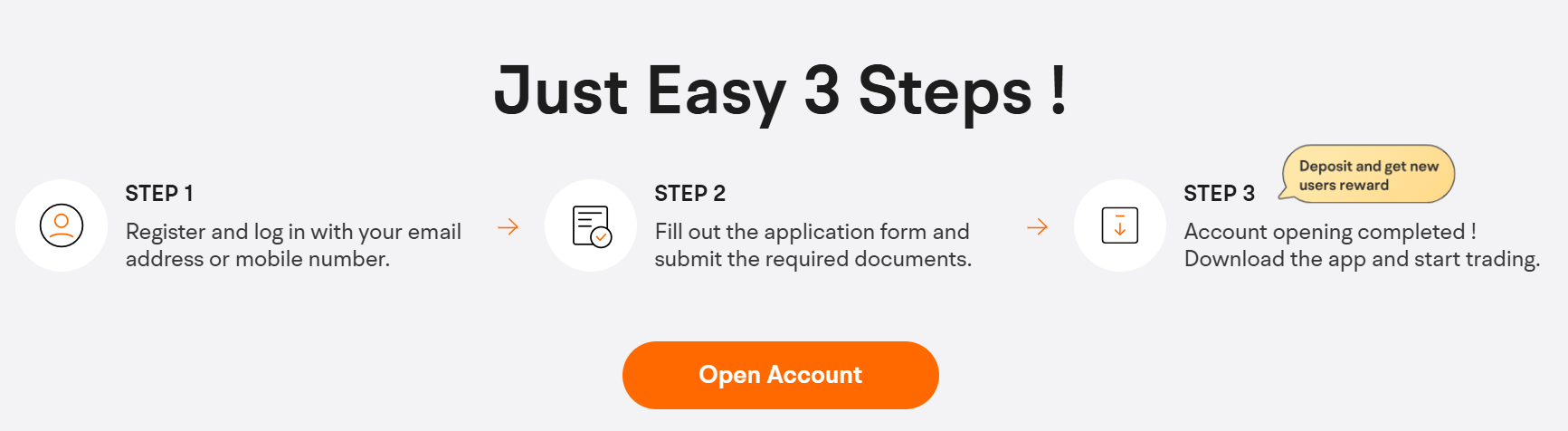
Step 2: Open an Account on Moomoo
Moomoo offers a user-friendly platform for Singapore investors to trade local and international stocks. Here's how to open an account:
Download the Moomoo App: Available on iOS and Android, or access the desktop version via Moomoo's official website.
Sign Up: Use your email or mobile number to register, then verify your identity.
Fund Your Account: Choose from convenient funding methods, including bank transfer, instant deposit via DDA, etc.
Step 3: Screen for Dividend Stocks
Use moomoo screeners or high dividend stocks/ETFs rankings to filter stocks by metrics like yield, payout ratio, sector, market cap, and dividend growth rate.
Step 4: Analyze the Company's Fundamentals
Beyond dividends, check financial health:
Stable revenue/earnings growth.
Low debt levels.
Strong competitive position in its sector (e.g., market share, brand strength).
Effective cost control to maintain profitability and support sustainable dividend payments.
Step 5: Place Your Order and Review Regularly
On moomoo, select the "Trade" button at the bottom of the stock page, specify the number of shares or dollar amount. Regularly review your portfolio (quarterly/annually). Reassess if a company cuts dividends, its fundamentals weaken, or your goals change. Rebalance to maintain your desired asset allocation.
Dividend Stocks Trading Guide in Singapore
Ready to maximize returns with Singapore's dividend stocks? Dive into our selected dividend-related articles and actionable guides—designed to equip you with the insights needed for successful trading and long-term passive income building. Each article in this section provides actionable insights for dividend stock trading.
[Related Articles]
What is a Dividend?
10 Best Dividend Stock in Singapore 2025
10 Best Dividend Stocks in Singapore 2023
How to Invest in Dividend Stocks?
[2022] Singapore's Blue-Chip Stocks
Singapore REITs Dividend Stocks Performance [2018-2023]
FAQs on Singapore Stocks with Dividends
How to Calculate Dividend Yield?
Calculating dividend yield is straightforward. First, find the annual dividend per share a company pays—this could be the sum of all quarterly/semiannual dividends in a year. Then, divide that number by the current market price per share of the stock. Finally, multiply the result by 100 to get a percentage. However, the moomoo dividend calculator—which is about to launch in Singapore—can help you calculate dividends automatically. For example, if a stock pays $2 in annual dividends and trades at $40 per share, the dividend yield is (2 ÷ 40) × 100 = 5%. It's a common way to compare how much income different stocks generate relative to their price.
What is the Ex-Dividend Date?
The ex-dividend date (often called the "ex-date") is a key deadline for stock buyers: if you buy a stock on or after this date, you won't get the next scheduled dividend payment. Only investors who own the stock before the ex-dividend date (known as "holders of record") qualify for the dividend. The ex-date is usually set 1 business day before the "record date" (the day the company checks its records to list eligible shareholders). To easily track these key dates, check the Dividend Calendar on Moomoo to know the specific dividend dates without any complicated manual checks or extra steps, including ex-dividend date, record date, payment date, etc.
Are Dividends Taxable in Singapore?
In most cases, dividends are not taxable for individual investors in Singapore. This is due to Singapore's "one-tier corporate tax system": companies already pay corporate income tax on their profits before distributing dividends, so individuals don't pay additional tax on those dividends.
How to Calculate Dividend Payout?
The dividend payout (often referred to as the dividend payout ratio) shows what percentage of a company's profits it pays out as dividends. To calculate it, first get the company's net income (profit after taxes) from its financial statements. Then, find the total dividends paid to shareholders (annual dividends per share × total outstanding shares). Divide total dividends by net income, and multiply by 100 to get a percentage.
Do ETFs Pay Dividends?
Yes, many ETFs (Exchange-Traded Funds) pay dividends—especially those that track dividend-focused indexes (like ETFs holding high-dividend stocks) or bond indexes. How they pay dividends varies: some distribute dividends quarterly or annually, while others do it monthly. The dividends come from the underlying assets of the ETF (e.g., if an ETF holds stocks that pay dividends, the ETF collects those payments and passes most of them to its investors). If you want to find dividend ETFs, you can easily check the Singapore high dividend ETFs list on Dividend Rankings on moomoo—simply filter by various data points, including dividend yield TTM, frequency, pay date, price, etc.
Can You Buy Stock Right before Dividends?
You can buy stock before the dividend is paid, but to actually receive the dividend, you need to buy it before the ex-dividend date (not just "right before" the dividend payment date). If you buy on or after the ex-date, you'll miss the dividend. Keep in mind that a stock's price often drops by roughly the dividend amount on the ex-date (since the company is giving away cash), so buying just to get the dividend might not always be profitable—you could end up with a lower stock value that offsets the dividend gain.
Do I Need to Declare Dividend Income?
Whether you need to declare dividend income depends on your country's tax rules. For example, in Singapore, individual investors usually don't need to declare dividend income because dividends are tax-exempt (thanks to the one-tier corporate tax system). But in many other countries, dividends are taxable, so you must declare them on your annual tax return—even if you receive them as cash or reinvest them (e.g., via a DRIP).
How to Qualify for a Stock Dividend?
To qualify for a stock dividend (a dividend paid as additional shares instead of cash), you need to be a shareholder of record for the company. This means you must buy the stock before the ex-dividend date (the deadline set by the company). The company will announce a "record date" (the day it checks its records to list eligible shareholders) and an ex-date (1 business day before the record date). If you own the stock by the end of the day before the ex-date, you'll be on the record list and receive the stock dividend.
What Stocks Pay Good Dividends?
Stocks that pay “good” dividends are usually those with consistently high, stable dividend yields and a track record of maintaining or increasing dividends over time. A stock paying a dividend of $2.00 per share annually, for example, with a stable history of payouts, is often considered a good dividend stock. They often come from mature, low-growth industries that generate steady cash flow (since high-growth companies tend to reinvest profits instead of paying dividends).
How Can Investors Implement Effective Dividend Investing Strategies in Singapore?
Successful dividend investing in Singapore involves more than just picking stocks with the highest yields. Passive income investors often use a mix of strategies to maximize both income and long-term growth. One common approach is to build a portfolio of high-yield dividend stocks, focusing on established companies with a strong record of consistent dividend payments. These stocks can provide a dependable income stream, especially when combined with other stable sectors like real estate. Another popular strategy is to target dividend growth stocks, which not only pay regular dividends but also have a history of increasing their payouts year on year. In Singapore, Real Estate Investment Trusts (REITs) like Mapletree Pan Asia Commercial Trust are also favored by investors for their diversified property holdings and stable rental income, making them a solid source of passive income. Moomoo provides Dividend Rankings by continuous growth to help investors quickly identify and screen dividend-paying stocks with consistent payout growth trends.
>> Click here to learn more FAQs about dividend stocks in Singapore. 
Conclusion: Explore Dividend Stocks in Singapore
In conclusion, Singapore's dividend stocks present a compelling avenue for investors seeking passive income. From understanding what dividend stocks are to leveraging tools like the Moomoo High Dividend Rankings for research, purchase, and monitoring, the process is accessible. Key metrics such as dividend yield, payout ratio, and history guide stock selection. Whether opting for blue-chip stocks like DBS, OCBC, and UOB, high-dividend REITs, or ETFs, there are diverse options. With resources like dividend calculators and calendars aiding decision-making, and opportunities for commission-free trading, investors can strategically build a portfolio to generate steady passive income, grow wealth over time, and navigate market swings with more confidence.
This presentation is for informational and educational use only and is not a recommendation or endorsement of any particular investment or investment strategy. Investment information provided in this content is general in nature, strictly for illustrative purposes, and may not be appropriate for all investors. Read more