Buying Market Dips in Singapore: Trump's Tariffs Guide

Trump's Tariffs: Implications for the Singapore Market
How to invest in the US stock market in Singapore? As the global economic landscape continues to evolve under the influence of Trump's tariffs, Singapore, a key player in Southeast Asia's economic sphere, is facing both direct and indirect repercussions. On April 2, 2025, the U.S. Department of Commerce announced country-specific reciprocal tariff rates that took immediate effect, marking a significant shift in trade policies.
Impact on Singapore Market

1. Industry-Specific Pressures
Logistics and Aviation: As a key ground service provider, SATS may face a single-digit profit decline due to the cancellation of the duty-free policy for small-scale goods.
Cryptocurrency: The relaxation of regulatory policies by the Trump administration in the United States may intensify competition in Singapore's cryptocurrency sector.
Pharmaceuticals and Electronics: Moody's analysts have pointed out that the 25% tariff on pharmaceuticals and semiconductors may pose a challenge to Singapore's major export industries.
2. Supply Chain Disruption
The fragmentation of global trade caused by the United States' imposition of tariffs on China and Mexico may divert the flow of goods away from Singapore's ports, thereby affecting its entrepot trade volume.
Why is the "Buy the Dip" Strategy Effective?

The “buying the dip” strategy, frequently utilized by investors amidst market volatility or uncertainty, has demonstrated its efficacy for multiple reasons when implemented with careful consideration. Assets have been influenced by market sentiment triggered by tariff announcements, resulting in sell-offs during phases of downward price pressure. Historical examples, such as the market rebounds following the 2008 financial crisis, illustrate how buying the dip can be a profitable strategy. Here's an explanation of why this strategy can be successful, especially in the context of Trump's tariff shocks and their implications for the Singapore markets:
Excessive Market Response: Markets tend to overreact to news, particularly in the short run. Trump's tariff announcements often prompted impulsive reactions, causing stock prices to plummet abruptly. By making purchases during these price dips, investors can take advantage of the market's irrational behavior and acquire high-quality assets at a reduced cost.
Emphasis on Long-Term Fundamentals: It is essential to focus on long-term fundamentals rather than being swayed by short-term market fluctuations. Although tariffs might pose immediate challenges to specific sectors, they do not necessarily change the inherent growth potential of companies or the overall economy.
Open an account on Moomoo SG now and claim your exclusive new-customer benefits!

Tendency towards Mean Reversion: Over time, markets generally revert to their average levels. Following a significant decline, there is often a subsequent rebound as the market corrects itself. Buying assets during a dip places investors in a favorable position to benefit from this mean reversion, provided that the assets have solid fundamental value.
Government and Central Bank Interventions: In response to economic disruptions such as tariff shocks, governments and central banks typically introduce measures aimed at stabilizing the economy. These measures may include fiscal stimulus packages, tax reductions, or monetary easing policies. Such initiatives can act as a positive influence on the markets, facilitating a recovery from price dips and potentially increasing returns for investors who made purchases during those periods.
How to Buy the Dip in Singapore
Step 1: Keep a Close Eye on the VIX Index
In the volatile world of investments, the VIX Index (hypothetical volatility index for this context) serves as a crucial barometer for gauging market sentiment and potential turbulence. In 2025, with Trump's tariffs still casting a long shadow over global trade, the expected market conditions are highly volatile, making it crucial to keep tabs on the VIX. A sudden spike often signals impending market corrections, presenting opportune moments to buy the dip.
Step 2: Identify and Focus on Tariff-Resilient Sectors
Not all sectors are equally affected by tariffs. Some industries, due to their nature or strong domestic demand, remain relatively resilient to trade disputes. By identifying these sectors and concentrating on investments there, investors can mitigate the risks associated with tariff fluctuations.

Step 3: Ensure Stability with a Gold and Bond Hedging Portfolio
Diversification stands as a fundamental pillar in risk management across all investment strategies. Given the unpredictable market impact of Trump's tariffs, incorporating defensive assets like bonds and gold into your portfolio can serve as a shield against volatility, for example, gold ETFs. These assets are known to thrive during economic downturns, providing either a steady income stream or potential for capital growth that helps offset losses in more turbulent equity markets.
Invest seamlessly with Moomoo SG: explore fixed deposit rates in Singapore and buy US treasury bonds in Singapore!
Step 4: Implement Dollar-Cost Averaging (DCA)
Dollar-cost averaging is a time-tested strategy that helps investors mitigate the risk of timing the market incorrectly. By investing a fixed amount of money at regular intervals, regardless of market conditions, investors automatically buy more shares when prices are low and fewer when they are high. For Singaporean investors, DCA offers a disciplined and emotionless approach to capitalizing on market dips, ensuring steady growth in the long run.
Step 5: Stay Informed about Policy Shifts
Lastly, staying informed about policy shifts, particularly those related to trade and tariffs, is crucial for navigating the investment landscape in 2025. Trump's tariffs have shown to be a moving target, with frequent adjustments and negotiations shaping the global trade environment.
'Iron Rice Bowl' Stocks to Consider in Singapore During Trump Tariff Chaos
On April 10, the STI Index experienced a remarkable 5% jump. This was spurred by President Trump's announcement, made at 2 am Singapore time, of a 90-day tariff pause, which, however, excluded China. This upward surge managed to recoup nearly a third of the 15% slump the STI had suffered since its record high above 4,000 points on March 28.
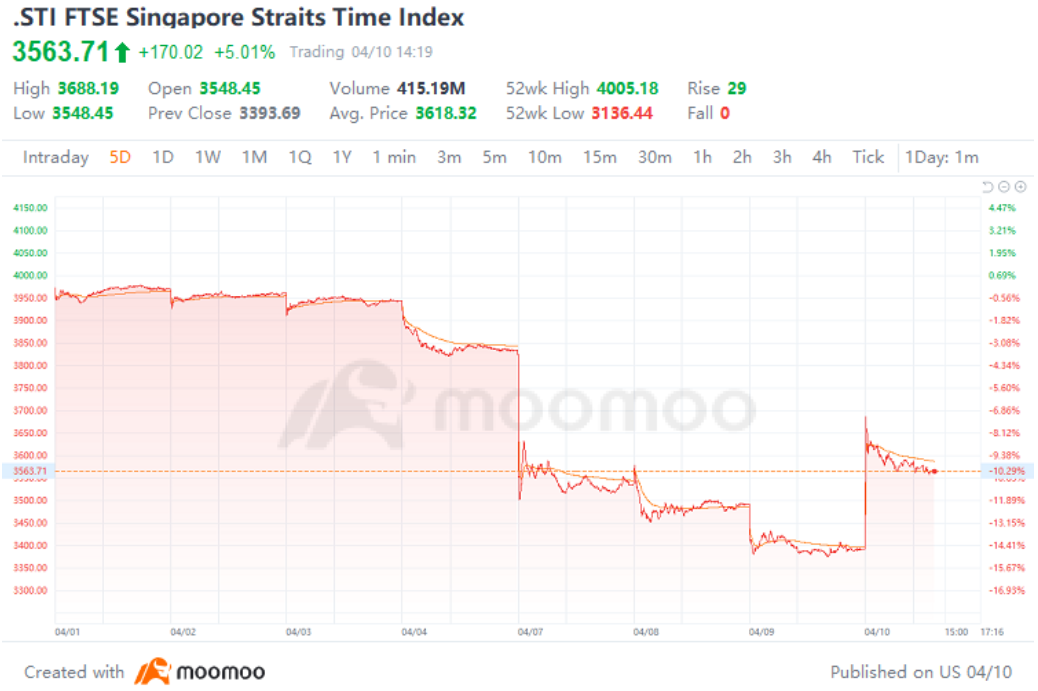
DBS, a banking heavyweight, led the market's recovery. It skyrocketed 11% and regained the S$40 mark. Meanwhile, YZJ Shipbuilding, an industrial underperformer, witnessed a 10% spike in the early trading session today. Nevertheless, the market's relief was short-lived. By 14:19, the index had dropped back to 3,563.7. It remained over 10% below its pre-crisis peak and firmly in the correction zone.
Investors should ensure there is a good reason for buying these stocks during market dips, such as strong fundamentals or significant corrective factors.
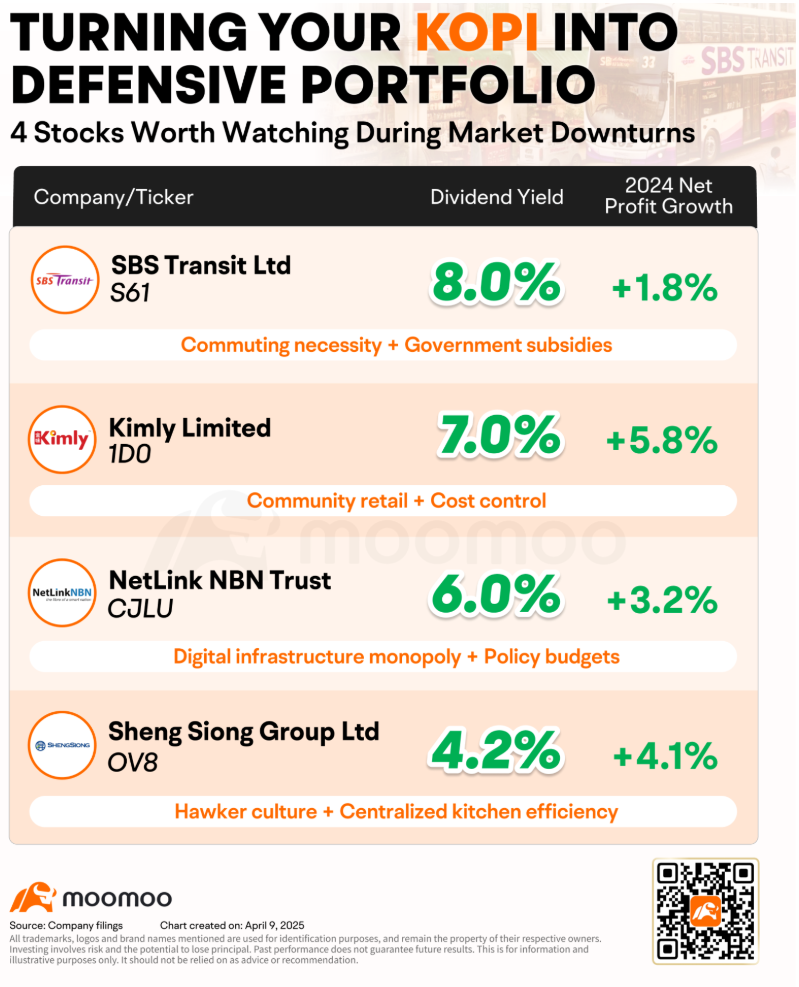
Here's a concise introduction to four "Iron Rice Bowl" stocks:
SBS Transit Ltd (S61)
SBS Transit Ltd (S61) is a leading public transport operator in Singapore, renowned for its extensive bus and rail network. With a strong track record of delivering reliable and efficient services, SBS Transit has become a cornerstone in Singapore's public transportation system. Its stable revenue streams from government contracts and consistent passenger volumes make it an attractive "Iron Rice Bowl" stock, offering investors a sense of security and stability.
Kimly Limited (1D0)
Kimly Limited (1D0) is a prominent food and beverage operator in Singapore, specializing in coffee shops, food courts, and quick-service restaurants. The company's diverse portfolio of brands and strategic locations across the city-state contribute to its resilient business model. Kimly's strong cash flow generation and expanding footprint in the F&B industry underscore its potential as a defensive investment, resilient even in times of economic uncertainty.

NetLink NBN Trust (CJLU)
NetLink NBN Trust (CJLU) is Singapore's sole provider of passive telecommunications infrastructure, playing a crucial role in the country's digital connectivity. As the demand for high-speed internet and data services continues to grow, NetLink NBN Trust's assets remain indispensable. Its long-term concession agreement with the Singapore government and the essential nature of its services provide investors with a steady income stream and a relatively low-risk investment opportunity.
Sheng Siong Group Ltd (OV8)
Sheng Siong Group Ltd (OV8) is a well-established supermarket chain in Singapore, known for its strong brand recognition and extensive network of stores. The company's focus on providing quality products at competitive prices has earned it a loyal customer base. Sheng Siong's resilient business model, underpinned by essential consumer demand, makes it an appealing "Iron Rice Bowl" stock. Its consistent growth and strong fundamentals offer investors a reliable and potentially rewarding investment option in the retail sector.
Top Trump's Tariff-Impacted Markets for Singapore Investors

For Singaporean investors maneuvering through the intricacies of Trump's tariff policies, it is of great importance to pinpoint the markets that are most significantly affected by these trade disputes. The ongoing trade war, marked by increased tariffs and intensifying trade frictions between the US and China, has far-reaching economic consequences for these markets. Here are some key areas to monitor and evaluate potential investment prospects:
VIX Index (Fear Index)
The VIX, commonly referred to as the Fear Index, functions as an indicator of investors' anxiety levels. During market panics, investors commonly buy options, which leads to an increase in the VIX Index. The VIX index serves as a means to predict short-term lows and highs within the S&P 500 index. A very high value of the VIX can imply that the stock market has already endured substantial losses and may be on the cusp of a recovery. In fact, when the VIX reaches extremely high levels, it indicates that the S&P 500 might have bottomed out, potentially initiating an upward (bullish) trend.
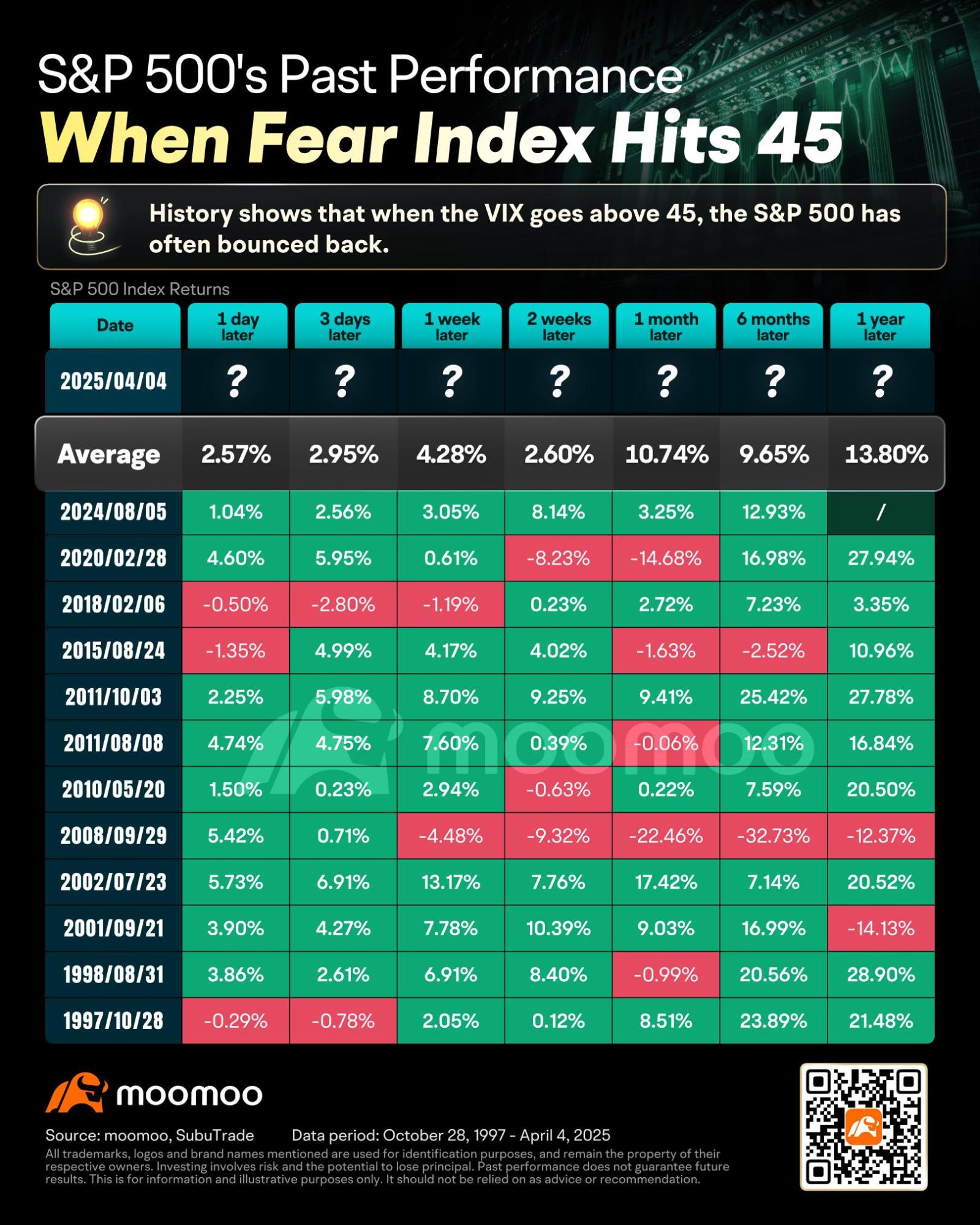
On April 5, the VIX hit 45. Since 2000, it has only ascended to such a level on a few occasions. Many experts view this situation as similar to what occurred in 2011 and 2015. Considering the role of the VIX in signaling market turnarounds and the current high value of the VIX, if the risks associated with tariffs start to abate, stocks may enter a volatile period followed by a recovery.
Gold
Gold has long been regarded as a safe-haven asset during times of economic uncertainty and trade disputes. Gold, along with other defensive assets, can offer stability during market volatility. Currently, this precious metal is trading at an all-time high, and forecasting its future price movement is challenging. With Trump's tariff policies creating market volatility, Singaporean investors may consider gold as a safeguard against potential losses in other asset classes.
NASDAQ 100 Futures
The NASDAQ 100 Futures contract offers exposure to a wide range of technology and growth-focused stocks listed on the NASDAQ exchange. Due to the impact of tariffs, technology stocks present investment opportunities for investors. Given the significant effect of tariffs on the technology sector, Singaporean investors may discover opportunities in this market to buy during price dips and profit from potential rebounds. However, investors should be cautious, as not all price falls indicate a good buying opportunity; thorough analysis is essential to avoid potential pitfalls.
How to Trade US Stocks During Tariff Chaos
In 2025, as the uncertainty in the global trade environment intensifies, especially under the influence of a new round of tariff policies introduced by the Trump administration, market volatility has become even more unpredictable. For investors seeking investment opportunities in a turbulent market, it is crucial to select the right stocks. Historically, markets rallied after significant declines, presenting opportunities for investors who timed their purchases well.
Here are three U.S. stocks that could be considered amidst the tariff chaos
Campbell's (CPB)
Campbell's currently trades at a substantial 36% discount relative to its fair value, presenting an excellent entry point for astute investors. Despite the challenging market conditions, Campbell's harbors significant growth potential. The company boasts a portfolio of robust brands, maintains strong relationships with retailers, and has implemented effective cost-saving measures, all of which contribute to the establishment of a wide economic moat.
ExxonMobil (XOM)
ExxonMobil is trading at a 23% discount below its fair value, making it an appealing option for value investors. The company excels in various performance metrics, particularly in cost efficiency and industry standing. It offers a dividend yield of 4%, providing investors with a reliable source of stable income. In the volatile and uncertain energy sector, ExxonMobil has carved out a narrow economic moat, thanks to its cost advantages and strong position within the industry.
International Flavors & Fragrances (IFF)
IFF is available at a notable 40% discount to its fair value. While its dividend yield of 2.2% may seem relatively low, the company holds promising potential for capital growth. IFF has established a wide economic moat, driven by its intangible assets and the significant product switching costs for its customers.
Note: This guide is for informational and illustrative purposes only and should not be used as advice or a recommendation.
ETF Strategies for Trump's Tariff Volatility
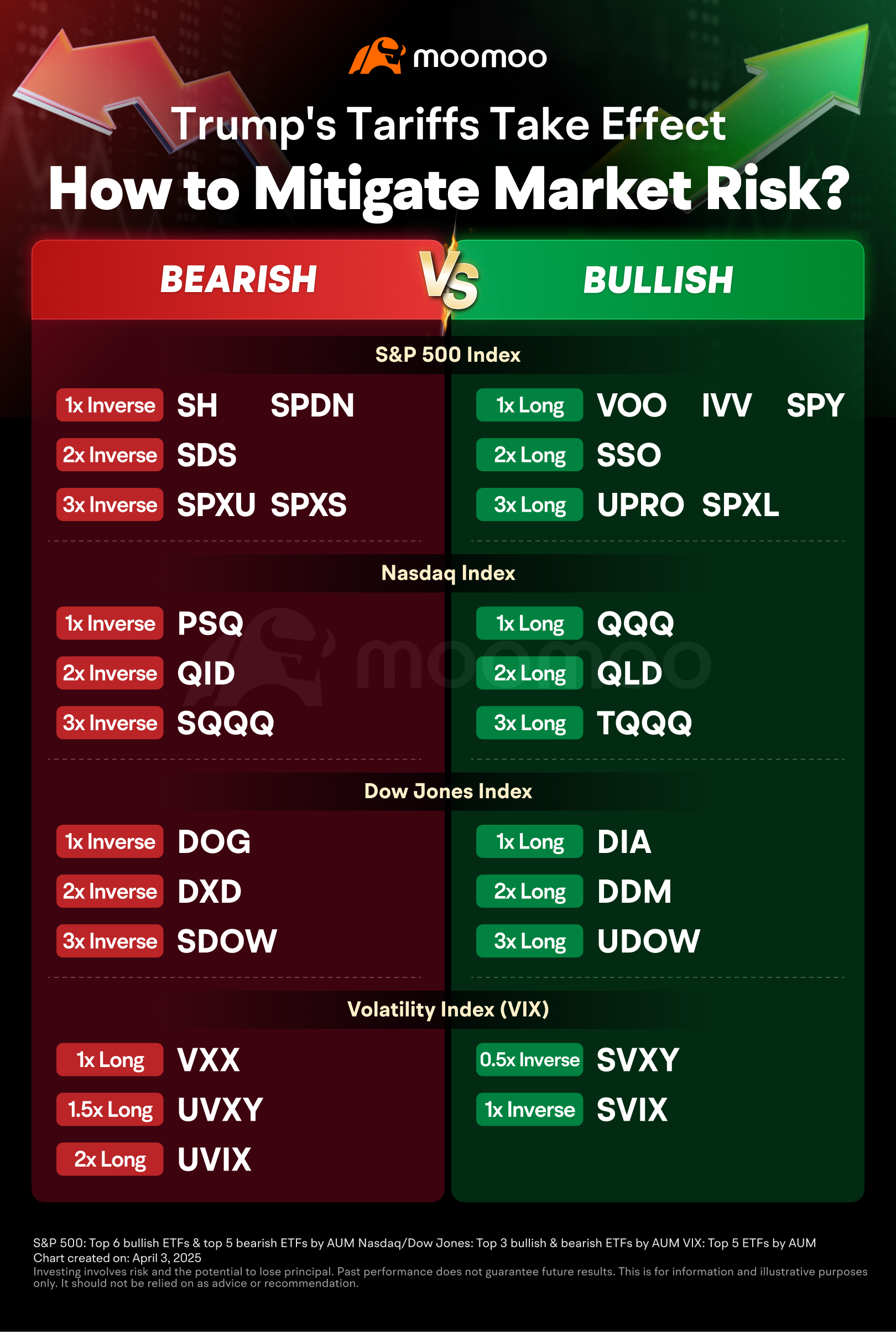
As investors grapple with the potential impacts of US tariffs, Exchange Traded Funds (ETFs) emerge as a versatile tool to navigate the resulting volatility. This guide explores various ETF strategies tailored to mitigate market risk.
S&P 500 Index ETFs
For those seeking to hedge against potential market downturns or capitalize on bearish sentiments, inverse ETFs offer a compelling option. The S&P 500 Index, a broad-based measure of U.S. stock market performance, sees several inverse ETFs tailored to different risk appetites:
1x Inverse: SH, SPDN provide a straightforward way to bet against the index, offering returns that are inversely correlated to the S&P 500.
2x Inverse: SDS doubles the inverse exposure, amplifying gains in a falling market.
3x Inverse: SPXU, SPXS take this strategy to the extreme, offering triple the inverse exposure for those willing to accept higher risk.

Investing in S&P 500 Index ETFs allows investors to gain exposure to a broad range of equities, which may recover after market downturns.
Conversely, for bullish investors, long ETFs tracking the S&P 500 provide straightforward exposure:
1x Long: VOO, IVV, SPY offer direct access to the index's performance.
2x Long: SSO doubles the exposure, allowing investors to magnify gains in a rising market.
3x Long: UPRO, SPXL provides triple leverage, suitable for aggressive investors.
Nasdaq Index ETFs
The Nasdaq Index, known for its heavy weighting in technology stocks, offers similar ETF options for both bearish and bullish investors:
Bearish: PSQ, QID, and SQQQ provide 1x, 2x, and 3x inverse exposure respectively, allowing investors to profit from or hedge against declines in the tech-heavy index.
Bullish: QQQ, QLD, and TQQQ offer 1x, 2x, and 3x long exposure, enabling investors to tap into the growth potential of the Nasdaq.
Dow Jones Index ETFs
The Dow Jones Industrial Average, a bellwether of U.S. industrial performance, also boasts a range of ETF options:
Bearish: DOG, DXD, and SDOW provide 1x, 2x, and 3x inverse exposure, respectively, for those anticipating a downturn in blue-chip stocks.
Bullish: DIA, DDM, and UDOW offer 1x, 2x, and 3x long exposure, allowing investors to participate in the potential upside of the Dow.
Volatility Index (VIX) ETFs
For investors seeking to profit from or hedge against market volatility, VIX-related ETFs provide a unique opportunity:
Long: VXX, UVXY, and UVIX offer 1x, 1.5x, and 2x long exposure to the VIX, respectively, enabling investors to capitalize on market uncertainty.
Inverse: SVXY and SVIX provide 0.5x and 1x inverse exposure to the VIX, allowing investors to bet against volatility.
Note: Past performance does not guarantee future results. This guide is for informational and illustrative purposes only and should not be used as advice or a recommendation.
Option Strategies to Reduce Tariff Volatility for Beginners
Investors can also use certain option strategies to make their investment portfolios less volatile. One example is the covered call. In a covered call strategy, an investor holds a long position in a stock while concurrently selling a call option on that very stock. Moomoo SG offers 11 different option strategies. Investors should be cautious, as stock prices may fall further, emphasizing the need for careful analysis before making investment decisions.

Trading Trump Tariff Markets with Moomoo SG
In the dynamic world of global finance, having the right tools and platforms can make all the difference. Enter Moomoo SG, a cutting-edge trading platform tailored to the needs of investors navigating the complexities of Trump's tariff markets.
0* Commission Trading
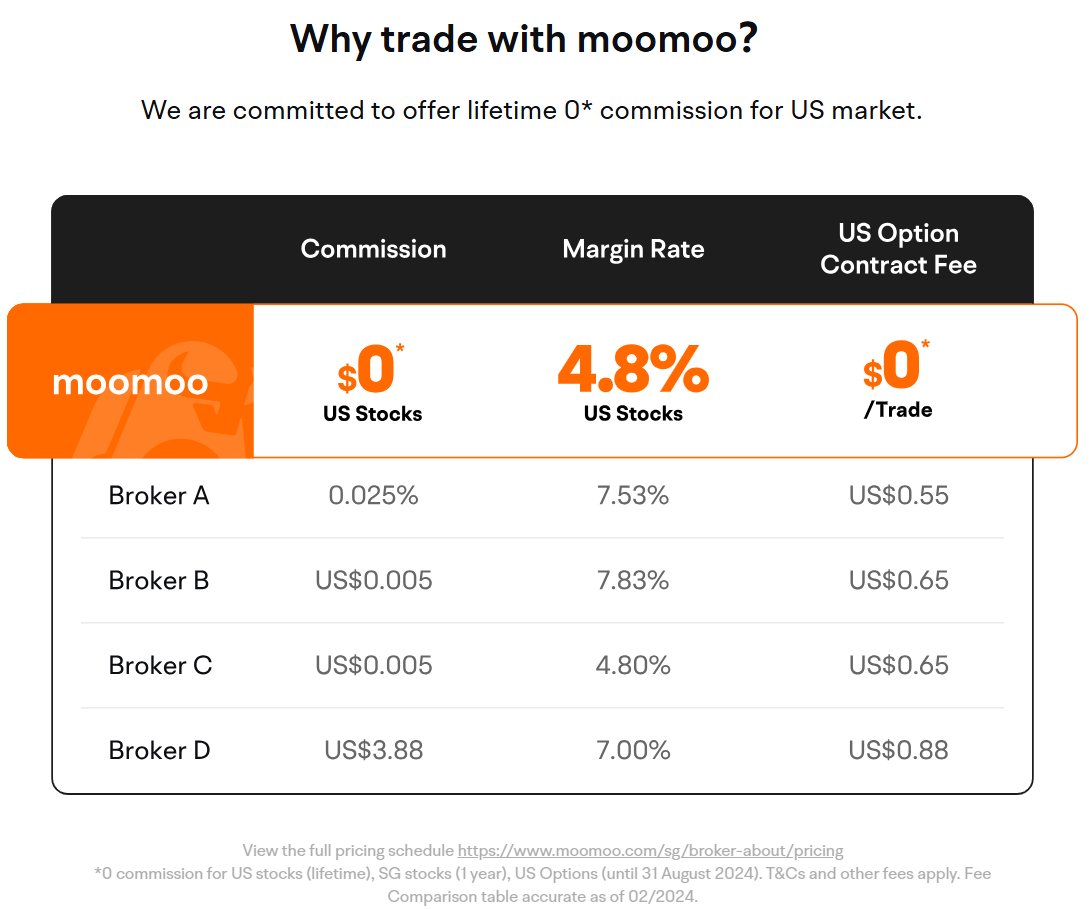
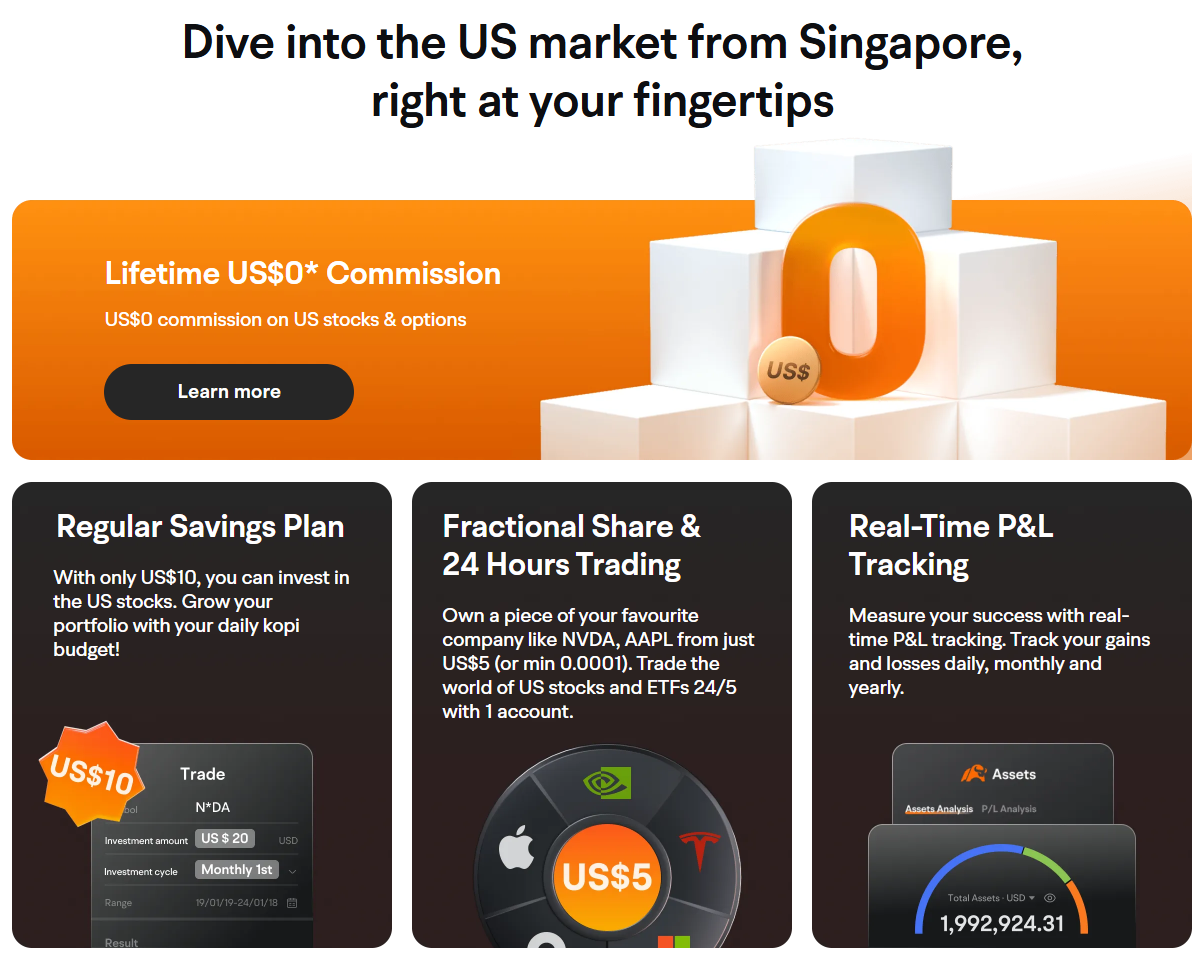
One of the standout features of Moomoo SG is its commitment to 0% commission trading. This means that investors can trade US stocks without the burden of commission fees, allowing for more flexible and cost-effective investment strategies.
24-hour Trading for US Stocks
Another key advantage of Moomoo SG is its 24-hour trading for US stocks. With 24-hour trading, investors can respond to market movements at any time, ensuring they never miss out on potential opportunities.
Global Community with 24 Million Users
Joining Moomoo SG also means becoming part of a vibrant global community of investors. With over 24 million users worldwide, the platform offers a unique opportunity to connect with like-minded individuals, share insights, and learn from each other's experiences.
Conclusion

In conclusion, Trump's tariffs in 2025 present both challenges and opportunities for the Singapore market. The direct and indirect impacts of these tariffs, as explored, can significantly influence various sectors and investment strategies.
For Singaporean investors, closely monitoring indices like the VIX is crucial for gauging market volatility. Identifying tariff-proof sectors, diversifying with defensive assets such as gold and bonds, and implementing strategies like Dollar-Cost Averaging can help mitigate risks. Staying updated on policy shifts ensures investors can adapt their portfolios in a timely manner.
Overall, while the tariff landscape is complex, informed and strategic investment approaches can help Singaporean investors not only weather the storm but also potentially capitalize on emerging opportunities in these volatile markets.
*0 commission subject to terms and conditions. Platform and other fees apply.
This presentation is for informational and educational use only and is not a recommendation or endorsement of any particular investment or investment strategy. Investment information provided in this content is general in nature, strictly for illustrative purposes, and may not be appropriate for all investors. Read more