What's in the Fed's Toolbox?
The Federal Reserve (Fed) carries a "dual mandate," ensuring maximum employment and keeping prices stable.
Simply put, that means balancing "inflation" and "jobs," a task that's easier said than done.
Imagine a seesaw: when employment is high, most folks have jobs and money to spend, boosting demand for goods and nudging inflation upwards, just like we saw post-pandemic.
On the flip side, low inflation often lingers with layoffs and high unemployment. Japan's "Lost Decades" is a textbook case, with the economy stuck in low inflation and a job market deep freeze.
So, the Fed has to keep a keen eye on the economy’s pulse and make some tricky trade-offs along the way.
Luckily, the Fed isn’t facing this massive economic beast empty-handed. It's got two main arsenals: interest rates and the money supply.
Takeaways:
The Fed uses interest rates and the money supply to achieve its dual mandate.
The Fed influences the overall borrowing costs by setting the federal funds rate.
Quantitative Easing (QE) and Quantitative Tightening (QT) are methods the Fed uses to adjust market liquidity.
1. Interest Rate
Think about it—you encounter interest rates all the time. When you stash money in a savings account, the bank pays you interest. Take out a mortgage or swipe your credit card, and you’re paying interest. Essentially, interest rates are the cost of using money.
Does this mean the Fed sends memos to every bank, telling them to tweak their rates? Not quite.
The Fed sets the federal funds rate, the headline number you hear about after those Fed meetings. It's the cost for banks to lend money to each other. By controlling this "master switch," the Fed influences nearly all other interest rates in the market.
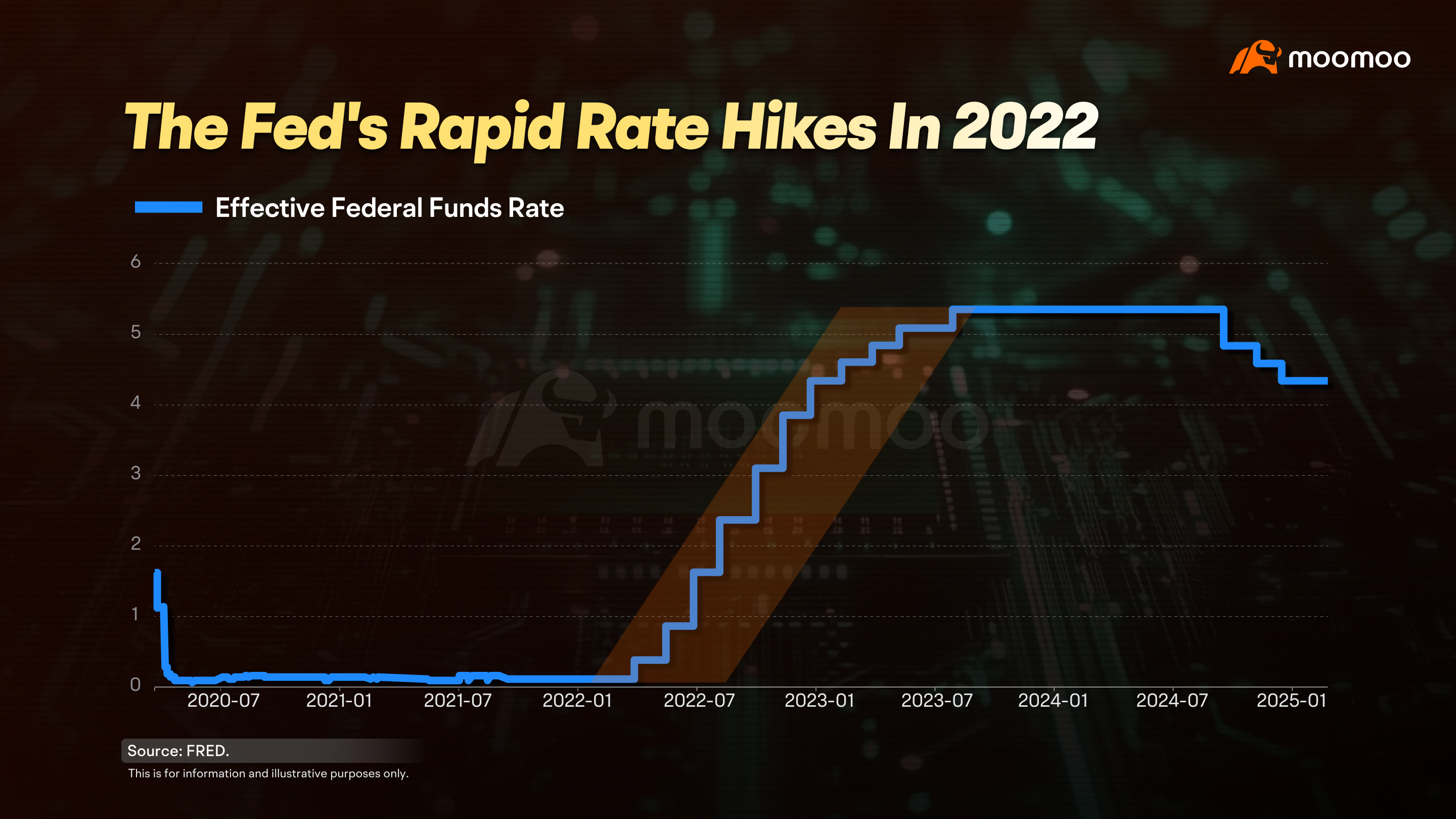
Since 2022, the Fed has rapidly increased the Federal Funds Rate. By early 2025, it remains at a relatively high level.
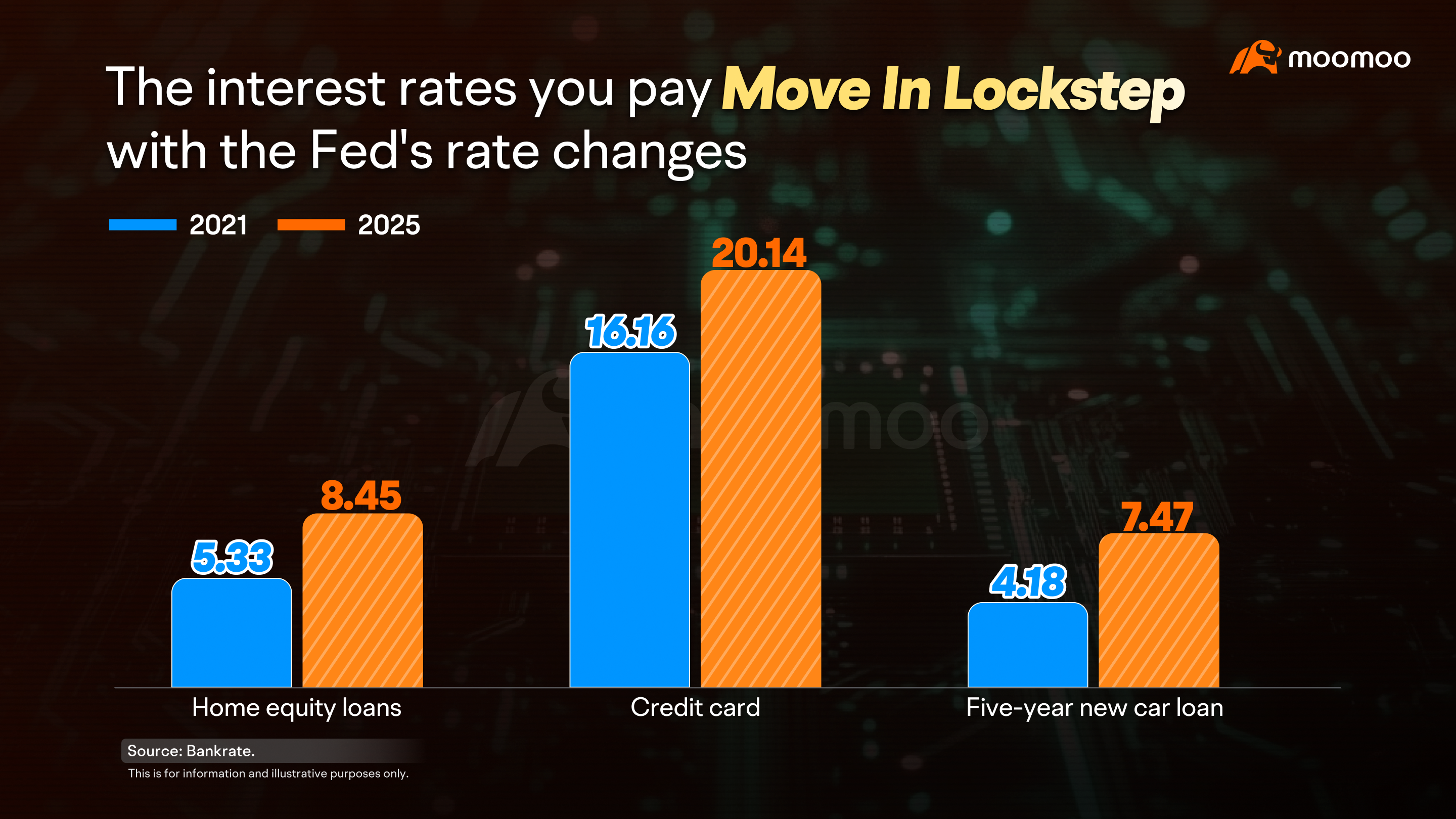
Consequently, the cost of taking out a loan to buy a house or a car using your credit card is climbing along with it.
2. QE & QT
Now, let's explore direct methods for changing the money supply, like Quantitative Easing (QE). This is when the Fed buys long-term government bonds and other assets to pump liquidity into the economy.
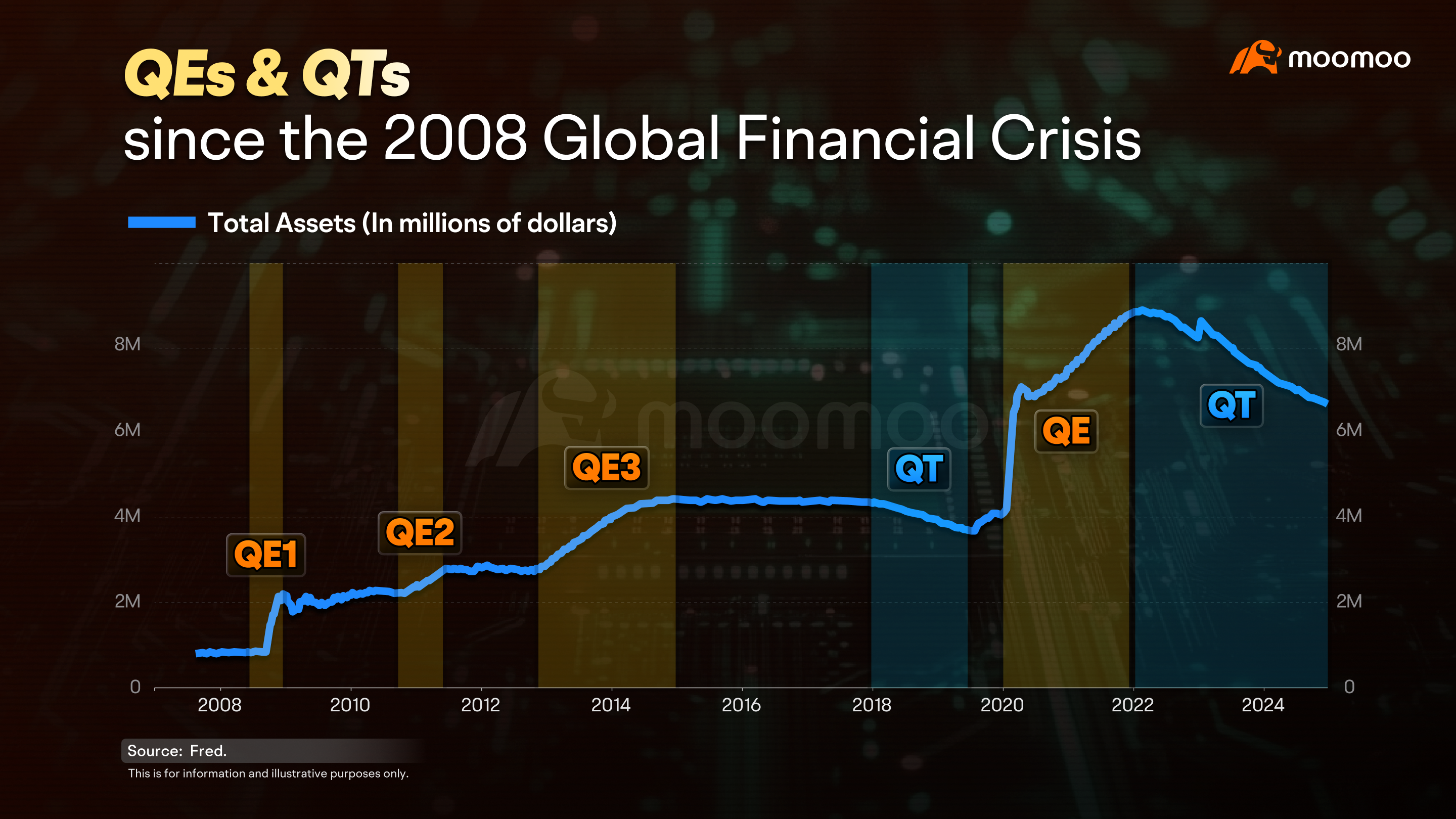
After the 2008 financial crisis, the Fed launched three rounds of QE, ballooning its balance sheet from a few hundred billion dollars to $4.5 trillion. And when the pandemic hit in 2020, the Fed rolled out an even bigger QE round.
But where there’s easing, there’s also tightening.
Quantitative Tightening (QT) is the Fed’s way of reversing course—selling off bonds or letting them mature to shrink its asset holdings. QT typically follows QE, as seen from 2017 to 2019 and again after 2022.
When the economy is overheating, the Fed needs to hike rates and trim the money supply, stepping on the brakes.
But if we’re skidding into a recession, it’s time to lower rates and pump up the money supply—hitting the gas pedal to rev up the economy.
By understanding the mechanism of interest rates and the money supply, you'll have a better grasp of how the Fed navigates our economic highways, maneuvering through twists and turns.
This presentation is for informational and educational use only and is not a recommendation or endorsement of any particular investment or investment strategy. Investment information provided in this content is general in nature, strictly for illustrative purposes, and may not be appropriate for all investors. Read more
Recommend
Mastering the Dollar Cycle: How to invest in a changing economy

How Will the US Dollar Perform in 2024? A Closer Look into the US Dollar Index
Unveiling Inflation: Why is Your Wallet Shrinking?

Why is the US dollar so powerful worldwide, and how can we tell?
How to interpret the Fed dot plot?
Why do oil ETFs lag behind oil prices in the long run?
Understanding Bessent's Fiscal Blueprint
Unpacking the U.S. Debt Issue
Meet Dr. Copper: Understanding the Copper Market
A look at employment: what other indicators are there?
Do Oil Price Swings Rock the Stock Market?
How Tariffs Could Impact the Copper Landscape?
Why is Oil Called the "Mother of All Commodities"?
GDP: The Barometer of National Prosperity
Are U.S. Treasuries still a safe haven?
How does nonfarm payroll impact the global market?
How Inflation Affects the Market
How to Decode Inflation: CPI, PCE, and PPI
Understanding Treasury Auctions: A Step-by-Step Guide
Gold vs. Gold Miners: A Comparison
Understanding the GDP
How does monetary policy steer our lives and investment
How to analyze the Federal Reserve's monetary policy?
Discussing the driving forces behind rises in gold prices
Strong Consumer Spending Despite Economic Slowdown: Here's Why
Rapidly Rising US Housing Prices: Opportunity or Risk?
The Underlying Conflicts Surrounding Crude Oil Prices
'Father of value investing' Benjamin Graham: Ten Stock Selection Criteria
'Oracle of Omaha' Warren Buffett:ROE>20% is preferable
07 Howard Marks & Oaktree Capital
Listen to the Fed's speakers: Hawks or doves?
Understanding the CCI
Understanding the Federal Reserve Interest Rate Decision
Understanding the Durable Goods Orders
Investing and Labor Market Indicators
Understanding the relationship between the stock market and the bond market
The Rise of the Fed: Can Trump Dismiss Powell?
01 Using 13F filings to learn from big investors
Why does Warren Buffett say don't piggyback on his trades?
Understanding the US Non-Farm Payroll Data
Understanding the US Crude Oil Inventories
Understanding the PPI
Understanding the Retail Sales
How to Preserve Your Wealth in a High Inflation Environment
What is the Debt Ceiling? A Deep Dive into US Fiscal Policy
Discover the bond market: A quick and easy guide
Analyzing the manufacturing industry may help you grasp economic trends
The Fed Dot Plot explained: What it says about US interest rates
What the Federal Reserve does?
08 Carl Icahn & Icahn Enterprises
09 Seth Klarman & Baupost Group
What's in the Fed's Toolbox?
Open the Fed's monetary policy toolbox
A brief history lesson on the Fed and U.S. economy
06 Ray Dalio & Bridgewater Associates
04 Warren Buffett & Berkshire Hathaway
03 How to Read Form 13F
02 Identify a fund's investment strategy
05 Bill Ackerman & Pershing Square Capital
Mastering the Dollar Cycle: How to invest in a changing economy
How Will the US Dollar Perform in 2024? A Closer Look into the US Dollar Index
Unveiling Inflation: Why is Your Wallet Shrinking?
Why is the US dollar so powerful worldwide, and how can we tell?
How to interpret the Fed dot plot?
Why do oil ETFs lag behind oil prices in the long run?
Understanding Bessent's Fiscal Blueprint
Unpacking the U.S. Debt Issue
Meet Dr. Copper: Understanding the Copper Market
A look at employment: what other indicators are there?
Do Oil Price Swings Rock the Stock Market?
How Tariffs Could Impact the Copper Landscape?
Why is Oil Called the "Mother of All Commodities"?
GDP: The Barometer of National Prosperity
Are U.S. Treasuries still a safe haven?
How does nonfarm payroll impact the global market?
How Inflation Affects the Market
How to Decode Inflation: CPI, PCE, and PPI
Understanding Treasury Auctions: A Step-by-Step Guide
Gold vs. Gold Miners: A Comparison
Understanding the GDP
How does monetary policy steer our lives and investment
How to analyze the Federal Reserve's monetary policy?
Discussing the driving forces behind rises in gold prices
Strong Consumer Spending Despite Economic Slowdown: Here's Why
Rapidly Rising US Housing Prices: Opportunity or Risk?
The Underlying Conflicts Surrounding Crude Oil Prices
'Father of value investing' Benjamin Graham: Ten Stock Selection Criteria
'Oracle of Omaha' Warren Buffett:ROE>20% is preferable
07 Howard Marks & Oaktree Capital
Listen to the Fed's speakers: Hawks or doves?
Understanding the CCI
Understanding the Federal Reserve Interest Rate Decision
Understanding the Durable Goods Orders
Investing and Labor Market Indicators
Understanding the relationship between the stock market and the bond market
The Rise of the Fed: Can Trump Dismiss Powell?
01 Using 13F filings to learn from big investors
Why does Warren Buffett say don't piggyback on his trades?
Understanding the US Non-Farm Payroll Data
Understanding the US Crude Oil Inventories
Understanding the PPI
Understanding the Retail Sales
How to Preserve Your Wealth in a High Inflation Environment
What is the Debt Ceiling? A Deep Dive into US Fiscal Policy
Discover the bond market: A quick and easy guide
Analyzing the manufacturing industry may help you grasp economic trends
The Fed Dot Plot explained: What it says about US interest rates
What the Federal Reserve does?
08 Carl Icahn & Icahn Enterprises
09 Seth Klarman & Baupost Group
What's in the Fed's Toolbox?
Open the Fed's monetary policy toolbox
A brief history lesson on the Fed and U.S. economy
06 Ray Dalio & Bridgewater Associates
04 Warren Buffett & Berkshire Hathaway
03 How to Read Form 13F
02 Identify a fund's investment strategy
05 Bill Ackerman & Pershing Square Capital