Short Iron Butterfly: A Malaysian Investor's Guide to Advanced Options Trading Strategy

For Malaysian investors looking to navigate a neutral market with a sophisticated options strategy, the short iron butterfly presents an intriguing opportunity. This approach is designed to potentially capitalize on stock or futures prices that are expected to move within a defined range.
The primary objective of this strategy is to generate profits when the underlying asset's price remains relatively stable. However, it demands meticulous planning and vigilant monitoring to manage risk effectively.
What is a Short Iron Butterfly
The short iron butterfly is a sophisticated options trading strategy that combines a bull put spread and a bear call spread. This strategy involves selling a call and a put at the same strike price, which is typically at or closer to the current market price of the underlying stock. All four options have the same expiration with three different strike prices that are equidistant. This combination results in a net credit and offers a limited theoretical potential for both profit and loss.

Why Consider the Short Iron Butterfly: How it Works
Implementing a short iron butterfly strategy requires strategically opening positions with both precision and purpose. This approach is initiated by applying the same strike price to both short puts and short calls, while ensuring that all options have the same expiry date, creating a synchronized and harmonious set of contracts.
Bull Put Spread: Sell a put option and buy another put option at a lower strike price. The objective here is to benefit from the underlying stock price remaining close to the strike price of the sold put.
Bear Call Spread: Sell a call option and buy another call option at a higher strike price. The aim is to potentially profit if the underlying stock price remains close to the strike price of the sold call.
All options involved in the short iron butterfly have the same expiration date, ensuring that they are subject to decay at the same time. The key to this strategy lies in the selection of strike prices that are equidistant from each other, creating a symmetrical structure around the current market price.
Short Iron Butterfly Example
Here's an example.
Bull put spread:
Buy 1 85 Put at RM1.20
Sell 1 90 Put at RM3.20
Bear call spread:
Sell 1 90 Call at RM3.30
Buy 1 95 Call at RM1.40
The net credit received is RM3.90 (3.20 +3.30 - 1.20 - 1.4).
Short Iron Butterfly Profit and Loss
The Short Iron Butterfly strategy combines elements of a call/put spread and a put/call spread, making it a balanced method of capturing premium income with limited risk exposure. Understanding profit/loss dynamics is critical for traders wishing to implement this strategy effectively.
Theoretical max profit
The theoretical maximum profit potential for a short iron butterfly is the net credit received, less any commissions. This profit is fully realized if the stock price matches the strike price of the short options (the center strike) at expiration. In this scenario, all options expire worthless, enabling the trader to retain the net credit as income. For this example, this would occur if the underlying security was RM90 upon expiration.
Theoretical max loss
The theoretical maximum loss is the difference between the lowest and middle strike prices minus the net credit received. Using the example in this article, if the difference between these strike prices is 5.00, the net credit is 5.00, and the net credit is 3.90 (excluding commissions), then the theoretical maximum loss is RM1.10. It is important to note that these figures assume that the entire multi-leg trade remains intact through expiration with no early exercise or allocation. In practice, losses over the theoretical maximum loss could be incurred if the strategy changes or the price of the underlying stock fluctuates significantly.
Breakeven points
The breakeven points for the short iron butterfly include two breakeven points.
Lower breakeven point: This is equal to taking the center strike minus the net credit received from creating the trade. For this example, it's RM90 - RM3.90 = RM86.10.
Upper breakeven point: This is equal to the center strike price plus the net credit received. For this example, it's RM90 + RM3.90 = RM93.90.
Time decay
Time decay (theta) is a critical factor in options trading, especially for short iron butterfly strategies. Options generally lose value as time passes due to the diminishing time left until expiration. For a short iron butterfly strategy, maintaining a net positive theta (time decay) occurs when the stock price stays between the lowest and highest strike prices. As a result, this strategy typically benefits from the passage of time, with potential profits accruing as options lose their extrinsic value. However, if the stock price shifts beyond the range of the strike prices, the theta turns negative, leading to potential losses as expiration approaches.
How to set up a short iron butterfly strategy using Moomoo Malaysia
Moomoo MY provides a user-friendly platform for trading options. Here's a step-by-step guide to get you started:
Step 1: Navigate to your Watchlist, then select a stock's "Detailed Quotes" page.
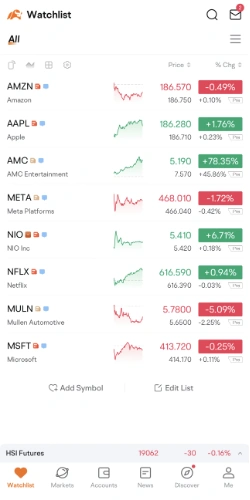
Images provided are not current and any securities are shown for illustrative purposes only and are not a recommendation.
Step 2: Navigate to Options> Chain located at the top of the page.
Step 3: By default, all options with a specific expiration date are shown. For selective viewing of calls or puts, simply tap "Call/Put."
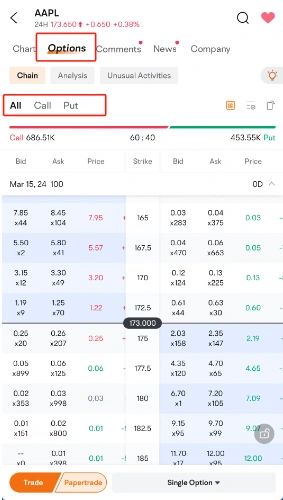
Images provided are not current and any securities are shown for illustrative purposes only and are not a recommendation.
Step 4: Adjust the expiration date by choosing your preferred date from the menu.
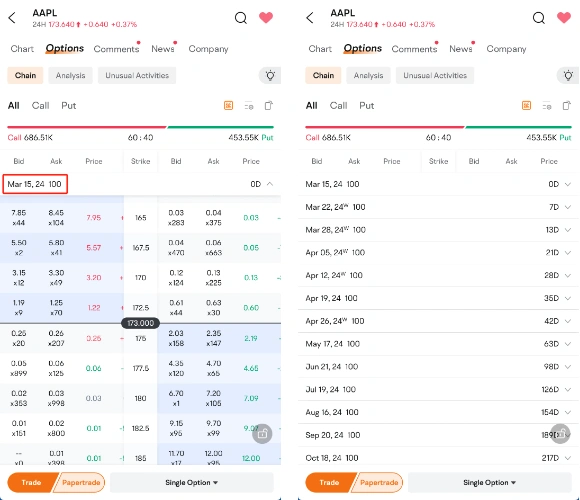
Images provided are not current and any securities are shown for illustrative purposes only and are not a recommendation.
Step 5: Easily distinguish between options: white denotes out-of-the-money, and blue indicates in-the-money. Swipe horizontally to access additional option details.
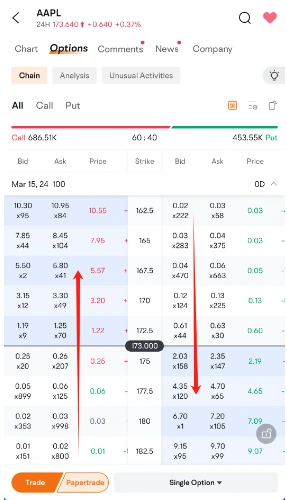
Images provided are not current and any securities are shown for illustrative purposes only and are not a recommendation.
Step 6: Explore various option trading strategies at the screen's bottom, offering flexibility for your investment approach.
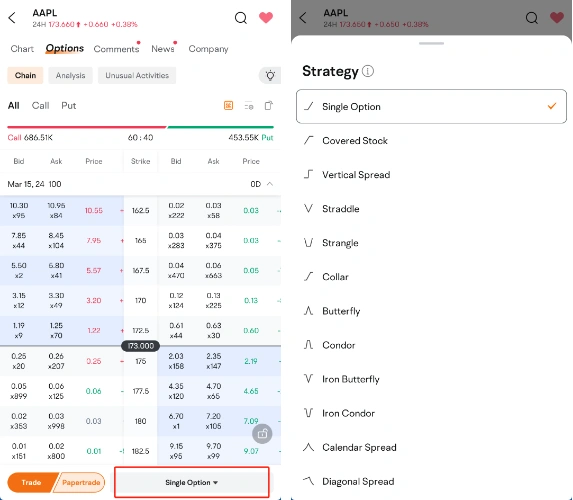
Images provided are not current and any securities are shown for illustrative purposes only and are not a recommendation.
When to Use a Short Iron Butterfly
The short iron butterfly is a sophisticated options trading strategy that combines the elements of a bull put spread and a bear call spread. It's particularly useful in scenarios where the market is expected to exhibit limited movement or remain range-bound. Here are some situations where traders might consider employing this strategy:
Low Volatility Environment: The Short Iron Butterfly strategy demonstrates its profit potential when the market is expected to enter a period of calm with a low range of asset price fluctuations. This strategy is ideal for investors who anticipate that the underlying asset will remain stable and will not experience large swings.
Neutral Market Outlook: This strategy is the "neutral" strategy in options trading, meaning that profits are possible as long as the price of the underlying asset is within a specific range at expiration. Short Iron Butterfly offers a potentially lucrative avenue for investors who do not have a strong directional expectation that the price of the underlying asset will remain within a certain range.
Limited Risk, Limited Reward Preference: For traders who prefer a strategy with defined risk and reward, the short iron butterfly offers a structured approach. By defining the maximum potential loss upfront, traders can manage risk effectively while still aiming for a limited reward.
Premium Collection: By simultaneously selling options and collecting the premium, the investor is able to generate immediate income. This strategy is an attractive option for traders who are looking for immediate cash flow from options trading.
Options Decay: Given that the Short Iron Butterfly strategy benefits from the decay of the time value of options, it would be particularly advantageous to employ this strategy when a decline in implied market volatility is expected.

When to close a short iron butterfly
Managing a short iron butterfly position involves careful consideration of market conditions, personal trading objectives, and risk tolerance. Here are several scenarios in which an investor might consider closing a short iron butterfly:
Nearing Expiration: As the expiration date approaches, especially if the price of the underlying asset is near one of the breakeven points, an investor may want to close the position to avoid the risk of the options expiring in the money. Closing the position allows the investor to limit potential losses and manage risk effectively.
Achieving Target Profit: When the price of the underlying asset moves within a specific range as expected and the Short Iron Butterfly strategy has realized a significant portion of its theoretical maximum potential profit, the trader may choose to close the position to ensure that the profit is pocketed.
Changing Market Conditions: If market conditions change, resulting in increased volatility or a significant movement in the price of the underlying asset, it may be wise to close the Short Iron Butterfly position to limit potential losses or take advantage of new trading opportunities that may arise.
Avoiding Assignment: There is a risk of striking an option if it is at intrinsic value before expiration, especially if the trader does not wish to buy or sell the underlying asset. Closing the position before expiration can help avoid this risk.
Rebalancing Portfolio: If the Short Iron Butterfly strategy is part of a broader options trading strategy or portfolio, closing the position may be part of a rebalancing effort for overall risk or exposure management.
Potential pros and cons of a short iron butterfly
The short iron butterfly options strategy is a sophisticated trading technique designed to capture premium income while managing risk. Like any trading strategy, it comes with its own set of advantages and disadvantages.
Pros of a short iron butterfly
Defined Loss Potential: One of the primary advantages of a short iron butterfly is that it offers a defined loss potential. When establishing the position, traders know the theoretical maximum potential loss, providing a clear risk profile.
Defined Profit Potential: In contrast to limited risk, the strategy also offers limited profit potential. Traders know the theoretical maximum profit when they enter a position, allowing them to accurately measure risk and reward.
Profit from Low Volatility: The Short Iron Butterfly strategy delivers profits when the price of the underlying asset is relatively stable and does not fluctuate dramatically, making it comfortable in calm markets.
Premium Collection: By selling options and collecting the premium, traders are able to take immediate income, providing additional cash flow to the trading strategy.
Neutral Strategy: Short Iron Butterfly is a neutral options trading strategy that allows profits to be made while the price of the underlying asset stays within a specific range, thus avoiding a strong prediction of the market direction.
Cons of a short iron butterfly
Complexity: This strategy involves multiple options contracts with different strike prices, which is more complex than simpler options strategies and requires a certain level of expertise and experience on the part of the trader.
Commission Costs: With its multiple legs (buying and selling multiple options contracts), transaction costs such as commissions can eat into potential profits. Traders need to carefully consider these costs when evaluating the strategy's viability and profitability.
Market Conditions: The Short Iron Butterfly strategy is most effective in low-volatility environments and may be ineffective or result in losses in high-volatility environments or during periods of significant market movement.
Short Iron Butterfly vs. Short Iron Condor: What's the difference
Short Iron Condor and Short Iron Butterfly are both neutral options trading strategies involving multiple options contracts for traders who expect range-bound volatile markets. However, there are key differences between the two in terms of structure, risk-reward profile, and profit potential. These differences are explored in more detail below.
Structure
The Short Iron Butterfly strategy involves selling an at-the-money (ATM) call and put option at the same time, while simultaneously purchasing a call option with a higher strike price and a put option with a lower strike price. This strategy is characterized by selling calls and putting at the same strike price and purchasing options on either side of the strike price of the two sold options, creating a narrower profit range.
In contrast, the Short Iron Condor strategy involves selling two options at different strike prices purchasing both calls, and putting at further away strike prices. This strategy uses option strikes that are further away from the current market price, thus providing a wider profit range.
Strike Prices
Short Iron Condor: Uses options with strike prices further away from the current market price of the underlying asset, resulting in a wider range for the strategy to be potentially profitable.
Short Iron Butterfly: Uses options with strike prices closer to the current market price of the underlying asset, resulting in a narrower range for the strategy to be potentially profitable.
Profit Potential
Short Iron Condor: It has a wider profit range compared to the short Iron Butterfly due to the further-out strike prices. However, the theoretical maximum potential profit is lower compared to the short iron butterfly.
Short Iron Butterfly: It has a narrower profit range due to the closer proximity of the sold options to the current market price. Offers a higher theoretical maximum potential profit compared to the short iron condor.
Risk-Reward Profile
Short Iron Condor and Short Iron Butterfly: Both strategies have a risk-reward profile characterized by limited potential profit and limited potential loss. A short iron condor potentially profits if the price of the underlying asset remains within a certain range until expiration. A short iron butterfly's potential profit range is narrower compared to the iron condor due to the closer proximity of the sold options to the current market price.
FAQs about the short iron butterfly options strategy

How can you potentially profit from the Iron Butterfly spread?
Correct price range forecasting: Malaysian investors first need to accurately predict that the price of the underlying asset will remain within a specific range until the option expires. This range is defined by the strike prices of the options that make up the spread.
Premium collection: When constructing a Short Iron Butterfly Spread, the Malaysian investor receives immediate option premiums by selling call and put options. These premiums serve as immediate income, and if the sold options become worthless at expiration, the investor retains these premiums and realizes a profit.
Time Decay (Theta) Utilisation: Options lose value as time passes due to time decay (theta). Since the short iron butterfly involves selling options with the same expiration date, Malaysian investors benefit as time passes if the price of the underlying asset remains within the range defined by the strike prices. The options they sold will lose value due to time decay, contributing to potential profits.
Volatility reduction: The short iron butterfly benefits from a decrease in implied volatility. As the value of the options decreases, it can allow Malaysian investors to buy them back at a lower price or let them expire worthless, increasing the profit potential.
Close the spread at a potential profit: If the price of the underlying asset stays within the expected range until expiry and the sold calls and puts become worthless, the investor can close the position by buying back the previously sold options (if they have not already been automatically closed out due to the expiry of the options), thus realizing the profits generated by the initial premium income and avoiding the need to hold the options to expiry, reducing risk.
Monitoring and Management: Throughout the life of the Short Iron Butterfly Spread, Malaysian investors should continually monitor market conditions, the price of the underlying asset, and any changes in implied volatility. Depending on these factors, investors may need to adjust or close positions before expiration to lock in potential profits or minimize losses.
Is the short iron butterfly better than the short iron condor?
There is no "better" Short Iron Butterfly or Short Iron Condor strategy, it all depends on the investor's market expectations, risk tolerance, and trading objectives. Each strategy has its own unique advantages and limitations, and the choice should be made on a case-by-case basis and according to personal preference. Here are some key points to consider when making your decision.
The Short Iron Butterfly strategy offers a relatively narrow profit range, but typically delivers a higher maximum potential profit, especially if the price of the underlying asset at expiration is exactly equal to the strike price of the sold option. However, it has a relatively low risk-return ratio compared to the Short Iron Condor strategy.
Some investors may favor the Short Iron Butterfly strategy because of its higher potential profit and higher probability of making a profit (since the strike price is closer to the current stock price). Other investors may choose the Short Iron Condor strategy for its wider profit range and potentially higher risk-to-reward ratio. Investors need to carefully evaluate their objectives and market conditions before deciding to use these strategies.
What is the success rate of the short iron butterfly strategy?
The success rate of the short iron butterfly strategy can vary widely depending on several factors, including market conditions, the investor's ability to accurately predict price movements, and how the strategy is implemented. While there is no definitive "success rate" for the short iron butterfly strategy, Malaysian investors can improve their potential for success by carefully considering these factors and understanding that options trading involves risks. Past performance is not indicative of future results, and multi-leg strategies like the short iron butterfly are complex and may not be appropriate for all investors.
Is the short iron butterfly a good strategy?
The short iron butterfly is a popular options trading strategy that involves combining both calls and put options to create a range-bound position that results in a net credit. Its primary goal is to capitalize on low volatility and time decay, making it appealing in stable market conditions. For Malaysian investors with a neutral outlook on the market and a preference for defined risk and reward, the short iron butterfly can be a good strategy. However, traders must be mindful of the potential for losses in volatile markets and should monitor and manage their positions effectively.
*Disclaimer:
Moomoo is a financial information and trading app offered by Moomoo Technologies Inc. In Malaysia, investment products and services available through the moomoo app are offered through Moomoo Securities Malaysia Sdn. Bhd. ("Moomoo MY").
This content is for informational purposes only and does not constitute a recommendation or solicitation for any financial products or services. Past performance does not guarantee future results. All investments carry risks, including loss of principal. This content does not consider your investment objectives or financial situation. Please consult your financial adviser as to the suitability of any investment. Full disclaimers at https://www.moomoo.com/my/support/topic9_37.
This advertisement has not been reviewed by SC.
This presentation is for informational and educational use only and is not a recommendation or endorsement of any particular investment or investment strategy. Investment information provided in this content is general in nature, strictly for illustrative purposes, and may not be appropriate for all investors. Read more