How to Buy SoFi Technologies (SOFI) Stock in Canada
 12hours ago
SoFi is a financial technology company offering a range of services including lending, investing, and banking through its digital platform. The company has gained attention from investors recently due to consistent revenue growth and developments in the SoFi stock price.
This guide explains the SoFi share price outlook and details how to buy SoFi stock in Canada via regulated platforms.
How to Buy SoFi Technologies (SOFI) Stock in Canada
Source: moomoo data, as of May 19, 2026.
Can Canadians Buy SoFi Technologies (SOFI) Stock?
Yes, Canadians can buy SoFi (SOFI) stock by opening a self-directed brokerage account that provides access to US exchanges. However, investors must consider the impact of tax treatment, currency fluctuations, and currency exchange fees on their total returns before finalizing any trades.
When Canadian investors purchase SoFi shares, choosing the right registered account is crucial for cross-border tax efficiency. Holding your investments in a Registered Retirement Savings Plan (RRSP) or a Tax-Free Savings Account (TFSA) can significantly impact your overall returns. Understanding the specific tax rules for US equities ensures you manage your portfolio effectively while navigating foreign withholding regulations.
TFSA vs. RRSP: Under the Canada-US tax treaty, US dividends are subject to a 15% withholding tax when held in a TFSA. In contrast, an RRSP is fully exempt from this foreign withholding tax. This crucial exemption makes the RRSP a much more tax-efficient account for Canadians holding any dividend-paying US stocks.
When Canadian investors trade US equities like SoFi, navigating the exchange rate is a critical step. Currency conversion spreads and foreign exchange fees can quietly erode your total investment returns when moving between CAD and USD.
To address this common pain point, moomoo offers zero currency conversion fees, enabling more efficient and cost-effective trading of SoFi stock for Canadians.

Step-by-Step: How to Buy SoFi Technologies (SOFI) Stock in Canada
Embarking on your investment journey doesn’t have to be complicated—this practical guide breaks down each step for how to buy SoFi shares in Canada. Whether you’re a first-time investor or looking to buy SoFi stock, you’ll gain the clarity and confidence to get started smoothly.
Step 1: Choose a Stock Trading Platform
Selecting the right broker is vital for Canadians wanting to buy US stocks like SoFi. You need a platform that perfectly aligns with your trading style and budget.
As the #1 US Stocks Trading Platform for Canadians, moomoo provides absolute peace of mind through strict CIRO regulation and because its parent company is Nasdaq-listed (NASDAQ: FUTU). These professional-grade tools make executing your SoFi trades incredibly straightforward.

Step 2: Open the Right Account Type
| Account Type | Best For | Tax Implications |
|---|---|---|
| RRSP | Long-term retirement | Exempt from 15% US withholding tax on SoFi dividends. |
| TFSA | Tax-free growth | No tax on gains; 15% withholding tax on SoFi dividends. |
| Cash | General investing | Gains and dividends from SoFi are fully taxable. |
| Margin | Leveraged trading | Taxable; interest on loans for SoFi may be deductible. |
📝 What You'll Need to Open an Account
Step 3: Fund your account
Moving capital into your brokerage account is a strict prerequisite before executing any market orders. Having settled funds available ensures seamless execution when you are ready to invest.
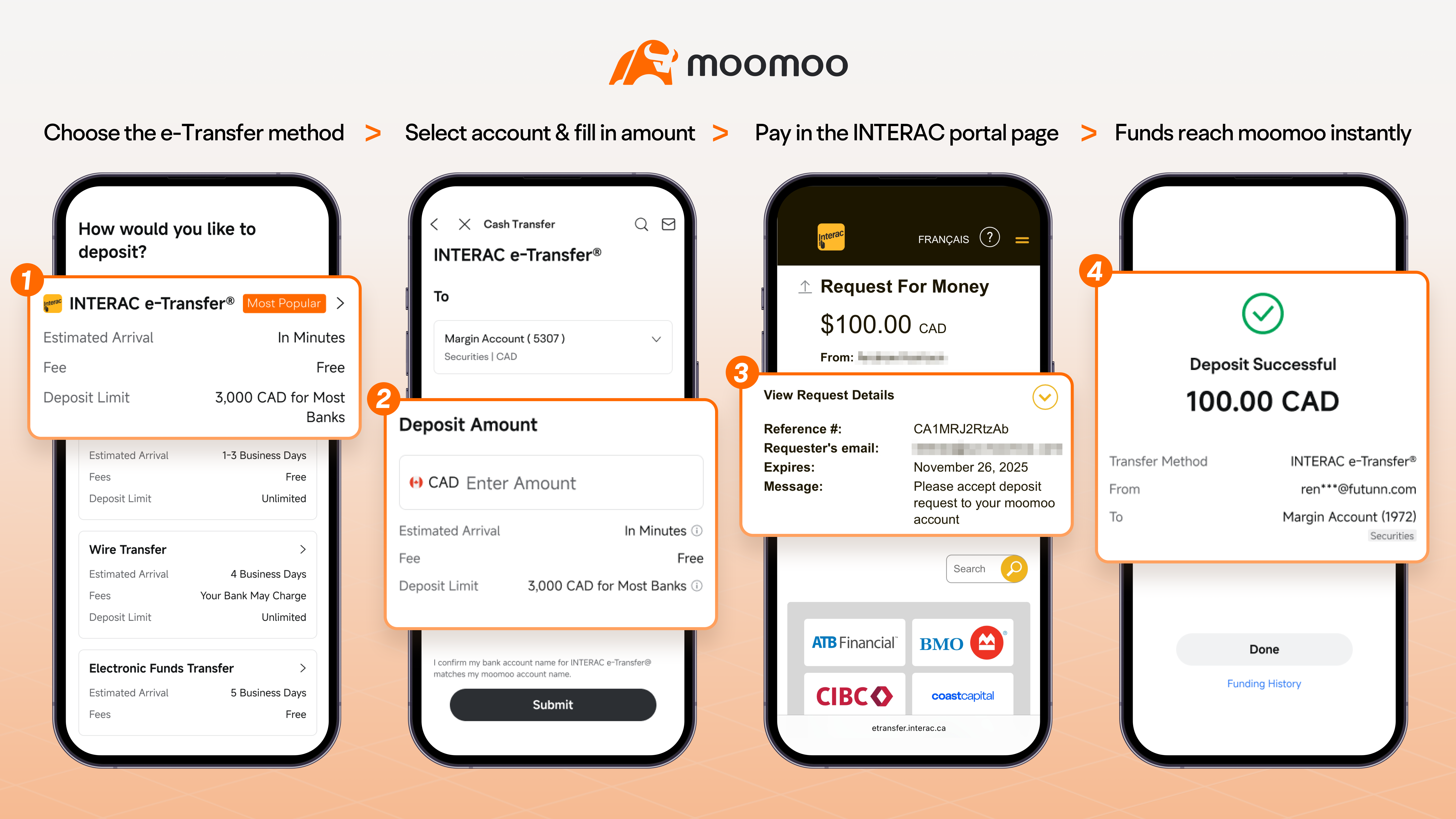
To buy SoFi Technologies stock efficiently, you can use Interac e-Transfer, wire transfer, direct deposit, or bill payment. Choosing a direct method reduces processing delays, allowing swift market entry.
Why Funding on moomoo is Different
When buying SoFi or other US equities, currency conversion fees are often a "hidden killer" of investment returns. moomoo solves this specific pain point for Canadian investors:
- Instant e-Transfers: Never miss a market move for SoFi with near-instant deposit availability.
- Zero Exchange Fees: Convert CAD to USD directly within the moomoo app without hidden markups.
- Transparent Rates: Review real-time conversion rates before committing your capital to SoFi shares.
Step 4: Search for SoFi Technologies (SOFI) Stock
Locate SoFi using its ticker to initiate a multi-dimensional evaluation. Analyzing price, trends, and volume is essential to decode short-term momentum and underlying market sentiment before finalizing any trade execution.
Mastering market depth and liquidity is crucial. Level 2 data reveals multiple layers of order flow beyond basic quotes, helping identify support and resistance levels alongside institutional activity for precise entry/exit.
While competitors often charge for this insight, moomoo provides free 60-level market depth with 0.3s refresh rates. This unmatched cost-to-performance contrast offers retail investors the institutional-grade clarity needed to succeed.

Step 5: Place Your SoFi Technologies (SOFI) Stock Order
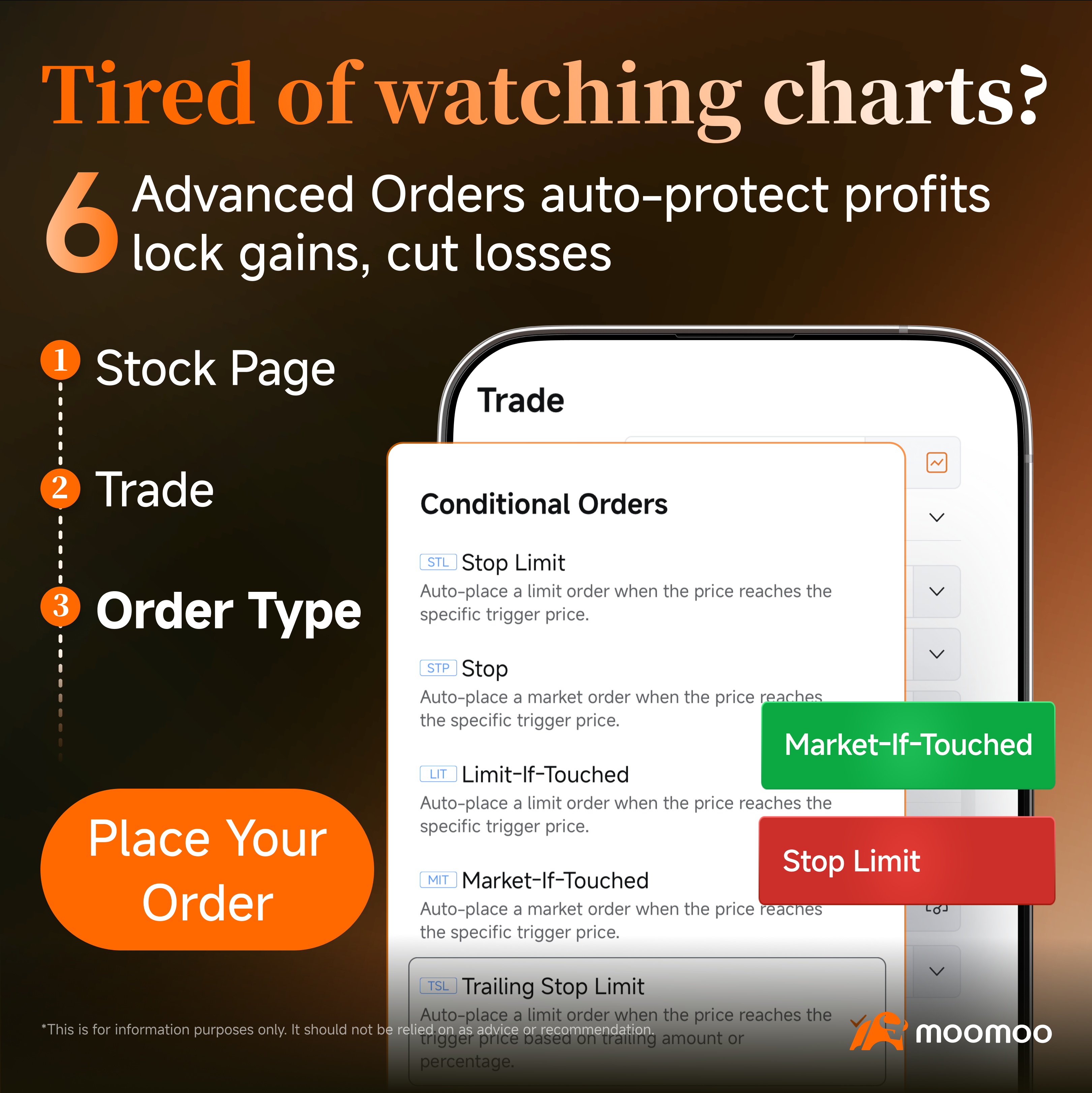
Selecting the correct order type through your online broker is essential for a successful SoFi trade, empowering you to control your exact execution price.
🎯 Order Type Selection
Designed to support professional-grade conditional trading strategies.
These sophisticated tools allow you to execute trades at your preferred price and set specific automated conditions—removing the need for constant screen monitoring. Whether building a long-term position or trading actively, moomoo provides the advanced functionality required to trade SoFi with institutional-grade precision.
SoFi Technologies (SOFI) Stock Chart
Monitor the real-time price movements and comprehensive historical trends of SoFi (SOFI) through this interactive chart, designed to provide Canadian investors with essential market clarity and precision.
Is It a Good Time to Invest in SoFi Technologies (SOFI) Stock?
Deciding exactly when to buy SoFi stock can feel overwhelming, leaving many investors paralyzed by the fear of mistiming the market.
Fortunately, platforms like moomoo help bridge this gap by aggregating institutional insights into a clear, accessible format. By compiling comprehensive Wall Street analyst ratings, investors can easily see where professional sentiment stands rather than relying on guesswork alone.
Reviewing this consensus data clarifies broader market expectations for SoFi, helping you build a stronger perspective before committing any capital.
Navigating the constant stream of SoFi stock news can feel overwhelming, often leading to hesitation when timing your entry.
As Canada's first AI-powered brokerage platform, moomoo addresses this by using moomoo AI to filter complex market noise. This technology transforms massive datasets into digestible summaries, allowing you to focus on the core factors driving price action.
Leveraging these AI-driven insights helps you remain informed and confident in today’s volatile market environment.

Why More Canadians Choose moomoo to Buy SoFi Technologies (SOFI) Stock?
Investing in SoFi is a gradual process, shaped by patience and reflection, especially amid uncertainty and changing market conditions.
By adding SoFi (SOFI.US) to your watchlist in moomoo, you'll get:
All these features are provided completely free. Join moomoo today and start your smarter, more professional investing journey.
FAQs about buying SoFi Technologies stock
Q1. Can I buy SoFi Technologies stock in Canadian dollars (CAD)?
SoFi Technologies stock trades in USD on NASDAQ, but Canadian investors can purchase it through brokers that support CAD-to-USD conversions, typically involving foreign exchange fees.
Q2. Has SoFi Technologies stock ever split?
No, historical data shows SoFi Technologies has not executed any stock splits since its public listing in 2021 through the date of this market information.
Q3. How much is SoFi Technologies stock worth?
As of April 8, 2026, SoFi Technologies stock closed at $16.49 USD, with market capitalization of $21.03 billion, though prices fluctuate continuously during trading hours.
Q4. Does SoFi Technologies pay dividends?
SoFi Technologies currently does not pay dividends, as indicated by its 0.00% dividend yield and recent quarterly financial statements showing no dividend distributions.
Moomoo Technologies Inc. is providing this content for information and educational use only. Read more