How to invest Apple Stock in Canada [2025]
Nov 17 16:37Key Takeaways
- Apple reported $416.2B in 2025 revenue with 19% YOY net income growth, driven by iPhone 17 and Services.
- Q4 2025 net profit surged 86.39% to $27.47B; EPS rose to $1.85.
- Apple’s PE ratio is 36.52; average analyst price target is $291.09, suggesting upside from its $272.95 close.
- Canadians can invest via TFSA or RRSP; RRSP offers tax advantages on U.S. dividends.
- Alternative investments include Apple-focused ETFs, options, or tech peers like Microsoft and NVIDIA.
Apple (AAPL) is a global technology leader known for its iconic devices and ecosystem-driven services. Headquartered in Cupertino, California, Apple designs and sells products like the iPhone, iPad, Mac, and Apple Watch, while generating significant recurring revenue from services such as iCloud, Apple Music, and the App Store. Its competitive edge lies in seamless hardware-software integration, innovation in AI and chip design, and a growing user base across emerging markets like India. With over $416 billion in 2025 revenue and net income up 19% year-over-year, Apple continues to showcase strong profitability and long-term growth potential.
Source: moomoo, data as of 25-11-17.
Is Apple stock overvalued or undervalued?
When assessing Apple stock from a Canadian investor's perspective, it's essential to look beyond surface-level momentum and familiarize ourselves with the company's core financials and valuation indicators. Apple Inc. (AAPL) continues to be one of the world’s most recognized brands, with a diverse portfolio that spans devices, services, and digital ecosystems. With the recent surge in its share price, largely supported by strong Q4 earnings and surging demand for the iPhone 17 series, questions are naturally emerging around valuation—especially for long-term investors seeking to buy Apple stock in Canada.
Examining Apple’s metrics offers valuable insight into whether its current stock price aligns with its performance. A booming services segment, record EPS, and robust institutional ownership are all positive signals. At the same time, a growing price-to-earnings ratio and market cap nearing historical highs suggest the market has high expectations baked into Apple’s valuation. Thus, rather than labeling the stock as definitively overvalued or undervalued, investors should position this data within broader market trends, macroeconomic risks, and forward guidance provided by the company.
Key financial metrics for Apple
| Metric | Value |
|---|---|
| Latest market close | $272.95 |
| Market capitalisation | $4.03T |
| PE Ratio (TTM) | 36.52 |
| Dividend (TTM) | $1.02 |
Source: moomoo, data as of 25-11-17.
Apple price forecast
The outlook for Apple stock price remains largely optimistic according to leading analysts. As of mid-November 2025, the average 12-month target price stands at USD $291.09, representing potential upside from the latest closing price. Analysts’ expectations suggest a high target of $345 and a low of $203.07, reflecting varying interpretations of growth in services, AI integration, and the international expansion strategy.
Notably, 21 out of 32 analysts rate AAPL as a “Buy,” with growing confidence in Apple’s financial resilience and innovation potential in wearables, chip development, and its expanding services model. This reinforces positive sentiment around Apple stock price in the near to mid-term future.
For Canadian investors, these factors should be carefully weighed alongside currency conversion, taxation, and cross-border trading considerations when seeking to add Apple to their portfolio through platforms like moomoo.
Apple earnings 2025 Q4 analysis
| 2025 Q4 | 2025 Q3 | 2025 Q2 | Y/Y | |
|---|---|---|---|---|
| Revenue | $102.47 billion | $94.04 billion | $95.36 billion | +7.94% |
| Operating Profit | $32.43 billion | $28.20 billion | $29.59 billion | +9.58% |
| Net Profit | $27.47 billion | $23.43 billion | $24.78 billion | +86.39% |
Source: Apple Inc. Income Statement, data as of 2025-10-31
In the most recent Apple earnings date announcement for Q4 2025, the tech giant surpassed expectations across the board. Total revenue climbed to $102.47 billion, marking a 7.94% increase year-over-year, with net profit surging a remarkable 86.39% to $27.47 billion. This was Apple’s strongest quarterly net profit performance in over two years. Think of it like a bakery during the holiday season: even if flour costs go up, if everyone rushes in to buy your signature cake, profits can soar. The standout contributor here was the iPhone 17 lineup, which alongside booming services revenue ($28.8 billion), powered both top and bottom-line growth. The earnings per share jumped to $1.85, up over 90% compared to $0.97 last year.
The most recent Apple earnings call held on October 31, 2025, highlighted product innovation and market expansion as key drivers. CEO Tim Cook noted record-setting results in the U.S., Europe, and India, fueled by new product launches and AI-feature integration. Meanwhile, CFO Kevan Parekh provided forward-looking guidance of 10–12% revenue growth for the December quarter, with expectations of the "best iPhone quarter ever." While operating expenses increased due to higher R&D investment, the impressive 47.2% gross margin shows that Apple is wisely managing costs while delivering high-margin services. The call made clear that strategic diversification in services and geographical markets is becoming as essential to Apple as iPhones and Macs once were.
Apple stock split analysis
Apple Inc. (NASDAQ: AAPL) has a long history of executing stock splits to enhance share liquidity and make its stock more accessible to retail investors, including those in markets like Canada. AAPL stock splits have historically accompanied periods of strong financial performance and bullish momentum. The most recent Apple stock split occurred on August 31, 2020, with a 4-for-1 ratio, significantly reducing the share price and drawing greater investor interest. Prior to that, Apple completed major splits in 2014 (7-for-1), 2005, 2000, and 1987 (each 2-for-1), reflecting strategic moves aligned with its exponential growth. Investors tracking Apple stock split history often use these events as key indicators for long-term value accumulation and portfolio planning.
| Effective Date | Split Ratio | Type |
|---|---|---|
| 2020-08-31 | 4-for-1 | Forward Split |
| 2014-06-09 | 7-for-1 | Forward Split |
| 2005-02-28 | 2-for-1 | Forward Split |
| 2000-06-21 | 2-for-1 | Forward Split |
| 1987-06-16 | 2-for-1 | Forward Split |
Source: moomoo.com, data as of 25-11-17.
Apple dividends analysis
Apple Inc. (AAPL) is not only a technology powerhouse in consumer electronics, but also a consistent dividend-paying stock that attracts income-focused investors globally. For Canadian investors exploring how to invest in Apple stock, understanding the company’s dividend policy is essential. With a steady track record of quarterly distributions, Apple has maintained a disciplined approach to returning capital to its shareholders. These dividend payments can be a strategic factor for those seeking growth with a stream of passive income from a leading tech brand.
As Apple continues to post record earnings and hold a robust cash position, its dividend yield remains an attractive component, even if relatively modest compared to Canadian high-yield stocks. The company paid out over $15 billion in dividends in fiscal 2025, underlining its commitment to shareholder returns. Navigating Apple dividend stocks as part of a diversified investment portfolio could enhance the long-term income and capital appreciation potential for Canadian buyers.
Dividend summary of Apple
| Fiscal Year | Ex-Dividend Date | Dividend Type | Amount (USD) |
|---|---|---|---|
| 2025 | 2025-11-10 | Cash | 0.26 |
| 2025 | 2025-08-11 | Cash | 0.26 |
| 2025 | 2025-05-12 | Cash | 0.26 |
Source: moomoo, data as of 2025-11-17.
Can I Invest Apple Stock with a TFSA or RRSP?
Canadian investors looking to gain exposure to Apple Inc. (AAPL.US) can purchase its shares using registered accounts like a Tax-Free Savings Account (TFSA) or a Registered Retirement Savings Plan (RRSP). While buying U.S. stocks in a TFSA is allowed, it’s important to note that dividends from Apple will be subject to a 15% withholding tax under the Canada-U.S. tax treaty, and this amount is not recoverable within a TFSA. In contrast, buying U.S. stocks with an RRSP offers an advantage—qualified dividends from Apple are exempt from the withholding tax, making RRSPs potentially more tax-efficient for U.S. dividend-paying stocks.
How to invest Apple stock in Canada?
For Canadians interested in the technology sector, Apple Inc. (AAPL) offers a chance to invest in one of the most profitable companies in the world, driven by its iPhone, Services, and accessories business units. Here's a streamlined approach that Canadian employees with limited time can follow to begin investing in Apple stock.
Step 1: Pick a stock trading platform
Selecting a stock trading platform is the first critical step. Consider the following factors:
- Accessibility: Make sure the platform supports trading on U.S. markets like Nasdaq, where Apple is listed.
- Fees: Look for platforms with low or zero-commission trading for U.S. stocks to maximize your returns.
- User experience: Choose a platform with a clean, intuitive interface, ideal for users with tight work schedules.
- Mobile compatibility: Ensure the platform offers a mobile app so you can invest on the go.
- Research tools: Some platforms offer useful financial data, analyst insights, and technical indicators that can guide your Apple investment decisions.
Step 2: Choose the right account type and open an account
Canadians can use several account types to invest in Apple stock. Here are the main options:
- Tax-Free Savings Account (TFSA): Gains from U.S. stocks like Apple can grow tax-free, but dividends are still subject to withholding tax.
- Registered Retirement Savings Plan (RRSP) / Spousal RRSP: Investments grow tax-deferred and U.S. dividends are exempt from withholding tax with proper documentation under the Canada-U.S. tax treaty.
- Margin Account: Allows you to borrow funds to buy Apple shares, introducing leverage (and risk).
- Cash Account: Offers straightforward investing with only your own money and no borrowing.
To open an account, provide valid government-issued photo ID (like a passport or driver’s licence), your SIN (Social Insurance Number), and employment and financial information.
Step 3: Fund your account
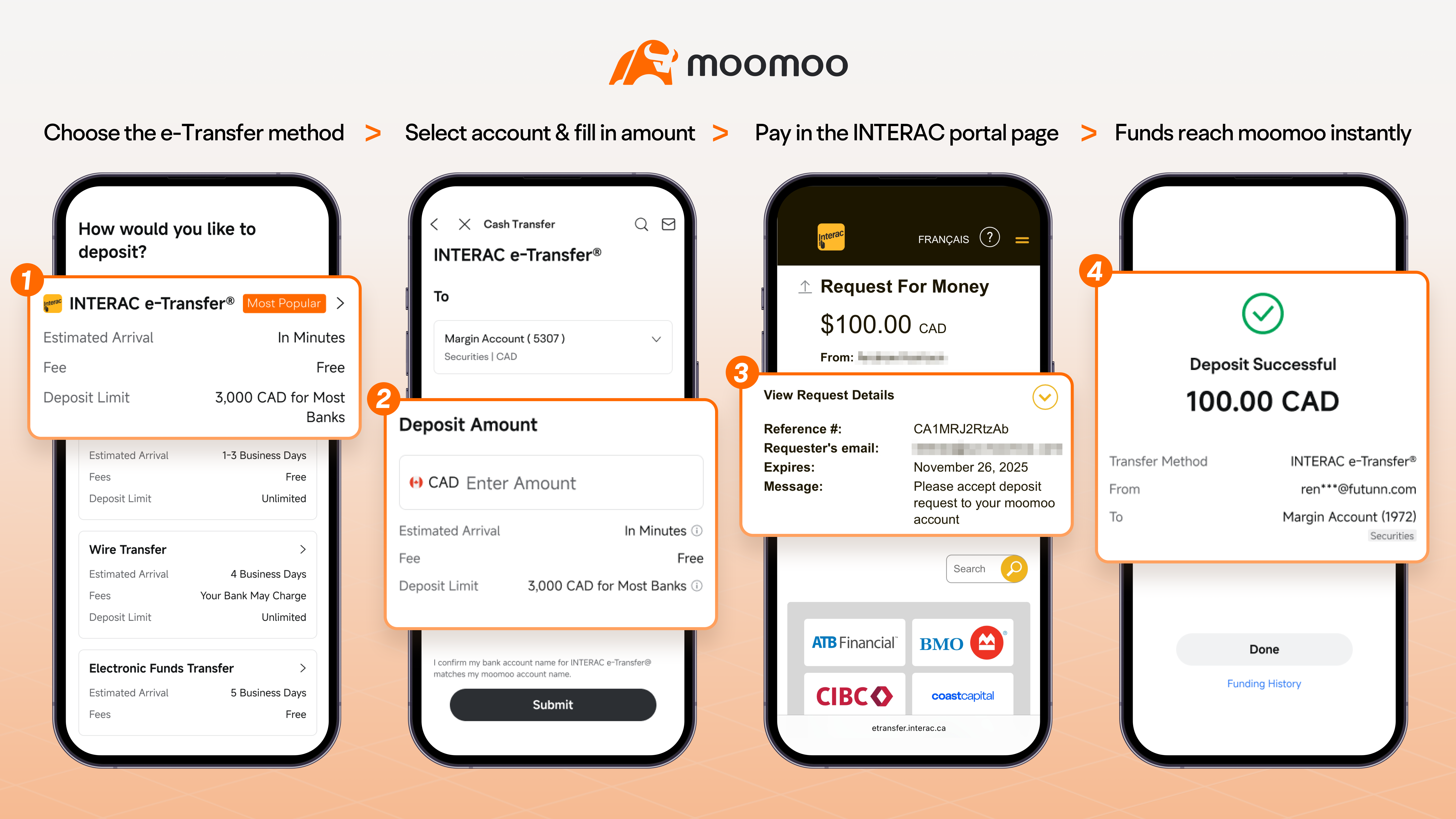
You can fund your trading account through common Canadian funding methods such as Interac e-Transfer, pre-authorized debit, bank wire transfer, or linking a Canadian bank account.
Step 4: Research Apple’s fundamentals
Before investing in Apple stock in Canada, analyze the company's financial health and performance. In fiscal year 2025, Apple reported revenue of $416.2 billion USD, with iPhones and Services contributing over 76% of its total revenue. Their net income rose 19% year-over-year to $112 billion USD. Review key metrics such as earnings growth, price-to-earnings ratio (36.52 TTM), and cash flow to ensure your investment aligns with your financial goals.
Step 5: Set a budget for your Apple stock purchase
Start by determining how much of your available capital you want to allocate to Apple based on your overall portfolio diversification strategy. Always ensure you’ve built an emergency fund—aiming for at least 3 to 6 months of living expenses—before investing. If the current AAPL price ($271.89 USD) is out of your budget, consider platforms that offer fractional share investing so you can still gain exposure with as little as $20 or $50.
Step 6: Place your Apple's order
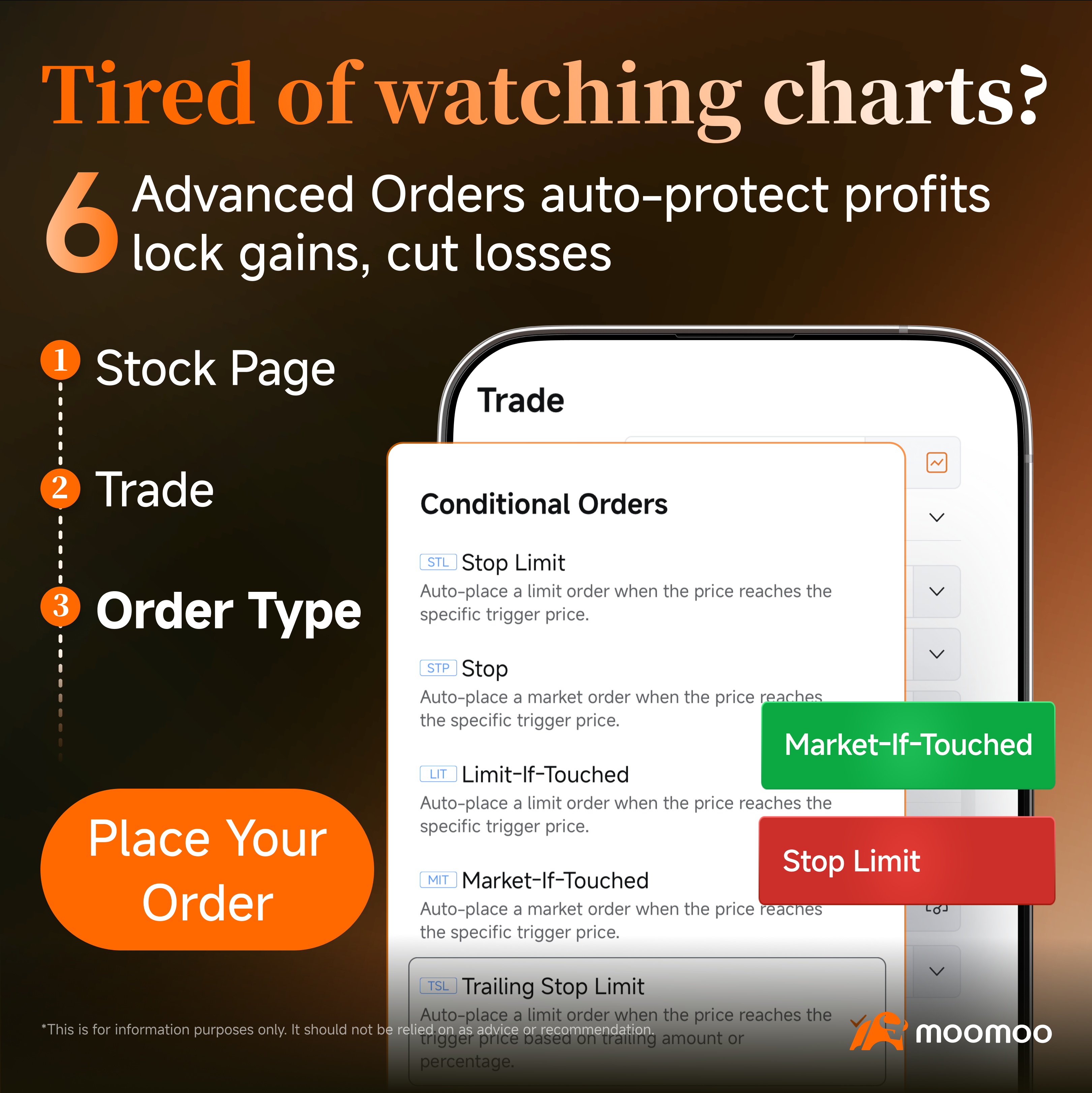
Once your account is funded, choose your order type. Beginners may start with a market order, which buys at the current price, or set a limit order if you prefer to wait for Apple stock to hit a target price. Double-check the ticker symbol AAPL and confirm you are purchasing from the U.S. exchange, usually Nasdaq.
Step 7: Monitor and manage your investment
Track your Apple holding using your platform’s portfolio dashboard or mobile app. Keep an eye on performance indicators like earnings reports, dividend yield (0.37%), and analyst ratings. Tools like watchlists, alerts, and portfolio rebalancing can help you adjust your strategy as the market evolves and your financial needs change.
Alternative ways to invest in Apple?
For Canadian investors looking to gain exposure to Apple Inc. (AAPL), there are more ways than just buying the stock outright. Depending on your investment goals, risk tolerance, and account type, alternative options like ETFs, options trading, or similar companies might be worth considering.
Apple ETFs
ETFs (Exchange-Traded Funds) allow investors to hold a diversified basket of stocks, which can reduce company-specific risk compared to owning individual shares like AAPL. They are also listed on exchanges and can be easily traded from Canadian brokerage accounts.
- Invesco QQQ Trust (QQQ) – Tracks the Nasdaq-100 Index, where Apple is one of the largest holdings. Offers Canadian investors broad tech sector exposure including AAPL.
- SPDR S&P 500 ETF Trust (SPY) – Mirrors the S&P 500 Index. Apple is one of its top constituents, making this ETF a way to invest in the overall market with significant Apple representation.
- XQQ.TO (Invesco NASDAQ 100 Index ETF - CAD Hedged) – Designed for the Canadian market, it provides exposure to the Nasdaq 100 with currency hedging to reduce USD/CAD exchange rate impact.
- ZQQ.TO (BMO NASDAQ 100 Equity Index ETF) – Offers Canadian investors direct access to top US tech equities, including Apple, in a CAD-denominated ETF traded on the TSX.
Apple options
Options trading is another method to gain exposure to Apple stock. This involves buying or selling contracts that give you the right, but not the obligation, to buy or sell AAPL at a predetermined price. It can be used for hedging, generating income, or leveraging investment strategies. Canadian investors with access to U.S. markets via a margin-enabled brokerage account can participate in Apple options, subject to approval.
Stocks similar to Apple
If you are considering alternatives to Apple (AAPL), there are several other major tech companies with comparable financial stability, market influence, and innovation pipelines.
- Microsoft (MSFT) – A global technology leader involved in software, cloud computing, and hardware, often compared directly with Apple in terms of market valuation and growth.
- Alphabet Inc. (GOOGL) – The parent company of Google, dominating digital advertising and investing heavily in AI and cloud services.
- Amazon (AMZN) – A leader in e-commerce and cloud infrastructure through AWS, offering exposure to both retail and tech segments.
- NVIDIA (NVDA) – Specializes in GPUs and AI processing, increasingly seen as a key player in the future of tech, much like Apple.
Is it a good time to invest Apple (AAPL) stock?
Apple (AAPL) has demonstrated strong operational and financial performance in recent quarters, but whether it is currently a good time to invest depends on a range of factors that Canadian investors should evaluate, including valuation, growth prospects, and market sentiment.
As of November 14, 2025, Apple stock closed at USD 271.97, slightly below its recent high of USD 277.32 (recorded on October 31). Over the past month, AAPL has gained approximately 11.5%, driven in part by strong Q4 results where it posted USD 102.5 billion in revenue and USD 1.85 EPS, both exceeding analyst expectations. Its trailing twelve-month PE ratio stands at 36.52, which is relatively high and suggests a premium valuation.
For Canadian investors considering currency impacts, the strength of the U.S. dollar against the CAD may influence returns. Additionally, Apple’s dividend yield sits at 0.37%, modest but consistent, supported by a strong free cash flow of USD 98.77 billion in FY2025.
From a fundamentals perspective, the company posted 19.5% annual growth in net income and maintained a robust gross margin of 46.9%. Analysts currently set an average price target of USD 291.09, indicating moderate upside potential.
Investors should also consider external factors, such as interest rate expectations from the Bank of Canada and global macroeconomic risks, in their decision-making process.
Source: Apple Financial Data, data as of 25-11-14
Moomoo Technologies Inc. is providing this content for information and educational use only. Read more