Why Selling Options Has Better Probability of Profit
Key Takeaways
- Option Buyers vs. Sellers: A Quick Overview
- Why Buffett Favors Selling Options
- Why the Odds Favor Option Sellers
- So... who Is Selling Options Best Suited For?
- Tools to Help You Trade Options
Quick question
Do you have the same concerns?
"Options? Isn't that basically gambling with leverage?"
"I've heard stories of people getting wiped out overnight…"
"I'm a buy-and-hold investor. I just want steady dividends. Options feel way too complicated for me."
If you're someone who focuses on long-term asset allocation and prefers holding quality names through market cycles, these concerns make total sense.
To most people, options mean high leverage, high risk, and directional bets. It feels like the opposite of "steady." But here's what's often missed: every options trade has two sides. There's a buyer, and there's a seller.
The horror stories people hear? Those are almost always about buyers. Meanwhile, selling options is a fundamentally different approach: one with structurally higher win rates that pairs naturally with a long-term portfolio.
Option Buyers vs. Sellers: A Quick Overview
Every options trade involves a buyer and a seller. Most people treat them as the same thing, but their profit mechanics, risk characteristics, and odds of success couldn't be more different.
According to Tastylive's backtesting data, using SPY as an example, selling a 30-delta short put and mechanically holding to expiration yields a win rate of approximately 70%. Incorporating profit-taking management can further improve that win rate.
Based on Tastylive's backtesting data on SPY, using a common short put parameter (selling out-of-the-money puts at around 30 delta), the win rate reaches approximately 70% even when held mechanically to expiration with no management. With proper profit-taking rules applied, the win rate improves further.
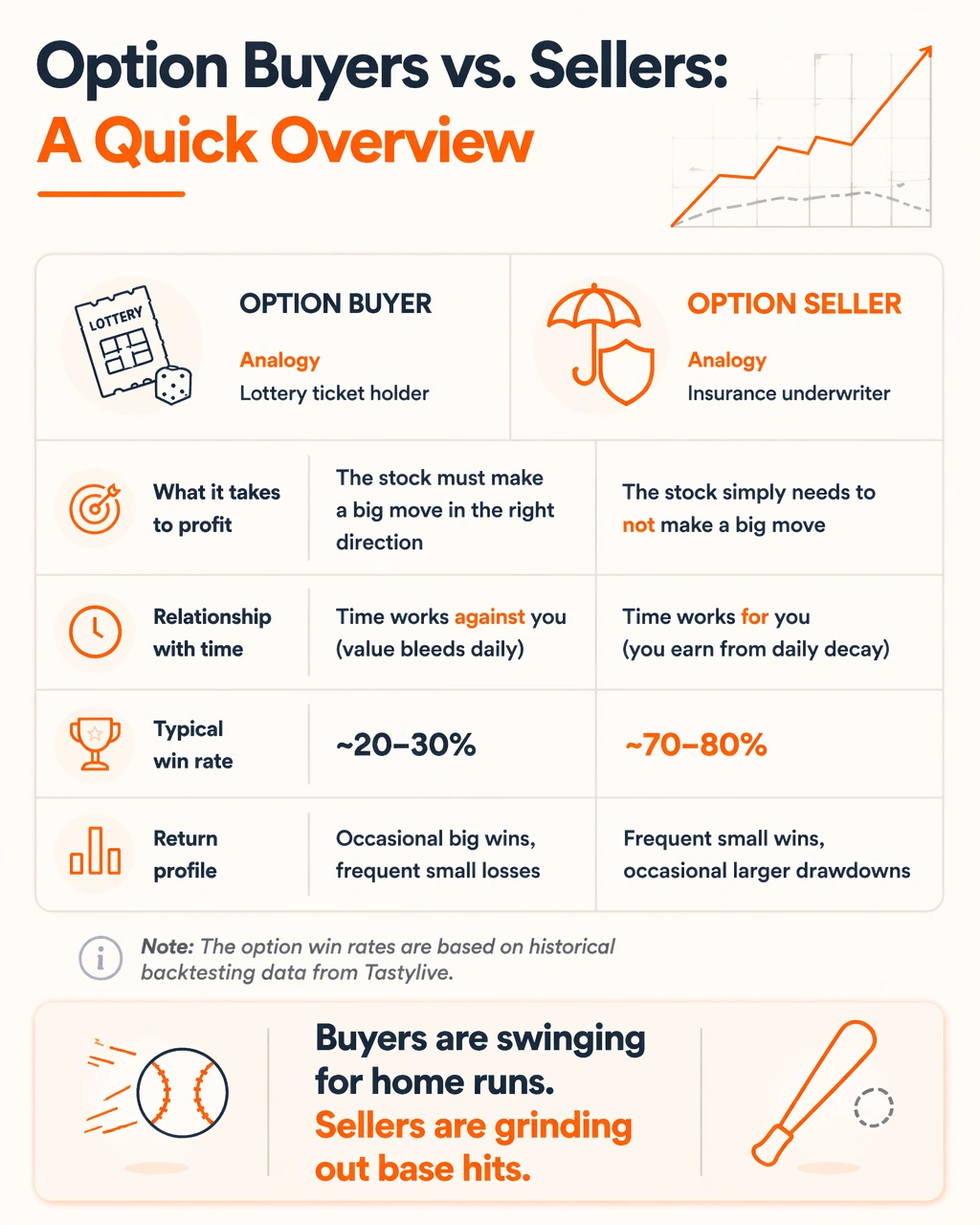
Buyers are swinging for home runs. Sellers are grinding out base hits.
If you're a long-term investor, your goal probably isn't to double your money overnight. It's to consistently and reliably grow your portfolio over time. That's precisely what option selling is designed to do.
Why Buffett Chose to Sell Options
In 1993, Buffett wanted to buy Coca-Cola for $35 a share. Rather than placing a limit order and hoping the stock would come to him, he sold put options instead:
– Strike price: $35
– Premium collected: roughly $1.50 per share, totaling about $7.5 million
This set up two possible outcomes, both of which worked in his favor:
✅ Coca-Cola stays above $35. The options expire worthless, and Buffett keeps the entire $7.5 million premium. No stock purchased, no effort required.
✅ Coca-Cola drops below $35. Buffett buys the shares at $35, which is exactly what he wanted to do anyway. And because he already collected $1.50 in premium, his effective cost basis drops to $33.50.
Either way, it's a good outcome. That's the beauty of selling from a position of intention.
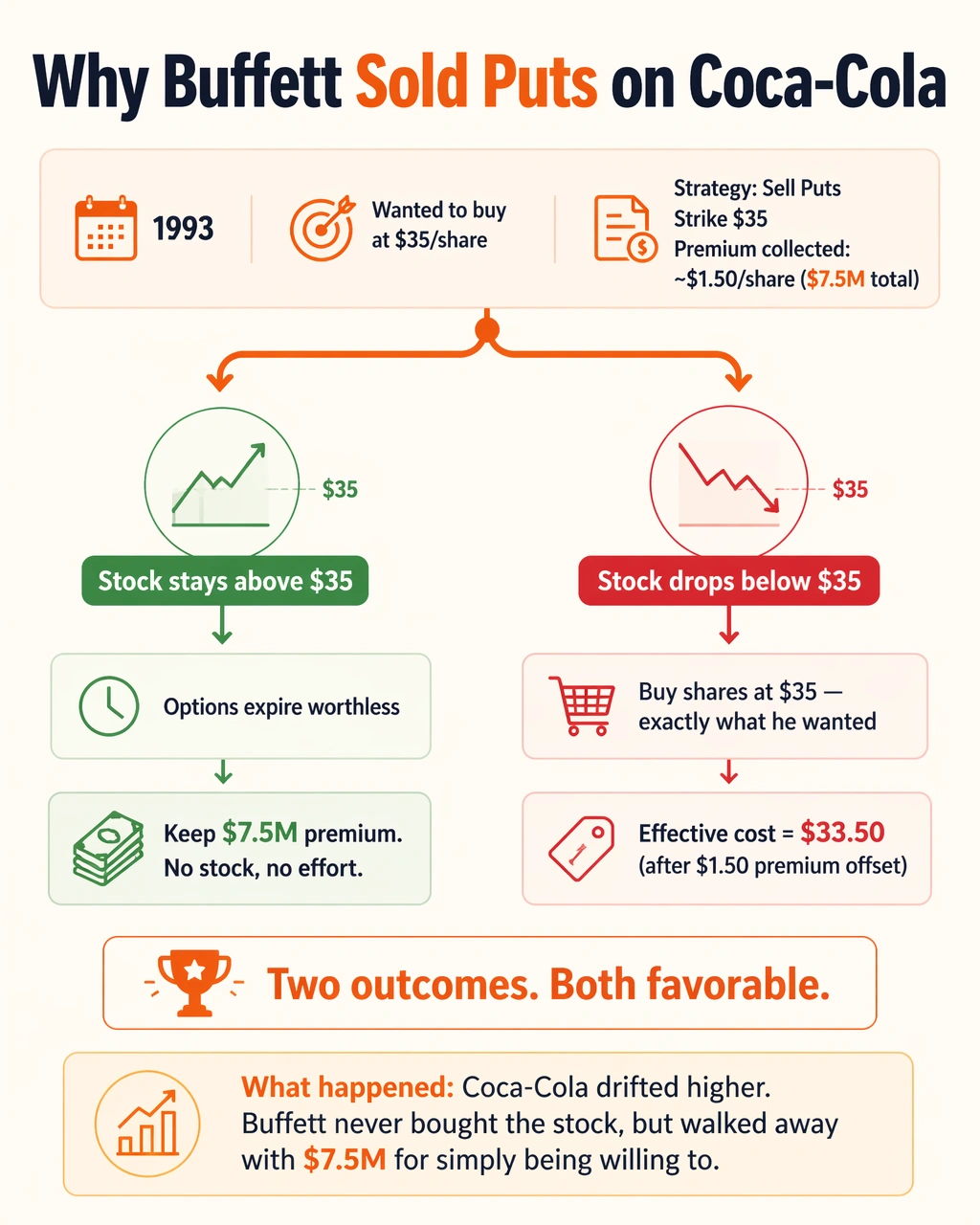
What actually happened? Coca-Cola drifted higher over the following year. Buffett never got to buy at his target price, but he walked away with $7.5 million in premium for simply being willing to buy a stock he already loved.
What if he'd bought puts instead?
Now imagine Buffett had taken the opposite approach: buying $35 puts, betting that Coca-Cola would fall.
– He would have paid $1.50 per share in premium upfront.
– The stock would have needed to drop below $33.50 just for him to break even.
Since Coca-Cola actually traded sideways to higher in 1993–1994, here's how the two approaches compared:
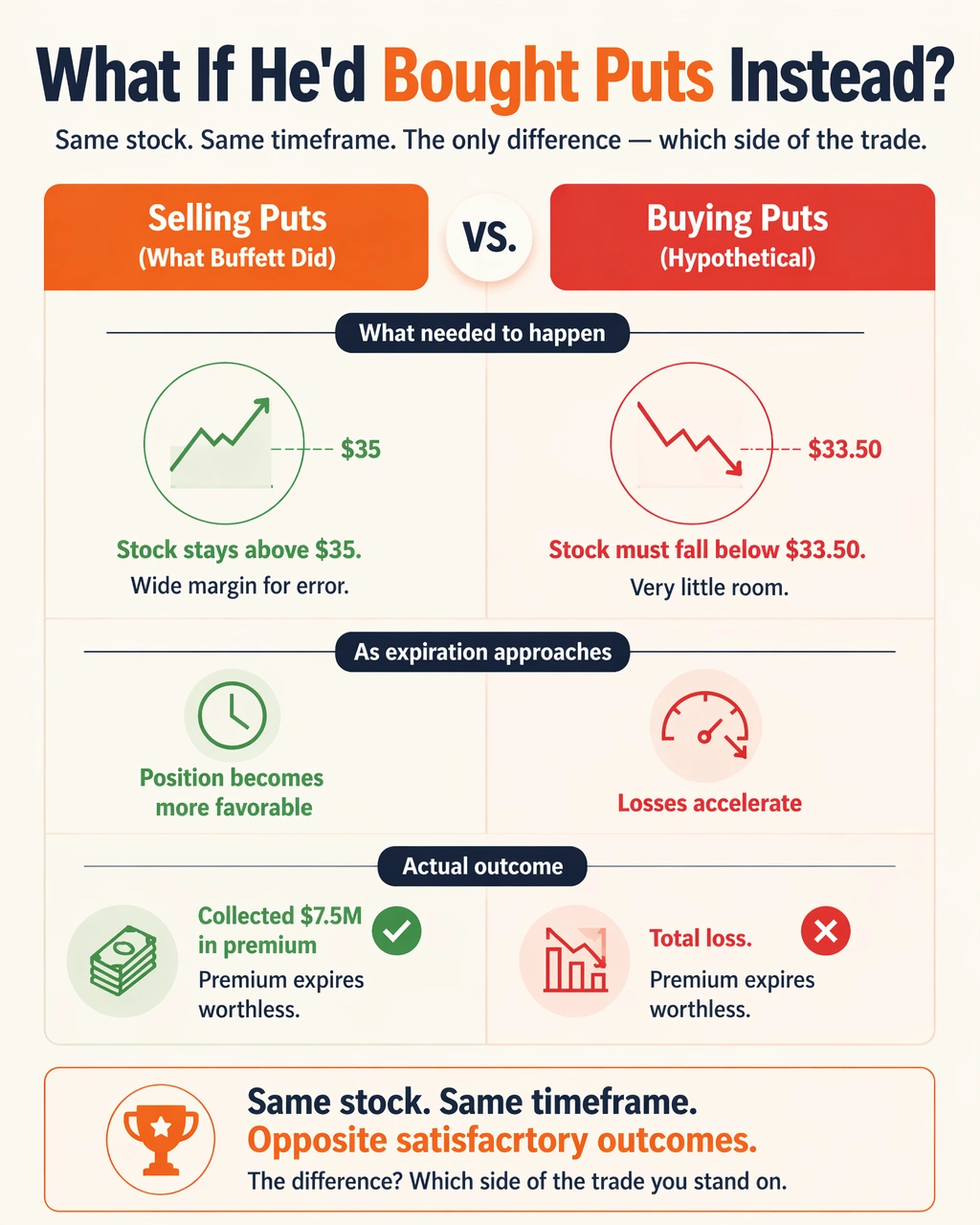
Same stock. Same timeframe. The only difference was which side of the trade he stood on. The outcomes were night and day.
Why the Odds Favor Option Sellers
This isn't luck or magic. It comes down to three features baked into how options work:
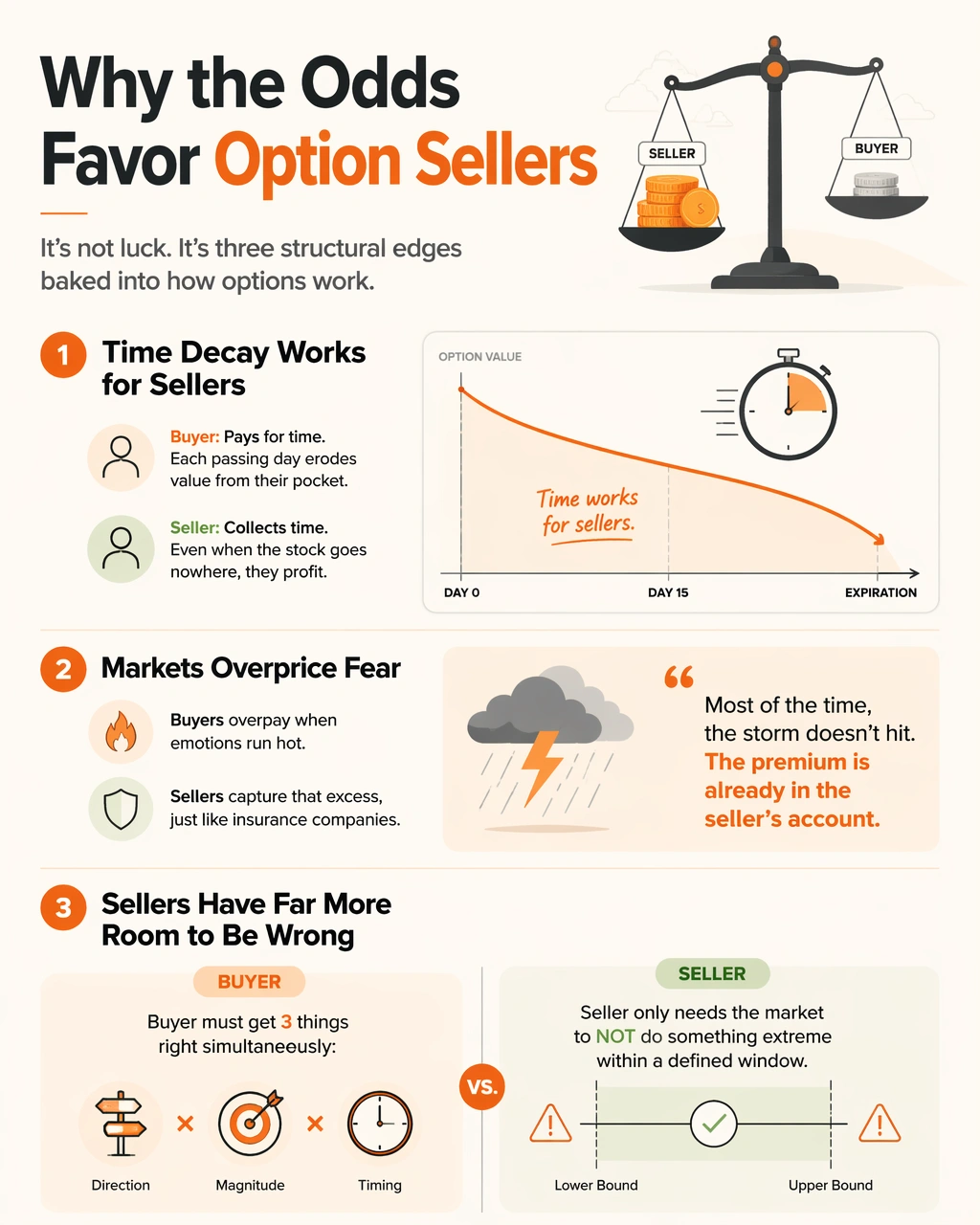
1️⃣ Time is constantly working in the seller's favor
Think of an option like a coupon with an expiration date. With every passing day, it inches closer to expiring, and its value naturally erodes.
If you're the buyer, that erosion is coming out of your pocket. If you're the seller, it's flowing into yours. Even on days when the stock goes absolutely nowhere, the seller is quietly profiting while the buyer is quietly losing. Time is not neutral in options. It has a clear bias, and it favors the seller.
2️⃣ Markets tend to overprice fear
Option premiums don't just reflect where a stock might go. They also embed the market's anxiety about what could happen. When uncertainty is high and emotions are running hot, buyers are willing to overpay for protection or speculative upside.
Sellers capture that excess. It's the same dynamic as insurance: premiums are priced for worst-case scenarios that, statistically, rarely materialize. Most of the time, the storm doesn't hit, and the premium is already in the seller's account.
3️⃣ Sellers have far more room to be wrong
To profit as a buyer, you need to nail three things at once: the right direction, enough magnitude, and the right timing. Get any one of those wrong, and you lose.
Sellers don't need to predict precisely where a stock is headed. They just need the market to not do something extreme within a defined window. It's the difference between needing to hit a bullseye and simply needing your arrow to land somewhere on the target. One demands precision. The other just requires staying in the ballpark.
Selling Option Isn't for Everyone, Though
Higher win rates don't mean zero risk, and they don't mean selling is the right choice for every investor.
If you have strong directional conviction about a near-term catalyst and you're comfortable risking a defined premium for leveraged upside, buying options still has its place. The appeal is straightforward: your downside is capped at what you paid, and the potential payoff can be multiples of your investment.
The honest challenge, though, is that most investors struggle to consistently get direction, timing, and magnitude right all at the same time over the long run.
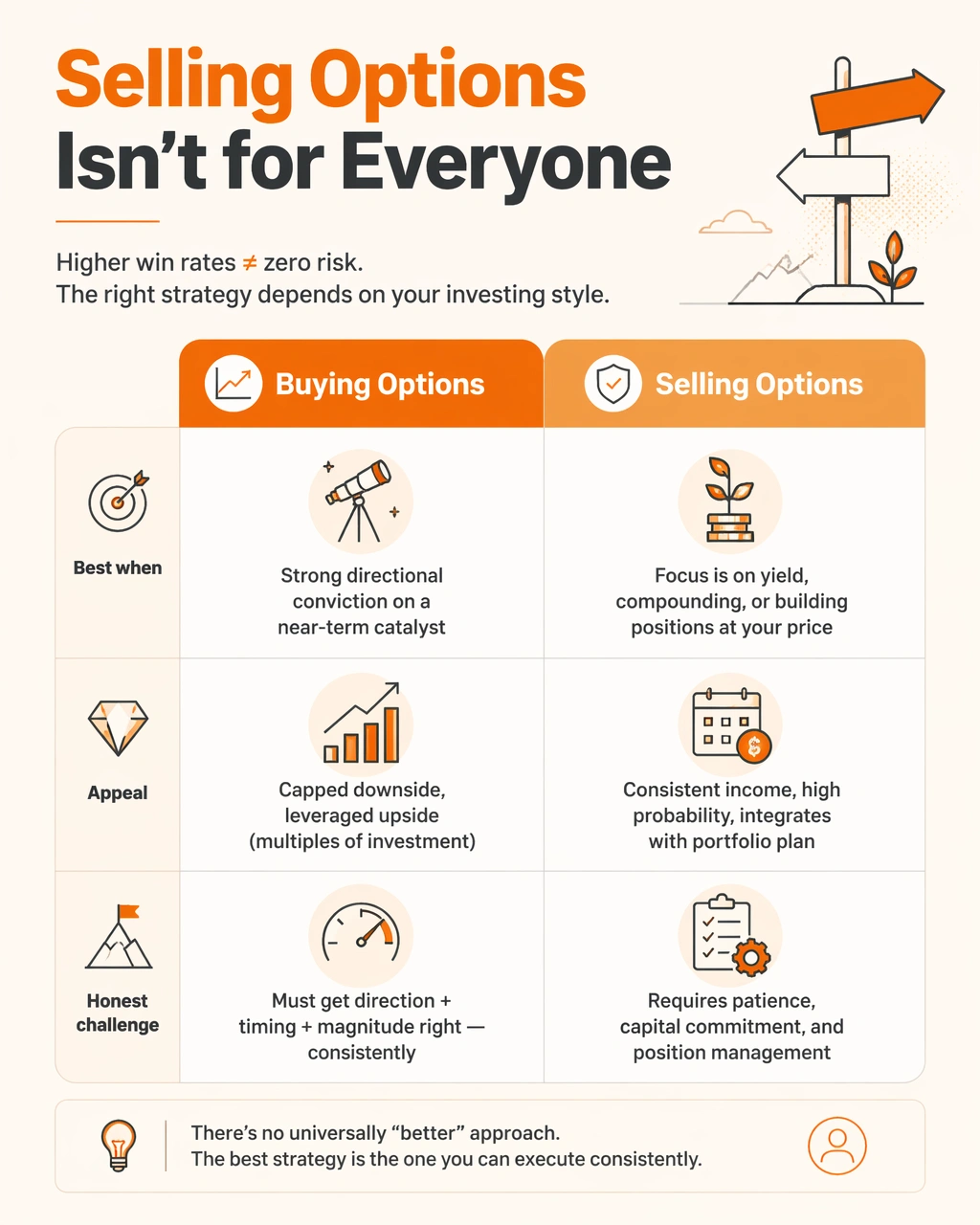
On the other hand, if your focus is portfolio yield, long-term compounding, or you already have a clear plan for when and where you want to build positions, selling is often the more natural fit. For most investors, the two covered structures worth focusing on are:
Cash-Secured Put: Getting paid while you wait for your price
You've identified a stock you'd love to own at a lower price. Instead of setting a limit order and hoping, you sell a put against cash you've set aside, collecting premium in the meantime.
– Stock doesn't drop to your strike? You keep the premium and can repeat the process.
– Stock falls on your strike? You buy shares you already wanted, at an effective discount thanks to the premium you collected.
Ideal for: Building positions in quality names on pullbacks, on your own terms.
Covered Call: Generating income from shares you already hold
You own 100 shares of a stock you plan to hold for the long term. By selling a call against that position, you generate extra income each month, almost like collecting an additional dividend.
– Stock stays below the strike? Premium is yours, shares stay in your account. Rinse and repeat.
– Stock rises above strike? Your shares get called away at a price you were happy to sell at anyway. You earn the capital gain plus the premium.
Ideal for: Extracting extra yield during sideways or gently rising markets.
What both strategies share: they're backed by real assets, either cash on hand or shares you already own. They integrate directly with your portfolio management process. And critically, they avoid the "naked" exposure that gives option selling its scary reputation.
In fact, many experienced investors chain these two strategies together into a continuous loop: start by selling puts to acquire shares at a price you're happy with, then once you're holding the stock, sell covered calls to keep generating premium income. Rinse and repeat. This is known as the Wheel Strategy, essentially a closed-loop system where you rotate between seller roles on the same underlying stock, steadily compounding income along the way.
Get Started with Options on moomoo
The gap between understanding a strategy and actually executing it usually isn't about knowledge. It's about having tools that make the process feel approachable. Here's what moomoo offers:
1)How to Find Opportunities?
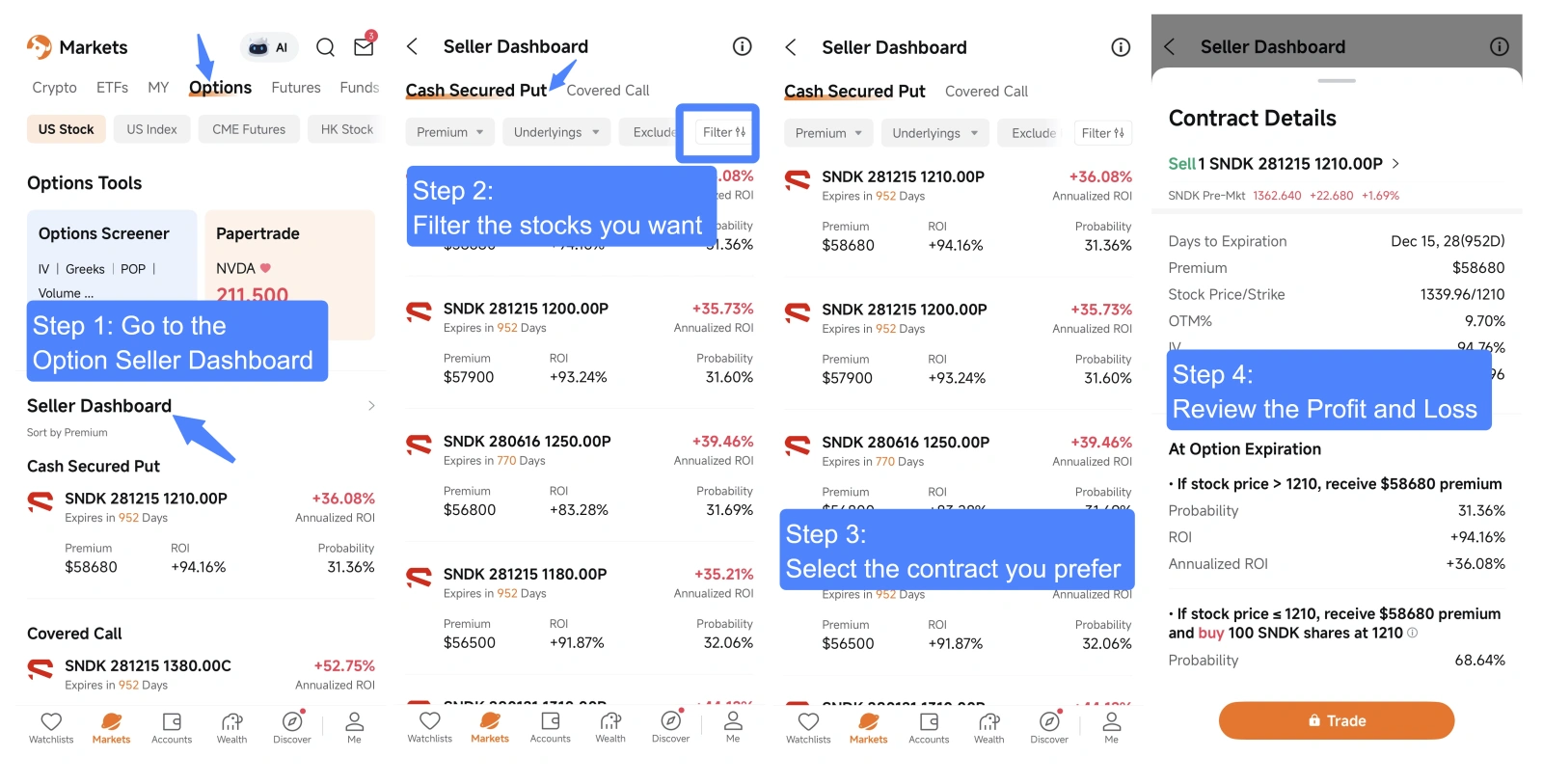
Option Seller Dashboard: Head to Markets > Options to find the dedicated Seller Dashboard. Browse contracts, review risk/reward profiles, and place trades, all in one streamlined flow. It's one of the simplest ways to start selling options with confidence.
2)Effortless Options Analysis
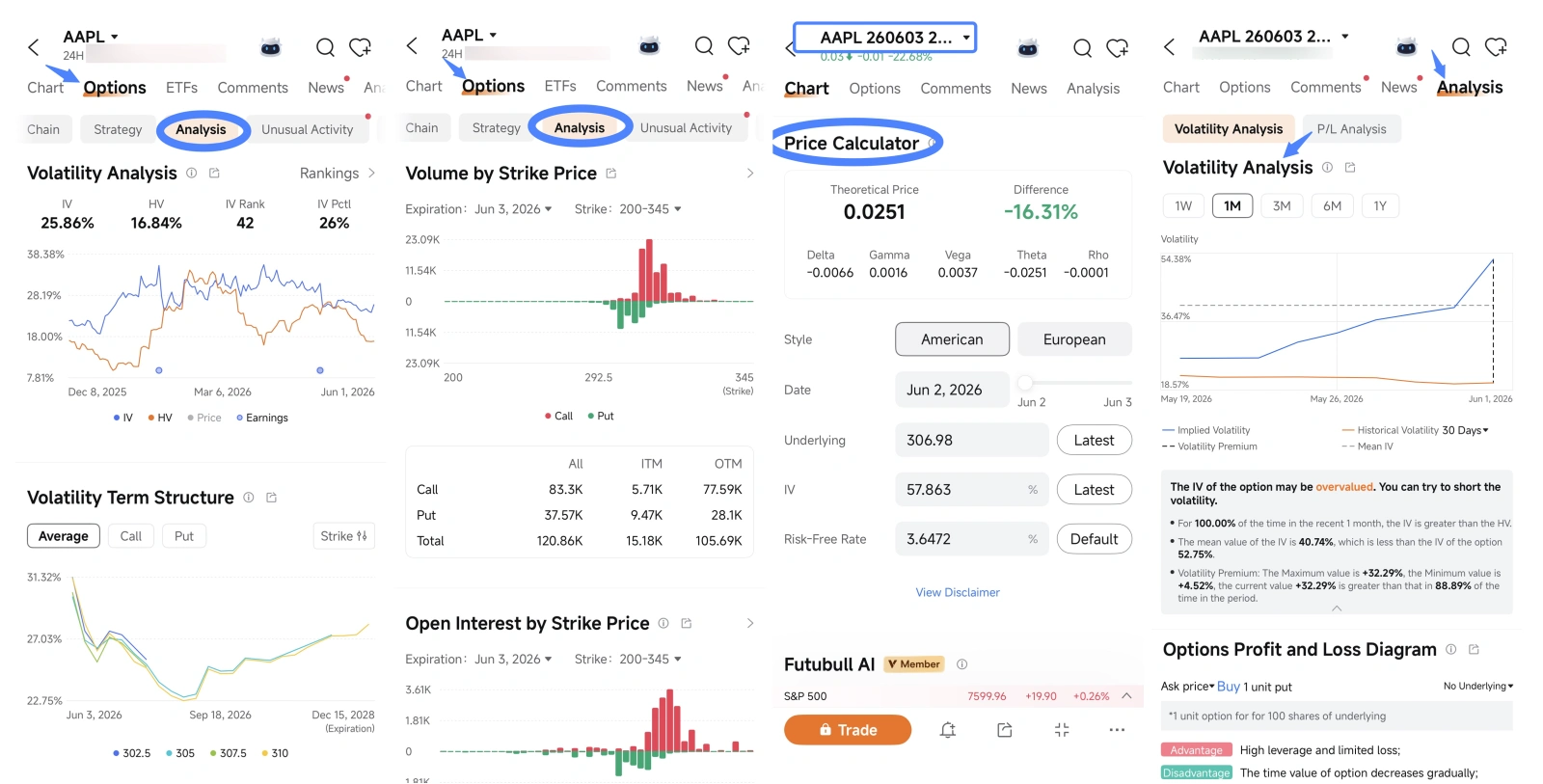
Analytical Tools: Leverage analytical tools such as volatility and open interest data to quickly identify key price levels, construct strategies, and manage risk.
3)Visualize Your Probability of Profit
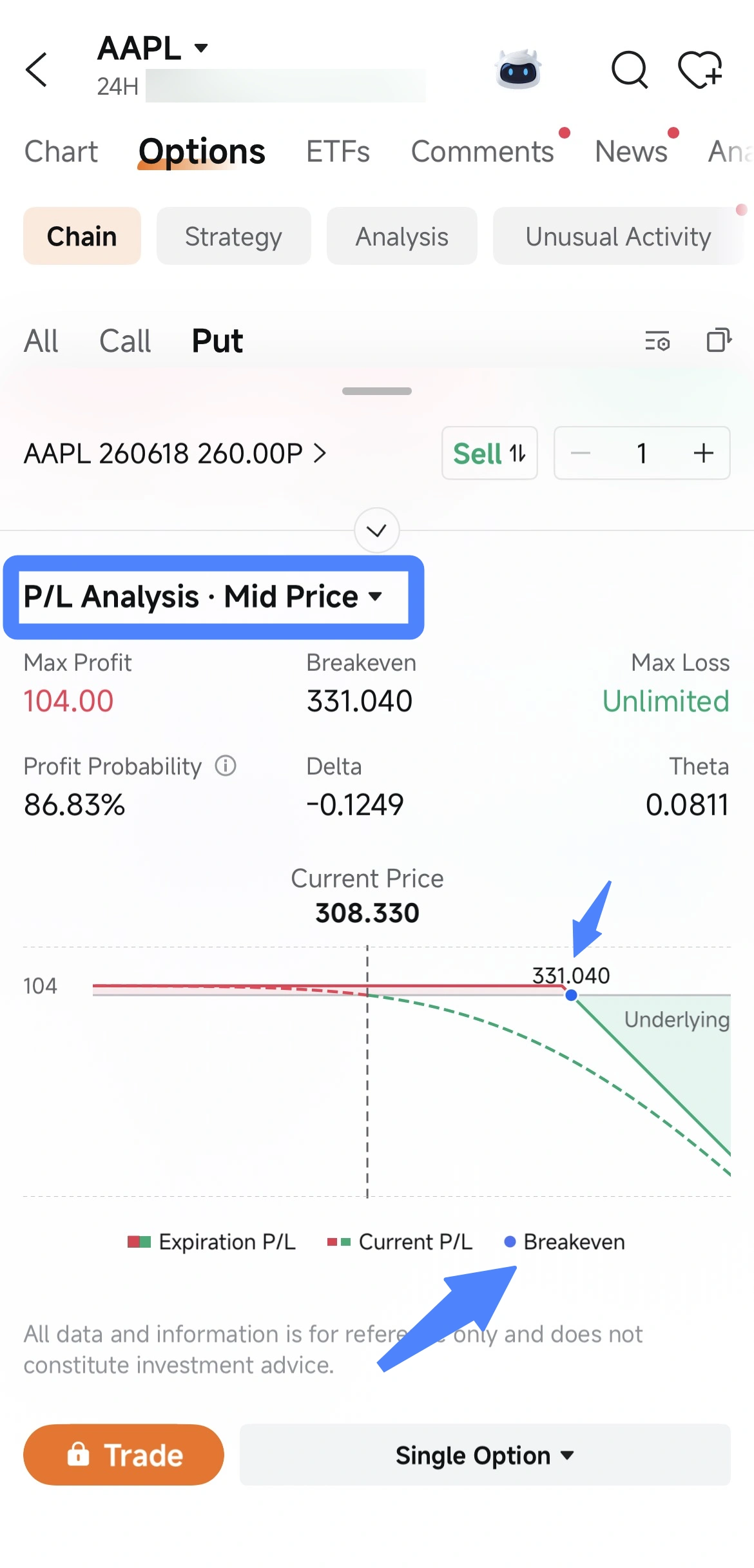
Profit Probability Display: Select an expiration and strike in the options chain, and you'll immediately see the estimated probability of profit along with expected return, right on the contract card.
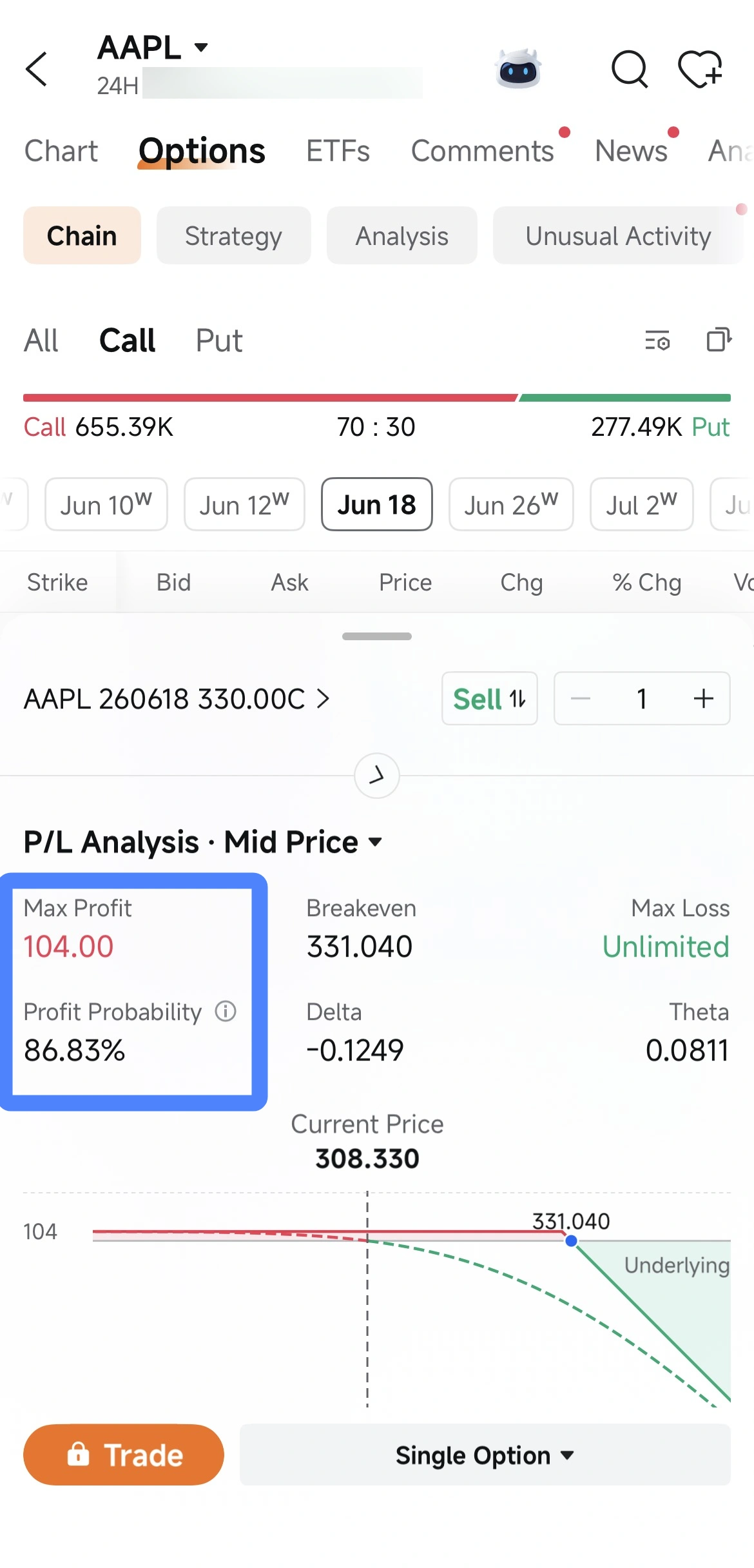
P&L Analysis: Every contract comes with a clear payoff diagram showing your breakeven, max gain, and various outcome scenarios at a glance.
4)Maximize Your Returns
"Triple Yield" Strategy: In traditional trading, margin collateral used to secure positions often sits idle, generating no additional returns.
Moomoo's SmartSave feature changes that. It allows your option margin to continue serving its collateral function while automatically being "smartly" swept into the Cash Plus money market fund — earning you a second layer of income.
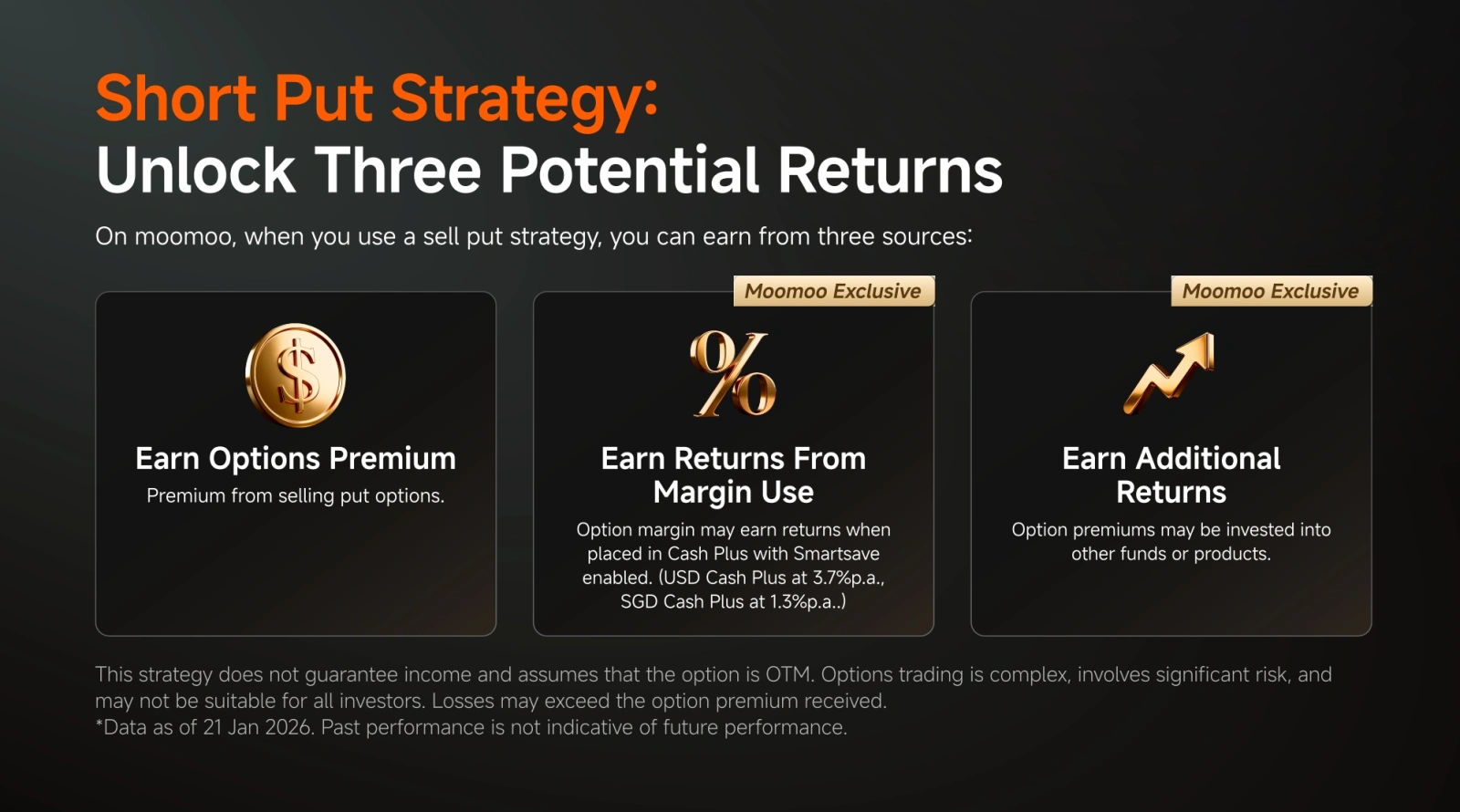
Better yet, the premium you receive from selling options is credited to your account in real time, rather than waiting until contract expiration. This capital can be immediately deployed through Moomoo Wealth into products such as Income Plus, Dividend Funds, or Fund Plus, allowing the premium itself to begin compounding — delivering a third layer of income.
(Note: This feature is currently available only for the SG market. Click to learn more:
Unlocking the "Triple Yield" Strategy for moomoo's Savvy Option Seller>>
One Last Thought
Options don't have to mean high risk. The real danger comes from treating them purely as directional bets with leverage, chasing quick scores on the buyer's side without a plan.
But when you approach options from the seller's perspective, especially through covered structures like Cash-Secured Puts and Covered Calls that are anchored to real cash or real holdings, something shifts.
Options stop looking like speculation and start looking like what they can genuinely be: a disciplined, probability-driven tool for managing and enhancing a long-term portfolio.
Happy trading. And if you want more practical selling strategies:
This presentation is for informational and educational use only and is not a recommendation or endorsement of any particular investment or investment strategy. Investment information provided in this content is general in nature, strictly for illustrative purposes, and may not be appropriate for all investors. Read more