Margin Trading Explained: Definition & Types
Key Points
Margin buying means borrowing funds to acquire stock shares and securities.
Margin trading enables investors to employ leverage to uphold or enhance their investment positions.
Margin trading is risky since traders must repay the borrowed amount to the broker.
Buying on margin can magnify both losses and profits.
If the market value of an account drops significantly, a margin call occurs. In response, investors are then obliged to add more cash or sell their shares.
Margin buying means borrowing funds to acquire stock shares and securities.
Margin trading enables investors to employ leverage to uphold or enhance their investment positions.
Margin trading is risky since traders must repay the borrowed amount to the broker.
Buying on margin can magnify both losses and profits.
If the market value of an account drops significantly, a margin call occurs. In response, investors are then obliged to add more cash or sell their shares.
Buying on margin means borrowing funds from a stock broker to buy stocks. With a margin account, investors can increase their financial leverage by using borrowed money. While margin trading is an attractive alternative to traditional trading, it comes with significant risks.
>> Open a margin account on Moomoo SG and start trading with 0 commission* today! Don't forget to claim your exclusive welcome rewards! *T&Cs and other fees apply.

When buying on margin, losses are magnified. Just as it can enhance gains, margin trading also amplifies the negative impact of losses. Moreover, there is the risk of a margin call. In such a situation, investors may be required to deposit more funds to keep their investment positions open or face forced liquidation.
What is Margin Trading?
Margin trading is a sophisticated financial strategy that allows investors to amplify their potential returns by borrowing funds from a broker to purchase additional securities. This practice essentially leverages the investor's existing capital, enabling them to control a larger position in the market than they would be able to with their own funds alone.
Key Concepts of Margin Trading
Leverage: Margin trading uses borrowed money to enlarge investments. It can boost returns, but also magnify losses.
Margin Account: Needed for margin trading.
Margin Requirements: Set by brokers. They define the minimum equity an investor must keep in the margin account, safeguarding both investor and broker from big losses. The amount of equity required can vary based on the broker's policies.
Interest Charges: Investors borrowing for margin trading usually pay interest on the sum borrowed. Rates vary by broker and market conditions, crucial for cost evaluation.
Risk Management: Essential in margin trading due to higher risks. Involves setting stop-loss orders, diversifying portfolios, and watching market conditions for smart trading choices.
Understanding Margin Accounts
A margin account is a type of brokerage account that allows investors to borrow money from the broker to purchase securities. The account holder must deposit a minimum amount of cash or securities, known as the initial margin, to open the account. The broker then lends the investor a certain amount of money, based on the value of the securities in the account, to purchase additional securities. The maintenance margin, which is the minimum amount of equity required to maintain the account, must be maintained to avoid a margin call. If the value of the securities in the account falls below the maintenance margin, the broker will issue a margin call, requiring the investor to deposit additional funds or sell some of the securities to cover the shortfall.
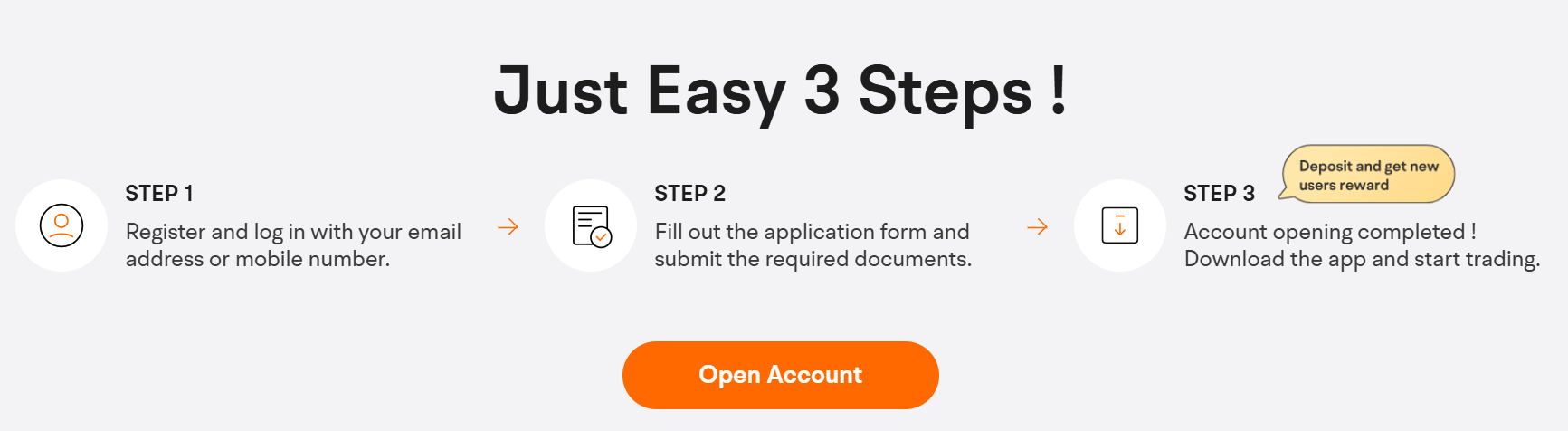
>> How to Open a Margin Account on moomoo? Just 3 Steps!
Types of Margin Trading
There are several types of margin trading, including stock margin trading, futures margin trading, and forex margin trading. Each type of margin trading has its own set of rules and regulations, and investors must understand these rules before engaging in margin trading. Stock margin trading involves borrowing money from a broker to purchase stocks, while futures margin trading involves depositing a performance bond to open a futures position. Forex margin trading involves borrowing money from a broker to trade currencies. Regardless of the type of margin trading, it is essential to understand the risks and to use this strategy wisely.
How to Buy Stocks on Margin?
Usually, brokers manage transactions through investors' brokerage accounts. When you buy a stock, cash is taken from your account to pay for it.
With cash, you can buy stocks in full—100% paid for, based on how many shares you want and their price. In a margin trading scenario, you can leverage borrowed funds to increase your purchasing power.
Margin trading is basically borrowing cash from your broker to invest in stocks or securities. That way, you can buy more shares than you'd be able to with just the money you have in your pocket. But you have to pay interest in the borrowed amount to use this leverage. The amount borrowed is determined by the broker's margin requirements and the investor's equity.
To trade on margin, you need a margin account, which is different from a regular cash account. The stocks or assets in your margin account act as collateral for the loan. Keep in mind: not all securities can be bought using margins.
Margin Trading on Moomoo SG
Looking to trade on margin in Singapore? Moomoo SG offers a competitive edge with low margin rates across multiple currencies. Here's what you need to know:
Supported Currencies & Margin Rates
USD: 4.8% p.a
SGD: 4.8% p.a
HKD: 6.8% p.a
CNH: 6.8% p.a
JPY: 2.8% p.a
Why Choose Moomoo SG for Margin Trading?
Low USD Margin Rate: At 4.8% p.a, moomoo's USD margin rate is highly competitive compared to other platforms in Singapore. Explore our deep dive on Moomoo vs IBKR Singapore.
Multi-Currency Support: Trade in your preferred currency with flexible margin options.
User-Friendly Platform: Access real-time data, advanced charting tools, and seamless execution.
Ready to leverage your trades? Open a margin account on Moomoo SG today and start trading with competitive rates!

*T&Cs and other fees apply.
Moomoo Financial Singapore Pte. Ltd. classifies margin into three types: Initial Margin, Margin Call Margin and Maintenance Margin. This structured approach helps you understand your financial obligations and the risks associated with margin trading on Moomoo's platform. (Source: Moomoo Support)
Margin Call
If market fluctuations cause your Equity with Loan Value (ELV) to fall below this predefined threshold, Moomoo SG will issue a margin call.
Client Obligations: Upon receiving a margin call, you must either:
Deposit additional funds into your account, or sell a portion of your assets within 48 hours.
Consequences of Inaction: Failure to meet the margin call allows Moomoo SG to liquidate your positions without prior notice to cover the shortfall.
Initial Margin
If you want to buy on margin a stock with a market value of $1 million, when the initial margin is 100%, you need $1 million to establish a position (at 1x leverage); when the initial margin is 80%, you only need $0.8 million, which means you borrow $0.2 million from moomoo SG (at 1.25x leverage).
If you want to short sell a stock with a market value of $1 million, when the initial margin is 100%, you need to ensure that you have $1 million in your account; when the initial margin is 80%, you only need $0.8 million, which means you use your own $0.8 million as collateral to borrow the stock with a market value of $1 million from Moomoo SG.
Maintenance Margin
The maintenance margin is the minimum margin you must maintain in your account if you want to keep a certain stock. Maintenance Margin Amount = Market Value of Open Positions × Maintenance Margin.
Practical Examples of Buying Stocks on Margin
Imagine you want to buy $20,000 worth of stocks, but your margin account only has $10,000 in cash. With a standard 50% initial margin requirement, you can borrow the remaining $10,000 from your broker. This lets you double your purchasing power—turning $10,000 into a $20,000 stock position. The value of the position is calculated based on the total amount of stock purchased, including both the investor's equity and the borrowed funds.
After buying the stocks with borrowed funds, two main scenarios can play out:
Scenario 1: The Stock Price Rises
Let's break down how margin trading can amplify gains. Suppose you use margin to buy $20,000 worth of stock, contributing $10,000 in cash (50% initial margin) and borrowing $10,000 from your broker.
What happens if the stock price rises?
Purchase: You buy $20,000 in stock ($10,000 cash + $10,000 loan).
Price Increase: The stock's value climbs to $30,000.
Sell: You sell the stock at the new value.
Repay Loan: After paying back the $10,000 loan (plus interest), your account balance becomes $20,000.
Result: You earned a 100% profit on your $10,000 cash investment. Without margin (buying the full $20,000 with cash), your gain would only be 50%.
Scenario 2: Sudden Fall in Stock Price
Now, let's see how margin magnifies losses. Start with the same $20,000 stock purchase ($10,000 cash + $10,000 loan).
What happens if the stock price drops?
Purchase: $20,000 in stock ($10,000 cash + $10,000 loan).
Price Decline: The stock's value falls to $15,000.
Sell: You sell the stock at a lower value.
Repay Loan: After repaying the $10,000 loan (plus interest), your account balance drops to $5,000.
Result: You lost 50% of your initial $10,000 investment—even though the stock's value only fell 25%. This shows how leverage cuts both ways: amplifying gains and losses.
Why Margin Stock Buying Carries Risks
All investments involve risk, but margin trading intensifies these dangers. It is crucial to maintain sufficient funds in your account to cover margin requirements and avoid margin calls. Here's a closer look at key risks and how they work:
Maintenance Margin Requirements
The maintenance margin refers to the minimum amount of margin that must be kept in your account to retain a specific stock position.
The maintenance margin amount is equal to the market value of open positions multiplied by the maintenance margin ratio. In other words, it is calculated by multiplying the current market value of the positions held by the specified maintenance margin ratio to determine the required amount of margin to be maintained.
Margin Calls: What Happens When Things Go Wrong
If a stock's price falls so much that your equity dips below the maintenance margin, your broker will issue a margin call. The securities in your margin account serve as collateral for the borrowed funds, and the broker can sell them to cover the shortfall. This forces you to:
- Sell stocks to raise equity, or deposit additional cash into your account.
Example with a 40% Maintenance Margin:
Purchase: You buy $20,000 in stock, borrowing $10,000 (50% margin).
Price Drop: The stock falls to $15,000.
Equity Calculation: $15,000 (value) – $10,000 (loan) = $5,000 equity.
Margin Check: $5,000 equity ÷ $15,000 value = 33% equity (below the broker's 40% requirement).
Outcome: If you don't add cash, your broker can sell your stocks without your approval to cover the shortfall.
Margin trading isn't just about amplified gains—it also means amplified losses. Always understand your broker's maintenance margin rules and be prepared for margin calls.
Benefits of Margin Trading
Margin trading offers several benefits to investors, including increased buying power, potential for higher returns, and flexibility. By borrowing money from the broker, investors can purchase more securities than they could with their own capital, potentially leading to higher returns. Additionally, margin trading allows investors to take advantage of market opportunities that may not be available with a smaller investment. However, it is crucial to understand the risks of margin trading and to use this strategy wisely.
Margin Account Management
Managing a margin account requires careful attention to the value of the securities in the account and the maintenance margin requirement. Investors must ensure that they have sufficient equity in their account to meet the maintenance margin requirement, or they may face a margin call. It is also essential to monitor the interest rates charged on the margin loan and to make timely payments to avoid accumulating debt. Investors should also be aware of the risks of margin trading, including the possibility of losing more than their initial investment.
What Does Buying Stock on Margin Mean?
Buying stocks on margin is when you borrow money from a broker to buy shares, so you can purchase more stock than you could afford with just the cash you have. This refers to the practice of using leverage to amplify both potential gains and losses.
How Does Margin Trading Work for Stocks?
Open a Margin Account: First, you'll need to set up a margin account with your broker. This margin trading account allows you to borrow funds to purchase stocks.
Borrow to Buy: Use the borrowed funds (margin loan) to purchase stocks. For example, if you have $10,000 in cash and a 50% margin requirement, you can buy $20,000 worth of stock (borrowing $10,000).
Profit Scenario: If the stock's value rises, sell the shares, repay the loan (plus interest), and keep the remaining profit.
Example: A $20,000 stock purchase rises to $30,000. After repaying $10,000 + interest, you keep the gain (e.g., ~$10,000 minus fees).
Risk Scenario: Margin Calls - If the stock's value drops, your account's equity (value minus loan) may fall below the broker's maintenance margin (often 25–40% of the stock's value). This triggers a margin call, forcing you to:
Sell shares at a loss to repay part of the loan
Deposit more cash to meet the margin requirement.
Repayment Obligation: Regardless of whether the stock rises or falls, you must repay the broker's loan—even if it means taking a loss.
In short, margin trading lets you “leverage” your investments, but it's critical to understand the risks of amplified losses and the mandatory loan repayment. Always check your broker's margin rules before trading.
Conclusion

*T&Cs and other fees apply.
In conclusion, margin trading is a powerful financial tool that offers both opportunities and risks. It allows investors to amplify their purchasing power by borrowing funds to buy stocks, potentially leading to higher returns. However, this leverage also means that losses can be magnified significantly.
Understanding the key concepts such as minimum margin, initial margin, and maintenance margin is crucial. The difference between these concepts lies in their specific roles: minimum margin is the lowest amount required to open a position, initial margin is the amount needed to initiate a trade, and maintenance margin is the minimum equity required to keep the position open. These distinctions impact how margin trading operates and the level of risk involved. Examples of buying stocks on margin, whether in scenarios of rising or falling stock prices, vividly demonstrate how outcomes can vary greatly.
When considering margin trading on platforms like moomoo, investors should not only take advantage of its features but also be fully aware of the associated risks. By being well-informed, setting clear investment goals, and having a solid risk management strategy in place, investors can navigate the world of margin trading more effectively. Remember, while margin trading can enhance investment potential, it requires careful consideration, continuous learning, and prudent decision-making.
This presentation is for informational and educational use only and is not a recommendation or endorsement of any particular investment or investment strategy. Investment information provided in this content is general in nature, strictly for illustrative purposes, and may not be appropriate for all investors. Read more