Best Singapore Stock Screener for Stock Picks
Getting started with investing can be quite daunting for some investors in Singapore. Before making investments, there are several decisions to be made, such as setting investment goals, selecting a reliable stock broker in Singapore to facilitate trading activities, determining the most crucial factors to take into account when purchasing stocks, and leveraging appropriate investment tools to streamline the investment process.
>> Want to use free stock screener? Looking to unlock a free, customizable stock screener on moomoo.

In this guide, we will explain some initial steps to take before selecting stocks and methods for conducting research.
What is a Stock Screener? Brief Introduction
A stock screener is a powerful tool designed to simplify and enhance the process of selecting stocks for investment. Essentially, it acts as a filter, sifting through vast amounts of financial data to identify stocks that meet specific criteria set by the investor.
How Does a Stock Screener Work?
At its core, a stock screener operates by allowing users to input a series of parameters or conditions based on their investment preferences. These parameters can range from fundamental financial metrics such as earnings per share (EPS), price-to-earnings (P/E) ratio, and dividend yield, to technical indicators like moving averages and trading volume.
Types of Stock Screeners
There are various types of stock screeners available, ranging from basic tools offered by brokerage firms to advanced software platforms with sophisticated features. Some screeners focus on fundamental analysis, while others emphasize technical indicators or a combination of both. Additionally, some screeners are tailored specifically for certain markets or investment strategies, such as value investing or growth investing.
Benefits of Using a Stock Screener
Time Efficiency: With thousands of Singapore stocks, manual research isn't practical. A screener automates this, saving time for analyzing top opportunities.
Objective Choices: Uses data over opinions to reduce emotional/biased choices and improve rational investing.
Customization: Tailors searches to match each investor's goals, risk tolerance, and strategies.
Find Hidden Opportunities: Finds undervalued or high-growth stocks that might otherwise go unnoticed.
Step 1: Define Your Investment Goals and Determine Your Risk Tolerance
Setting investment goals is a basic step to boost financial stability and reach specific investment aims. While how to pick stocks is a personal choice that's up to you, we'll share some steps as friendly guidance.
First, you need to clearly define your objectives—whether it's saving for retirement, funding a child's education, or saving up for a home down payment. It's also key to sort them into short-term, medium-term, and long-term investment goals, as this helps create a personalized investment strategy.
Read More: How to trade stocks on moomoo in Singapore?
Figure Out Your Investor Profile
Figuring out your investor profile can help you make investment choices that fit your financial goals, how much risk you're okay with, and how long you plan to invest. Here's some useful advice:
Decide what you want to get out of your investments and how long it'll take
Know how much risk you're willing to accept
Choose investments that match the time it'll take to reach your goals in Singapore stock market
Look at how much money you make, what you spend, how much you're worth, and how much cash you need on hand
Think about how much you know about different investment options and strategies
If you have any moral concerns or a preferred investment style, factor them into your plan
Use online tools to learn more and figure out how much risk you're taking
Step 2: Evaluate Your Risk Tolerance
Investors should assess how much risk they're comfortable taking to reach their investment goals—this is called risk tolerance. It varies from person to person, depending on things like age, finances, and investing experience. Once you know your risk tolerance, the key to risk management is to build a diversified portfolio that matches your goals. You should also regularly review and adjust your portfolio as your life changes or market conditions shift.
Step 3: Master the Art of Diversification
Diversification is an investment strategy that spreads your investments across different asset types, industries, or regions to lower risk. The basic idea is simple: don't put all your money into one place to help avoid big losses. When building a diversified portfolio, think about how much risk you're comfortable with and what you want to achieve with your investments. If one investment does badly, others might do well, which can even out how your entire portfolio performs.
Strategies for Diversifying Your Portfolio
Diversifying your portfolio needs careful planning for how you allocate assets and manage risk. Here are some practical strategies:
Spread Across Sectors: Invest in different sectors like tech, healthcare, consumer goods, and energy. This helps reduce risk, especially if some industries hit rough patches.
Go Global: Mix domestic investments with international markets, and consider opportunities in emerging economies for potential growth.
Moomoo Singapore: One-stop Solution for Global Stocks!
>> Click to open an account and claim your welcome rewards!
>> Click to open an account and claim your welcome rewards!

Mix Investment Styles: Combine growth stocks, value investments, and income-generating assets (like dividends). This balances the potential for long-term growth with steady income, working well in different market conditions.
Regular Rebalancing: Check and adjust your portfolio periodically. Market changes can throw off your original asset allocation, so rebalancing keeps your risk in check and prevents overexposure to any single investment.
Step 4: Research and Pick Target Companies
Researching and selecting target companies is key to making smart investment choices—and it's a big part of how to choose stocks. Start by figuring out which sectors or industries you're interested in. Once you have a focus, dig into a company's basics, like its financial reports, revenue growth, profit margins, and debt. Metrics like the price-to-earnings (P/E) ratio and return on equity (ROE) can show you how valued the company is and how well it's run.
Don't forget qualitative factors, too, like how the company competes, the quality of its management, and market trends. Knowing how a company fits in its industry—along with what might drive its growth or pose risks—is essential for a full evaluation. Using resources like analyst reports, news articles, and earnings calls can give you a deeper understanding of the companies you're targeting. Here are four practical steps for picking target companies:
1. Utilize a Stock Screener for Filtering
First, figure out what you want to achieve and what specific features you're looking for in stocks. Common filters include market cap, sector, price-to-earnings (P/E) ratio, dividend yield, and debt-to-equity ratio.
>> Moomoo stock screener provides over 100 advanced stock screening factors. Specifically, investors can look at factors such as:
● Different industrial sectors
● Market indicators
● Financial indicators
● Technical indicators
● Market performance
● Brokerage stocks
● Different industrial sectors
● Market indicators
● Financial indicators
● Technical indicators
● Market performance
● Brokerage stocks
Once you set these filters, the screener will list stocks that fit your criteria, making it easier to focus on your analysis and save time. This also ensures you're focusing on metrics that matter for your goals. After getting the results, it's important to do more research—both numerical (like financial data) and qualitative (like company strategy)—to assess each stock's potential and risk.
2. Understand the Price-to-Earnings Ratio
The price-to-earnings (P/E) ratio is a simple tool to gauge how expensive a company's stock is. It compares a company's current share price to its earnings per share (EPS), showing how much investors are willing to pay for each dollar the company earns. A high P/E ratio might mean the stock is overpriced, or it could signal that investors expect big growth ahead. On the flip side, a low P/E ratio may indicate the stock is undervalued, or it could mean the company is facing problems.
Why use it? Investors often compare P/E ratios within the same sector to spot relative bargains or overhyped stocks. This helps identify companies that might be flying under the radar or those with unrealistic expectations. Looking at a company's historical P/E ratios also gives context—you can see if the current price is high or low compared to past trends, which helps with buying or selling decisions. Just remember: past performance doesn't guarantee future results.
3. Consider the Price-to-Sales Ratio
The P/S ratio is a useful metric for sizing up a company's value, especially when its profits are unpredictable or in the red. It measures a company's market cap against its total sales revenue, showing how much investors are willing to shell out for each dollar of sales. A low P/S ratio often signals that a stock is undervalued compared to its sales, which could make it a solid buy. On the other hand, a high P/S ratio might mean the stock is overpriced—or that investors are betting on big growth down the line.
Why does it matter? The P/S ratio lets you compare companies in the same industry fairly, since it focuses on revenue generation without getting hung up on profit margins. Looking at a company's historical P/S ratios also helps you make sense of its current valuation. You can see if the market price lines up with its revenue trends or if it's out of whack. Just like with any metric, it's not foolproof—but it's a handy tool for getting a clearer picture of a stock's worth.
4. Analyze the Dividend Yield
Dividend yield is a go-to metric for investors chasing income or sizing up dividend-paying stocks. It's calculated by taking the annual dividend per share and dividing it by the stock's current price, showing the percentage return in dividends you'll get based on the stock's price. A higher yield often means more income relative to the stock's cost, making it a magnet for investors focused on steady cash flow.
How to use it? Compare dividend yields within the same sector to spot stocks offering strong income potential. But here's the catch: a sky-high yield isn't always a good thing. If the stock price drops sharply, the yield can spike artificially—even if the company isn't increasing dividends. That's why checking the payout ratio (how much of its profits a company shells out in dividends) is crucial. A sustainable payout ratio ensures the dividend isn't just a short-term perk but a reliable part of the company's strategy. Always pair yield with a deeper look at the company's financial health to avoid missing red flags.
Read More: 10 Best Dividend Stocks in Singapore 2025
Step 5: Analyze Stock Valuation and Performance
Checking a stock's value and performance means looking at a company's financial health, market trends, and growth potential from different angles. Here are two key ways investors do this:
Fundamental Analysis
The way of fundamental analysis is to gauge a stock's true value by digging into a company's financial reports and broader business landscape. Here's what it involves:
Examine Financial Statements: Look at the income statement, balance sheet, and cash flow statement to understand the company's profitability, assets, liabilities, and cash flow.
Use Key Ratios: Calculate metrics like P/E ratio, earnings per share (EPS), return on equity (ROE), and debt-to-equity (D/E) ratio to see if the stock is priced fairly—either undervalued or overvalued.
Understand the Business: Study how the company operates, its business model, and who its main competitors are.
Factor in Macro Trends: Consider economic conditions, industry trends, and news that could impact the company's performance.
Assess Qualitative Factors: Look at intangible aspects like brand reputation, market share, and how well the company is managed.
Check Expert Insights: Review research reports and recommendations from analysts to get a broader view of the stock's potential.

Technical Analysis
Technical analysis helps investors predict future stock price movements by studying past and current price trends. It's built on the idea that prices follow repeating patterns and that all market factors are already reflected in the stock's price. Here's how it helps investors:
Spot Trade Timing: Identify the best moments to buy or sell a stock.
Analyze Trends: Figure out if prices are likely to keep rising/falling, pause, or reverse direction, and assess whether the current price is unusually high or low.
Step 6: Refine Your Portfolio
There are several practical ways to optimize your portfolio and important factors to keep in mind when buying stocks:
1. Asset Allocation
Align your investments with your financial goals to manage risk effectively. For example, prioritize growth-focused assets for long-term goals like retirement, and more stable investments for short-term needs.
2. Diversification
Spread your investments across different asset classes, sectors, and regions to reduce the impact of poor performance in any single area.
3. Risk Tolerance
Understand how much risk you're comfortable taking—it's central to choosing the right mix of investments and assets in your portfolio.
4. Portfolio Rebalancing
Regularly adjust the weights of your assets to maintain your desired risk level and maximize portfolio value. Market changes can shift your original allocation, so rebalancing keeps things on track.
5. Tax-Efficient Investing
Strategies like holding investments in tax-advantaged accounts can help minimize tax burdens and boost long-term returns.
6. Minimize Brokerage Fees
Look for ways to avoid or reduce account fees, as they can eat into your profits over time. Choose low-cost brokers or commission-free trading options where possible.
>> Want to trade with free commission? Check moomoo fees in Singapore. Trade US stock with lifetime US$0 commission* on Moomoo Singapore! *T&Cs and other fees apply.

FAQs about Stock Picking and Stock Screener
1. How to Decide Which Stocks to Buy
Figuring out which stocks to buy requires a mix of research, analysis, and clarity on your financial goals and risk tolerance. Here's a practical guide to help you choose stocks that fit your portfolio:
Clarify Your Basics: Start by defining your investment goals (e.g., retirement, buying a home), how long you'll invest (short/long-term), and how much risk you're comfortable with.
Do Your Homework: Use fundamental analysis to study a company's financial health (think P/E ratios, earnings, debt) and technical analysis to spot price trends. Consider qualitative factors like the company's business model, management team, and industry trends.
Stay Informed: Keep up with company news, economic updates, and analyst insights to gauge a stock's potential.
Diversify Smartly: Spread your investments across different sectors and stock types to avoid overexposing yourself to one area.
Review Regularly: Check your portfolio often to ensure it still aligns with your goals and adjust as needed.
Use Tools to Simplify: Stock screeners and research platforms can narrow down options based on your criteria, saving time and effort.
2. How Warren Buffett Picks Stocks?
Warren Buffett’s portfolio emphasizes undervalued stocks, long-term holding, economic moats, strong management, and sustainable profitability. Warren Buffett's stock-picking strategy focuses on value and long-term stability:
Understand the Business: He only invests in companies he fully understands, avoiding industries or models he can't grasp.
Look for a Moat: He seeks businesses with a “competitive moat” — unique advantages (like brand loyalty or patents) that protect them from competitors and sustain profits.
Prioritize Financial Strength: Buffett favors companies with consistent earnings growth, strong management, low debt, and a history of reliable performance.
3. Why Picking Stocks is Tough?
Stock picking feels intimidating for several reasons:
Market Unpredictability: Prices can swing due to factors like economic shifts, political news, or investor emotions, making trends hard to predict.
Information Overload: With endless data (financial reports, news, social media), it's tricky to separate useful insights from noise, especially for new investors.
4. Is Stock Screener Free to Use?
Many stock screeners are free (e.g., moomoo stock screener), offering basic filters like P/E ratio or market cap. Premium versions with advanced features usually require a subscription.
5. How to Create Your Own Stock Screener?
Define goals (e.g., value/growth stocks).
Use free tools like moomoo stock screener.
Set criteria (e.g., P/E < 20, market cap > $1B).
Filter data using spreadsheet functions (e.g., FILTER or QUERY).
Update regularly as markets change.(Alternative: Use platforms like moomoo stock screener to build custom screeners.)
6. What Legal Considerations Should I Be Aware of When Using Stock Screeners?
When using stock screeners, it's important to be aware of the legal rules and regulations governing financial advisories and disclosures. The materials provided in research reports should be independently evaluated as they may not be verified by the analyzing group. Additionally, the distribution of these reports is often intended for specific audiences and regions, reinforcing the legality of distribution within various jurisdictions.
How to Pick Stocks with Moomoo Stock Screener?
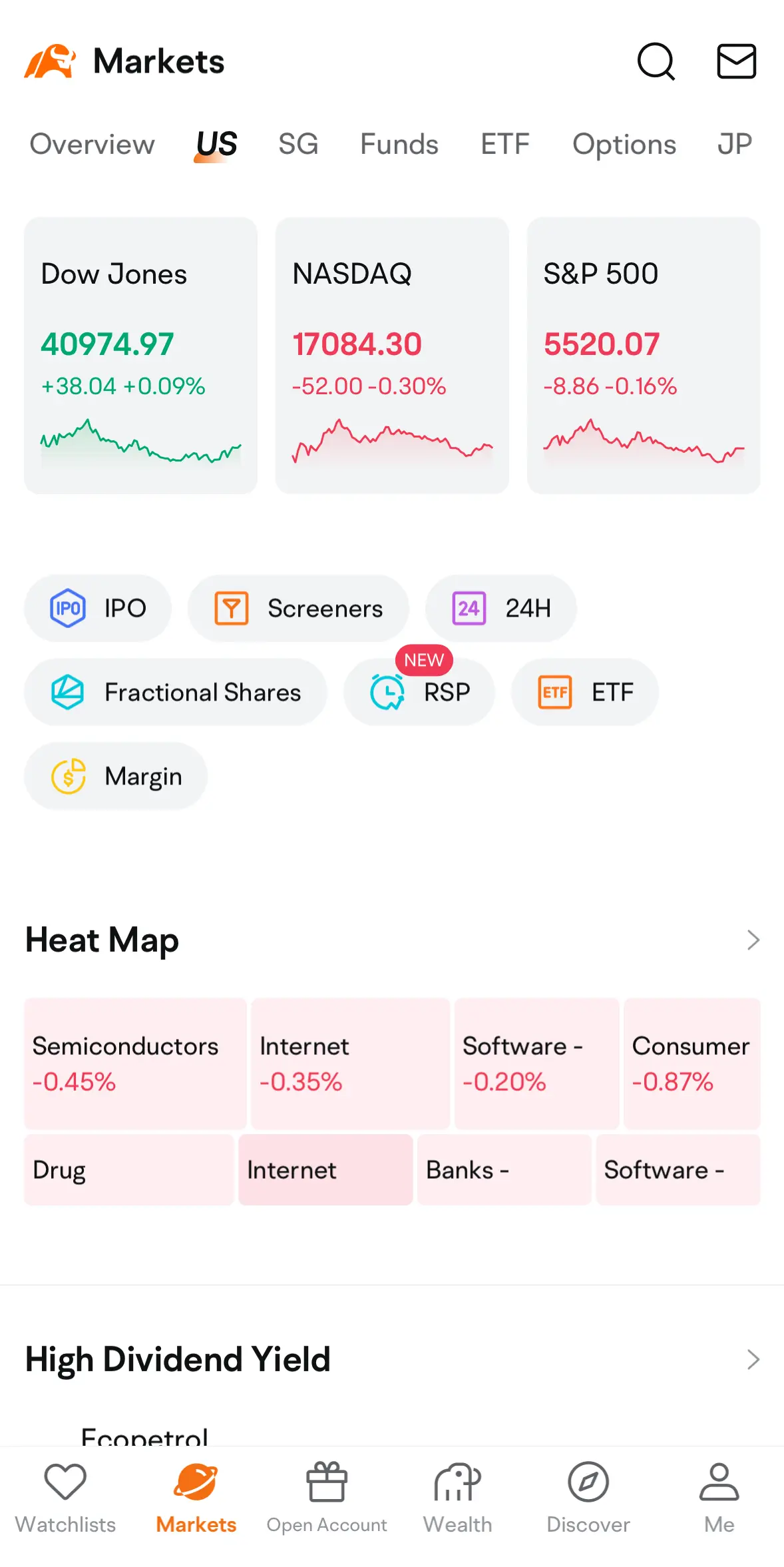
Method 1: Go to "Markets" > Pick a specific market > Select "Screeners"
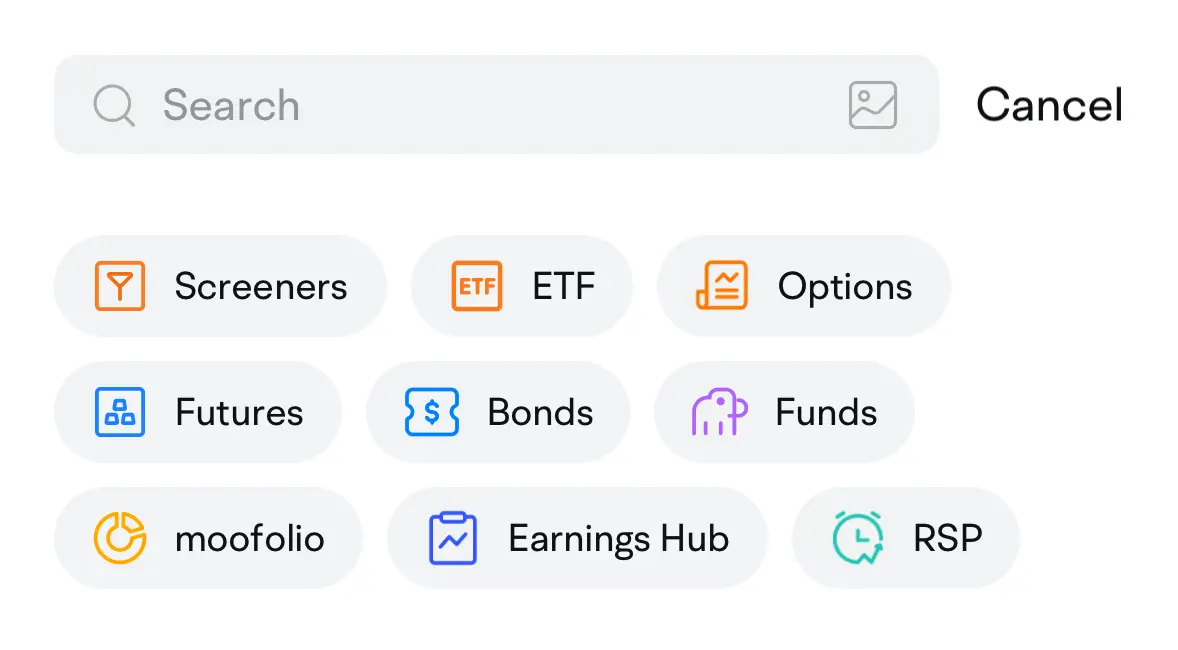
Method 2: Click on the "Markets" tab > Choose "Explore" > Select "Stock Screener"
Conclusion

*T&Cs and other fees apply.
In conclusion, navigating the stock-picking landscape in Singapore requires a strategic and informed approach. Utilizing Moomoo's stock screener, with its 100+ advanced features, is a game changer. By first setting clear investing goals and assessing risk tolerance, investors can then apply the principles of diversification. Researching and selecting target companies becomes more efficient with the aid of the stock screener, which can filter stocks based on crucial metrics like price-to-earnings ratio, price-to-sales ratio, and dividend yield.
Analyzing stock value and performance is an ongoing process that helps in making timely decisions. Regularly optimizing your portfolio ensures it remains aligned with your financial objectives. Remember, stock-picking is not a one-time activity but a continuous journey. With the right tools like Moomoo's stock screener and a well-thought-out strategy, investors in Singapore can enhance their chances of building a successful and profitable investment portfolio.

This presentation is for informational and educational use only and is not a recommendation or endorsement of any particular investment or investment strategy. Investment information provided in this content is general in nature, strictly for illustrative purposes, and may not be appropriate for all investors. Read more