Margin Trading: Guide and Strategy for Malaysian Investors

In the rapidly moving world of finance, investors continually seek ways to enhance their investment returns. Margin trading, a method that enables investors to utilize leverage to increase the scale of their trades, which is gaining attention in Malaysia. Margin trading enables investors to manage bigger investment positions while using less capital, increasing the potential for greater returns. Nonetheless, this kind of trading carries significant risks, making it essential to comprehend and fully understand its mechanics.
This article seeks to offer a comprehensive guide on margin trading for Malaysian investors. One of the key aspects to understand is the initial margin requirement, which is the minimum amount of capital an investor must deposit to open a margin position. This article will explore the mechanics of margin trading, including its operation and the use of leverage. At the same time, the article will explore the possible advantages of margin trading in Malaysia, along with the associated risks, to help investors make well-informed choices. Furthermore, this article outlines practical steps and strategies for investors embarking on their margin trading journey in Malaysia to enhance their investment returns.
What is Margin Trading?
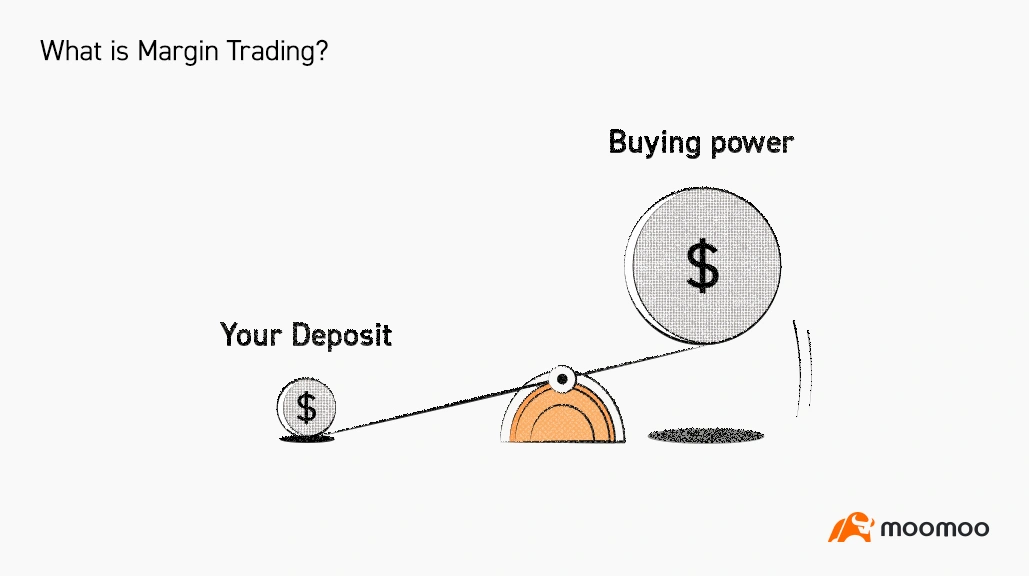
Margin Trading is a strategy that allows investors to increase the size of their trades by borrowing funds. In this trading model, investors can gain greater purchasing power than their original capital by putting up only a portion of their funds as margin and using borrowed funds from a broker. By borrowing additional funds from a broker, the investor is able to build a larger position in the market, thereby magnifying potential returns. However, it is worth noting that this same leverage effect magnifies losses and therefore risk.
At the heart of margin trading is the use of leverage, where a small amount of capital is used to control a large asset value. For example, in the foreign exchange, stock or cryptocurrency markets, investors can choose to trade on margin to increase their market presence. Leverage can significantly increase profits when the market moves in a favourable direction, but equally, if the market moves in the opposite direction, it can lead to losses in excess of the initial investment.
For investors in Malaysia, margin trading offers the opportunity to enter the market at a lower cost, especially in markets where large amounts of capital are usually required to participate. However, it is important that investors fully understand the risks involved and have a proper risk management plan in place before deciding to adopt this method of trading. The next section looks in more detail at the mechanics of how margin trading works and why it has become the choice of many Malaysian investors.
How Does Margin Trading Work?
Margin Trading is a method of investing using leverage, which allows investors to control larger investment positions with smaller amounts of capital, using their assets as collateral. The process involves several key elements: margin, leverage, maintenance margin, and a margin account.
Margin
Margin, also known as initial margin, is the amount of money an investor is required to deposit when trading. This money acts as collateral to cover possible losses. Margin can be viewed as part of the investor’s contribution to a trading position, rather than the full amount required to trade.
Margin Account
A margin account is a special account set up between an investor and a broker. In addition to the initial margin, investors must also maintain a certain level of funds in the account, known as the maintenance margin. This account contains not only the investor’s cash deposits, but also funds obtained through leveraged borrowing. All buying and selling activities related to margin trading are carried out in this account.
Leverage Ratio
Leverage Ratio is the ratio of the size of the position that an investor can control to the amount of money he or she actually puts in. For example, if a trading platform offers 10 times leverage, then an investor can control RM10,000 worth of assets by putting up only RM1,000 as margin. Higher leverage means that the investor can trade on a larger scale with less capital.
Maintenance Margin
Maintenance Margin is the minimum level of margin that must be maintained in an account at all times in order to maintain an open position. If the funds in the account fall below this level, the investor will receive a Margin Call requesting more funds to make up the difference.
Buying Securities With Borrowed Funds
Buying securities with borrowed funds is a key aspect of margin trading. When you buy securities with borrowed funds, you are essentially using the assets in your account as collateral for a loan. This allows you to increase your buying power and potentially earn higher returns. However, it’s essential to understand the risks involved and how margin trading works.
How Buying Securities With Borrowed Funds Works
When you buy securities with borrowed funds, you are required to deposit a certain amount of cash or securities into your margin account. This deposit is known as the initial margin requirement. The initial margin requirement varies depending on the brokerage firm and the type of securities being traded.
Once you have deposited the initial margin requirement, you can borrow funds from your brokerage firm to purchase additional securities. The borrowed funds are used to purchase the securities, and the securities are held in your margin account as collateral for the loan.
Interest Charges and Fees
When you buy securities with borrowed funds, you are required to pay interest on the borrowed amount. The interest rate varies depending on the brokerage firm and the type of securities being traded. In addition to interest charges, you may also be required to pay fees for maintaining a margin account.
Risks of Buying Securities With Borrowed Funds
Buying securities with borrowed funds involves a high level of risk. If the value of the securities in your margin account falls, you may be required to deposit additional funds to meet the maintenance margin requirement. If you fail to meet the maintenance margin requirement, your brokerage firm may issue a margin call, which requires you to deposit additional funds or sell some of your securities to cover the shortfall.
Example of Buying Securities With Borrowed Funds
Let’s say you want to buy 100 shares of a stock that costs $50 per share. You have $5,000 in your margin account, which is the initial margin requirement. You can borrow $5,000 from your brokerage firm to purchase the additional shares. The total value of the shares in your margin account is now $10,000. If the value of the shares falls to $8,000, you may be required to deposit additional funds to meet the maintenance margin requirement.
Conclusion
Buying securities with borrowed funds is a key aspect of margin trading. While it can increase your buying power and potentially earn higher returns, it involves a high level of risk. It’s essential to understand the risks involved and how margin trading works before using borrowed funds to buy securities.
Why Consider Margin Trading in Malaysia?
For Malaysian investors seeking to increase capital efficiency and broaden their participation in the markets, margin trading offers a range of advantages that enable them to operate more flexibly and efficiently in the financial markets, thereby increasing their buying power. Below are a few important reasons to consider margin trading in Malaysia:
Increasing Purchasing Power
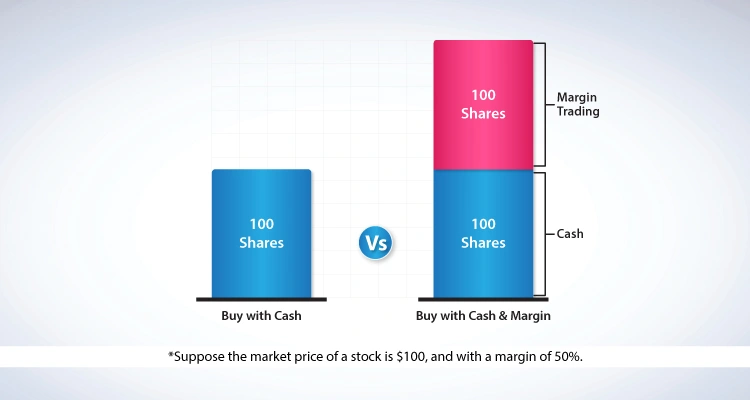
Margin trading can increase buying power
Images provided are not current, and any securities are shown for illustrative purposes only.
With margin trading, investors can use borrowed funds to increase their purchasing power, meaning they can buy more shares or other securities than just the amount of cash in their account will allow. To start margin trading, investors must meet the initial margin requirement, which is the minimum amount of capital needed to open a margin position. This leverage allows investors to control larger investment positions with less capital, thereby magnifying potential gains when market conditions are favourable.
Higher Potential Profits
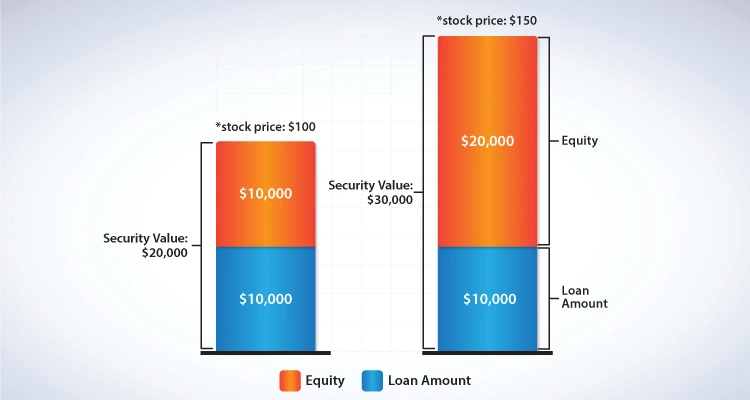
margin trading may bring higher returns
Images provided are not current, and any securities are shown for illustrative purposes only.
The leverage of margin trading not only increases purchasing power but also magnifies profits. If an investor's investment performs well, then their earnings will also increase due to leverage. For example, if an investor uses a leverage ratio of 3:1 and the price of their holdings rises by 10 per cent then their actual return will be 30 per cent because of the leverage factor.
No need to liquidate existing assets
Margin trading allows investors to trade without selling their existing shares. If an investor liquidates their shares for cash, they may incur a taxable event that can be deducted against potential investment income. However, investors using existing stock as collateral can trade without selling their stock.
Flexibility and Market Participation
Margin trading provides investors with greater flexibility, enabling them to respond more quickly to market changes by using borrowed funds to scale up position sizes. With the ability to use leverage to scale up position sizes, investors can participate in a wider variety of market activities. Adequate margin also provides investors with the ability to implement hedging strategies using a wide range of financial instruments.
Risks of Margin Trading
While margin trading offers many opportunities, it also comes with significant risks. One of the key risk factors is the initial margin, which is the minimum amount of capital required to open a margin position. Understanding these risks is essential for investors to help them make more informed decisions when trading on margin. The following are the main risk points of margin trading:
Magnified Losses
One of the main risks of trading on margin is that losses can be magnified. As investors can control much larger positions by putting up only a small amount of money as margin, this means that if the market moves against expectations, losses will be magnified accordingly due to the leverage ratio. In extreme cases, losses can exceed the amount of margin initially invested by the investor.
Margin Call
When the funds in an investor's margin account fall below the Maintenance Margin level, a Margin Call is issued. This means that the investor is required to inject additional funds into the account within a specified period of time in order to prevent the position from being automatically closed. Failure to respond to a margin call in a timely manner may result in the broker having the right to close out part or all of the position without notice in order to meet the margin requirement.
Market Volatility
Margin trading is very sensitive to market fluctuations. Even short-term price fluctuations can result in significant losses. Particularly in highly volatile market environments, rapid price movements can make it difficult for investors to react in a timely manner and expose them to a greater risk of loss, even if they have sufficient collateral.
Emotional Trading
Margin trading is prone to emotional trading behaviour, especially when borrowed funds are involved. When an investor sees the money in their account growing or shrinking rapidly, they may be influenced by greed or fear and make irrational decisions. This can include over-trading, inappropriately adjusting stop-loss levels, etc. These behaviours often exacerbate losses.
Regulatory Compliance
Investors involved in margin trading need to comply with the laws and regulations of the country or region in which they are trading. In Malaysia, investors must also meet the initial margin requirement set by regulatory bodies to ensure compliance. Investors should ensure that the broker they choose complies with the relevant regulatory requirements and that they themselves comply with all applicable trading rules. Non-compliance may not only result in financial loss, but may also attract legal penalties.
How to Get Started with Margin Trading in Malaysia
For Malaysian investors who want to enter the world of Margin Trading, it is important to know how to get started. Below is a step-by-step guide to help investors start their Margin Trading journey smoothly.
1. Choosing the right broker
Firstly, you need to choose a reputable and regulated broker. In Malaysia, make sure that the broker is licensed by the Securities Commission (SCM) or other relevant regulatory bodies. Factors to consider when choosing a broker include commission charges, the functionality of the trading platform, customer service support, and educational resources offered.
2. Open a Margin Account
After selecting a broker, the next step is to open a Margin Account. This usually involves completing an application form and submitting the necessary identification documents. Some brokers may also require you to complete an online risk assessment questionnaire to confirm that you understand the risks of trading on margin.
3. Deposit Initial Margin
Upon opening an account, you will be required to deposit an Initial Margin. This fund will form the basis of your margin trading and will act as collateral for your account. Ensure that you deposit an amount of money that is sufficient to support your trading plan and allow for a sufficient buffer against possible market fluctuations.
4. Choosing Trading Products
Investors can choose suitable trading products such as stocks, futures, forex or cryptocurrencies based on their investment strategies and market analyses.
5. Choosing Leverage
Depending on one's risk tolerance and trading strategy, investors can choose different leverage ratios.
6. Executing trades
Once an account has been established and sufficient margin has been deposited, the investor can use leverage to trade. For example, buying shares in the stock market or buying and selling currency pairs in the foreign exchange market.
7. Monitoring Accounts
Investors need to regularly check the level of margin in their accounts to ensure that they are not under margined due to market price movements.
8. Managing Risk
Protecting yourself from excessive losses by placing stop-loss orders and taking other risk management measures.
Margin Trading Tips for Malaysian Investors
Margin trading provides investors with an opportunity to utilise leverage to magnify potential gains, but it also comes with a higher level of risk. It is also crucial to regularly monitor the maintenance margin to avoid margin calls. To help Malaysian investors better manage and avoid these risks, here are some margin trading considerations:
Knowing Interest Rates
It is important to understand interest rates on borrowed funds. Interest on margin loans can add up significantly if the position is held for a long period of time. When considering trading on margin, it is important to factor in this interest as part of the total cost of trading.
For example, if you borrow RM 5,000 from your broker to trade on margin at 7% per annum, you will pay RM 87.50 in interest charges (RM 5,000 × 7% × 3/12) after holding the position for three months.
Interest rates can have an impact on the outcome of a trade, so don’t ignore this when calculating your trading costs.
Avoid Rushing Into Trades
While it may be tempting to trade on a hunch or news report alone, this approach is especially risky in margin trading. Before making any trades, ensure you understand the initial margin requirement and how it impacts your trading strategy. If you want to invest in a company, you should carefully review its financial statements, study industry trends, and stay on top of relevant news and market developments before trading.
Monitoring Positions
To manage risk and capture opportunities in margin trading, it is essential to monitor the maintenance margin and use real-time quotes, news feeds, and technical analysis tools to closely monitor positions. Consider placing stop-loss orders or closing positions when appropriate. To stay on top of the latest developments, set up alerts and notifications to keep abreast of important changes to your positions.
Avoiding Margin Calls
A margin call is triggered when the margin account balance falls below the minimum requirement, which could result in your position being forced to close and incur significant losses, even if you have sufficient collateral.
For example, if you purchased 50 shares at RM 20 per share with a total value of RM 1,000 and are required to maintain a 50 percent margin rate, you must have at least RM 500 of equity value in your account. If the account value drops to RM 400, the broker may issue a RM 100 margin call to make up the difference.
Conclusion

Margin trading provides Malaysian investors with an investment vehicle that utilises leverage to magnify potential returns. However, this type of trading is also accompanied by a high level of risk. Understanding the initial margin and how it impacts your trading strategy is crucial for successful margin trading. This article introduces the basic concepts, operational mechanisms and unique advantages of margin trading. It also discusses some of the major risks associated with margin trading and proposes five effective strategies suitable for Malaysian investors.
For investors wishing to venture into margin trading, it is important to have not only the knowledge but also good risk management skills. Choosing the right broker, opening a margin account, understanding leverage and having a clear trading plan are all key success factors. In addition, continuous learning and practice are an integral part of improving trading skills.
In conclusion, margin trading provides a powerful tool for Malaysian investors seeking greater capital efficiency. However, investors must always exercise caution and take appropriate risk management measures to ensure that potential losses are effectively managed while pursuing high returns.
This presentation is for informational and educational use only and is not a recommendation or endorsement of any particular investment or investment strategy. Investment information provided in this content is general in nature, strictly for illustrative purposes, and may not be appropriate for all investors. Read more