
Moomoo Insights
Jul 16 15:38
TSMC Earnings: AI Demand Is Stronger Than the Chip Selloff Suggests
Moomoo Insights
Sep 30 05:04
Live Take | Anthropic’s $518B Compute Bet: Who Wins From the AI Buildout?
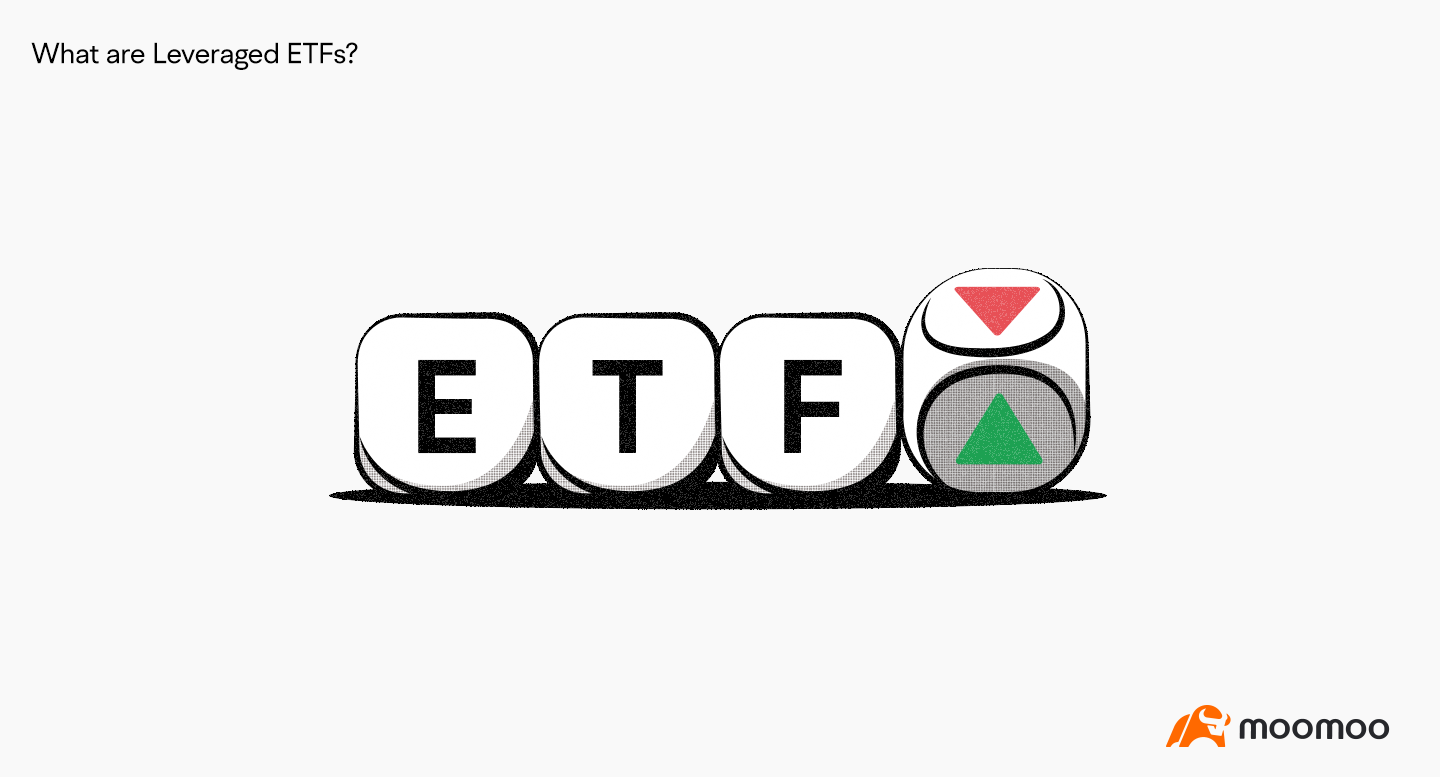
Leveraged exchange-traded funds (ETFs) are a class of some of the riskier investment vehicles on the market. While the returns from these securities can be high, leveraged ETF investors must manage risk and plan their trades carefully due to the risks involved. In this article, you’ll learn how leveraged ETFs work and how traders include them in their portfolios.
Traditional ETFs buy stocks, bonds or a combination of securities to track a specific index. For example, a bond ETF may track the Barclays Aggregate Bond Index. A stock ETF might buy securities to simulate the performance of the Nasdaq exchange or Dow Jones Industrial Average. But leveraged ETFs work differently.
By using derivatives, leveraged ETFs aim to maintain a specific leverage ratio daily, objectives of the ETFs. Leveraged ETFs can track a variety of stock or bond indices, or they can be based on a single stock. Leveraged ETFs are short-term trading vehicles used to speculate on markets, especially when investors believe volatility will be high.
A leveraged ETF introduces options, futures or borrowed money in an attempt to help enhance returns. By using these derivatives, fund issuers can multiply the volatility of the asset compared to the index it tracks. For example, a leveraged ETF tracking the NASDAQ 100 might use options to turn a 1% gain in the index into a 3% gain in the ETF. It works both ways, however, and losses will be similarly magnified.
Leveraged ETFs use derivatives and margin to reach specific ratios in relation to index returns. In U.S. markets, most leveraged ETFs seek to produce returns of 200% or 300% compared to the returns of the underlying index or security.
If the S&P 500 goes up 2% in a day, a 3x leveraged ETF tracking it will aim to return 6%. Conversely, if the S&P 500 drops 1%, the 3x leveraged ETF will have a magnified drop of 3%. Investors must properly manage funds like 2x and 3x leveraged ETFs to avoid excessive losses and tracking errors.
Leverage is often expensive, and premiums must be paid upfront on options contracts. As a result, leveraged ETFs often carry some of the industry's highest expense rates, and these costs must be factored into investment plans.
Leveraged ETFs use derivatives to multiply returns on an index by ratios like 2:1 or 3:1.
Inverse-leveraged ETFs track an index in reverse.
Single-stock leveraged ETFs use derivatives to track a single stock instead of an index or asset class.
Leveraged ETFs are primarily intended for short-term speculation,
One of the reasons leveraged ETFs struggle in the long term is tracking error. Since derivatives are used to enhance leverage, the fund issuer must reset its holdings daily. As a result, over time, leveraged ETFs fall out of sync with their benchmark index, leading to excess losses if not adequately considered.
Potential outsized profits: Leveraged ETFs are designed to outpace their underlying index, which can produce massive returns.
Margin alternative: Investors in leveraged ETFs can reap the benefits of margin without worrying about losing more than their principal.
Exposure to derivatives: Options and futures often require permission from brokers to trade but leveraged ETFs can provide an indirect exposure to derivatives.
Exponential losses are possible: Remember, if the S&P 500 goes down 3%, a 3x leveraged ETF that tracks it will drop 9%.
Tracking error is a severe problem: One of the reasons these funds are generally viewed as short-term vehicles is the frequency of tracking errors over time.
Fees can add up: Since derivatives like options require upfront premiums and margin isn’t free, leveraged ETFs have high expense rates.
Leveraged ETFs offer the potential reward of outsized returns, but that comes with plenty of risk. Losses are exacerbated if the index moves in the opposite direction, and fees for leveraged ETFs are high. In some cases, leveraged ETFs have nearly evaporated overnight. To trade these funds, traders must have a high risk tolerance and a keen eye for market changes. Getting caught on the wrong side of a leveraged ETF trade can be devastating to portfolios.
Leveraged ETFs use derivatives like options and futures contracts to multiply exposure to various indices like the S&P 500 or Russell 2000 or to single stocks like Apple or Tesla.
- Are leveraged ETFs a good idea?
It depends. Like all investments, it depends on an individual's goals, risk tolerance, and experience. Leveraged ETFs can produce outsized returns, but timing is vital since these funds often suffer from tracking errors. As a result, these types of securities are intended for short-term trading rather than multiple-decade investment.
- Can you lose more than you invest in leveraged ETFs?
Unlike traditional margin investing, losses cannot exceed principal when trading leveraged ETFs. However, some leveraged ETFs can erode quickly, and it's not uncommon for these funds to drop by as much as 90% in a short timeframe.
Leveraged and inverse exchange traded products are not designed for buy and hold investors or investors who do not intend to manage their investment on a daily basis. The use of leverage by an ETF increases the risk and are not suitable for all investors and should be utilized only by sophisticated investors who understand leverage risk, consequences of seeking daily leveraged or daily inverse leveraged investment results, and intend to actively monitor and manage their investment.
Important Information: Before investing in an ETF, you should read both its summary prospectus and its full prospectus, which provide detailed information on the ETF’s investment objective, principal investment strategies, risks, costs, and historical performance (if any). You can find prospectuses on the websites of the financial firms that sponsor a particular ETF, as well as through your broker. A Word About Risk: Investment returns will fluctuate and are subject to market volatility, so that an investor's shares, when redeemed or sold, may be worth more or less than their original cost. ETFs are subject to market volatility and the risks of their underlying securities, which may include the risks associated with investing in smaller companies, international securities, commodities, fixed income, and more. An ETF may trade at a premium or discount to its net asset value (NAV).
Benzinga was commissioned for this article and is not affiliated with the moomoo app or it's affiliated companies. This includes Moomoo Technologies Inc. (MTI) provider of the app and Moomoo Financial Inc. (MFI) Member FINRA/SIPC, which offers securities in the U.S. Any comments or opinions provided herein are Benzinga’s. MTI, MFI, or their affiliates do not endorse any trading strategies that may be discussed or promoted herein.
This presentation is for informational and educational use only and is not a recommendation or endorsement of any particular investment or investment strategy. Investment information provided in this content is general in nature, strictly for illustrative purposes, and may not be appropriate for all investors. Read more
Recommend

Chinese EV Industry: Stocks to Watch Based on Growth
SK Hynix ADR (SKHY) 2026 Listing: U.S. Investor's Guide to Memory Stocks

Top 5 Chinese Companies Listed on US Stock Exchanges by Market Cap

2024 Chinese Stimulus Package Basics & How it's Impacting Chinese and Hong Kong Stocks
Chinese Stock Slump: Opportunity or Curse?
What Are Leveraged ETFs and How Do They Work?
What is Market Cap? Definition and How to Calculate
What Are Sector ETFs?
How to Invest in a Bear Market?
Insights into Primary and Secondary Markets
The Investment Strategy of Warren Buffett
What Is An Earnings Call?
What is Value Investing?
Understanding the Operating Margins
Gap Analysis: What Is It?
Investment Portfolio Strategy during Recession
How to Analyze Stocks Using Fundamental Analysis
Why Short Selling Can Be Dangerous
Diversify Your Stock Investment Portfolio with moomoo
Chinese EV Industry: Stocks to Watch Based on Growth
SK Hynix ADR (SKHY) 2026 Listing: U.S. Investor's Guide to Memory Stocks
Top 5 Chinese Companies Listed on US Stock Exchanges by Market Cap
2024 Chinese Stimulus Package Basics & How it's Impacting Chinese and Hong Kong Stocks
Chinese Stock Slump: Opportunity or Curse?
What Are Leveraged ETFs and How Do They Work?
What is Market Cap? Definition and How to Calculate
What Are Sector ETFs?
How to Invest in a Bear Market?
Insights into Primary and Secondary Markets
The Investment Strategy of Warren Buffett
What Is An Earnings Call?
What is Value Investing?
Understanding the Operating Margins
Gap Analysis: What Is It?
Investment Portfolio Strategy during Recession
How to Analyze Stocks Using Fundamental Analysis
Why Short Selling Can Be Dangerous
Diversify Your Stock Investment Portfolio with moomoo

