Pyramid strategy: a strategy to explore ETF trading
Short-term market movements are always unpredictable. Some investors adopt the strategy of buying and selling in tranches in order to better manage the situation of prices going unexpectedly. It can be a prudent approach applied to buy and sell ETFs.
Today we're going to learn about a method of buying and selling in tranches pushed by a legendary Wall Street trader - Jesse Livermore: the pyramid trading strategy.

What is the pyramid trading strategy?
For instance, let's take an investor who has a positive outlook on an ETF valued at $10 per share and intends to allocate $10,000 towards it. The investor could design a following buying plan:
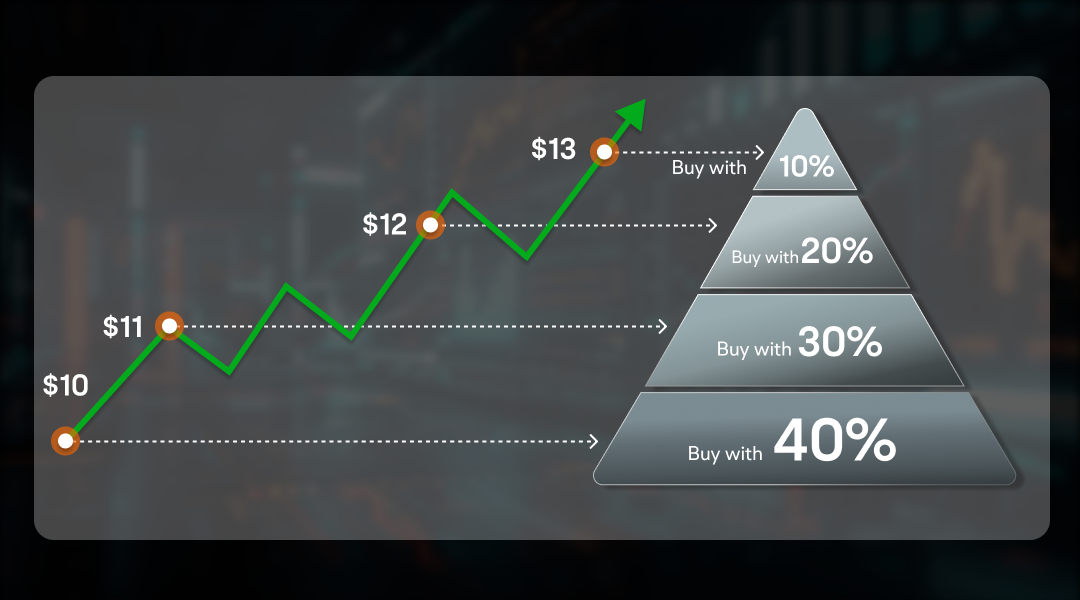
As you can see, his plan is to put 40% of his money into building a bottom position at the current price, and then every time the stock price rises by $1, he continues to buy, but gradually reduces the amount of money he buys with each time - that's the first approach to the pyramid strategy.
So how does selling work? Assuming that the ETF has risen to $20 per share, the investor believes that the stock price has peaked and will trend downward in the future, so he creates the following selling plan:
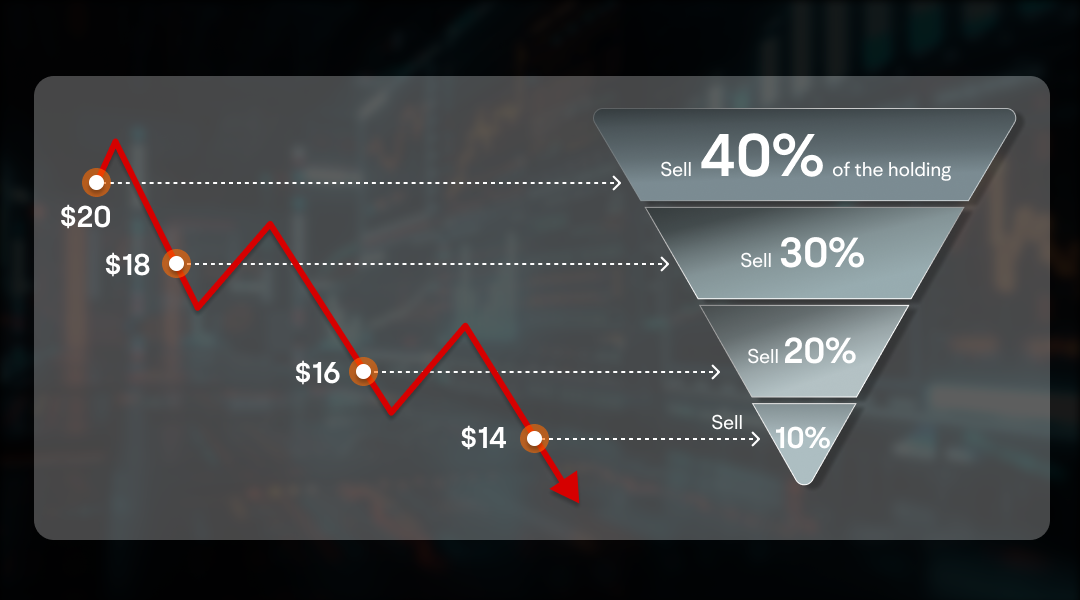
This investor sells 40% of his position immediately at $20, and if the stock price continues to fall after that, he continues to cut down his position, but gradually reduces each sale - this is the second approach to the pyramid strategy.
Doesn't it sound simple? Yes, the pyramid strategy can be simple and easy to use.
How to operate a pyramid strategy
The pyramid trading strategy involves scaling investments with the trend: buying shares as prices rise and selling when they fall. You should determine:
1. Where to start
2. How often to buy/sell, choosing between three, four, five, or more intervals
3. The exact price points and quantities for each buy/sell
All of the above can be flexibly adjusted, the main principle that must be observed is: buying fewer as prices increase, selling fewer as prices drop.
What are the potential benefits of using the pyramid strategy? When you buy, in case prices fall, you might mitigate your losses; when you sell, in case prices rise, you might still profit from the remaining shares.
However, it is difficult to time the market, making this strategy very risky under some unfavorable market conditions. So it should be explored by experienced investors with a higher risk tolerance.
Applicable scenarios
The pyramid trading strategy fundamentally relies on discerning market trends for position adjustments. It's best implemented in a market with a clear direction, allowing the strategy to unfold effectively.
ETFs that may align with this strategy include broad-based index ETFs, known for their steady, long-term growth historically. Another potential choice is growth ETFs, which offer greater upside potential during upward trends.

Over the past five years, as reported by S&P Indices Versus Active (SPIVA), a staggering 78.68% of equity funds in the United States have failed to match the performance of the S&P 500 index. So investing in broad-based index ETFs for the long-term could be a potential choice.
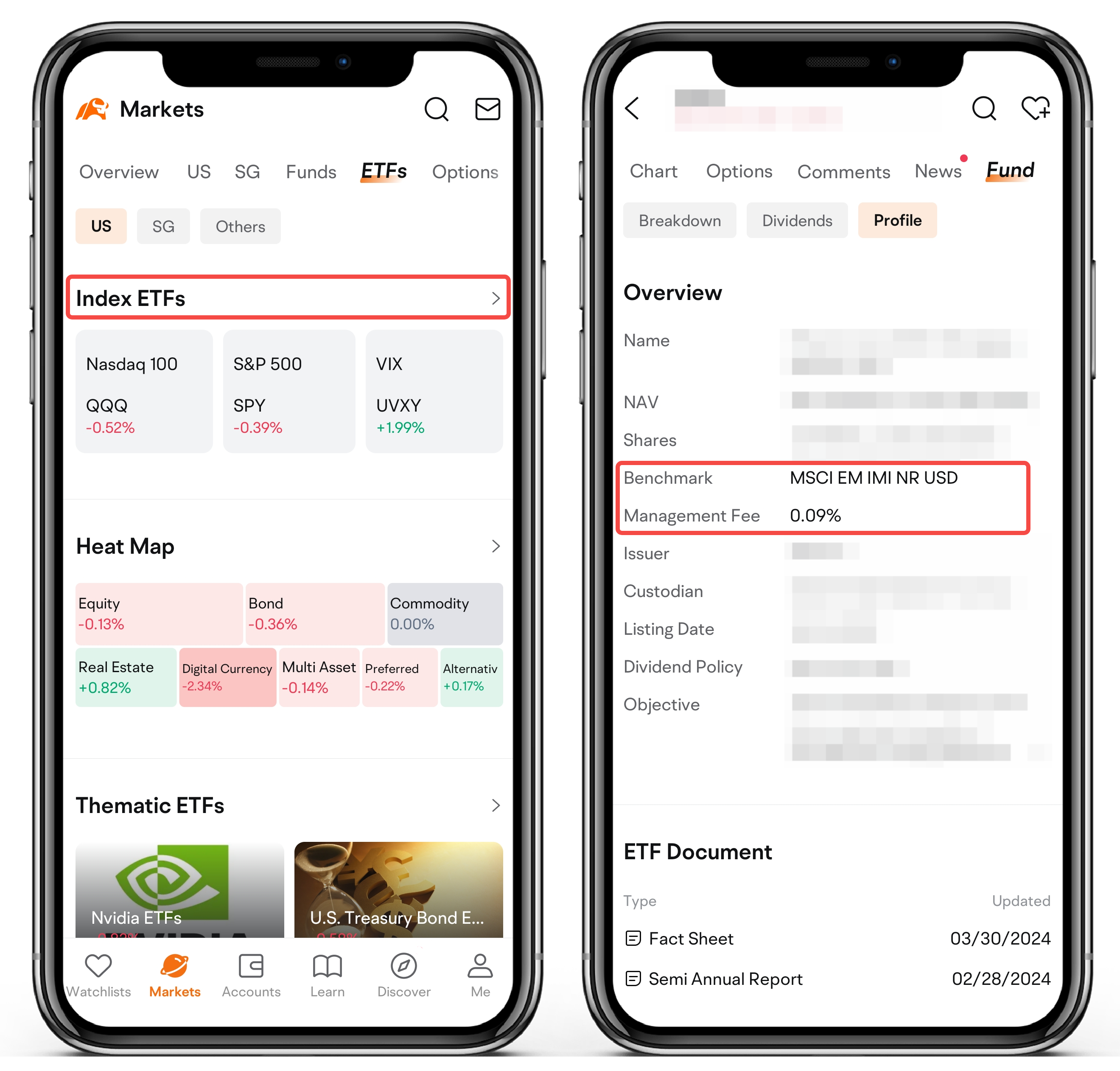
On moomoo, you can find a list of broad-based index ETFs by clicking Markets> ETFs > Index ETFs. Click on a specific ETF to view key information about that ETF, such as the tracking index and management fee rate, to help you pick your favorite.
Another pyramid trading strategy
The strategy discussed earlier is a form of trend-following trading. However, some investors are contrarian traders, aiming to buy low and sell high in anticipation of trend reversals.
If that's your approach, there's a pyramid trading strategy that may be applicable to this style as well.
Again, let's take an investor who has a positive outlook on an ETF valued at $10 per share and intends to allocate $10,000 towards it. But this time the ETF is on a downtrend. The investor could design a following buying plan:
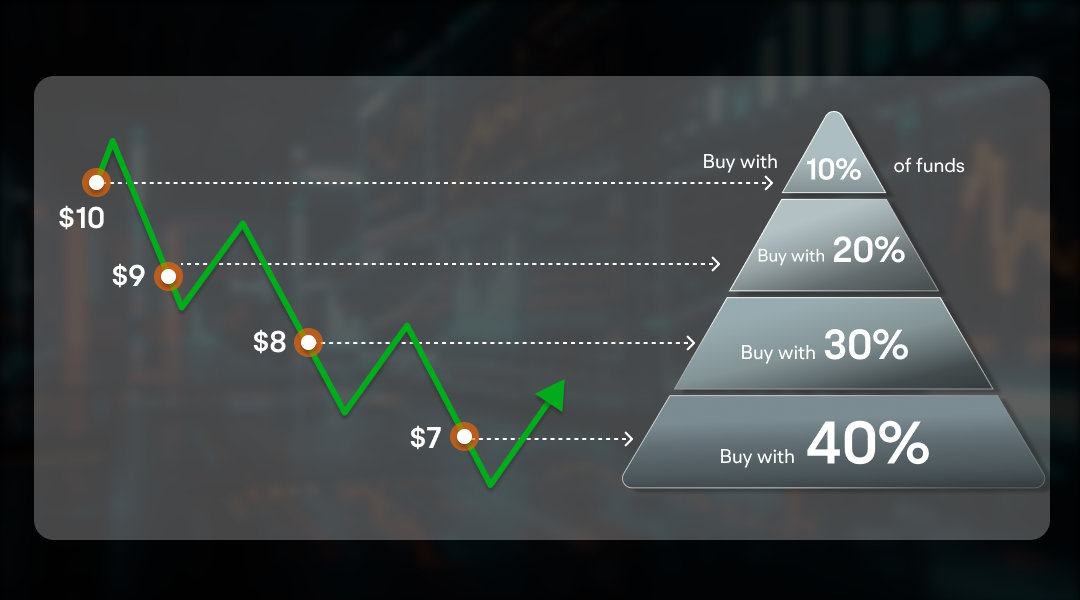
Clearly, this contrarian strategy aims to "bottom-fish" for undervalued assets, a technique commonly used by value investors.
As the ETF begins its upward trend, an investor could establish a selling plan as follows:
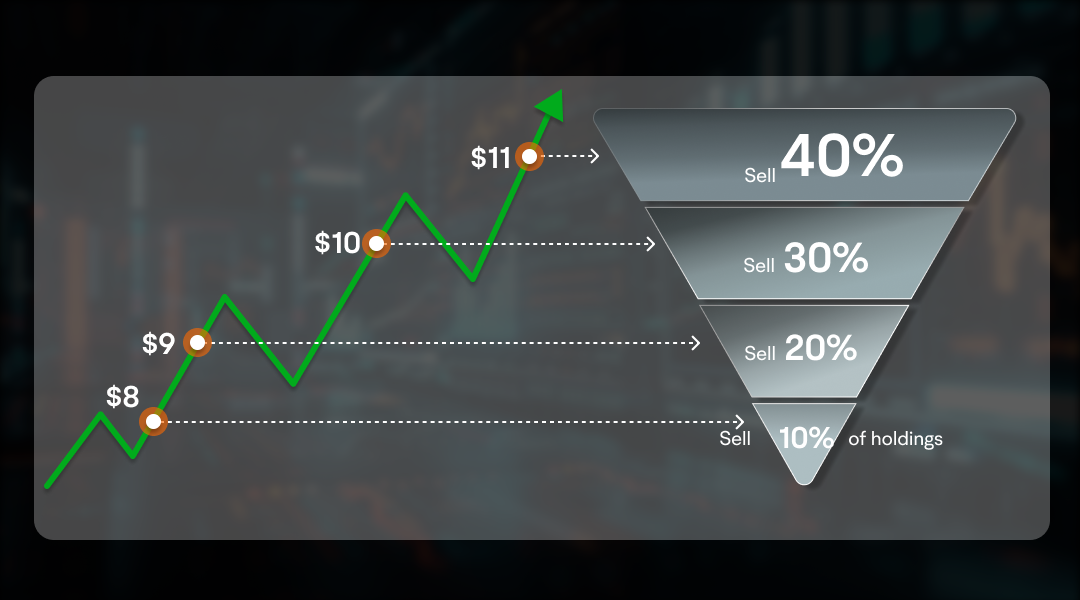
Comparison of two pyramid trading strategies
Both pyramid trading strategies stress the importance of risk management by executing trades in increments, aligning with market movements.
The primary distinction between the two pyramid trading strategies is their market approach: the first one focuses on trend-following, aiming to capitalize on existing market momentum; while the second one is contrarian, seeking to trade against the trend.
Both strategies have their merits and cater to different investor profiles. Regardless of which strategy you use, the prerequisite is to find ETFs that can potentially go up in the long run. On moomoo, you can find key screening criteria that might help you judge the potential of ETFs.

Which pyramid trading strategy do you favor? Share your preference in the comments below!
This presentation is for informational and educational use only and is not a recommendation or endorsement of any particular investment or investment strategy. Investment information provided in this content is general in nature, strictly for illustrative purposes, and may not be appropriate for all investors. Read more