SRS Investment in Singapore: How to Invest Your SRS Funds with Moomoo
Key Takeaways
Put eligible SRS funds to work, not just in cash. While SRS funds can generally be invested in a range of approved products under prevailing rules, moomoo gives eligible investors access to supported SGX-listed shares, REITs and ETFs.
Link your existing SRS account—without moving your funds. Connect an eligible SRS account held with an agent bank to moomoo and it'll enable you to place supported SRS investment orders.
Discover and assess investment opportunities in one app. Search supported counters on moomoo and use real-time market data, charts, company information, news, analyst ratings and watchlists to research an investment before you make the trade.
Make more informed long-term decisions with AI-enabled insights. Use Moomoo AI to explore market or company developments, understand a stock or ETF, and consider how a potential investment may fit alongside your broader portfolio (and not just within SRS).
Place supported SRS orders seamlessly when you are ready. Select SRS as the payment method for an eligible order on moomoo without switching to a separate platform for execution.
Ready to invest your SRS funds?Link your DBS, OCBC or UOB SRS account in the moomoo app to start exploring supported securities.
Link Your SRS Account Now
Link Your SRS Account Now
Your Supplementary Retirement Scheme (SRS) account is designed to support long-term retirement planning. Beyond making SRS contributions for potential tax relief, eligible investors may choose to invest their SRS funds in approved investment products.
With Moomoo, eligible investors can link an SRS investment account held with DBS, OCBC or UOB and trade supported SGX-listed shares and ETFs.
Before you start, know the essentials:
Your SRS money and holdings remain with your agent bank while Moomoo facilitates trading.
No short selling or contra trading: SRS trades must be backed by sufficient cash or holdings in your SRS investment account.

Why you should invest in your SRS funds instead of leaving them as cash
Making an SRS contribution and investing your SRS funds are two different decisions.
An SRS contribution may qualify for tax relief under prevailing rules. However, after you contribute, you still need to decide whether to leave the money as cash in your SRS account or invest it in eligible products.
What is SRS investment and how is it different from contributing to SRS
An SRS contribution may qualify for tax relief, subject to prevailing rules. But it does not automatically invest your money.
After contributing, you can either:
Leave your SRS funds in cash earning 0.05% per annum; or
Use them to buy eligible investments.
For investors with a long retirement horizon, investing may offer greater potential for long-term growth than holding cash alone. However, investments can fall in value, and you may receive less than you invested. Tax relief is not an investment return, and investment returns are not guaranteed simply because you invest through SRS.
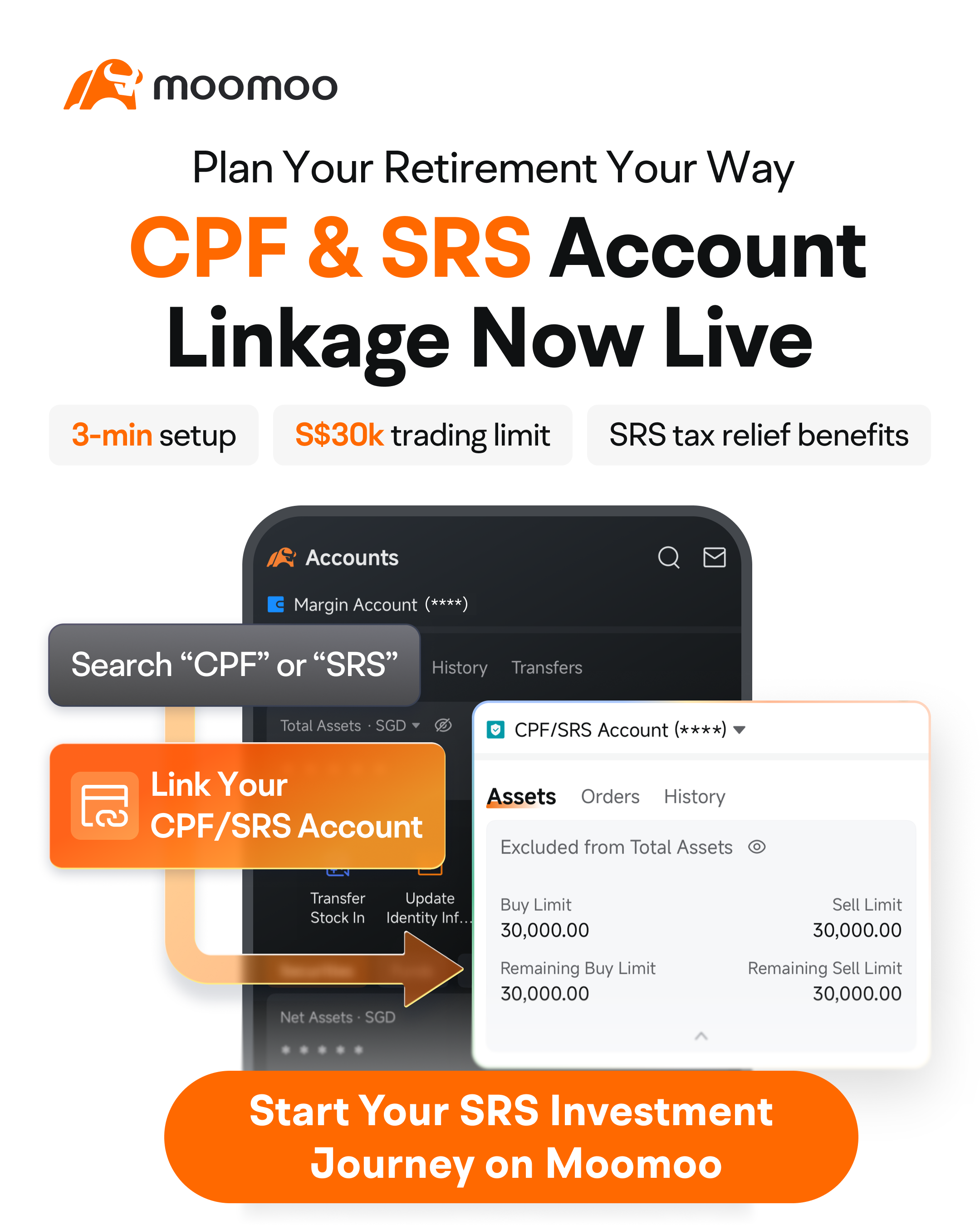
Why invest your SRS funds with Moomoo?
Moomoo gives eligible SRS investors a convenient way to access supported investments, research them with free and advanced in-app tools, get AI-powered portfolio insights, and manage their investments through a seamless and integrated workflow, all within one app.
Choosing an SRS investment platform is not only about finding an investment product. It is also about understanding the information, tools, costs and account processes available to help you manage a long-term retirement portfolio.
If you already have an SRS account and are looking to invest for the long term, moomoo offers five key advantages:
Access a suit of SRS approved investment products
Make more informed investment decisions with free, powerful investing tools
Get AI-powered insights and a fuller portfolio view
Trade with transparent, competitive fees
Link and manage your portfolio (including SRS investments) in one integrated workflow
Access supported SRS investment products
With moomoo, eligible investors can use their SRS funds to invest in supported SGX-listed shares, REITs and ETFs.
Product | Currency |
SGX-listed shares | SGD |
SGX-listed ETFs | SGD and USD |
For USD-denominated SGX ETFs, your order may be placed in USD, but the final settlement with your SRS agent bank is converted and settled in SGD. The final SGD amount will depend on the applicable exchange rate, as well as the order value and applicable fees.
Before placing an order, check that:
The counter is supported for SRS trading in the moomoo app;
You have sufficient SRS funds for buying orders, including applicable fees and any FX conversion impact; and
You have sufficient settled holdings in your SRS account before selling.
Make more informed decisions with free, powerful investing tools
Long-term wealth building requires research, and Moomoo provides free in-app tools that can help investors assess opportunities before they invest, which includes:
Real-time market data and price charts;
Company profiles, financial information and corporate actions;
Market news and stock-specific updates;
Analyst ratings, earnings information and research content;
Technical indicators and charting tools;
Watchlists to track securities before investing; and
Information on dividends or distributions, historical performance and price movements.
Get AI-powered insights and a fuller portfolio view
Investors often need help turning large amounts of market and portfolio information into useful next steps. With Moomoo AI's enabled capabilities, users can ask questions in app and receive timely and relevant insights.
This can help investors:
Understand recent movements in a stock or ETF;
Summarise relevant company, earnings or market information;
Explore questions about a security before investing;
Identify portfolio concentration or exposure considerations; and
View investments more holistically, rather than assessing each holding in isolation.
For SRS investors, this can be especially useful because SRS investments should usually be considered as part of a broader long-term financial and retirement portfolio, not as standalone trades.
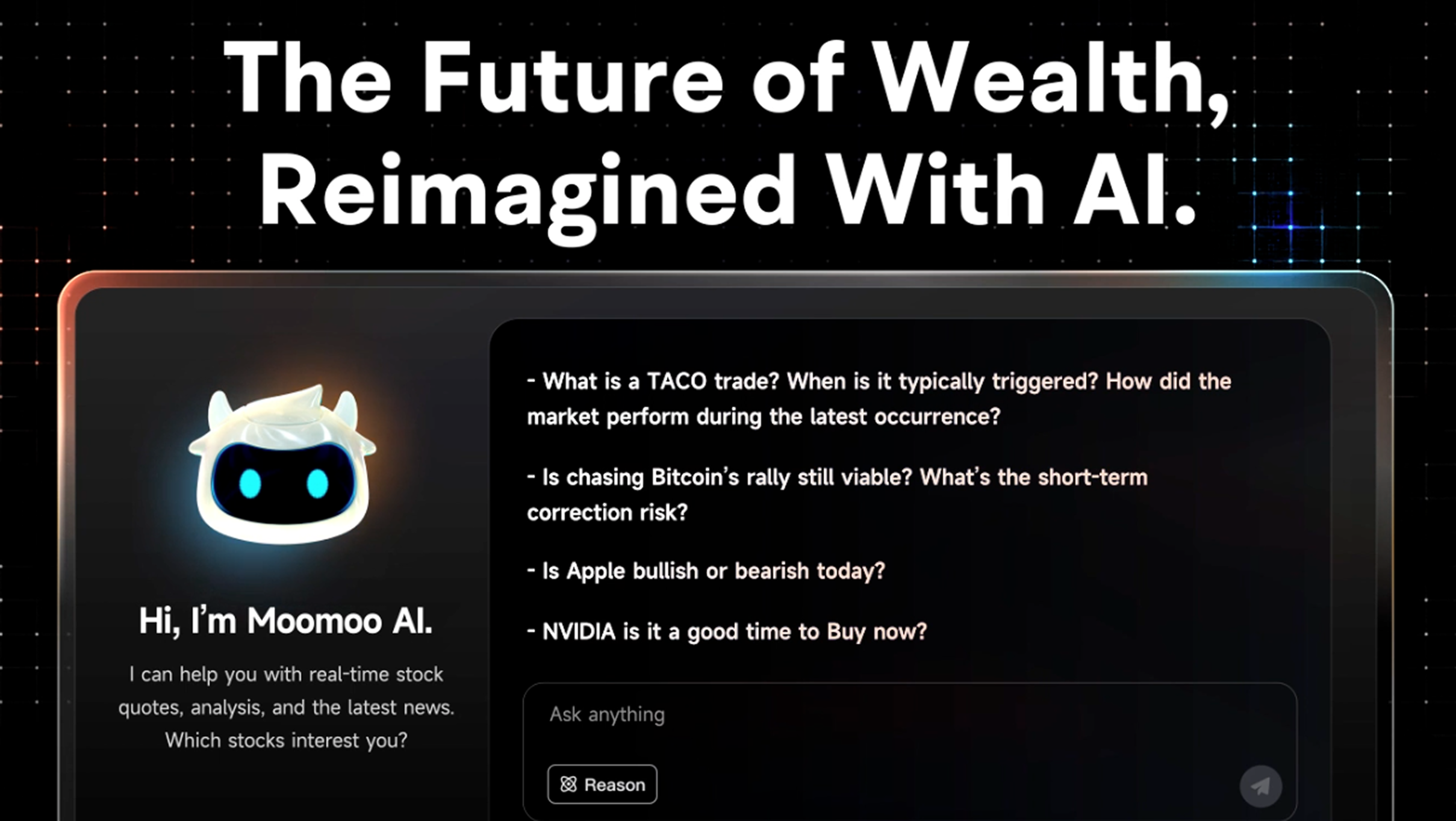
Disclaimer: AI-generated insights are for informational purposes only, and do not constitute investment advice or recommendations.
Trade and Invest with transparent and competitive SRS investment fees with Moomoo
Fee | Charge |
Commission | 0.10% of transaction value, minimum S$4.99 or US$4 per order |
Platform fee | 0.12% of transaction value, minimum S$4.99 or US$4 per order |
SGX trading and clearing fees | Charged at prevailing SGX rates |
For an SRS trade above the minimum-fee threshold, Moomoo’s commission and platform fee add up to 0.22% of the transaction value, before applicable SGX trading and clearing fees.
For example, on a S$10,000 SRS trade:
Commission: S$10.00
Platform fee: S$12.00
Total Moomoo fees: S$22.00
Plus applicable SGX trading and clearing fees
For smaller orders, the minimum commission and platform fees may apply instead.
If you trade a USD-denominated SGX ETF using SRS funds, your order may be placed in USD, but settlement with your SRS agent bank is completed in SGD. The final SGD settlement amount is based on the order amount and fees converted at the applicable FX rate.
If an SRS trade fails settlement and is moved to your margin account, Moomoo does not charge an additional fee solely because of the transfer. However, if there are insufficient shares in the margin account for a sell order, SGX buy-in charges may apply.
When comparing SRS investment options, consider not only the fees charged when you buy or sell. Depending on the provider and product, there may also be ongoing annual charges, such as account maintenance, custody or platform fees, as well as fund management fees for ETFs, unit trusts or fund products. These charges can affect your long-term returns, so review the full fee schedule and product documents before investing.
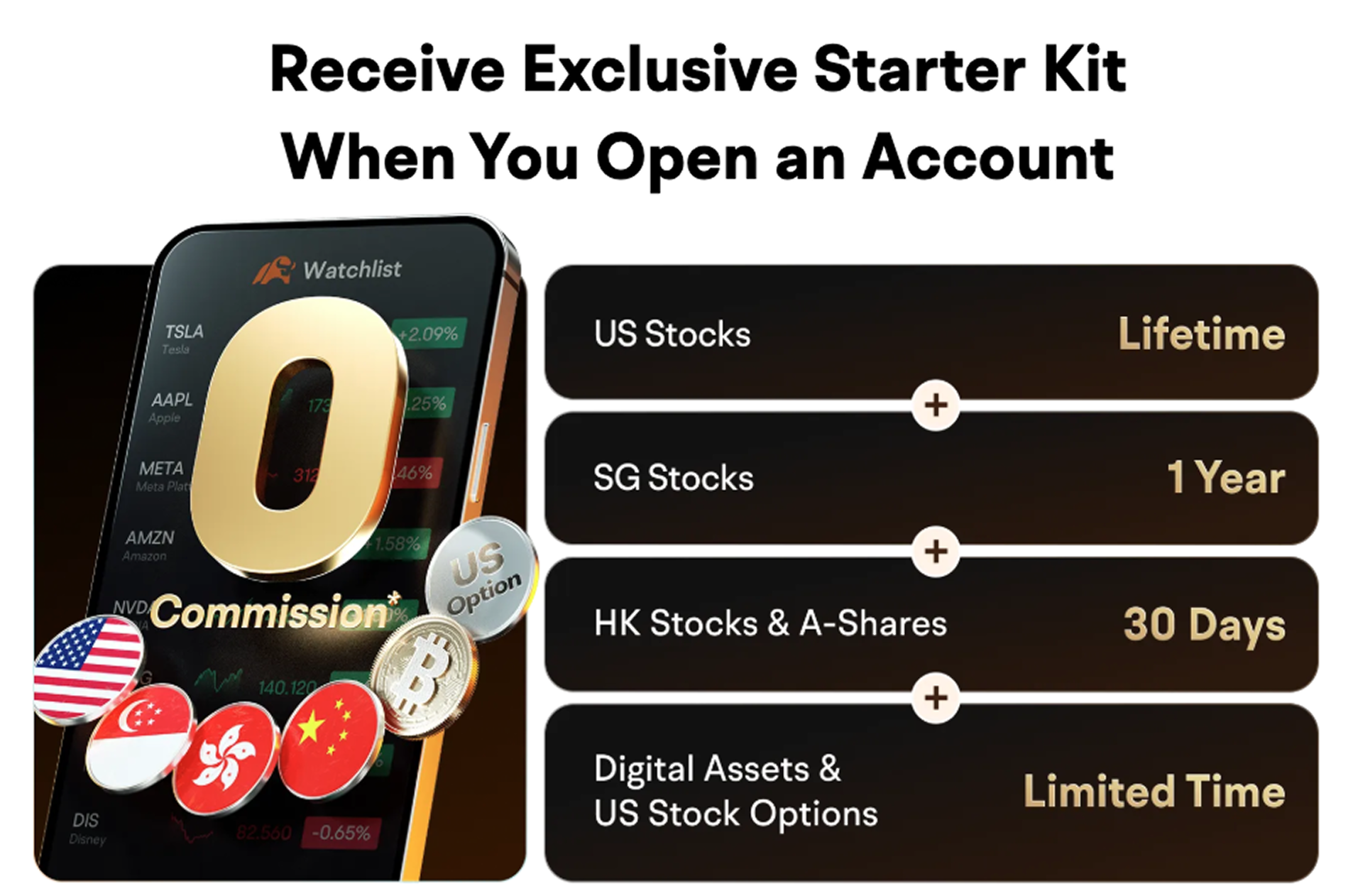
Link and manage your SRS investments in one workflow
Moomoo makes it easier for eligible investors to move from SRS account setup to support SRS trading without relying on separate platforms for each stage of the investing journey.
With moomoo, you can go from discovering an investment idea to placing an eligible SRS order in one app.
Research using Moomoo’s market data, analysis tools and AI features. When you are ready to place an eligible trade, simply select SRS as your payment method before confirming the order. This means you do not need to switch between separate platforms just to research an investment and then place your SRS trade.
How to invest your SRS funds with Moomoo: step-by-step guide
Step 1: Open an SRS account with an approved SRS operator
To invest your SRS funds with Moomoo, you need an SRS investment account with one of the approved agent banks: DBS, OCBC; or UOB.
You should also ensure that the SRS account details you enter in Moomoo are accurate and belong to you.
An SRS account is held with the agent bank, not with Moomoo. Moomoo is the trading platform used to place supported SRS orders.
Step 2: Make an SRS contribution if it suits your tax and retirement plan
If you decide to contribute to SRS, ensure that the contribution amount is appropriate for your financial circumstances, retirement goals and liquidity needs.
Before contributing, review the applicable annual contribution limits, potential tax treatment and SRS withdrawal rules. You should also consider whether you intend to hold the funds as cash or invest them in eligible products.
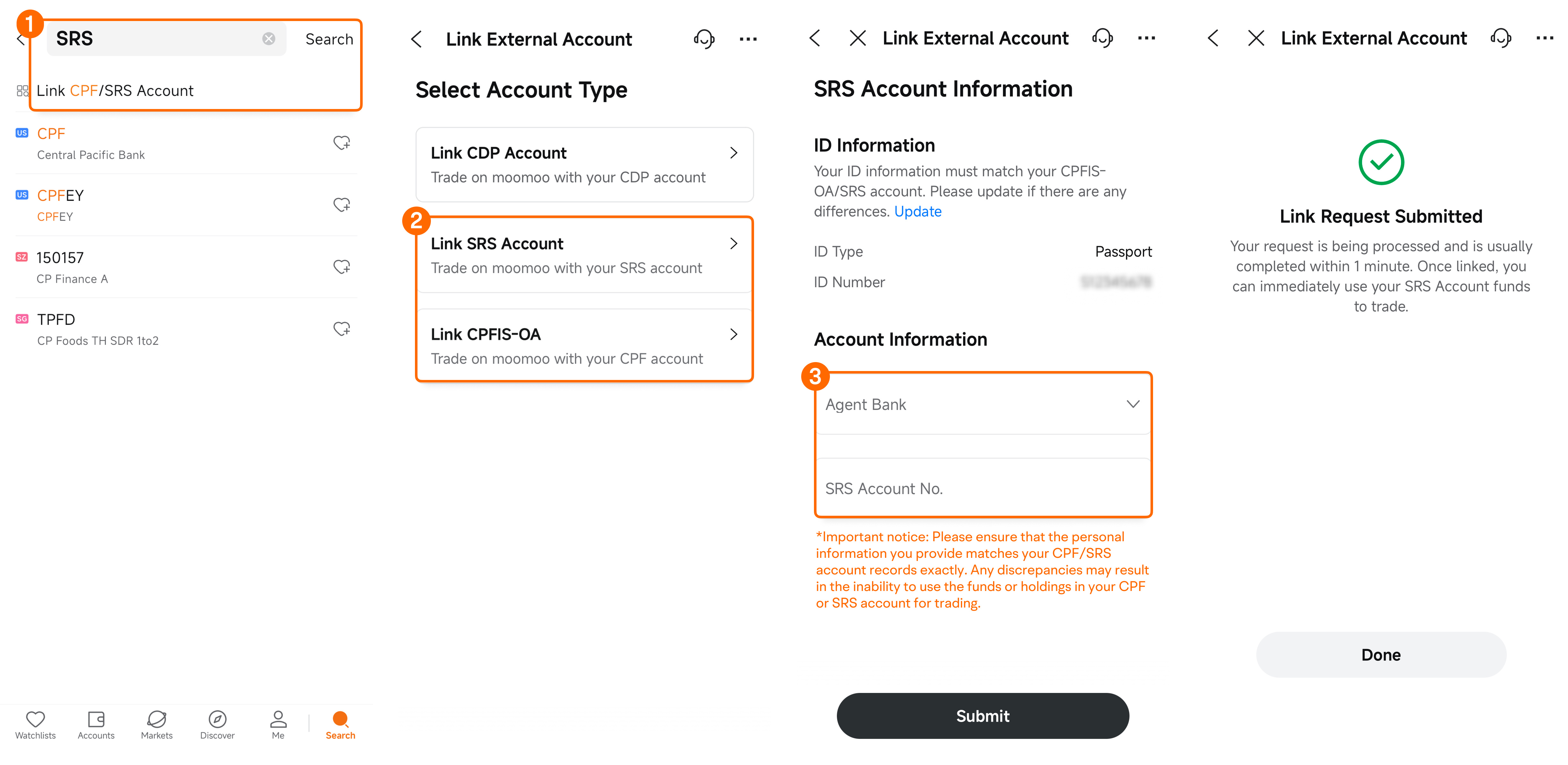
Step 3: Link your SRS account on Moomoo
Option 1: Through Account Management
Log in to the moomoo app.
Go to Accounts > Account Management.
Select Link External Account.
Choose Link CPF/SRS Account.
Enter your agent bank and SRS account details.
Follow the on-screen instructions to submit.
Option 2: Search in the app
Search for “SRS”.
Select Link CPF/SRS Account.
Complete the required details.
Once linked, your SRS account appears as a dedicated CPF/SRS cash trading account in your account list.
Step 4: Place your order and review your portfolio over time
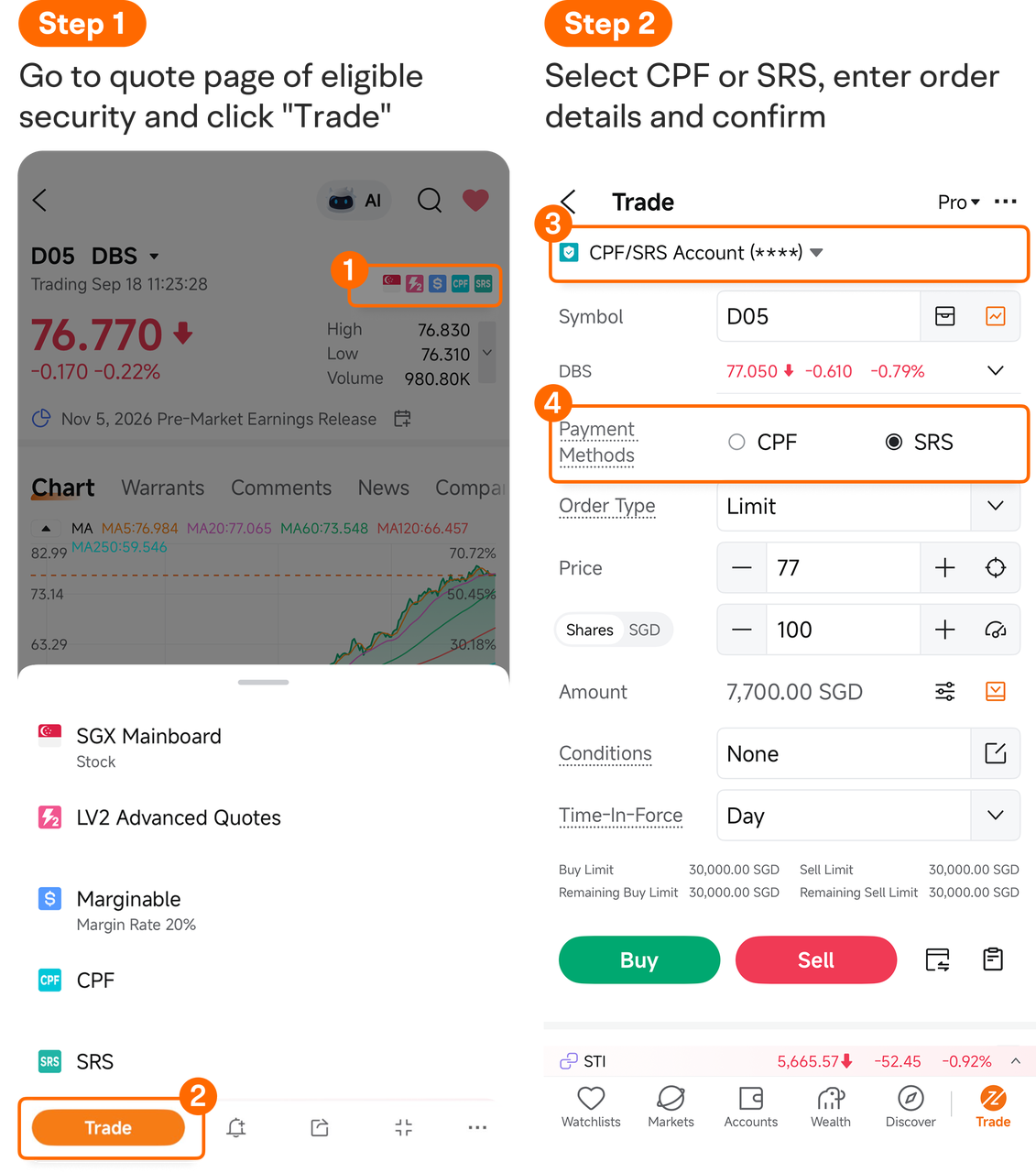
Once you have selected an eligible product and completed the required SRS setup, follow the relevant Moomoo order process to place your investment.
Before confirming an order, check:
That you are using the correct SRS funding or payment route;
That the product is eligible and supported by SRS investing;
The order type, quantity, price and applicable fees.
After investing, monitor your portfolio periodically. Long-term investing does not require constant action, but regular reviews can help you ensure that your holdings remain appropriate as your goals, risk tolerance and financial situation evolve.
What can you invest your SRS funds in?
SRS funds can generally be used for a range of approved investment products. However, the products you can access depend on prevailing SRS rules, the product itself and the platform you use.
SRS investment options in Singapore
Depending on prevailing SRS rules, SRS investment options may include selected:
Shares and other listed securities;
Unit trusts or mutual funds;
Exchange-traded funds;
Singapore Government Securities and certain bonds;
Fixed deposits;
Insurance products; and
Other approved investment products.
Each product type has different risk, return, cost and liquidity characteristics. For example, shares and equity funds may offer greater growth potential but can experience larger price swings. Fixed-income products may be less volatile in some circumstances but can still carry interest-rate, credit and liquidity risks.
Always check the latest official SRS guidance and product documentation before investing.
What is the best SRS investment for you?
There is no universally “best” SRS investment. The right approach depends on your retirement timeframe, financial objectives, existing investments, risk tolerance and ability to withstand losses.
For example:
An investor with a longer time horizon may be more willing to accept market volatility in pursuit of potential growth.
An investor approaching retirement may place greater importance on stability, income or capital preservation.
An investor who already has significant exposure to a specific sector or market may prioritise diversification.
An investor who does not want to manage investments actively may prefer a simpler, diversified approach.
The important question is not “Which product performed best recently?” but “Does this investment fit my long-term retirement plan?”
CPF vs SRS investing: what is the difference?
CPF and SRS can both play a role in retirement planning, but they have different objectives, contribution rules, investment pathways and withdrawal conditions.
How are CPF and SRS different, and can investors use both?
CPF is Singapore’s compulsory social security savings scheme for eligible working Singaporeans and Permanent Residents. SRS is a voluntary scheme that may offer tax relief on eligible contributions.
Some broad differences include:
Consideration | CPF | SRS |
Nature of scheme | Compulsory savings framework for eligible employees and employers | Voluntary retirement savings scheme |
Contributions | Based on prevailing CPF contribution rules | Voluntary, subject to annual limits |
Tax treatment | Subject to prevailing CPF rules | Eligible contributions may qualify for tax relief |
Investment pathway | Subject to CPF Investment Scheme rules | Subject to SRS investment rules |
Withdrawal rules | Subject to CPF withdrawal policies | Subject to SRS withdrawal rules and tax treatment |
Some investors may use both CPF and SRS as part of their retirement planning. The appropriate approach depends on personal financial circumstances, investment knowledge, risk tolerance and retirement goals.
SRS investment Frequently Asked Questions
What is SRS investment in Singapore?
SRS investment means using funds in your Supplementary Retirement Scheme account to buy eligible investment products. Making an SRS contribution and investing your SRS funds are separate decisions. Contributions may qualify for tax relief under prevailing rules, while investment returns depend on the performance of the product you choose.
How do I invest my SRS funds with Moomoo?
You need an active SRS account with an approved SRS operator, followed by completion of Moomoo’s applicable SRS setup or linking process. Once the setup is complete, you can explore supported SRS-eligible products on Moomoo and place an order using the appropriate SRS funding route.
Do I need to open an SRS account before investing through Moomoo?
Yes. An SRS account is generally opened with an approved SRS operator. Moomoo may facilitate access to supported SRS investments, but the SRS account itself is held with the relevant approved operator.
Can I invest the money in my SRS account?
Generally, yes. SRS funds can be used to invest in eligible products, subject to prevailing SRS rules, product eligibility and platform availability.
Depending on the product and platform, SRS investment options may include selected listed securities, ETFs, unit trusts, bonds, fixed deposits, insurance products and other approved instruments.
On moomoo, eligible investors can trade supported SGX-listed shares, REITs and ETFs using SRS funds. Always check whether a specific counter is supported for SRS trading in the moomoo app before placing an order.
Should I leave my SRS funds as cash or invest them?
After contributing to SRS, you can leave the funds as cash with your SRS operator or invest them in eligible products.
Leaving funds as cash may provide greater certainty over the amount held, but the stated interest rate on uninvested SRS cash is typically low. Investing may offer greater long-term growth potential, particularly for investors with a longer retirement horizon, but it also involves market risk and potential losses.
Who can open and contribute to an SRS account?
SRS is generally available to Singapore Citizens, Singapore Permanent Residents and foreigners who meet the applicable eligibility requirements.
These generally include being:
At least 18 years old;
Not an undischarged bankrupt;
Mentally capable of managing your own affairs; and
Eligible under the prevailing requirements of the SRS operator and relevant regulations.
An SRS account is opened and maintained with an approved operator, such as DBS, OCBC or UOB. Eligibility for SRS tax relief depends on your individual tax residency and circumstances.
How much can I contribute to SRS each year?
Under prevailing limits, the annual SRS contribution cap is:
SRS contributor | Annual contribution cap |
Singapore Citizens and Singapore Permanent Residents | S$15,300 |
Foreigners | S$35,700 |
To be treated as an SRS contribution for a particular calendar year, the funds generally need to be received by your SRS operator by 31 December of that year.
Contribution limits, eligibility requirements and tax treatment may change. Check the latest information from your SRS operator and relevant authorities before contributing.
How does SRS tax relief work, and how much tax can I save?
Eligible SRS contributions may reduce your chargeable income for the relevant year of assessment, subject to prevailing rules and the overall personal income tax relief cap.
SRS relief reduces your taxable income; it does not reduce your final tax payable on a dollar-for-dollar basis. Your potential tax savings depend on your marginal tax rate and personal tax circumstances.
A simplified illustration is:
Potential tax savings = eligible SRS contribution × marginal tax rate
For example, an eligible S$15,300 SRS contribution made by an individual with a 7% marginal tax rate may result in potential tax savings of:
S$15,300 × 7% = S$1,071
This illustration is for general information only. Your actual tax outcome may differ depending on your tax residency, total income, personal reliefs and prevailing tax rules.
When should I consider contributing or topping up my SRS account?
You may consider making an SRS contribution when it supports both your tax planning and your long-term retirement plan.
Before contributing or topping up, consider whether:
You have sufficient emergency savings for near-term needs;
You have high-interest debt or upcoming major expenses to address first;
The potential tax relief is meaningful for your individual tax position;
You are comfortable with the withdrawal restrictions and possible consequences of early withdrawal; and
You intend to hold the funds as cash or invest them as part of a long-term retirement portfolio.
SRS contributions can be illiquid. Avoid contributing funds that you may need for emergencies, short-term goals or foreseeable expenses.
Can I withdraw my SRS investments early?
Early SRS withdrawals are generally fully taxable and may also incur a 5% penalty, unless a qualifying exception applies under prevailing rules.
If your SRS funds are invested, you may first need to sell or redeem the relevant investments before withdrawing cash. The amount you receive may be affected by market prices, product liquidity, settlement time and any lock-in or early-exit conditions.
When can I make penalty-free SRS withdrawals?
Your applicable statutory retirement age is generally determined with reference to the retirement age prevailing when you made your first SRS contribution.
Once you reach that applicable retirement age, you may generally make penalty-free withdrawals, subject to prevailing SRS rules. The 10-year withdrawal period generally begins when you make your first penalty-free withdrawal.
Under prevailing rules, 50% of qualifying withdrawals made during this withdrawal period are generally taxable. Consider seeking professional tax advice if you are planning your SRS withdrawals.
Is SRS investing safe?
SRS investing carries investment risk. While SRS contributions may provide tax benefits under prevailing rules, those benefits do not protect you from losses on investments. The level of risk depends on the investment product selected.
Ready to explore SRS investing with Moomoo?
If you have an SRS account and are considering how to invest your retirement funds, explore the supported SRS investment options available on Moomoo.
To add disclaimer:
This article is for educational and informational purposes only and does not constitute financial or investment advice. Investments in capital market products involve risk. Please consider your financial circumstances and investment objectives before investing. Full disclaimers at www.moomoo.com/sg/support/topic5_510. This advertisement has not been reviewed by the Monetary Authority of Singapore.
This article is for educational and informational purposes only and does not constitute financial or investment advice. Investments in capital market products involve risk. Please consider your financial circumstances and investment objectives before investing. Full disclaimers at www.moomoo.com/sg/support/topic5_510. This advertisement has not been reviewed by the Monetary Authority of Singapore.
This presentation is for informational and educational use only and is not a recommendation or endorsement of any particular investment or investment strategy. Investment information provided in this content is general in nature, strictly for illustrative purposes, and may not be appropriate for all investors. Read more