10 Effective Crypto Trading Strategies for Singapore Investors
In the midst of the surge in digital currencies, cryptocurrencies have emerged as the top choice for investors globally. As technology advances rapidly and the market becomes increasingly complex, investors in Singapore are leading the charge in this financial transformation. The erratic nature of the crypto market brings both unique challenges and opportunities for traders. In this context, it has become essential to master effective strategies for trading cryptocurrencies.
Crypto trading goes beyond just the act of buying and selling; it involves a clash of psychology and strategy. Investors in Singapore must possess a thorough knowledge of market dynamics to take advantage of timing and make well-informed decisions. In this article, we will examine 10 effective crypto trading strategies aimed at assisting investors in maneuvering through the intricate and fluctuating market.

Why Do You Need Strategies for Trading Crypto in Singapore?

The world of crypto trading is a dynamic and ever-evolving field. It is characterised by high volatility and rapid change. In Singapore, where the digital asset ecosystem continues to grow at a phenomenal rate, having a clear crypto trading strategy is a necessity. Here are some reasons why strategy is crucial when trading cryptocurrencies in Singapore:
Market Volatility: one of the most important challenges in crypto trading is its volatility. Crypto values can fluctuate significantly within a matter of hours, complicating the prediction of future trends. Utilizing a crypto trading strategy, like day trading, allows investors to capitalize on market fluctuations more effectively while minimizing risk.
Regulatory changes: The Monetary Authority of Singapore (MAS) regularly updates its guidelines, which may affect the types of cryptocurrencies that can be traded and their associated rules. A clear strategy helps investors stay compliant and adapt to the new rules, ensuring that crypto purchases are made within the laws of Singapore.
Emotional Decision Making: Emotions play a major role in trading and often lead to impulsive decisions. The crypto trading strategy helps investors maintain their sanity by outlining clear rules and guidelines for buying and selling. This reduces the likelihood of making decisions based on fear or greed.
Risk Management: Risk management is crucial in any form of trading, and the volatility of cryptocurrencies makes it even more so. Crypto trading strategies allow investors to set stop-loss and take-profit levels to help limit potential losses and lock in profits.
What are Crypto Trading Strategies?

A crypto trading strategy is a systematic approach to buying, holding and selling cryptocurrencies based on specific criteria and market analysis. It involves analysing market data, identifying trends and using various indicators to determine the best entry and exit points.
Key Components of an Effective Strategy
Market analysis
Fundamental analysis: Understand project basics (project team, technology development, market potential, partnerships, regulatory environment, and macroeconomic indicators). Assess market trends and adoption rates.
Technical analysis: use of charts and indicators (moving averages, RSI, MACD, etc.). Identify patterns and trends.
Risk management
Position management: Controlling the right size of transactions for your situation helps to manage risk.
Stop loss orders: Limiting potential losses in a trade by setting a predetermined level.
Diversification: Diversify your investments into different cryptocurrencies and assets.
Execution Strategy
Entry Timing: Use technical signals or news events to time entries.
Exit strategy: Setting profit targets and implementing trailing stops.
Order Types: Effective use of limit, stop and market orders.
Sentiment Management
Market Sentiment: Assess market sentiment by monitoring the emotions and opinions of market participants. This includes social media sentiment, news reports, market surveys and professional analysts' opinions.
Self-Emotion: Manage your own fear, greed and FOMO (fear of missing out).
10 Effective Crypto Trading Strategies
In the rapidly evolving realm of crypto trading, establishing a clear strategy is essential for achieving success. Whether you’re a newcomer intending to purchase crypto in Singapore or a seasoned trader aiming to enhance your strategies, here are 10 practical crypto trading techniques o help you adapt to the complexities of the market.
1. Long-term Holding Strategy (HODL)
What it is: long-term holding, often referred to as HODL is a simple crypto trading strategy that involves buying and holding cryptocurrencies over a longer period of time (usually months to years), ignoring short-term fluctuations in the market.
Operation: Instead of actively trading crypto, HODL strategy traders benefit from holding them for the long term. Keep a long-term perspective and resist reacting to short-term market fluctuations.
Potential Advantages:
Avoid Emotional Trading: avoid impulsive trading by not being affected by panic or greed caused by market volatility.
Possible long-term gains: historically, many cryptocurrencies have increased in value over the long term.
Reduce trading costs: minimise costs associated with frequent trading, such as fees and taxes.
Risks:
Market volatility risk: crypto markets are volatile and long-term holdings may be exposed to greater price volatility.
Opportunity cost: better investment opportunities may be missed as funds are locked in HODL strategies.
Technology risk: crypto technology is still developing, and long-term holdings may lose value due to technical issues or lack of market acceptance.
2. Day Trading
Intraday trading is a strategy of completing multiple purchases and sales in a single day, with the goal of taking advantage of short-term fluctuations in the market to make a profit.
Operation: Intraday traders need to close all positions by the end of the trading day and not hold positions overnight. Commonly used tools include intraday charts (minute charts ), moving averages (to help identify trends and support/resistance levels.) and RSI (measures the magnitude of recent price changes to assess overbought or oversold conditions).
Potential Advantages:
Large number of trading opportunities: day trading offers a large number of trading opportunities throughout the day, allowing traders to make multiple trades and accumulate profits.
Risk Management: by closing all positions at the end of the day, intraday trading can help reduce the risk of overnight market fluctuations.
Risks:
High trading frequency: day trading requires a high frequency of trades, which can lead to higher trading costs and requires precise execution.
Technical Skills Required: successful day trading requires a deep understanding of technical analysis and the ability to react quickly to market changes.
3. Swing Trading
Swing trading involves holding positions for a period ranging from several days to a few weeks, with the aim of capitalizing on intermediate-term price movements. Unlike intraday trading strategies, swing trading allows traders to capture larger swings without the need to trade frequently.
Operation: Positions are usually held for a few days to a few weeks until the trend reverses or a predetermined target is reached. Commonly used tools include daily charts (to analyse short to medium term trends), weekly charts (to identify long term trends as well as important support and resistance levels) and moving averages (for pinpointing trends and potential turning points).
Potential Advantages:
Frequent trading opportunities: swing trading offers more frequent trading opportunities than long-term investments, while avoiding the high frequency of day trading.
Flexibility: traders can adjust the timing of their positions according to market conditions, and are neither limited to the time of day as in day trading, nor do they have to wait for long periods of time as in long-term investments.
Risks:
Holding positions for longer periods of time: swing trading involves holding positions from a few days to a few weeks, which can expose traders to overnight risk and market uncertainty.
Psychological stress: holding a position for an extended period of time may increase the psychological stress on the trader, especially during times of high market volatility.
4. Trend trading
Trend trading is a method of making profits based on identifying and exploiting major market trends. The goal is to follow the trend until it shows signs of reversal or until a profit target is reached.
Operation: Use technical indicators such as Moving Averages, MACD (Moving Average Convergence Divergence), ADX (Average Directional Index) to determine the direction of the market trend.
Potential Advantages:
Follow the trend: trend trading allows traders to follow the overall direction of the market, thereby reducing the risk of going against the market.
Simplified decision making: once a trend has been identified, traders simply follow the trend, reducing the complexity of frequent decision making.
Risks:
Lag effect: technical indicators usually have a lag, which may cause traders to take action only after the trend has reversed.
Psychological stress: holding a position for a long period of time may increase the psychological stress on the trader, especially if there is a sharp pullback in the market.
5. Mean reversion
Mean reversion is grounded in the belief that over time, asset prices and returns will naturally gravitate back toward their historical averages. The strategy assumes that when asset prices deviate significantly from their mean, they will eventually revert to that mean.
Operation: Statistical analysis is used to determine when prices have deviated significantly from historical norms. Commonly used tools include daily and weekly charts, Bollinger Bands (which help identify overbought or oversold conditions) and the RSI (which measures the magnitude of recent price changes).
Potential Advantages:
Taking advantage of short-term fluctuations: mean reversion strategies allow traders to take advantage of short-term fluctuations in the market to capture price regression opportunities.
Predictability: based on historical data, mean reversion provides a more stable predictive model, which helps to develop a trading plan.
Risks:
False signals: sometimes market prices may consistently deviate from their historical averages, causing the mean reversion strategy to generate false signals.
Changes in market structure: if market fundamentals change, such as a major news event or policy change, the mean reversion strategy may no longer be applicable.
6. Breakout trading
Breakout trading involves buying or selling an asset when its price breaks through an important resistance or support level. This strategy is based on the idea that once a price barrier is broken, momentum will move the price further in that direction.
Operation: A potential breakout is signalled when price breaks above a resistance level or below a support level. Tools used include daily and hourly charts, moving averages (to help confirm the validity of the breakout), and volume indicators (to confirm the strength of the breakout by looking at trading volume).
Potential Advantages:
High potential returns: breakout trades are usually accompanied by rapid and significant price movements, offering high profit potential.
Clear entry points: price breakouts above key levels provide traders with clear entry signals.
Risks:
False breakouts: false breakouts often occur in the market, where price briefly breaks above a key level and then quickly retraces, resulting in unnecessary losses.
Psychological stress: as breakout trades usually involve large price swings, traders may be exposed to high levels of psychological stress.
7. Volume price analysis trading
Volume price analysis is the combination of volume and price data to identify market trends and potential trading opportunities. This strategy is based on the premise that changes in trading volume can precede large swings in price, providing valuable insights into market sentiment and direction.
Operation: Monitor both volume and price action. High trading volume usually indicates strong market sentiment and can confirm the validity of a price move. If trading volume increases significantly during a price movement, it indicates that the price movement is supported by strong buying or selling pressure.
Potential Advantages:
Confirmation of trend strength: volume changes can help confirm the strength of a price trend, thus increasing the success rate of trades.
Reducing false signals: combined with volume analysis, false signals due to price fluctuations can be reduced, increasing the accuracy of trades.
Risks:
Lag effect: volume data is usually provided after the fact and may have a certain lag, affecting immediate decision-making.
Market volatility: short-term fluctuations in the market may lead to misinterpretation of volume signals, making trading more difficult.
8. Momentum trading
Momentum trading focuses on capitalising on the persistence of existing price trends. The strategy assumes that assets that have shown strong upward or downward momentum are likely to continue in the same direction.
Operation: Entering the market when momentum is at its peak. Mainly used RSI, Stochastic Oscillator (to identify overbought or oversold conditions), Power Indicator (to confirm the strength of the trend by looking at price and volume data)
Potential Advantages:
Follow the trend: momentum trading allows traders to follow strong trends in the market, thereby capturing large price swings.
Simplicity: once the direction of the trend has been determined, traders simply follow the trend and buy and sell, reducing the need for a complex decision-making process.
High return potential: momentum trading can deliver high returns in strong trends, especially in fast-rising or falling markets.
Risks:
Lag effect: technical indicators usually have a lag, which may cause traders to take action only after the trend has reversed.
False signals: short-term fluctuations in the market may generate false signals, resulting in unnecessary trading costs.
Psychological stress: holding a position in a strong trend may increase the psychological stress on the trader, especially if the market pulls back.
9. Scalping
Scalping is a strategy that trades in very short time frames with the goal of taking advantage of small price fluctuations in the market to make a profit. This strategy usually involves tens or even hundreds of trades in a single day.
Operation: Charts and indicators are primarily used to pinpoint entry and exit points. Commonly used tools include candlestick charts (which identify potential reversal points through specific patterns), moving averages (which can act as support and resistance levels), and the RSI (which can generate entry/exit signals and confirm trends).
Potential Advantages:
Fast Returns: Scalping allows traders to quickly accumulate small gains during the trading day which can add up to significant daily profits.
Low Risk: The risk per trade is low because the target profit is small and the stop loss is set tightly.
Flexibility: Scalping offers flexibility, allowing investors to trade on their own time.
Risks:
High Stress: Scalping can be very stressful for traders due to the need to constantly monitor the market.
High Transaction Costs: Frequent trading may incur high transaction costs and erode profits.
Technical Requirements: Scalping relies heavily on technical analysis and the ability to accurately interpret charts.
10. Event-driven trading
Event-driven trading is the use of specific events in financial markets to guide trading decisions. The prices of cryptocurrencies tend to be very sensitive to external factors such as news events, technological updates, and policy changes.
Operation: Event-driven traders use both fundamental and technical analysis to identify potential trading opportunities. Common events to monitor include project launches, partnership announcements, regulatory changes, mergers and acquisitions, and economic data releases.
Potential Advantage:
Exploitation of market inefficiencies: After an event, the market may take time to digest and price correctly, providing traders with the opportunity to profit from market inefficiencies.
Potential for High Returns: Major events often lead to significant price fluctuations, providing traders with the potential to realise high returns in a short period of time.
Risk:
High Risk: Event outcomes are often unpredictable, leading to significant price fluctuations. If the market reacts as expected, this can lead to significant losses.
Information overload: The crypto market is rapidly updating information and traders need to sift through and process large amounts of information to avoid making poor decisions due to information overload.
How to Pick the Right Crypto Trading Strategy?

For buying crypto in Singapore, there are a variety of crypto trading strategies to choose from, ranging from intraday trading strategies to long-term holdings, and it's important to choose an approach that meets the investor's investment goals, risk tolerance, and time availability.
Understanding your investment objectives
Before delving into specific strategies, it's important to determine what you hope to achieve with your investments. Do you want quick profits or are you looking for a more sustainable source of income. Are you focused on capital growth, or are you looking for fixed income. Understanding these goals will help you narrow down your options.
Assessing Your Risk Tolerance
Each crypto trading strategy has its own level of risk. Some strategies (such as crypto day trading) require a higher risk tolerance due to the fast pace of trading. Other strategies (e.g., long-term holding) may be less risky, but still involve market volatility. Assessing your risk tolerance will help you choose a strategy that fits your personal financial situation.
Consider your time commitment
Different strategies require different levels of time commitment. For example, crypto day trading typically requires a significant amount of attention throughout the trading day, while swing or scaling trades may offer more flexibility. Evaluate how much time you can dedicate to trading and choose a strategy that fits your schedule.
Analysing market conditions
Market conditions can significantly affect the effectiveness of different strategies. During bull markets, trending strategies tend to perform well, while bear markets may favour short selling or hedging strategies. Stay informed about current market trends and choose strategies that take advantage of current conditions.
Explore different strategies
Once you have a clear understanding of your goals, risk tolerance, and time commitment, you can explore various strategies to see which ones meet your criteria.
Testing Strategies
Before adopting a particular strategy, consider testing it with a small amount of capital or using a demo account. This way, you can evaluate the performance of the strategy without risking a large amount of capital.
Continuous Learning and Adaptation
The crypto market is highly dynamic and successful traders must adapt to changing conditions. Stay up to date with the latest news and trends and be prepared to adjust your strategy as needed.
Why Trade Crypto with Moomoo
Crypto trading requires a platform that offers reliability, security and advanced features to cope with the volatile and rapidly evolving digital asset market. Combined with the nature of cryptocurrencies, moomoo offers Singapore investors some unique advantages when it comes to crypto trading.
Analysis Tools
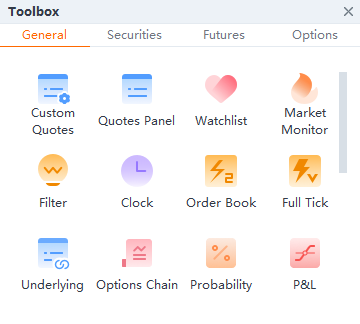
Considering the volatile nature of cryptocurrencies, moomoo offers advanced trading tools and analyses. These tools include real-time market data, price alerts and the ability to provide technical indicators such as charts, trend lines, RSI, MACD and more. This is helpful for traders who either wish to take advantage of short-term price movements or implement long-term strategies.
Information and Community
Crypto prices are often sensitive to external factors such as news events, technology updates, policy changes, etc. Moomoo provides real-time market dynamics and news updates, enabling users to stay up-to-date on macroeconomic factors and industry news that affect crypto prices. At the same time, with an active global trading community, investors can share views and strategies and get more information and investment ideas.
Multi-currency and Multi-language
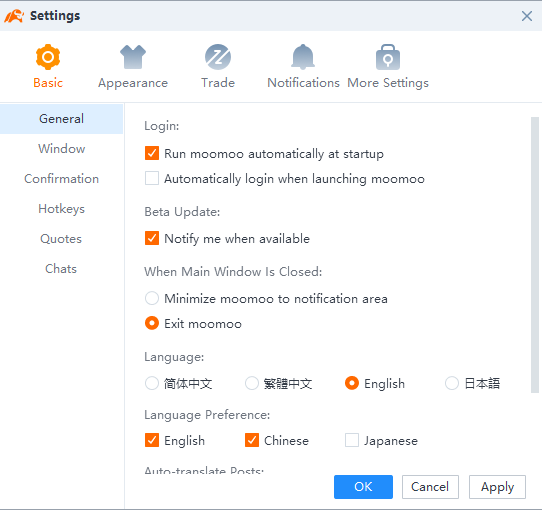

With a wide range of cryptocurrencies available in the market, moomoo supports a wide range of crypto trading pairs, providing users with diversified investment options. Moomoo's multi-language and multi-currency support is an advantage for investors, given Singapore's multi-cultural and international business environment.
Details on how to trade cryptocurrencies on moomoo can be viewed here.
Conclusion

This article explores 10 effective crypto trading strategies tailored specifically for Singapore investors. From setting clear investment goals and assessing risk tolerance to understanding market trends and exploring different strategies, each step is key to developing a successful trading plan. In short, the world of crypto trading offers both incredible opportunities and great challenges. Choosing the right trading strategy, whether based on technical or fundamental analysis, requires investors to have a deep understanding of their risk tolerance and market trends. As the market develops, strategies need to be constantly adjusted and improved. Crypto trading involves high risk, including the possibility of losing your entire investment. Therefore, it is important to conduct thorough research and consider consulting a financial advisor before making any investment decision.
This presentation is for informational and educational use only and is not a recommendation or endorsement of any particular investment or investment strategy. Investment information provided in this content is general in nature, strictly for illustrative purposes, and may not be appropriate for all investors. Read more