How to Practice Trading Without Risking Money?
One way to practice trading without risking money is to use a trading simulator or demo account. Many online brokerages and trading platforms offer these tools, which allow you to place virtual trades using simulated market conditions. This allows you to test your trading strategies and get a feel for the market without risking any of your own money. Additionally, you can also practice your trading skills by keeping a trading journal and regularly reviewing your past trades to identify mistakes and areas for improvement.

Why Should You Practice Trading Before You Invest in the Real Market
Practicing trading before investing in the real market can help you gain valuable experience and develop your trading skills. It allows you to test different strategies and methods, and to make mistakes in a safe environment, where there is no real money at risk. By using a trading simulator or demo account, you can learn how to navigate the trading platform, understand the mechanics of placing trades, and become familiar with the market and its movements.
Additionally, it can also help you to develop a risk management plan and to better understand the psychology of trading. You can learn to control your emotions, such as fear and greed, which can be detrimental to your trading performance. By practicing beforehand, you can be more prepared and confident when you begin trading with real money.
Overview of Paper Trading
Paper trading, also known as simulated trading, is a method of practicing trading without using real money. It involves keeping a record of hypothetical trades on paper or in a trading simulation program. The process is similar to actual trading, where a trader will record their buy and sell decisions, along with the prices at which they were executed, and then track the performance of their "portfolio" over time.
Paper trading is a valuable tool for new traders to gain experience and develop their trading skills without risking any real money. It can help traders to test different strategies, to better understand the market and its movements, to develop a risk management plan, and to control their emotions while trading.
Many online brokerages and trading platforms offer paper trading as a built-in feature, which allows traders to practice their skills using real-time market data and conditions. Additionally, some trading simulation software is also available for traders to use.
It is important to keep in mind that paper trading does not take into account the impact of real-world events, such as economic news, or the impact of slippage and commissions that would be incurred when trading in the real market.
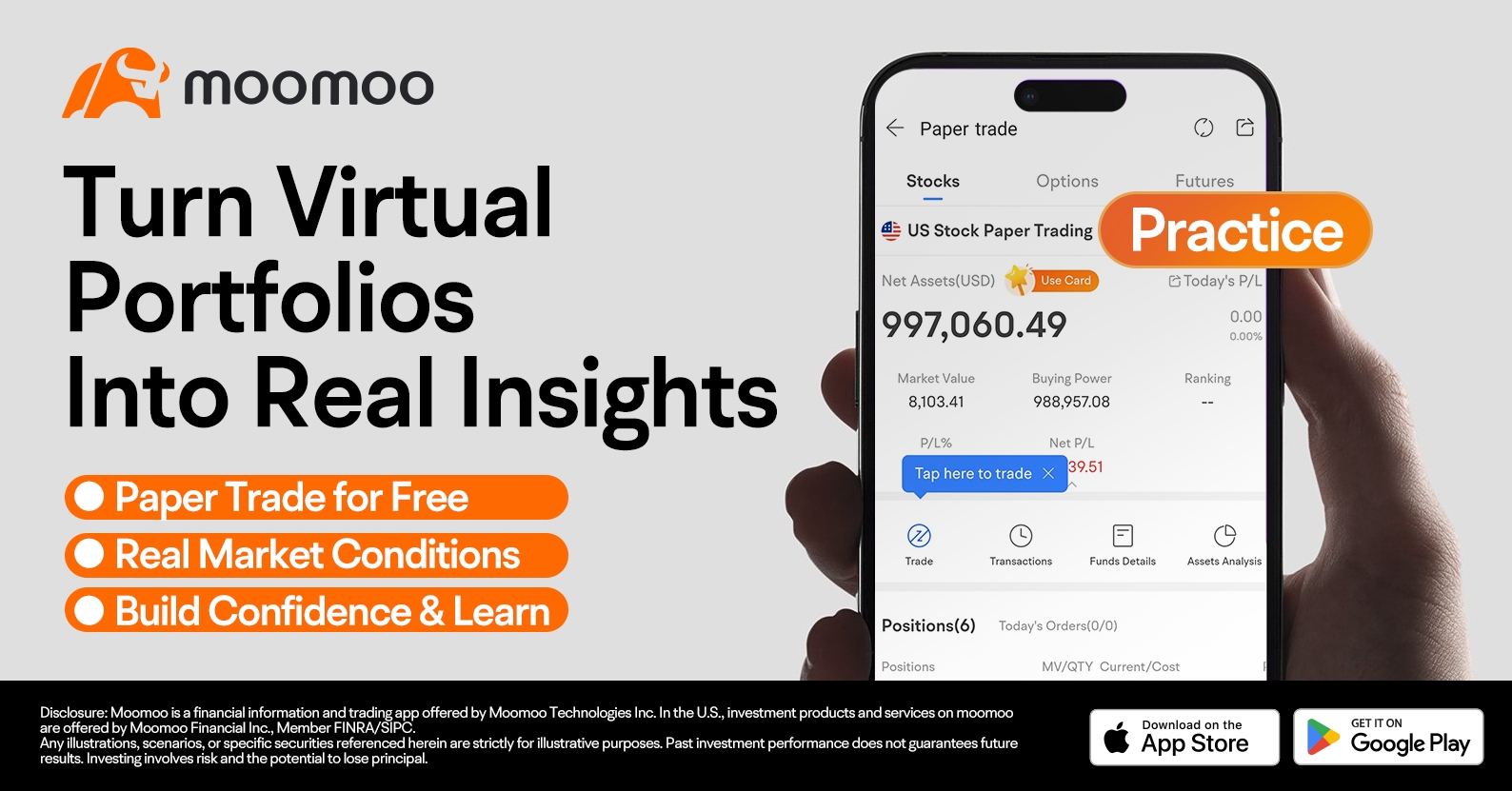
Paper Trading VS. Live Trading
Paper trading and live trading are two different methods of trading, each with its own advantages and disadvantages.
Paper trading is a form of simulated trading, where traders practice their skills using hypothetical trades and no real money is at risk. It is a great way for new traders to gain experience and develop their trading strategies without the risk of losing real money. It also allows traders to test different trading styles and methods, and to understand the market and its movements.
Live trading, on the other hand, involves trading in the real market using real money. It allows traders to experience the real-world dynamics of the market, such as the impact of economic news and events, and the impact of slippage and commissions. However, it also carries the risk of losing real money.
Both paper trading and live trading have their own advantages. While paper trading is a low-risk and low-stress way to gain experience and develop your trading skills, live trading allows you to experience the real market and the emotions and stress that comes with it. Furthermore, paper trading does not take into account the impact of real-world events or the impact of slippage and commissions that would be incurred when trading in the real market.
Join w!se x moomoo Finance Leader Challenge to Win $20,000!
How to Practice Paper Trading?
Practicing paper trading involves keeping a record of hypothetical trades, either on paper or in a trading simulation program. Here are some steps you can follow to practice paper trading:
Step 1: Choose a trading simulation program or a virtual trading platform. Many online brokerages offer this service for free.
Step 2: Set up a trading account with the simulation program or virtual trading platform. This will give you access to real-time market data and conditions.
Step 3: Decide on a trading strategy or method. This could be technical analysis, fundamental analysis, or a combination of both.
Step 4: Place hypothetical trades using the simulation program or virtual trading platform. Record the details of each trade, including the buy and sell prices, the quantity of shares, and the date and time of the trade.
Step 5: Track the performance of your "portfolio" over time. This will give you an idea of how your trading strategy or method is performing.
Step 6: Regularly review your trades and make adjustments to your strategy or method as necessary.
Keep a trading journal and document your thoughts, emotions, and learnings during the process.
Conclusion
Paper trading is a form of simulated trading, which allows traders to practice their skills using hypothetical trades and no real money is at risk. It can be a great way for new traders to gain experience and develop their trading strategies without the risk of losing real money. It's a valuable tool for gaining experience, developing your trading skills, and testing different strategies before committing real money to live trading.
This presentation is for informational and educational use only and is not a recommendation or endorsement of any particular investment or investment strategy. Investment information provided in this content is general in nature, strictly for illustrative purposes, and may not be appropriate for all investors. Read more
Recommend

How to Invest MyDCD IPO Malaysia 2026
SpaceX IPO 2026: How to Invest in SpaceX in Malaysia
Top 7 Dividend ETFs for Malaysian Investors 2026

How to Invest Stratus Global IPO Malaysia 2026
How to Invest in SkyeChip IPO in Malaysia 2026
Top 10 Features of Stock Brokers in Malaysia
How to Invest in Sunway Healthcare in Malaysia 2026
Cara Melanggan IPO Empire Sushi (5351): Panduan Lengkap
Top 7 S&P 500 ETFs Malaysian Investors
Top 9 Semiconductor ETFs Malaysia 2026
Top 8 Gold ETFs in Malaysia for 2026
Moomoo vs Robinhood: Which Platform for Malaysian Investors
Top 8 Inverse ETFs Malaysia 2026
Moomoo Scams Alert: The Official Anti-Fraud Guide in Malaysia
Top 9 Index ETFs Malaysia 2026
Top 10 Technology ETFs in Malaysia for 2026
Safe Investing in Malaysia: Moomoo MY Statement
Is Moomoo Safe in Malaysia
Top 8 Artificial Intelligence Stocks for Malaysian Investors
Invest in 99 Speedmart Share in Malaysia: A Complete Guide
Top 6 Semiconductor Stocks for Malaysian Investors in 2024
Top Investment Strategies for Banking Sector in Bursa Malaysia
How to Buy Tesla Stock in Malaysia
Top 4 Copper ETFs Malaysia 2026
How to Buy IPO Stocks in Malaysia
Top 7 Sectors in the US Stock Market for Malaysian Investors
Top 10 US Penny Stocks for Malaysian Investors
Popular China Stocks for Malaysia Investors to Buy
Top 10 High Dividend Stocks Malaysia 2026
What Is A Recession?
How to Buy Money Market Funds in Malaysia
How to Buy Stock in Malaysia 2026
Top 10 US Healthcare Stocks for Malaysian Investors 2024
Top 5 Malaysia Dividend Stocks in 2026
How to Invest in Startups Before IPO in Malaysia
Top 7 Leveraged ETFs to Invest in Malaysia
Top 8 Currency ETFs Malaysia 2026
How to Invest in Anthropic IPO Malaysia 2026
Moomoo Malaysia vs M+ Global: Which Platform to Choose
What is a Bond and How to Buy U.S. Treasury Bond?
How to Invest in Foodie Media IPO in Malaysia?
Mutual Funds vs Money Market Funds: Which to Invest in Malaysia
Moomoo Malaysia Brokerage Fees and Pricing
What is Thematic Investing?
Malaysia Data Center: Beneficial Sectors and Stocks
Is Moomoo Legal in Malaysia
8 Benefits of Using Paper Trading Apps for Malaysian Traders
Margin Trading: Guide and Strategy for Malaysian Investors
Top Fixed Deposit Rates in Malaysia 2024
Trading App Moomoo: Download and Guide
Top 8 Benefits of Using Moomoo Malaysia as a Stock Broker
Top 10 US Technology Stocks for Malaysian Investors 2026
US-Listed Chinese Stocks Surge on Policy Boost: Who is Leading the Charge?
China-Linked Stocks Surge Amid Strong Policy Stimulus: Wall Street Says, “This Time Is Different!”
How Much Room is There for Valuation Recovery in China-Linked Stocks?
Top 8 Consumer Products and Services Companies in Malaysia 2024
Top 8 Tips for Using Paper Trading for Bursa Malaysia Investors
Top 10 Real Estate Investment Trusts Companies in Malaysia 2024
Top 10 Construction Companies and Stocks in Malaysia 2024
Top 6 Plantation Companies and Stocks in Bursa Malaysia 2025
Special Purpose Acquisition Company and How to Invest
Top 8 Technology Stocks in Malaysia 2024
Top 10 ETFs in Malaysia 2026
How to Choose Your Ideal ETF in Malaysia?
Top 5 Energy Companies and Stocks in Malaysia 2024
What Is Social Trading
How to Use Paper Trading to Test and Help Refine Your Trading Strategy?
Tax Trading Strategies in a Bear Market
6 ETF Concerns That Investors Shouldn’t Overlook
HK Financial Stocks Make a Strong Comeback Amid PBOC Policies & Fed Rate Cuts: Are High-Dividend Inv
How Stock Charting Tools Can Help You
Choosing a Stock Simulator to Practice Stock Trading
Psychological Condition of the Market
What Is SWOT Analysis?
What Is Copy Trading
What Is Working Capital?
What Is the Spot Rate?
Index Funds in Singapore
How to Practice Trading Without Risking Money?
Mutual Funds in Singapore
What Is Mirror Trading?
What Is Revenue?
What Is Trend Analysis?
What Is a Volatility Smile?
What Is Beta in the Stock Market?
What Does It Mean to Have a Certificate of Deposit (CD)?
What Is a Day Order?
Price-to-Earnings (P/E) Ratio
What Is the National Best Bid and Offer (NBBO) in US Equities?
What Are Market Orders?
Using Volume Oscillators to Confirm Price Movements
Forex Trading in Singapore
What Is a Bellwether?
On-Balance Volume (OBV): What Is It?
What Is Historical Volatility (HV)?
Company Earnings and Earnings per Share What Investors Need to Know
Spot Market: What Is It?
Scalping Stock Trading: How Does It Work?
What Is Market Depth?
What Is a Trailing Stop and How to Use It?
Swing Trading vs. Day Trading: What's the Difference?
Will ESG Investing Be The Future Of Investing?
Hedge Funds in Singapore
Build a Low-Risk Portfolio with Blue-Chip Shares in Australia
What Is the Money Flow Index (MFI)?
How to Invest MyDCD IPO Malaysia 2026
SpaceX IPO 2026: How to Invest in SpaceX in Malaysia
Top 7 Dividend ETFs for Malaysian Investors 2026
How to Invest Stratus Global IPO Malaysia 2026
How to Invest in SkyeChip IPO in Malaysia 2026
Top 10 Features of Stock Brokers in Malaysia
How to Invest in Sunway Healthcare in Malaysia 2026
Cara Melanggan IPO Empire Sushi (5351): Panduan Lengkap
Top 7 S&P 500 ETFs Malaysian Investors
Top 9 Semiconductor ETFs Malaysia 2026
Top 8 Gold ETFs in Malaysia for 2026
Moomoo vs Robinhood: Which Platform for Malaysian Investors
Top 8 Inverse ETFs Malaysia 2026
Moomoo Scams Alert: The Official Anti-Fraud Guide in Malaysia
Top 9 Index ETFs Malaysia 2026
Top 10 Technology ETFs in Malaysia for 2026
Safe Investing in Malaysia: Moomoo MY Statement
Is Moomoo Safe in Malaysia
Top 8 Artificial Intelligence Stocks for Malaysian Investors
Invest in 99 Speedmart Share in Malaysia: A Complete Guide
Top 6 Semiconductor Stocks for Malaysian Investors in 2024
Top Investment Strategies for Banking Sector in Bursa Malaysia
How to Buy Tesla Stock in Malaysia
Top 4 Copper ETFs Malaysia 2026
How to Buy IPO Stocks in Malaysia
Top 7 Sectors in the US Stock Market for Malaysian Investors
Top 10 US Penny Stocks for Malaysian Investors
Popular China Stocks for Malaysia Investors to Buy
Top 10 High Dividend Stocks Malaysia 2026
What Is A Recession?
How to Buy Money Market Funds in Malaysia
How to Buy Stock in Malaysia 2026
Top 10 US Healthcare Stocks for Malaysian Investors 2024
Top 5 Malaysia Dividend Stocks in 2026
How to Invest in Startups Before IPO in Malaysia
Top 7 Leveraged ETFs to Invest in Malaysia
Top 8 Currency ETFs Malaysia 2026
How to Invest in Anthropic IPO Malaysia 2026
Moomoo Malaysia vs M+ Global: Which Platform to Choose
What is a Bond and How to Buy U.S. Treasury Bond?
How to Invest in Foodie Media IPO in Malaysia?
Mutual Funds vs Money Market Funds: Which to Invest in Malaysia
Moomoo Malaysia Brokerage Fees and Pricing
What is Thematic Investing?
Malaysia Data Center: Beneficial Sectors and Stocks
Is Moomoo Legal in Malaysia
8 Benefits of Using Paper Trading Apps for Malaysian Traders
Margin Trading: Guide and Strategy for Malaysian Investors
Top Fixed Deposit Rates in Malaysia 2024
Trading App Moomoo: Download and Guide
Top 8 Benefits of Using Moomoo Malaysia as a Stock Broker
Top 10 US Technology Stocks for Malaysian Investors 2026
US-Listed Chinese Stocks Surge on Policy Boost: Who is Leading the Charge?
China-Linked Stocks Surge Amid Strong Policy Stimulus: Wall Street Says, “This Time Is Different!”
How Much Room is There for Valuation Recovery in China-Linked Stocks?
Top 8 Consumer Products and Services Companies in Malaysia 2024
Top 8 Tips for Using Paper Trading for Bursa Malaysia Investors
Top 10 Real Estate Investment Trusts Companies in Malaysia 2024
Top 10 Construction Companies and Stocks in Malaysia 2024
Top 6 Plantation Companies and Stocks in Bursa Malaysia 2025
Special Purpose Acquisition Company and How to Invest
Top 8 Technology Stocks in Malaysia 2024
Top 10 ETFs in Malaysia 2026
How to Choose Your Ideal ETF in Malaysia?
Top 5 Energy Companies and Stocks in Malaysia 2024
What Is Social Trading
How to Use Paper Trading to Test and Help Refine Your Trading Strategy?
Tax Trading Strategies in a Bear Market
6 ETF Concerns That Investors Shouldn’t Overlook
HK Financial Stocks Make a Strong Comeback Amid PBOC Policies & Fed Rate Cuts: Are High-Dividend Inv
How Stock Charting Tools Can Help You
Choosing a Stock Simulator to Practice Stock Trading
Psychological Condition of the Market
What Is SWOT Analysis?
What Is Copy Trading
What Is Working Capital?
What Is the Spot Rate?
Index Funds in Singapore
How to Practice Trading Without Risking Money?
Mutual Funds in Singapore
What Is Mirror Trading?
What Is Revenue?
What Is Trend Analysis?
What Is a Volatility Smile?
What Is Beta in the Stock Market?
What Does It Mean to Have a Certificate of Deposit (CD)?
What Is a Day Order?
Price-to-Earnings (P/E) Ratio
What Is the National Best Bid and Offer (NBBO) in US Equities?
What Are Market Orders?
Using Volume Oscillators to Confirm Price Movements
Forex Trading in Singapore
What Is a Bellwether?
On-Balance Volume (OBV): What Is It?
What Is Historical Volatility (HV)?
Company Earnings and Earnings per Share What Investors Need to Know
Spot Market: What Is It?
Scalping Stock Trading: How Does It Work?
What Is Market Depth?
What Is a Trailing Stop and How to Use It?
Swing Trading vs. Day Trading: What's the Difference?
Will ESG Investing Be The Future Of Investing?
Hedge Funds in Singapore
Build a Low-Risk Portfolio with Blue-Chip Shares in Australia
What Is the Money Flow Index (MFI)?