Retail Traders Are Getting Smarter About Risk — But Psychology Still Wins

Retail Traders Are Getting Smarter About Risk — But Psychology Still Wins
Insights from moomoo’s New York Options Roadshow
Retail investors are no longer just participating in the options market, they’re actively building strategies, analyzing risk, and experimenting with advanced tools. But as trading becomes more sophisticated, one challenge continues to stand out: psychology, not strategy, is still the biggest driver of losses.
That was the clear takeaway from moomoo’s recent Options Roadshow at The Times Center, where traders, educators, and market participants gathered for a day of live trading, strategy sessions, and candid conversations about what actually goes wrong in options trading. The event combined education with real-time engagement, including interactive giveaways and hands-on product experiences, debuting moomoo API Skills for the first time.
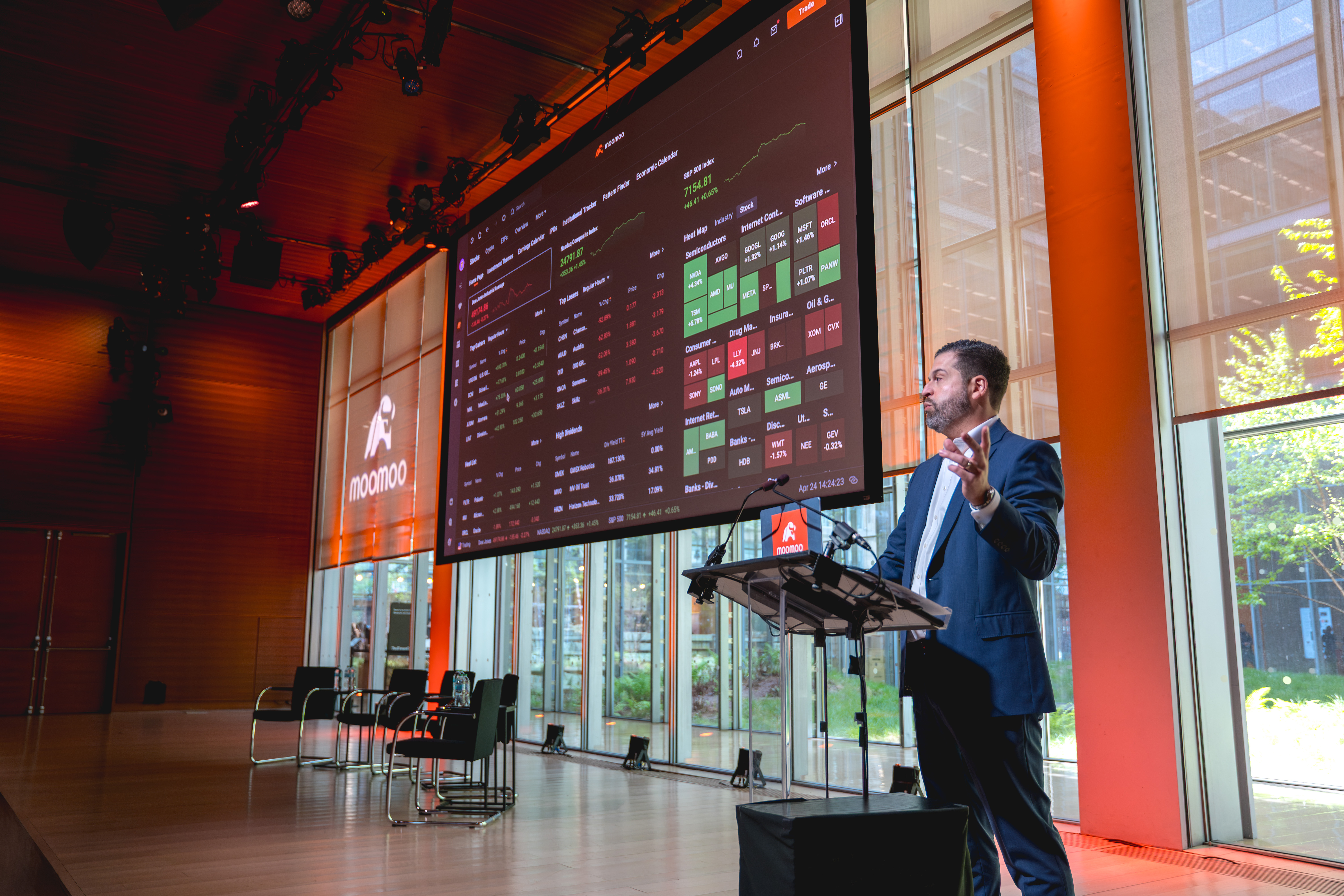
The event brought together speakers across institutional finance, professional trading, and the retail investing community. The moomoo Product Roadshow was led by Neil McDonald, CEO, moomoo U.S., alongside Warren Gibson, VP of Market Operations, and David Rodriguez, U.S. Product Lead.
“The Most Expensive Lessons in Options” panel featured Julian Ritossa, CIO; Ananya Kaul, Founder, Vanquish Trader Prop; and Noor Al (u/OPINION_IS_UNPOPULAR), Head Moderator & Founder, WallStreetBets Inc., moderated by Ralane Bonn, Director, Prime Brokerage Client Solutions, moomoo.
An educational deep dive on volatility, Greeks, and options pricing was led by Jeff Kilburg, CNBC Contributor; Founder/CEO/CIO, KKM Financial.
The “0DTE: Tool, Hedge, or Speculation?” panel featured Neil McDonald, CEO, moomoo U.S.; Karen Dominguez (Lady Leverage), Full-time Options Day Trader; Stock Dads Expert; Matt Saincome, CEO, Unusual Whales; and Lander Schlessinger, Full-time Day Trader & Entrepreneur, moderated by Carlee Snyder, Head of Communications & Media Relations, moomoo U.S.

The Biggest Losses Aren’t About Strategy — They’re About Behavior
Across sessions, one theme came up repeatedly:
Most traders don’t fail because they don’t understand options, they fail because they don’t follow their own rules.
Panelists shared real-world examples of trades that went wrong, often pointing to the same pattern:
Holding losing positions too long
Doubling down instead of cutting losses
Letting conviction override discipline
In hindsight, many noted they would have exited earlier if they were advising someone else—highlighting the gap between knowing what to do and actually doing it.
Why “Cutting Losses” Is So Difficult in Practice
Even experienced traders acknowledged how hard it is to act rationally in the moment.
Key behavioral drivers discussed included:
Loss aversion: losses feel significantly worse than gains feel good
Sunk cost fallacy: staying in a trade simply because you’re already down
FOMO and revenge trading: chasing momentum or trying to recover quickly after a loss
These pressures are amplified in options trading, where outcomes can change rapidly and emotions escalate quickly.
To address this, many speakers emphasized the importance of pre-defined rules at entry—including stop losses and position sizing—before emotions take over.

Over-Leverage Remains One of the Most Common Mistakes
Another recurring theme: many retail traders underestimate how much leverage they are actually taking on.
Even small-dollar options positions can represent significant exposure, particularly in short-dated contracts. Panelists stressed that:
Risk should be measured against total portfolio size, not just the options allocation
Position sizing rules should be fixed—not based on “gut feel”
Loss limits should be defined in advance and consistently enforced
0DTE Trading: Tool, Hedge, or Speculation?
A separate panel focused on the rise of zero-days-to-expiration (0DTE) options, which now account for a significant share of daily options volume.
Speakers highlighted that 0DTE trading can serve very different purposes depending on the user:
A tool for disciplined traders using defined-risk strategies
A hedge for institutions managing intraday exposure
Speculation for those trading without a clear plan
The difference ultimately comes down to process and discipline, not the product itself.
The Rise of the “Retail Quant”
One of the clearest shifts observed at the event was the growing demand for data-driven trading tools.
Attendees showed strong interest in:
API-based strategy building
Real-time Greeks and volatility analysis
Scenario modeling and trade simulation
This reflects a broader trend: retail traders are increasingly adopting workflows and tools once reserved for institutional desks.
From Education to Execution
A consistent takeaway across sessions was that education alone isn’t enough—execution matters.
Tools that help traders:
visualize outcomes before entering a trade
define risk upfront and automate decision-making can play a critical role in bridging the gap between intention and action.