Warren Buffett Portfolio: How to Invest Wisely in Singapore
In the intricate web of global finance, this year has been marked by significant market tremors, largely instigated by President Donald Trump's far-reaching tariff policies. Amidst this chaos, the investment world looks towards the timeless wisdom of Warren Buffett. As one of the few billionaires to post positive stock market returns recently, Warren Buffett's investment portfolio offers a unique vantage point for investors seeking to navigate these turbulent waters.
How to invest in the US stock market wisely for Singapore investors? In this article, we embark on a journey to explore how we can learn from Warren Buffett's investment strategies in the Singapore stock market.
Warren Buffett Amid Trump Tariff-Driven Volatility
President Donald Trump's imposition of tariffs on over 180 countries and territories is wreaking havoc on the global market. The S&P 500 Index has plummeted 18.71% from its recent peaks, edging perilously close to bear market territory. Concurrently, the tech-dominated NASDAQ 100 Index has nosedived 23% from its all-time high.
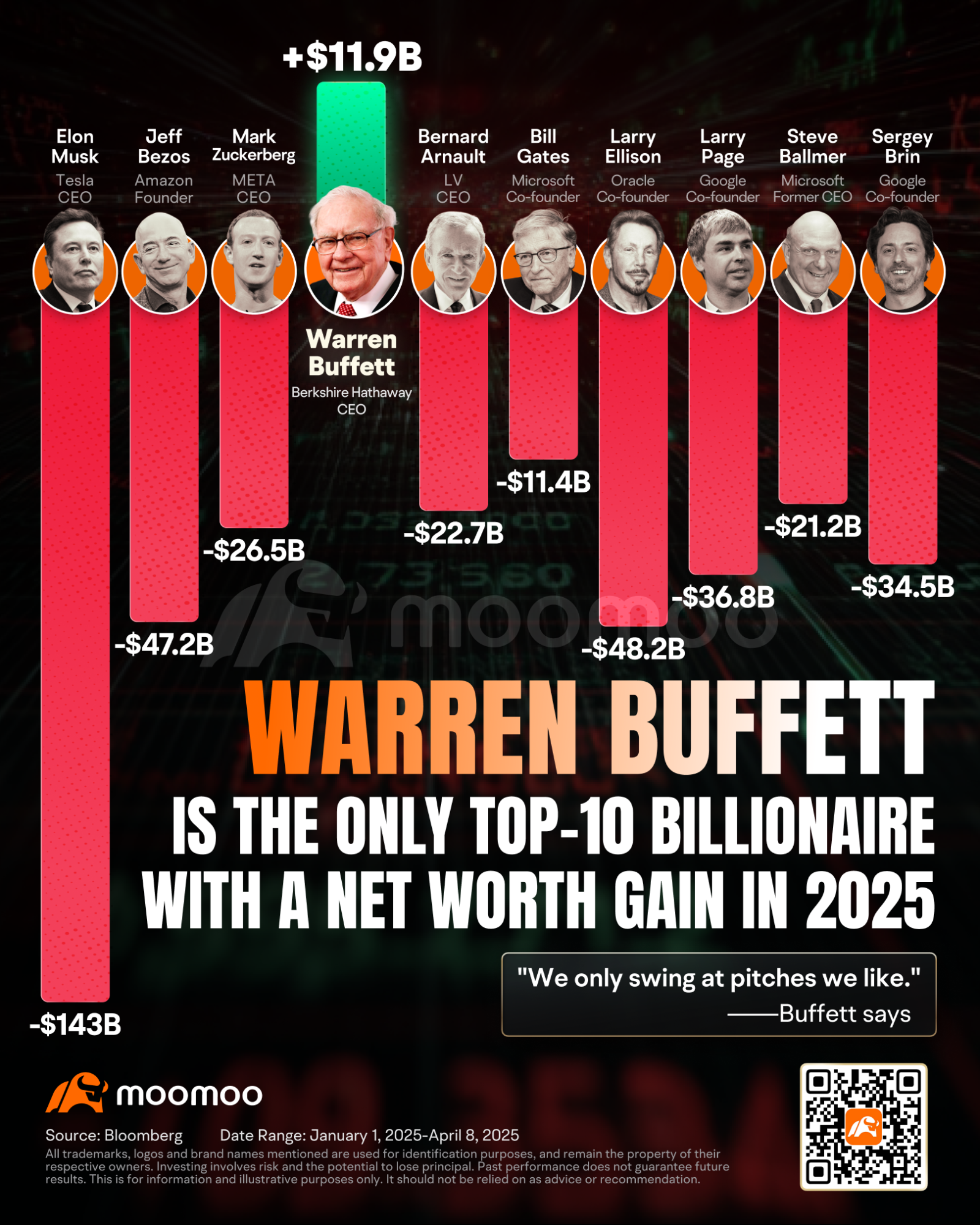
According to the Bloomberg Billionaire Index, Jeff Bezos, Larry Ellison, and Mark Zuckerberg each saw losses approaching $10 billion by the close of trading on last Friday alone. On April 3 and 4, the world's 500 wealthiest individuals endured the largest two-day losses in history. This was partially due to the massive value erosion of prominent tech stocks such as NVIDIA, Amazon, and Meta Platforms, which shed billions in market capitalization.
Even those with close ties to Trump are not immune to the financial fallout. Elon Musk, the visionary behind Tesla and SpaceX, has suffered the most significant losses globally. His net worth has plummeted by over $140 billion so far this year. Remarkably, despite these substantial setbacks, he still retains the title of the world's richest person.
Read Also: What is the S&P 500 Index and how to Invest in Singapore?

Warren Buffett: The Only One Net-Positive Investor in 2025
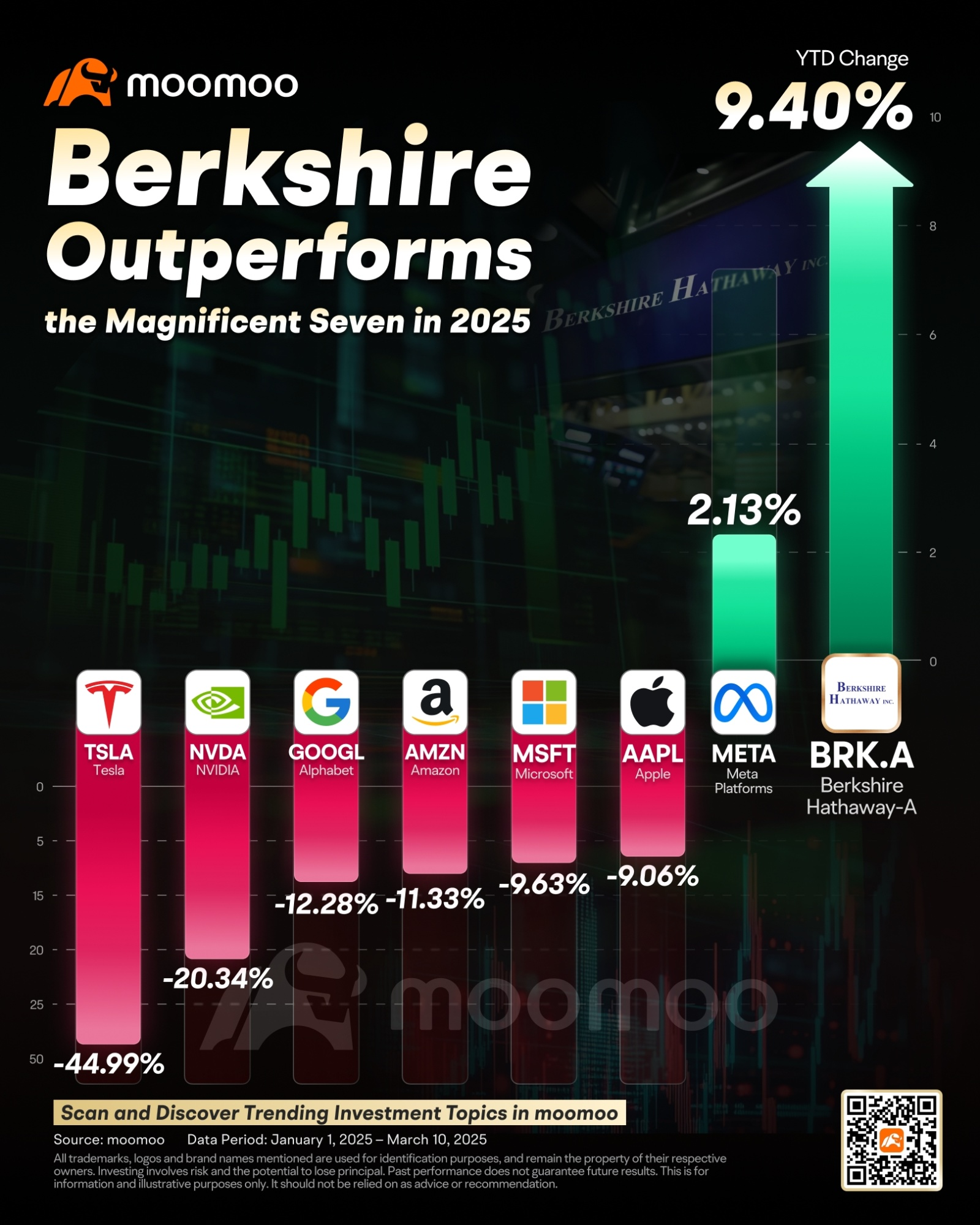
However, among billionaires, one well-known figure stands out prominently in 2025 for maintaining positive stock market returns. Warren Buffett seemingly foresaw an impending market shift. In 2024, he divested approximately $134 billion worth of stocks and ended the year with a staggering $334 billion in cash reserves. By 2025, his wealth had increased by around $12 billion, and as of April 9, 2025, he ranked as the world's fourth-richest person, trailing just behind Jeff Bezos and Mark Zuckerberg.
In his February letter to shareholders, Buffett explained, “We benefited from a foreseeable significant rise in investment income as Treasury Bill yields increased, and we significantly boosted our holdings of these highly liquid short-term securities.”
During the previous annual shareholders' meeting, when queried about Berkshire Hathaway's reluctance to deploy its substantial cash reserves more aggressively, Buffett remarked, "We only take action when the opportunities are truly appealing."
Berkshire Hathaway's Annual Shareholder Meeting Agenda
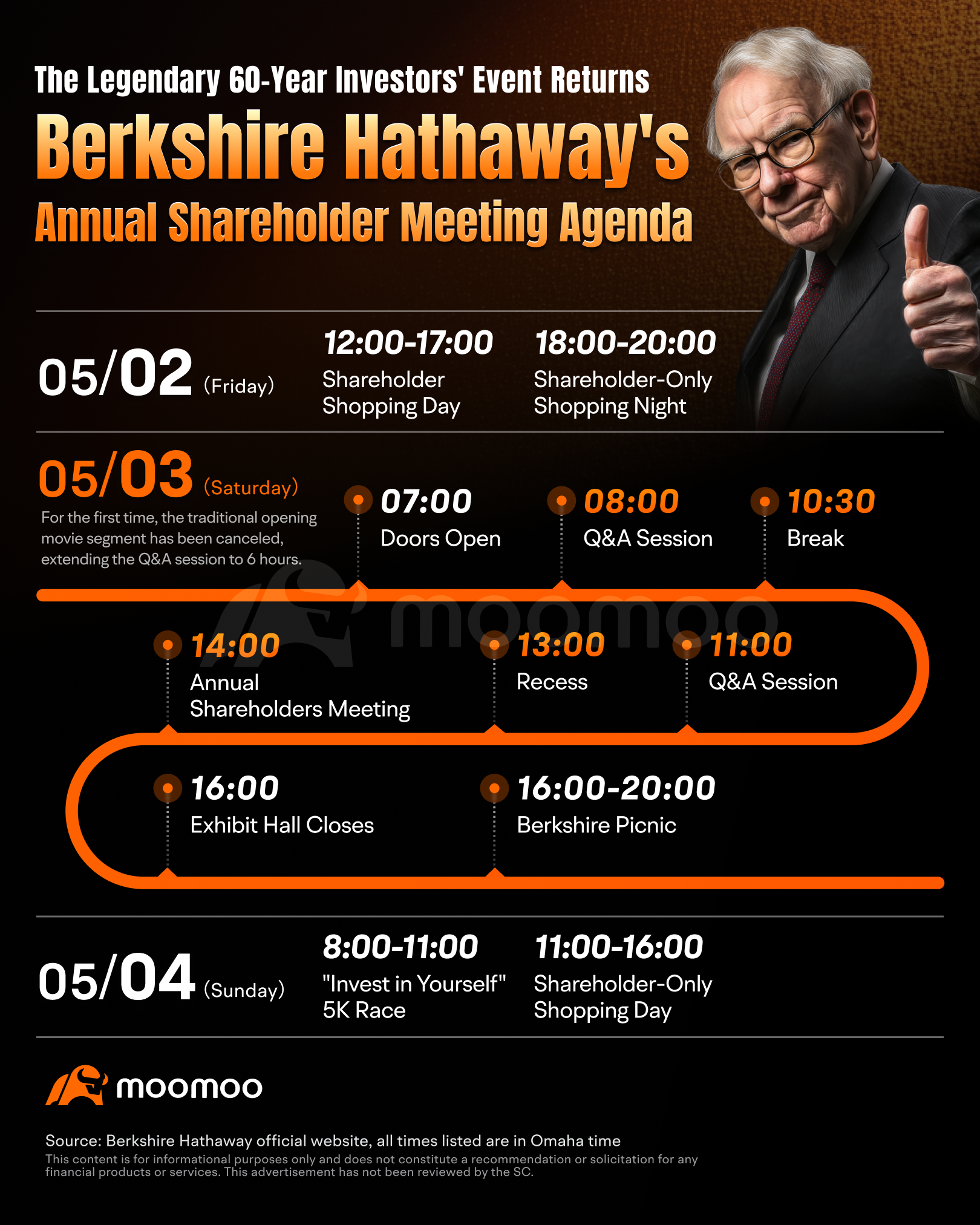
Warren Buffett's 60-Year Legacy: Highlights of Berkshire's Shareholders Meeting
The annual and highly anticipated Berkshire Hathaway Annual Shareholder Meeting, a significant event in the investment calendar, is set to take place on May 3rd in Omaha, Nebraska, Warren Buffett's hometown.
This year is particularly momentous as it commemorates the 60th anniversary of Buffett's stewardship of Berkshire. Nicknamed the 'Diamond Shareholder Meeting,' it is expected to provide insights into the investment legend's succession plans and an in-depth look at his recent strategic investment maneuvers.
So, what are the key highlights to look forward to at Berkshire Hathaway's 2025 Annual Shareholder Meeting?
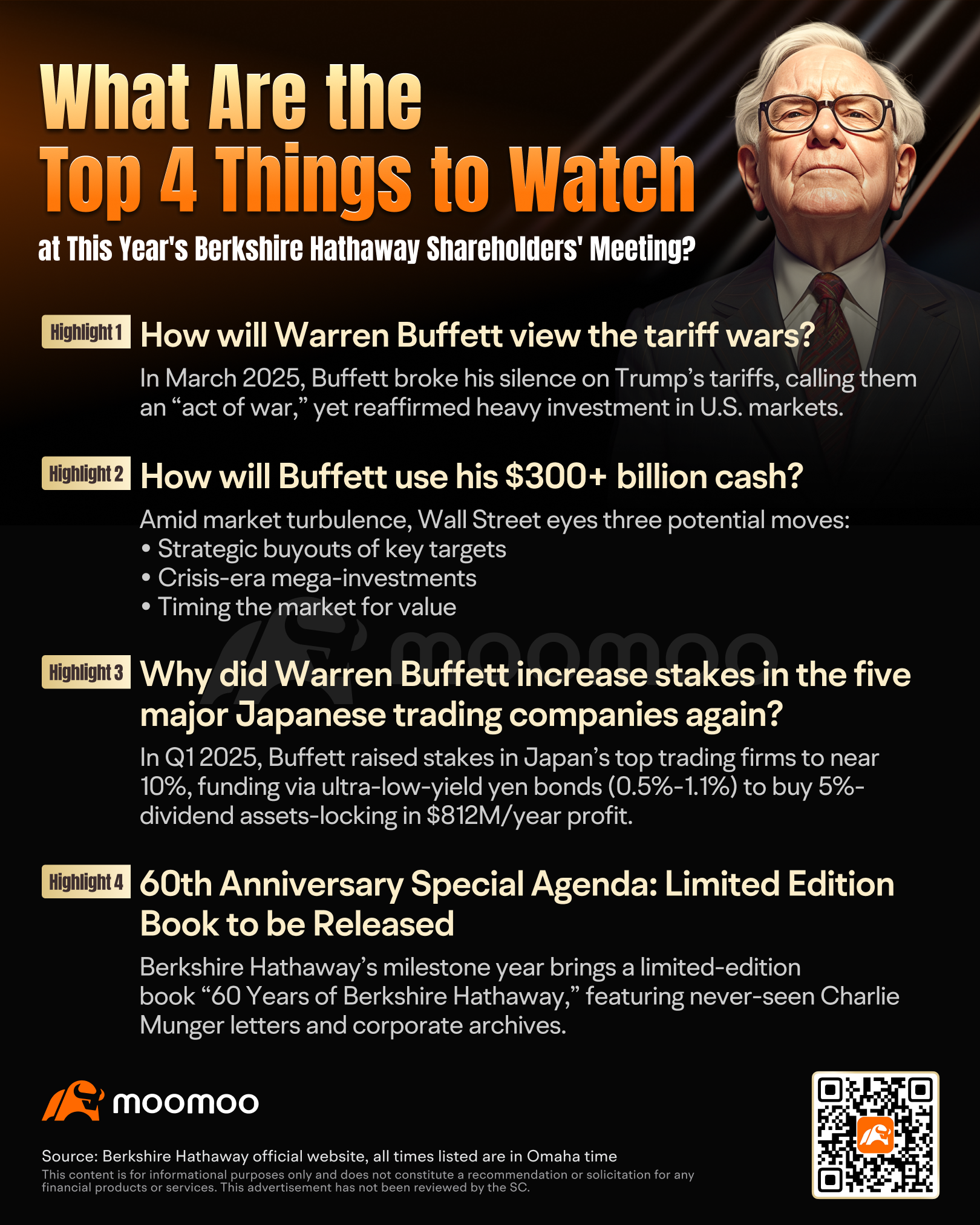
Highlight 1: Buffett's Stance on Tariff Wars Roiling Global Markets
In March 2025, Buffett made an uncharacteristic statement about Trump's tariff policy. He described tariffs as, to a certain degree, a "war act." Nevertheless, he also affirmed that the majority of the funds under his management would continue to be invested in the United States.
Highlight 2: When Will the "Oracle of Omaha" Act His $300 Billion-Plus Cash Hoard?
Given the elevated volatility in global markets, Wall Street is abuzz with speculation. Several scenarios are being mooted: large-scale acquisitions targeting influential companies, strategic bailouts in the face of substantial opportunities, or simply biding one's time until the right pricing moment presents itself.
Highlight 3: The Reason Behind Buffett's Increased Stakes in Japan's Five Major Trading Companies
In the first quarter of 2025, Buffett's ownership stake in Japan's five major trading companies, such as Mitsui & Co. and Mitsubishi Corporation, neared 10%. By issuing low-interest yen bonds (with interest rates ranging from 0.5% to 1.1%), he acquired high-dividend assets (boasting a 5% dividend yield), projecting an annual arbitrage profit of $812 million. This move underscores his penchant for inflation-resistant assets.
Highlight 4: 60th Anniversary Exclusive: Release of a Limited-Edition Book
As 2025 marks the 60th anniversary of Buffett's leadership at Berkshire Hathaway, a limited-edition book titled "60 Years of Berkshire Hathaway" will be launched. It will feature previously unseen letters from Charlie Munger and a comprehensive account of the company's growth journey.

Looking Ahead with Confidence: Lessons from Warren Buffett in Volatile Markets
Although the present market slump is disconcerting, it offers opportunities for those who are ready to act with self-discipline and patience. The ongoing uncertainty, stoked by tariff policies, inflation concerns, and recession anxieties, is leading numerous investors and institutional experts to recommend a strategic move towards defensive investments and diversified portfolios.
The consistent success of Warren Buffett and Berkshire Hathaway serves as a reminder that, even in the most dire of circumstances, a stable, value-oriented investment strategy can not only safeguard capital but also put investors in a favorable position to gain when the market eventually rebounds.
By concentrating on sectors that have a history of performing well during economic downturns, maintaining a diversified asset mix, and adhering to the long-term investment tenets that Buffett exemplifies, investors can navigate through the turmoil and emerge more robustly on the other side.
Warren Buffett Portfolio: Investment Overview
How to Learn from Warren Buffett in 2025
In the face of stock market volatility fueled by tariff uncertainties and looming trade wars, Warren Buffett's 2025 investment portfolio tells a story of calculated prudence. In this exploration, we will delve into Warren Buffett's top stock picks in 2025, which reflect his unique market perspective, and trace the history of his investment journey, uncovering the principles and experiences that have shaped his unparalleled success.
Warren Buffett's Top Stock Picks in 2025
As of April 2025, the following stocks represent Berkshire Hathaway's largest positions by market value:
Apple: Valued at $60.27 billion, Warren Buffett significantly pared back this position from its peak, when it accounted for nearly 40% of Berkshire's portfolio. Nevertheless, as he revealed in his February 2025 letter to shareholders, his confidence in Apple remains unshaken.
American Express: Since initiating his investment in 1991, Buffett has not divested a single share of American Express, a testament to his long-term faith in the company.
Bank of America: Despite trimming his stake in Bank of America by approximately 15% during the final quarter of 2024, Buffett still holds over 680 million shares, worth around $26 billion, which represents 9.7% of Berkshire's portfolio.
Coca-Cola (KO): Valued at $29.7 billion, Buffett's investment in Coca-Cola dates back to 1988, and he has held onto every share since, perfectly embodying his "buy-and-hold-forever" investment philosophy.
Chevron (CVX): With a value of $16.36 billion, Chevron stands out among Buffett's top holdings as a relatively recent acquisition. Berkshire first entered the market for Chevron shares in late 2020, when energy stocks were out of favor.
History of Warren Buffett's Investment Journey
In this highly charged market climate, delving back into Warren Buffett's investment tenets and analyzing the current situation's impact on the stock market holds particular importance.
1987 ‘Black Monday’
On that infamous Black Monday in October 1987, the S&P 500 plummeted by over 20% in a single day, culminating in an annual decline of 36%. Seizing the moment, Warren Buffett purchased Coca-Cola shares at their lowest point that October and held onto them for the long haul.
1999 ‘Dot-Com Bubble’
The burst of the Dot-Com bubble from 2000 to 2003 led to a 50% drop in the S&P 500, which finally hit rock bottom in October 2002. Spanning from March 2000 to October 2002, Buffett steadily accumulated positions, directing his investments towards consumer goods and financial stocks.
2007 ‘Housing Crisis’
During the 2007 - 2009 financial meltdown, the S&P 500 shed more than half of its value, bottoming out in March 2009. At the height of the crisis in 2008, Buffett made strategic investments in Goldman Sachs and General Electric, and further increased his holdings when the market reached its lowest ebb in 2009.
2025 ‘Trump Tariff’
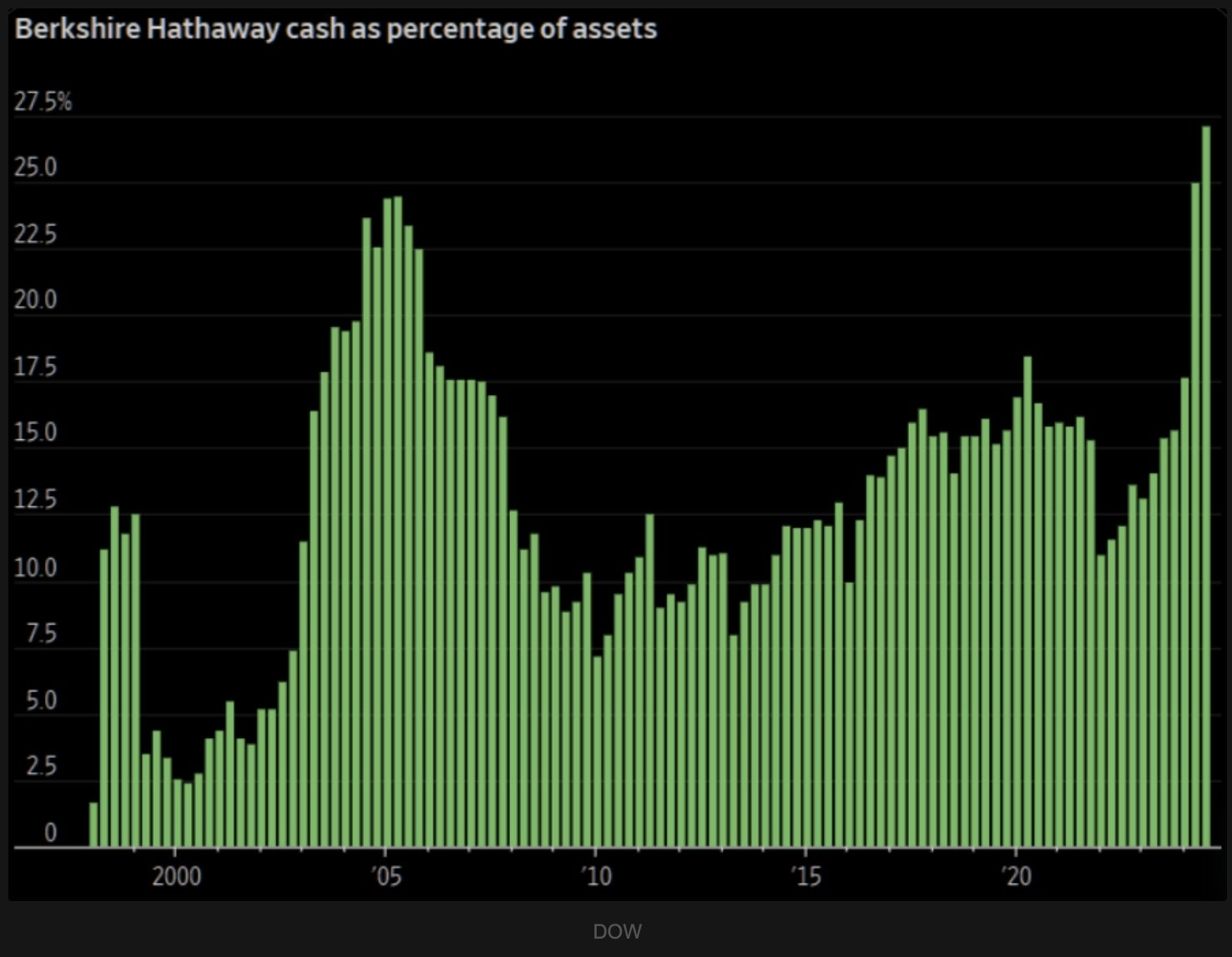
Currently, Berkshire Hathaway's cash reserves have swelled to a remarkable 50% of its portfolio, hitting an all-time high. This suggests that Buffett may be poised to act during the ongoing significant market adjustment. Investors would do well to watch closely whether Buffett will channel funds into his traditionally preferred sectors, namely finance, industry, and consumer staples. These sectors typically boast stable cash flows and formidable competitive advantages, showcasing enduring value, especially in times of market downturns.
Buffett's perspective on market volatility serves to reinforce his investment philosophy. He perceives market corrections not as threats but as golden opportunities. His record-high cash position is a clear indication that he is biding his time, patiently awaiting the emergence of an "irresistible investment opportunity."
Strategies for Hedging Against Market Volatility

In the face of turbulent market conditions, numerous experts advocate shifting investment focus towards defensive sectors and building a well-diversified portfolio as an effective means of hedging against further market volatility. Defensive sectors, including consumer staples, healthcare, and utilities, generally exhibit lower sensitivity to economic cycles. This characteristic allows them to offer greater stability during economic downturns, serving as a reliable anchor for investment portfolios.
UBS analysts have recently highlighted that safe-haven companies with robust competitive advantages and consistent profitability, such as utility providers and fast-food chains, have demonstrated remarkable resilience. Even as major market indices declined, these sectors managed to record modest gains. Moreover, diversifying investments into bonds or gold can act as a buffer, mitigating the impact of fluctuations in the equity market.
In essence, while there are general strategies for hedging against market volatility, studying Warren Buffett's investment approach provides a more profound understanding of how to implement these strategies effectively. By focusing on value, choosing the right sectors, and understanding the true nature of diversification, investors can better protect their investments in an unpredictable market environment.
Warren Buffett and Berkshire Hathaway: A Guiding Light in Turbulent Times
In market uncertainty, Warren Buffett stands as a pivotal figure, offering both reassurance and direction to investors. Even during the current market downturn, Buffett's Berkshire Hathaway has a remarkable track record of outperforming the market during periods of upheaval. Boasting cash reserves exceeding $300 billion, equivalent to approximately 30% of Berkshire's market capitalization, the company is ideally situated to capitalize on low asset valuations and lucrative investment prospects when the market dives. This substantial cash buffer provides Buffett with the latitude to acquire undervalued assets during market crashes, much like his strategic investment in Bank of America back in 2011.
Buffett's investment philosophy eschews the pursuit of market timing. Instead, it emphasizes the virtue of patience in waiting for opportune moments while maintaining an unwavering long-term perspective. His renowned maxim, “be fearful when others are greedy, and greedy when others are fearful,” has not only served him admirably throughout his career but also continues to encourage investors to remain composed amidst short-term market volatility.
Although individual investors may not have the same financial heft as Berkshire Hathaway, there are invaluable lessons to be gleaned from Buffett's investment strategy. By adhering to a disciplined, long-term investment plan, concentrating on companies they thoroughly understand, and keeping a sufficient cash reserve on hand to seize opportunities presented by market corrections, investors can enhance their chances of success. Attempting to time the markets is notoriously difficult. Instead, staying true to one's investment plan and maintaining a diversified portfolio offers a more reliable path to achieving financial goals.
Exploring Warren Buffett Portfolio with Moomoo Singapore

Regular Savings Plan
Start your investment journey in US stocks with as little as US$10.
Fractional Share & 24 Hours Trading
Invest in renowned companies like NVDA and AAPL for as low as US$5 (or a minimum of 0.0001 shares). With a single account, enjoy the flexibility to trade US stocks and ETFs 24 hours a day, 5 days a week.
Real-Time P&L Tracking
Stay on top of your investments with real-time profit and loss tracking. Effortlessly monitor your gains and losses on a daily, monthly, and yearly basis, giving you full visibility into your investment performance.
Conclusion

In conclusion, the investment landscape in 2025, characterized by market volatility triggered by tariff-related issues, has been a challenging yet revealing period. Warren Buffett's investment portfolio and his long-standing principles have once again proven to be a source of inspiration and learning for investors in Singapore and globally. His ability to weather market storms, not by chasing short-term trends but by focusing on long-term value, stability, and opportunity, is a lesson that transcends geographical boundaries.
As investors in Singapore look to the future, they can draw strength from Buffett's example, emphasizing discipline, patience, and a well-thought-out investment plan. By diversifying their portfolios, focusing on sectors with enduring value, and maintaining a cash reserve for opportune moments, they can not only protect their investments but also position themselves to thrive when the market eventually turns around. In the ever-changing world of finance, Buffett's approach serves as a timeless compass, guiding investors towards wiser investment decisions in Singapore and beyond.
This presentation is for informational and educational use only and is not a recommendation or endorsement of any particular investment or investment strategy. Investment information provided in this content is general in nature, strictly for illustrative purposes, and may not be appropriate for all investors. Read more