Crypto vs. Gold: How to Invest in Singapore
Crypto vs. Gold: An Overview
As of April 22, the Gold Futures market reached a new milestone, breaking through the $3,500 mark. This represented a staggering year-to-date (YTD) increase of over 32%, driven by a combination of factors. Concurrently, GOLD ETFs also soared, with a YTD growth of more than 29%, closely mirroring the upward trajectory of the underlying gold prices and attracting substantial investor interest.

The crypto market also saw remarkable performance. On April 28, the cryptocurrency market witnessed significant activity. Bitcoin experienced notable price fluctuations, hovering around $93,000 at one point. Bitcoin is almost back to the $100,000 mark. Both gold and Bitcoin prices have been influenced by market volatility and investor sentiment, serving as stores of value during periods of economic uncertainty. Ethereum, on the other hand, maintained a relatively stable upward trend, hovering near $1,800.
What is Crypto?
Cryptocurrency, often referred to simply as “crypto,” represents a revolutionary shift in the world of finance and technology. It is a digital or virtual form of currency that uses cryptography for security, making it nearly impossible to counterfeit or double-spend.
Cryptocurrencies offer several unique features that distinguish them from traditional assets. They are global, meaning they can be sent across borders without the need for currency exchange or significant transaction fees. They are also pseudonymous, allowing users to maintain a level of privacy while conducting transactions. Furthermore, the supply of many cryptocurrencies is limited, which, combined with increasing demand, can drive up their value over time, similar to precious metals like gold. However, the crypto space is known for its volatility and unpredictability, presenting unique challenges for traditional investors compared to more established assets like gold. These dynamics are influencing investment behavior, especially with the rise of crypto ETFs.

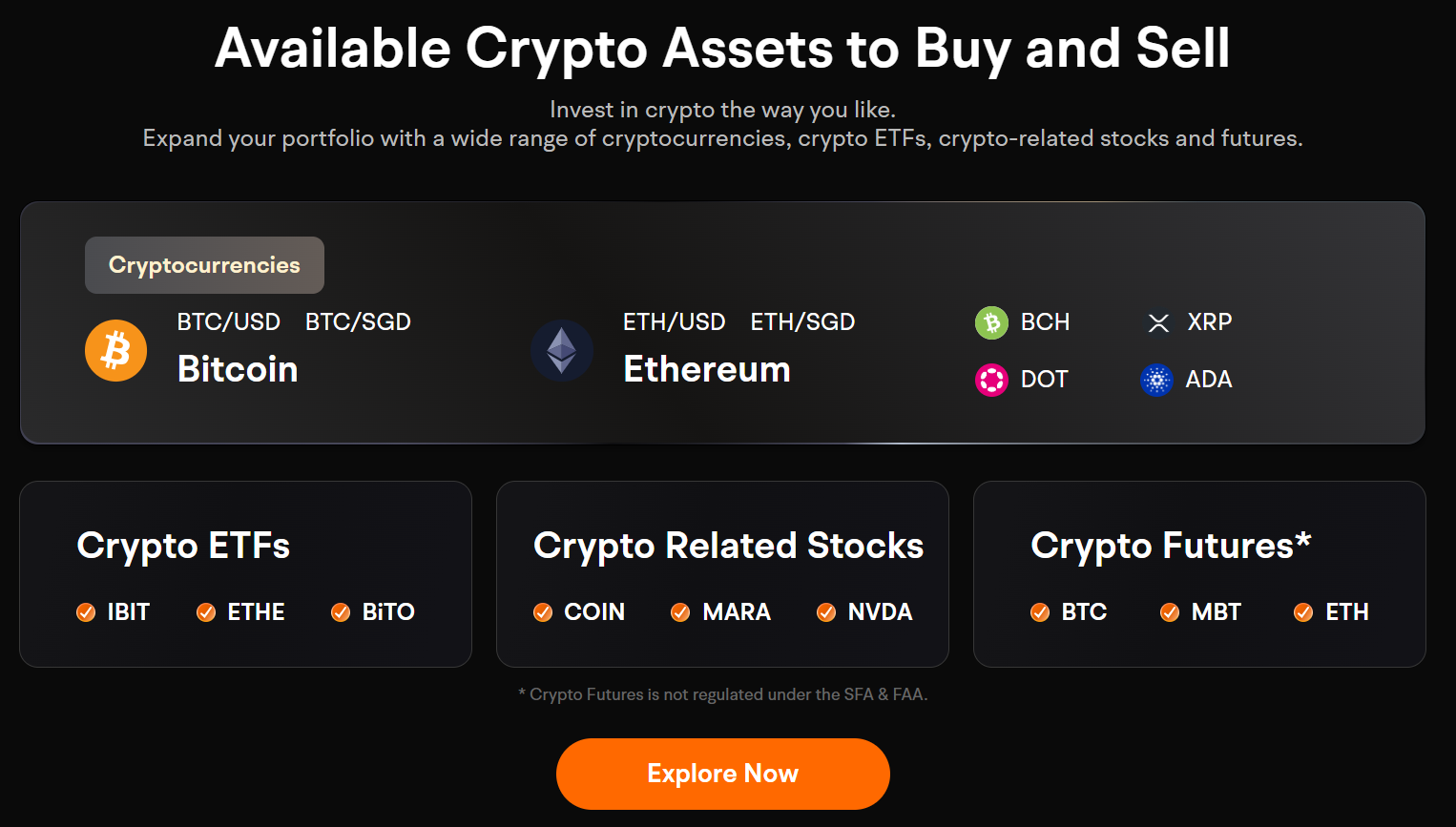
How to Invest in Crypto with Moomoo Singapore?
![]() Open a Crypto Account: In the moomoo app, navigate "Trade" > "Crypto" > "Next" > "Start Now".
Open a Crypto Account: In the moomoo app, navigate "Trade" > "Crypto" > "Next" > "Start Now".
![]() Transfer Funds: Go to "Accounts" > Select your crypto account > "Transfers".
Transfer Funds: Go to "Accounts" > Select your crypto account > "Transfers".
![]() Start Trading: On the detailed quotes page, click on the "Trade" button.
Start Trading: On the detailed quotes page, click on the "Trade" button.
>> Don't miss out on your exclusive welcome rewards!![]()
 Open a Crypto Account: In the moomoo app, navigate "Trade" > "Crypto" > "Next" > "Start Now".
 Transfer Funds: Go to "Accounts" > Select your crypto account > "Transfers".
 Start Trading: On the detailed quotes page, click on the "Trade" button.
>> Don't miss out on your exclusive welcome rewards!

Bitcoin
Bitcoin was launched in 2009, and this decentralized technology marked the beginning of a new era in the financial and investment world. At first, these digital currencies only appealed to a small number of niche enthusiasts.
In 2010, early speculators found that the Bitcoins they had bought for just a fraction of a cent had increased in value to $0.09 each. Subsequently, large-scale Bitcoin mining farms and pools became increasingly popular, and cryptocurrency exchanges started to emerge.
In 2020, when the COVID-19 pandemic led to the shutdown of economies around the world, speculators and investors observed that the value of Bitcoin didn't decline along with stock prices. As a result, they began to invest large amounts of capital in it. Institutional investors also continued to explore ways to create investment instruments and funds related to it, causing its price to soar. Bitcoin's price saw a significant rise over recent years, highlighting its potential for high returns and considerable volatility.
By April 2021, the price of Bitcoin reached approximately $61,000, and it peaked at $69,000 on Coinbase in November. Afterwards, it entered a long-term decline. After enduring a prolonged period of relatively low prices, known as the “crypto winter,” its price surged to over $75,000 on March 14, 2024, following the approval of Bitcoin Spot ETFs by the Securities and Exchange Commission. Holding Bitcoin through various investment vehicles, such as ETFs, provides investors with convenient exposure to this cryptocurrency. How to buy Bitcoin in Singapore?
Read Also: What is XRP? Crypto Basics for Singapore Beginners
Introduction to Gold
Throughout history, gold has proven to be a resilient asset during market downturns. Its value remains relatively stable, and when the specter of a recession looms and investors start shifting their money away from stocks, the price of gold typically begins to climb. This is why gold serves as an effective hedge, an investment that can offset losses in other assets during market corrections or economic recessions.
When the COVID-19 pandemic hit, while some investors were drawn to Bitcoin, many others stuck with tried-and-true investment strategies and flocked to gold instead. This surge in demand caused the price of gold to soar. In early 2019, it was just below $1,300 per ounce, but by mid-2020, it had reached nearly $2,100 per ounce. Gold's low volatility, scarcity, and stability as a secure investment option make it a preferred choice during times of economic uncertainty. For long-term wealth preservation, gold is often viewed as a reliable option for maintaining wealth stability compared to the speculative nature of Bitcoin.

As economies gradually recovered in 2021, the price of gold declined. However, even with this drop, its average price remained higher than what it was before the pandemic-triggered economic slowdown. (Source: Investopedia)
Characteristics of Gold
Gold, in particular, has a number of characteristics that make it an appealing investment. Its limited supply, durability, and aesthetic value have driven demand for centuries. As a result, gold has become a widely accepted form of exchange and a key component of many investment portfolios. The yellow metal's ability to withstand economic downturns and geopolitical tensions has earned it a reputation as a safe haven asset. Additionally, gold's value is not tied to any particular currency or financial instrument, making it an attractive option for investors seeking to diversify their holdings. Many investors view gold as a way to preserve wealth and protect against inflation, making it a popular choice for those with a long-term perspective.
Key Differences between Crypto and Gold
Gold is the steady, time-tested choice for stability and tangible utility. Crypto offers innovation, speed, and borderless freedom—but with higher risks and unpredictability. Investors often blend both: gold for safety, crypto for growth potential. As the financial world evolves, comparing traditional assets like gold with modern digital assets like Bitcoin becomes crucial in determining the better investment for 2025. These two assets serve distinct purposes in investment portfolios, with gold providing financial stability and Bitcoin offering diversification and growth potential. Here are 5 key differences between Crypto and Gold:
Regulation and Security
Gold operates within a well-established, tightly regulated system. For centuries, its trading, storage, and transport have been governed by strict rules. Buying gold usually means working with registered dealers, and moving it across borders often requires government approval. Its physical nature makes it hard to steal or fake, but also demands secure storage like vaults or safes. Gold maintains its value due to its finite supply and intrinsic worth, contrasting it with fiat currencies, which can be subject to inflationary pressures.
In contrast, cryptocurrencies like Bitcoin investing rely on encryption and decentralized networks to prevent theft or forgery. While crypto can move freely across borders (with rare exceptions), its regulatory landscape remains patchy. Many countries still lack clear rules to protect users, and the pseudonymous nature of crypto transactions complicates oversight.
Moomoo SG: The first and only licensed online broker for crypto trading in Singapore.
>> Open an account & start trading now!![]()
>> Open an account & start trading now!


Practical Uses
Gold's value is rooted in its versatility. Beyond being a currency and a luxury item, it's used in industries like electronics, dentistry, and aerospace. This real-world utility helps gold hold its value even during economic downturns. Bitcoin, however, is still catching up. Today, it's primarily a digital currency or speculative asset. While decentralized finance (DeFi) platforms now let users lend, borrow, or earn interest with Bitcoin, these uses are niche compared to gold's broad applications. Crypto's future is uncertain: it could expand into mainstream finance or fade into irrelevance, depending on adoption and innovation. Bitcoin is also emerging as a legitimate investment alternative alongside traditional assets like gold, recognized as a digital asset with potential for significant returns and growing interest from both retail and institutional investors.
Liquidity
Liquidity—how easily an asset can be bought or sold—varies sharply between the two. Gold is universally liquid, whether traded as physical bars, ETFs, or jewelry. Its value is recognized globally, though liquidity can dip during extreme market stress. For crypto, liquidity depends heavily on popularity. Bitcoin and other top cryptocurrencies are highly liquid due to massive trading volumes, but smaller coins struggle to find buyers. Even Bitcoin's liquidity isn't guaranteed: exchanges might limit trades during volatility, and prices can differ across platforms. Both gold and Bitcoin react to events in global markets, such as financial volatility and investor sentiment, influencing their performance and liquidity.
Price Stability
Gold's price moves slowly, influenced by macroeconomic factors like inflation or interest rates. It's seen as a “safe haven” because it rarely crashes or spikes overnight. Bitcoin, however, is notoriously volatile. News headlines, regulatory rumors, or social media hype can send its price soaring or plunging within hours. This makes Bitcoin risky for conservative investors but attractive to speculators. To address this, stablecoins—crypto pegged to stable assets like the U.S. dollar—have emerged. While they reduce volatility, they're not immune to risks like issuer insolvency or regulatory scrutiny. Bitcoin's potential for substantial returns within relatively short periods, emphasizing its limited supply and growing adoption, might lead to considerable price increases in the near future.
Long-Term Perception
Gold's reputation as a store of value spans millennia. It's trusted by governments, institutions, and individuals alike. Crypto, meanwhile, is still proving itself. Bitcoin's 15-year history shows promise, but it faces challenges like regulatory crackdowns, technological shifts, and competition from newer coins. Gold's physical scarcity and industrial uses anchor its long-term appeal, while crypto's value hinges on faith in its decentralized technology and adoption. Bitcoin's role in the financial ecosystem is significant as a decentralized asset that operates independently of traditional financial systems and government control, with potential as a digital store of value and a safe haven investment, particularly in times of economic uncertainty.
Bitcoin or Gold: Which is the Superior "Crisis Hedge"?
Bitcoin's emerging role as a "Crisis Hedge" relies on four characteristics it shares with gold:
Attribute | Gold | Bitcoin |
Scarcity | Finite supply (Earth's crust) | Hard-capped 21M supply |
Inflation Hedge | Outperforms during monetary debasement | Up 16% since April 9 vs. S&P 500's 9% drop |
Decentralization | No issuer risk | No government/central bank control |
Liquidity | $13.7T market cap | $1.7T market cap; ETF daily trading volume $3.8B |
As depicted in the following chart, historically, Bitcoin has lagged behind gold's price breakouts by 100 - 150 days. This relationship is clearly shown in the “Bitcoin v Gold (100d Lead)” graph: the upward trend of gold (represented by the white line) regularly comes before Bitcoin's more dramatic price surges (the orange line), and Bitcoin tends to magnify the price movements seen in gold. Given that gold reached its 55th all-time high within the past 12 months, it's possible that Bitcoin's next significant rally could occur in the third quarter of 2025, depending on macroeconomic catalysts such as Federal Reserve interest rate cuts or increased tariffs. Both Bitcoin and gold serve as hedges against inflation and market shocks, complementing each other in a diversified investment portfolio by balancing stability and growth.
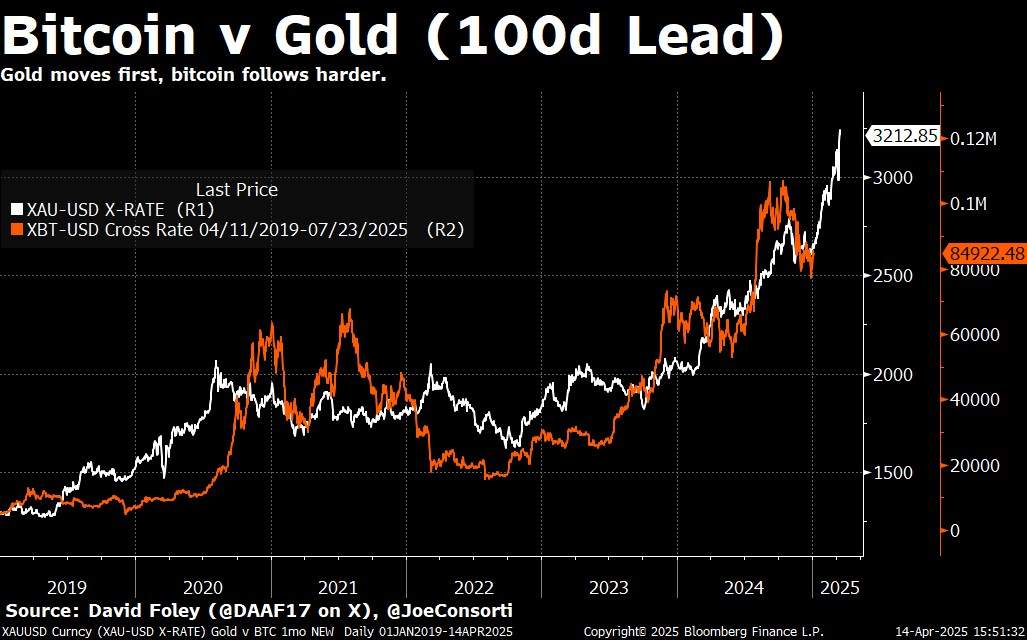
During policy shocks, such as the time when Powell's ouster was threatened, gold typically takes the lead as the “first-mover hedge.” Meanwhile, Bitcoin attracts younger investors who are interested in digital scarcity. This sequential shift from traditional to crypto safe-haven assets is further intensified by Bitcoin's narrative of a “halving-driven supply shock” and the deep-seated institutional acceptance of gold.
Analysis from Geiger Capital highlights a crucial difference between Bitcoin and traditional risk assets. The chart shows that as the dollar depreciates and gold prices rise, Bitcoin's price (represented by the blue line) starts to deviate from tech stock futures (indicated by the red and green bars). This decoupling phenomenon confirms Bitcoin's growing significance as a crisis hedge.
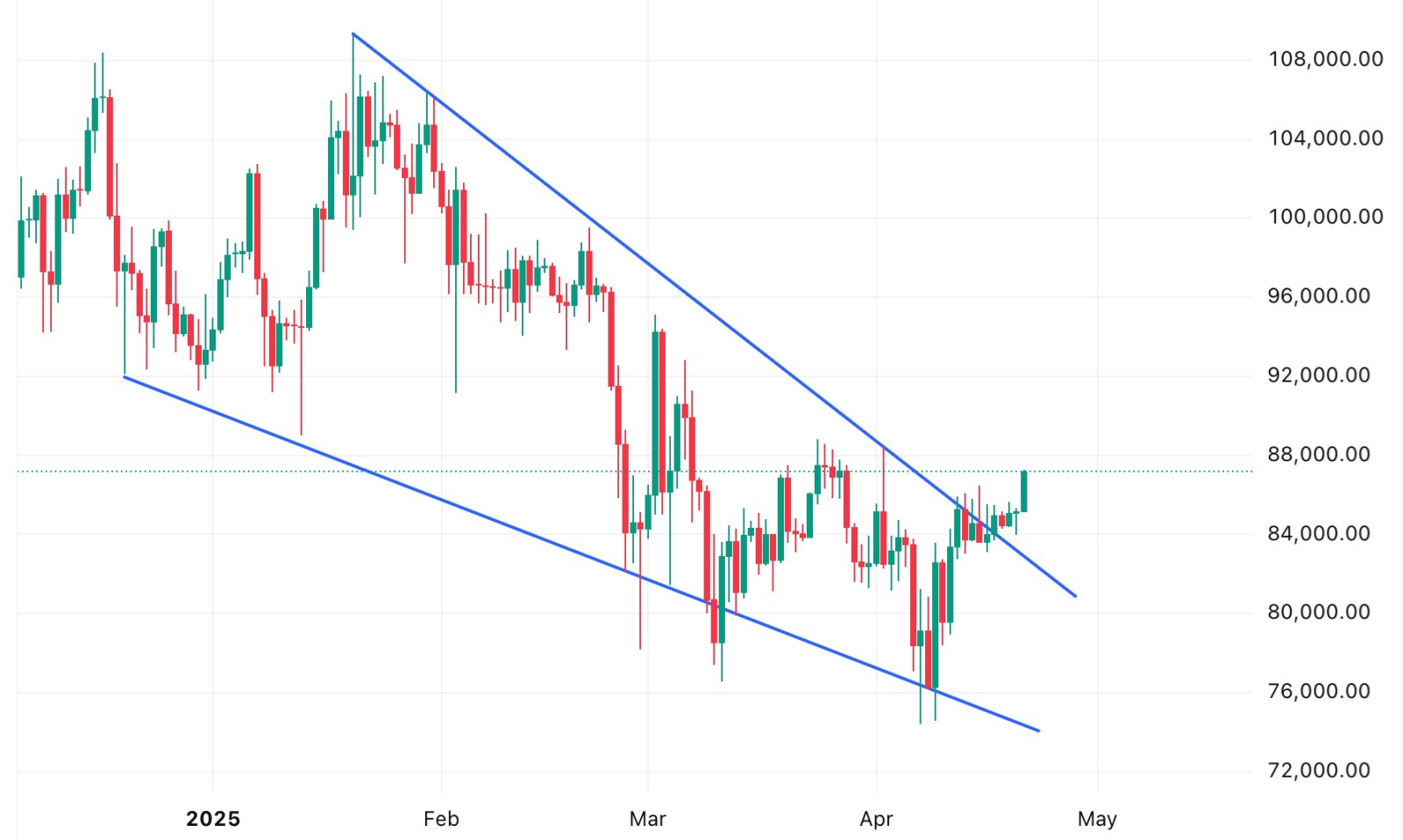
However, key differences exist. Bitcoin's 30-day volatility of 45% is much higher than gold's 12%, showing that crypto is driven by retail investors while gold benefits from institutional support. Adoption also differs: 79 public firms hold 688,000 BTC, while central banks own 17% of mined gold, worth $1.4 trillion. This shows gold's strong place in global finance, while Bitcoin is still developing as “digital gold.” (Source: Moomoo Community)
Top Crypto ETFs to Consider

As the cryptocurrency market gains momentum, crypto-related Exchange-Traded Funds (ETFs) are becoming attractive investment options. They bridge the gap between the innovative world of digital currencies and traditional investment methods. Here, we’ll look at some top crypto ETFs based on the highest trading volume worth considering. (Source: Moomoo Crypto, as of May 9, 2025)
Investors are also showing growing interest in other cryptocurrencies, which, while carrying higher risks and significant fluctuation potential, are often compared to high-risk tech investments. Unlike Bitcoin, which is gaining traction as a store of value similar to gold, other cryptocurrencies offer different investment potentials and volatilities.
iShares Bitcoin Trust (IBIT)
iShares Bitcoin Trust is an exchange-traded fund (ETF) that aims to provide investors with exposure to the price movements of Bitcoin. It allows investors to gain access to the Bitcoin market in a more regulated and tradable format within the traditional investment framework.
2x Bitcoin Strategy ETF (BITX)
The 2x Bitcoin Strategy ETF (BITX) is a leveraged ETF. It seeks to provide twice the daily return of Bitcoin. This means that it can amplify both the gains and losses compared to the actual performance of Bitcoin, making it a more speculative investment vehicle for those who have a strong view on Bitcoin's short-term price movements.
ProShares Bitcoin ETF (BITO)
ProShares Bitcoin ETF is one of the first Bitcoin-related ETFs in the market. It provides investors with a way to invest in Bitcoin's performance without directly holding cryptocurrency. It tracks the price of Bitcoin futures contracts, allowing investors to participate in the Bitcoin market through a more familiar ETF structure.
ProShares Ultra Ethereum ETF (ETHT)
The ProShares Ultra Ethereum ETF is an ETF focused on Ethereum. It aims to provide investors with leveraged exposure to Ethereum's price movements, specifically seeking to deliver twice the daily performance of Ethereum. This offers investors a more aggressive way to gain exposure to the Ethereum market.
Read More: How to Choose the Right ETFs for Your Portfolio Investment in Singapore
Top Gold ETFs to Consider
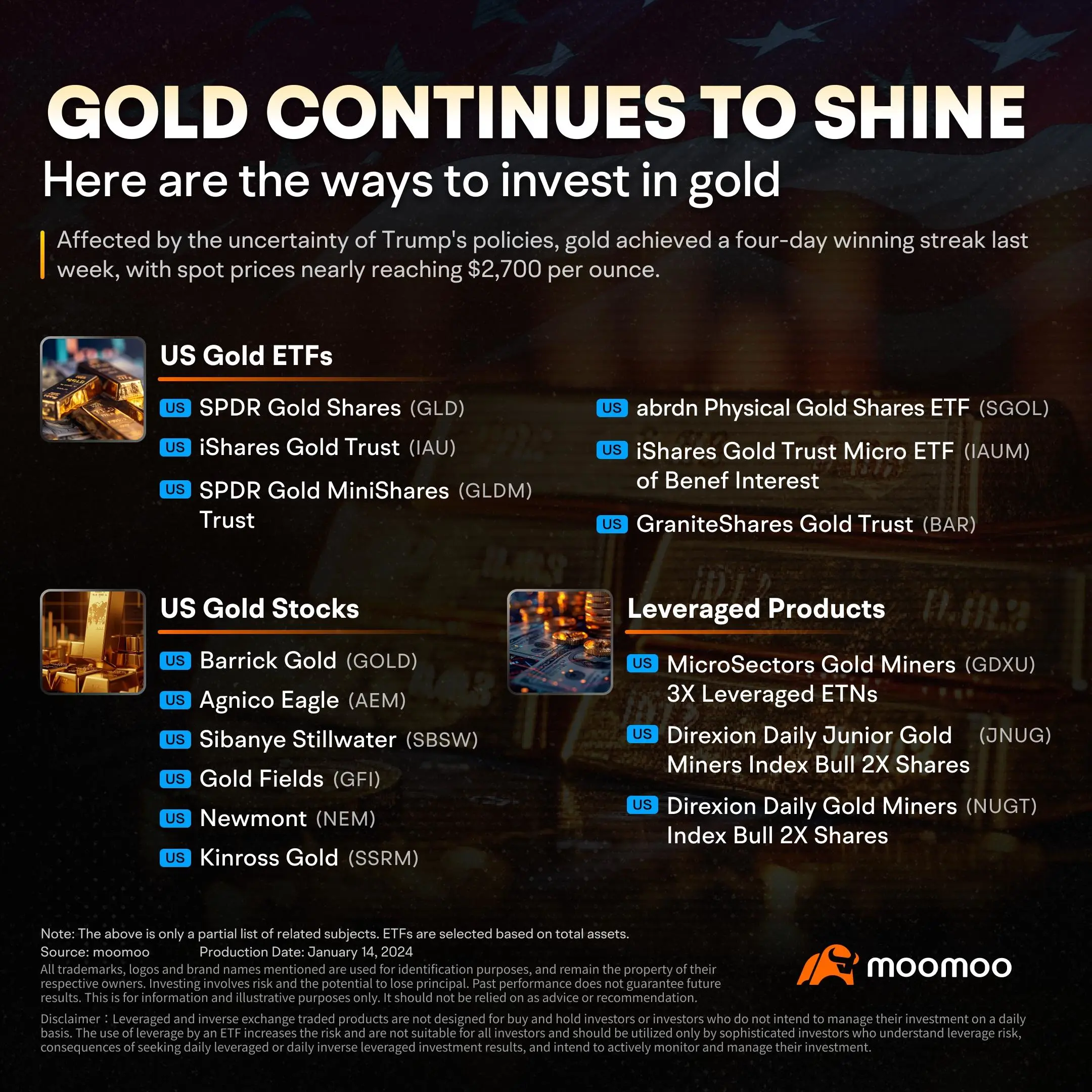
SPDR Gold Shares (GLD)
One of the most prominent gold-backed ETFs. SPDR Gold Shares (GLD) aims to mirror the performance of gold bullion prices. Holding physical gold in custody provides investors with a convenient way to gain exposure to the gold market within the traditional investment framework. The yellow metal serves a dual role as a tangible store of wealth and a consumer good, making it popular in sectors like technology, jewelry, and investment, especially during economic fluctuations.
ABRDN Physical Gold Shares ETF (SGOL)

ABRDN Physical Gold Shares ETF (SGOL) represents physical gold held in secure storage. It offers investors direct exposure to the price movements of gold, enabling participation in the gold market with liquidity and relative ease.
iShares Gold Trust (IAU)
The iShares Gold Trust (IAU) is a popular exchange-traded fund (ETF) that provides investors with a convenient way to gain exposure to the price of gold. Each share of IAU represents a fractional ownership interest in allocated gold bullion, which is held in secure vaults.

iShares Gold Trust Micro ETF (IAUM)
A smaller-scale version of the iShares Gold Trust. iShares Gold Trust Micro ETF (IAUM) provides exposure to gold prices, catering to investors seeking a more accessible entry point, perhaps with lower investment amounts.
SPDR Gold MiniShares Trust (GLDM)
Designed to offer exposure to gold price movements. SPDR Gold MiniShares Trust (GLDM)'s structured to be more cost-effective and accessible for investors, providing a way to engage with the gold market in a more manageable investment size.
GraniteShares Gold Trust (BAR)
GraniteShares Gold Trust (BAR) holds physical gold and is designed to track the value of gold. It gives investors an alternative option to gain exposure to the gold market through an ETF structure. (Source: Moomoo News)
FAQs on Crypto vs. Gold

Will Gold Be Replaced by Crypto?
It's unlikely that gold will be completely replaced by crypto any time soon. Gold has been a store of value for thousands of years, with deep-rooted cultural and economic significance. Crypto, while innovative and growing, still faces challenges in terms of regulatory acceptance, market volatility, and widespread adoption. Therefore, both assets are likely to coexist, serving different investor needs.
Is Gold or Crypto a Better Long-Term Investment?
It depends on risk tolerance. Gold is safer for steady value preservation. Crypto (like Bitcoin) has higher growth potential but comes with volatility and regulatory uncertainties.
Is It Better to Buy Bitcoin or Gold?
Whether it's better to buy Bitcoin or gold depends on your investment strategy and risk appetite. Bitcoin, as the leading cryptocurrency, offers the potential for significant gains but is also highly volatile. Gold, on the other hand, provides a more stable investment with a long history of preserving wealth. Diversifying your portfolio by investing in both assets can help balance risk and return.
Could Bitcoin Surpass Gold?
While Bitcoin has gained significant traction and market value in recent years, it's still too early to say whether it will surpass gold in terms of overall value and acceptance. Gold's status as a global reserve asset and its role in jewelry and industrial applications give it a unique position. Bitcoin, however, continues to evolve and gain mainstream acceptance, and its future value will depend on factors such as regulatory developments, technological advancements, and market demand.
Investing Crypto and Gold ETFs on Moomoo SG
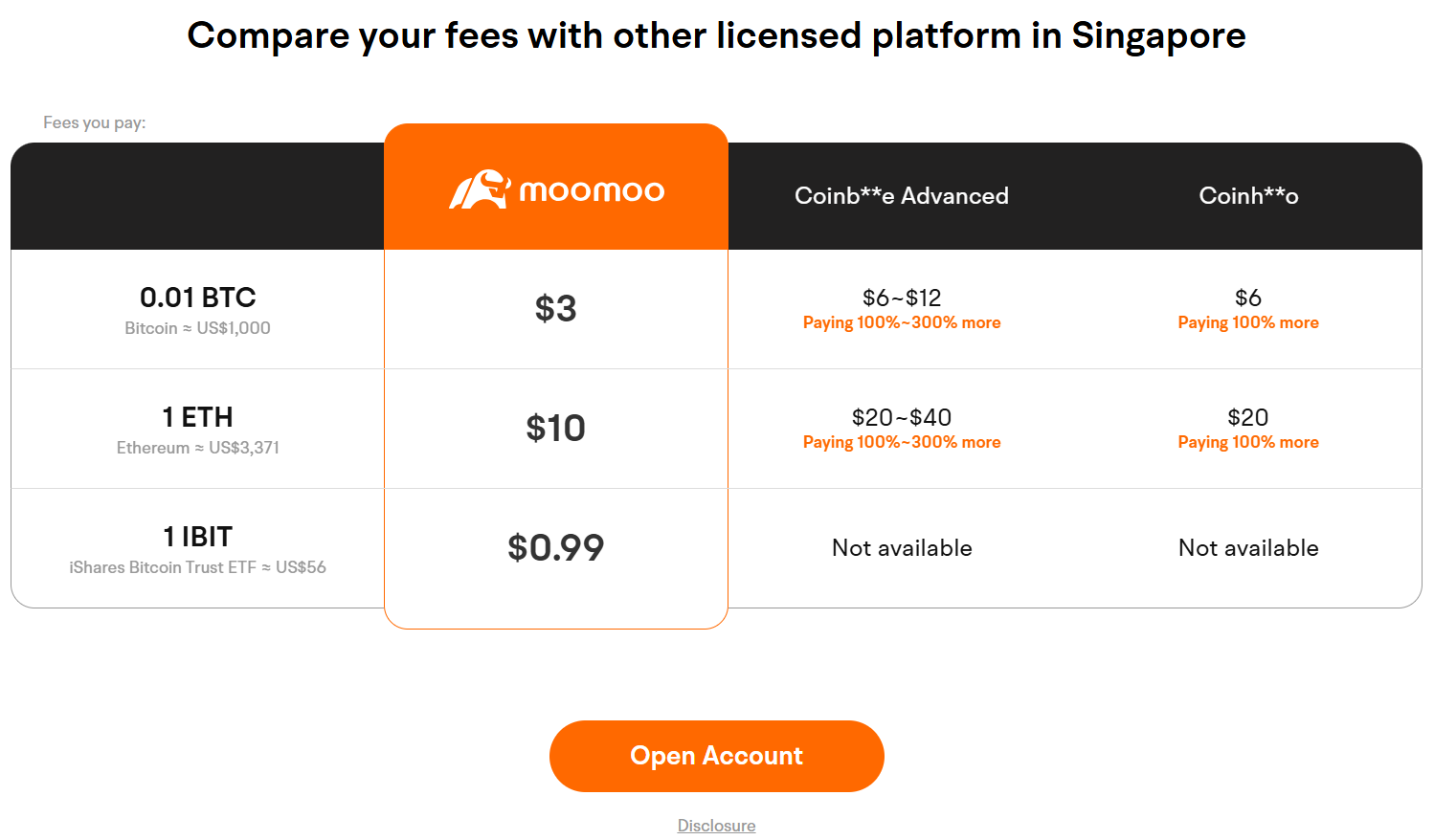
Enjoy 0* commission on all coins, stocks, and ETFs
Investing in Crypto and Gold ETFs on Moomoo SG offers a significant advantage with 0* commission on all transactions involving coins, stocks, and ETFs. This means that investors can buy and sell their preferred assets without incurring additional costs, thereby maximizing their investment returns. The platform's transparent pricing structure ensures that investors can focus on making informed investment decisions rather than worrying about hidden fees or commissions.
Trusted and licensed by MAS
Another key aspect of investing in Crypto and Gold ETFs on Moomoo SG is the platform's trustworthiness and regulatory compliance. Moomoo SG is a trusted and licensed financial services provider, regulated by the MAS (Monetary Authority of Singapore). This regulatory oversight ensures that the platform adheres to strict standards of conduct, safeguarding investors' interests and maintaining market integrity. By choosing Moomoo SG, investors can have peace of mind knowing that their investments are protected by a reputable and regulated institution. This regulatory backing also enhances the credibility of the platform, making it a preferred choice for investors seeking to invest in Crypto and Gold ETFs in a secure and compliant environment.
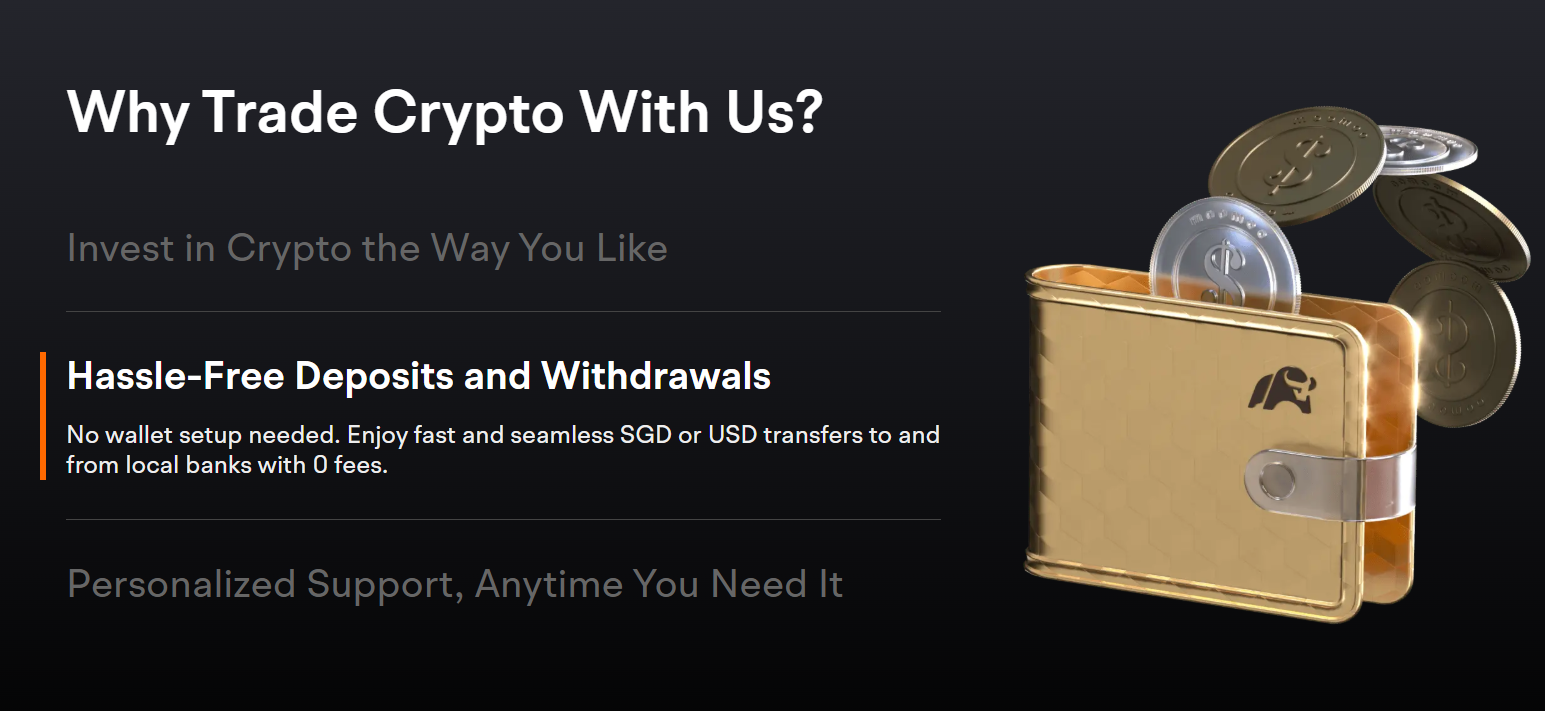
Read More: Moomoo vs. Coinbase vs. Coinhako: Which Crypto Exchange is Best in Singapore?
Conclusion

In conclusion, the choice between investing in crypto and gold is not a straightforward one. Both assets come with their own unique sets of characteristics, risks, and rewards. Crypto, with its innovative blockchain technology and potential for high volatility and returns, appeals to those who are willing to embrace a more speculative and tech-forward investment. Gold, on the other hand, has a long-standing reputation as a store of value, a hedge against inflation, and a reliable asset during times of economic uncertainty.
Investors must carefully assess their own financial goals, risk tolerance, and investment horizon. For those seeking stability and a time-tested asset in their portfolio, gold may be the preferred choice. Conversely, individuals with a higher risk appetite and a long-term belief in the digital revolution may find crypto to be an attractive addition. Ultimately, a well-diversified portfolio might even incorporate both, balancing the potential of new-age digital assets with the steadfastness of a traditional precious metal. As the financial landscape continues to evolve, staying informed and vigilant will be key to making sound investment decisions in either or both of these asset classes.

This presentation is for informational and educational use only and is not a recommendation or endorsement of any particular investment or investment strategy. Investment information provided in this content is general in nature, strictly for illustrative purposes, and may not be appropriate for all investors. Read more