Covered Call
I. Strategy Explained
1) Setup
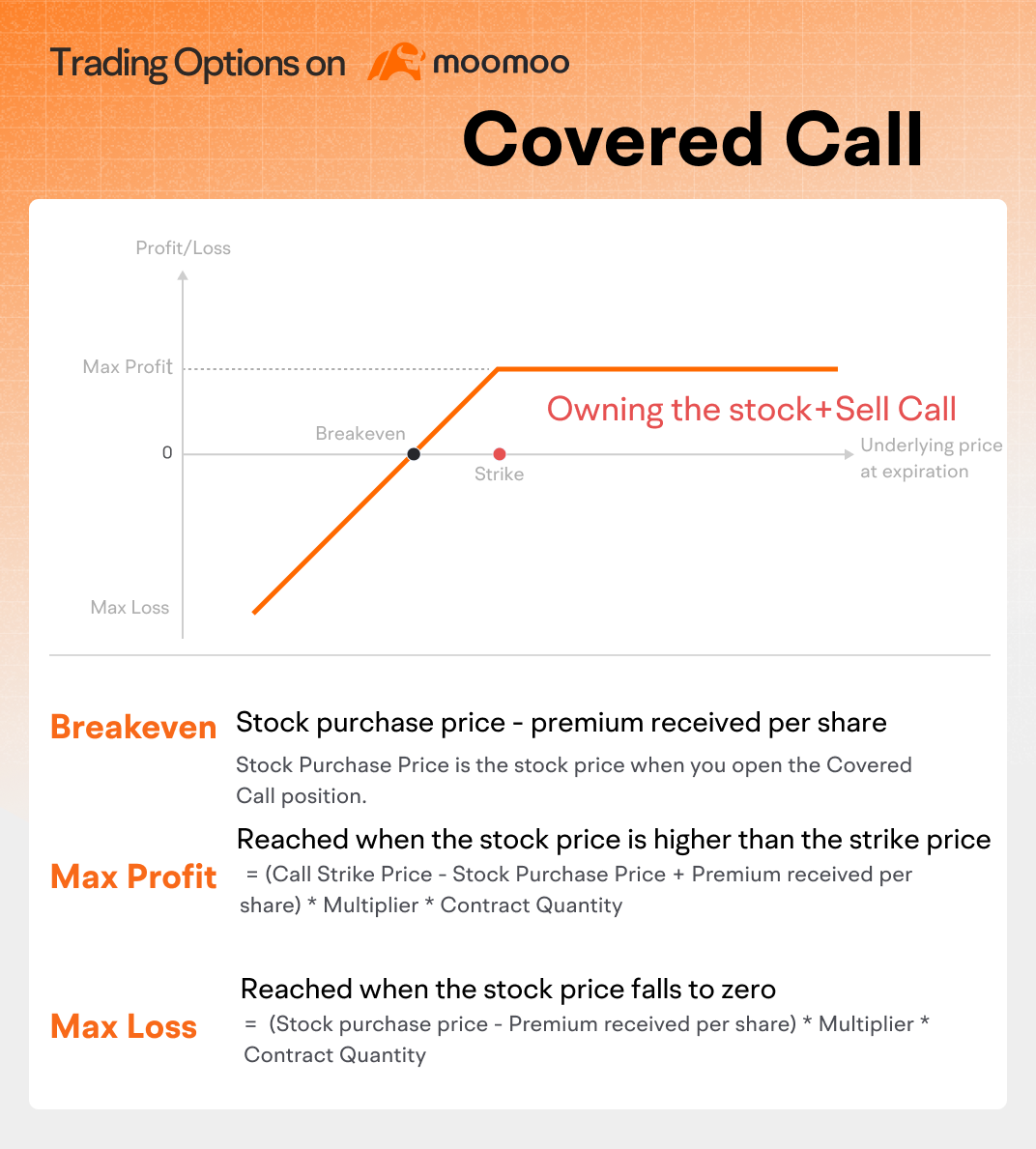
Owning the stock+ Sell Call
Note: The number of shares owned should match the number of call options sold. Because one option contract usually represents 100 shares, you must own at least 100 shares of the underlying stock for a short call.
2) Breakdown
The potential profit from a covered call theoretically comes from two sources: the appreciation of the stock's value and the premium earned from selling the call option.
3) Features of Strategy
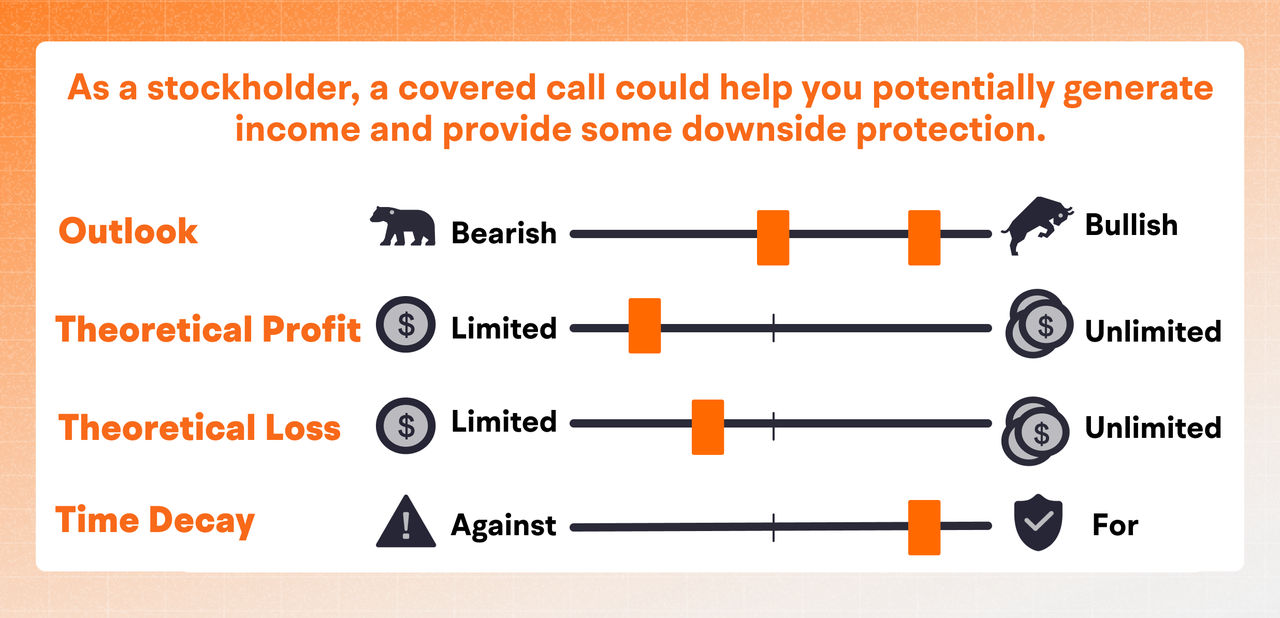
Notes: Although the theoretical loss is limited, it could still be significant if the stock drops precipitously.
Ideal conditions: Low to medium volatility, neutral or bullish stock.
Capped Profit: A covered call has a maximum profit limit. If the stock price rises above the strike price, you might be required to sell your shares. This prevents you from benefiting from any further price increases.
Limited Loss: With a covered call, losses are limited because you own the underlying stock. However, the writer of the option is still exposed to the risk of loss related to holding the underlying stock.
In theory, if the stock goes down to zero, they would have lost their entire investment in the stock except for the small premium income gained from selling the call option.
Time Decay: As an option seller, time decay works in your favor.
II. Case Study
Suppose TUTU is a reliable public company you believe will do well in the long term. However, you think its stock price might not move much in the short term due to market conditions.
As a careful investor mindful of the time cost of holding stocks, you've set up a covered call strategy: you own 100 shares of TUTU and sell one call option, hedging a portion of potential downward losses while earning extra income.
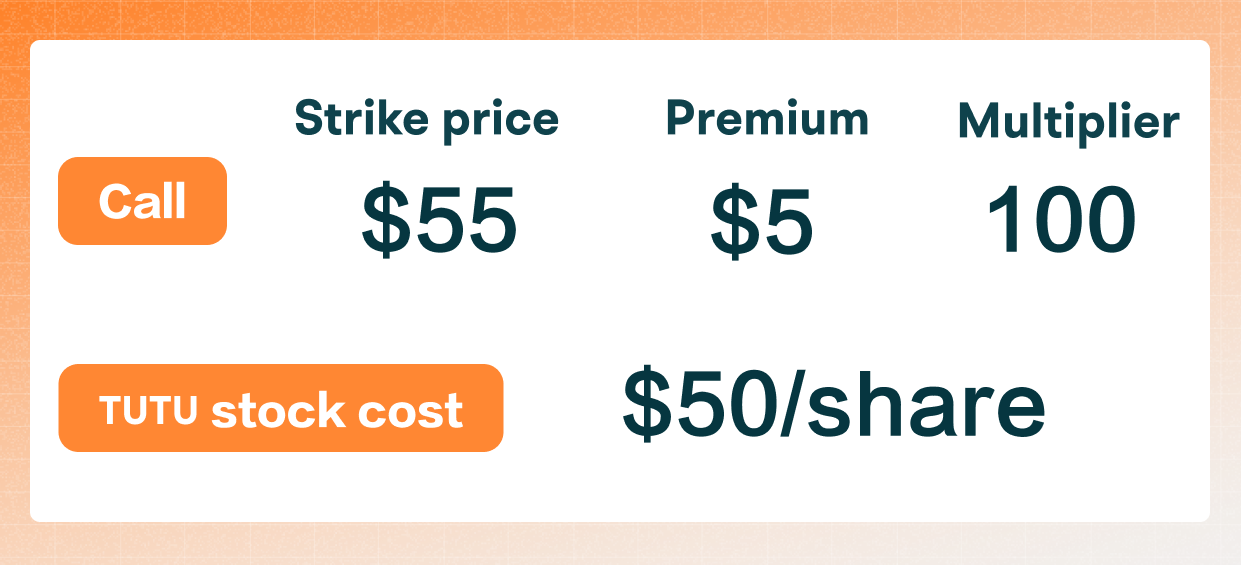
Cost of purchasing TUTU stock: $5,000 ($50 per share).
Premium received from the call option: $500 ($5 per share).
Note: Since you already own the stock, no additional margin is needed when selling the call.
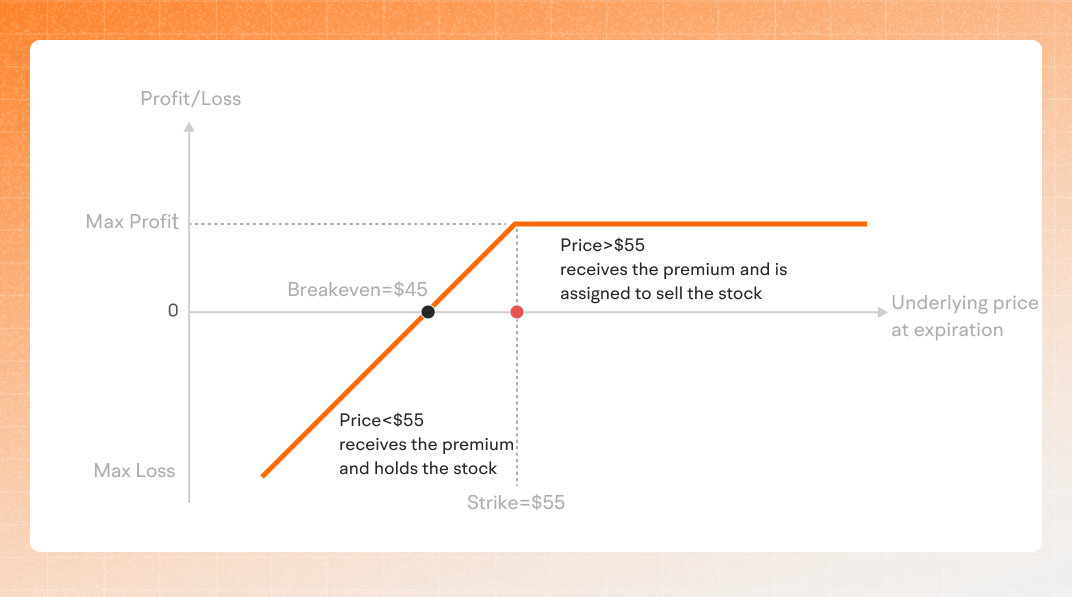
Scenario 1: The stock price rises above the call strike price.
In this case, the option is in-the-money at expiration, and you're likely to be assigned to sell the stock.
You're obligated to sell 100 shares of TUTU for $55.
Your profit consists of two parts: the option premium from selling the call and the profit from the stock sold for a higher price than you bought it.
Maximum Profit:
As the option has been exercised, any further increase in the stock price is irrelevant to the covered call seller.
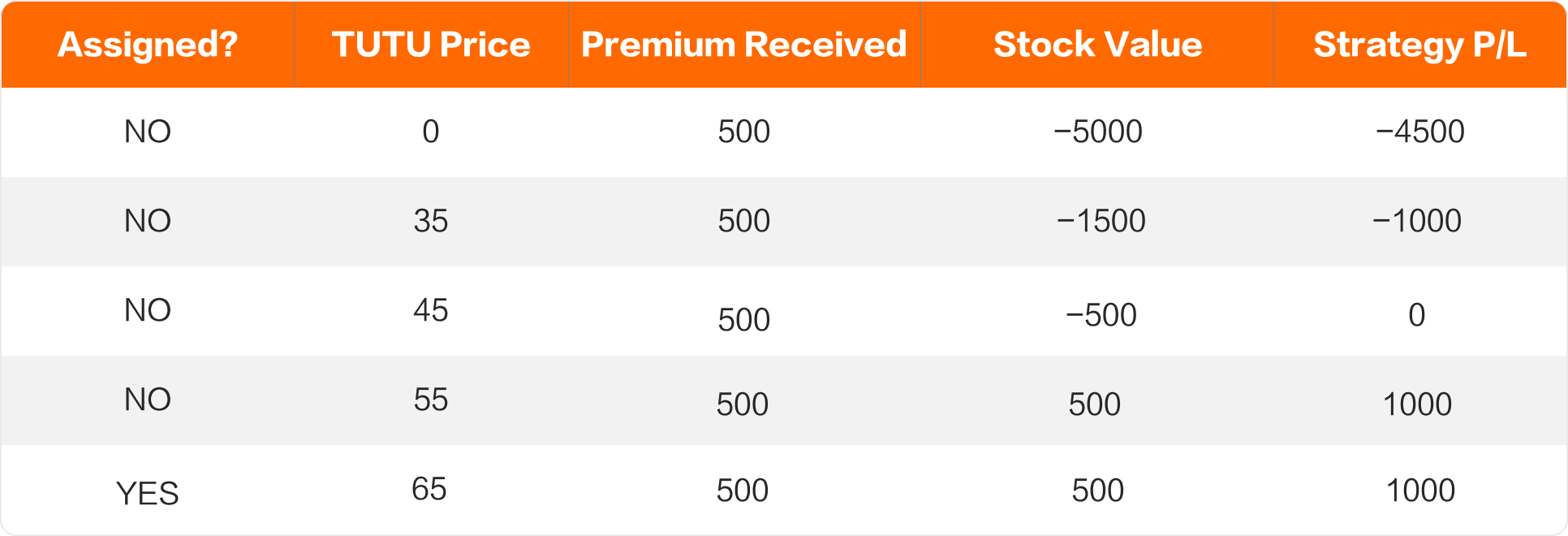
The premium received from the short call is $500, and the income from selling the 100 shares of the underlying stock to satisfy the option assignment is also $500. Therefore, when the stock price is ≥$55, the strategy achieves its maximum profit, which is $1,000.
Scenario 2: The stock price doesn't reach the strike price.
In this case, the option is out-of-the-money, and the buyer is unlikely to exercise it.
Therefore, you're not obligated to sell the TUTU stock.
Your gain or loss is determined by the premium received from selling the call and the change in value in the underlying stock.
The option premium received from the short call can offset part of the potential loss due to a stock price decline.
Breakeven: $50 - $5 = $45.
If TUTU stock price falls below $45, the strategy incurs a loss. This loss would only be a paper loss until the underlying shares were sold.
Maximum Loss:
If TUTU stock reaches $0, the maximum loss occurs, which is $4,500.
III. How to construct a covered call on moomoo
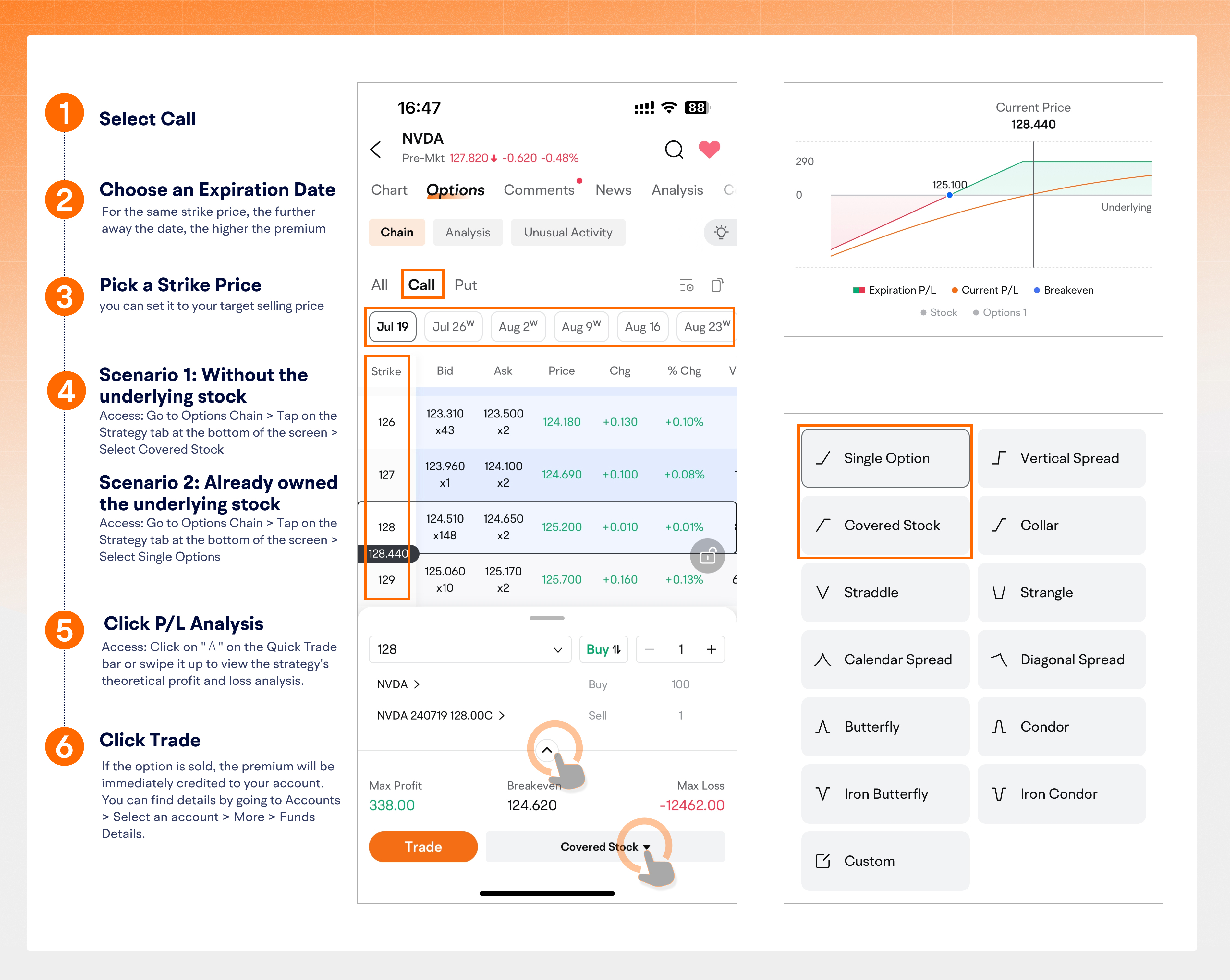
Scenario 1: Without the underlying stock.
Access: Go to Options Chain > Tap on the Strategy tab at the bottom of the screen > Select Covered Stock
The system will then automatically help you buy 100 shares of the underlying stock and sell one Call option, forming a covered call.
Scenario 2: Already own the underlying stock.
Access: Go to Options Chain > Tap on the Strategy tab at the bottom of the screen > Select Single Options and directly sell a call option.
The system will automatically recognize and construct a covered call for you.
IV. Applying the covered call strategy
In the covered call strategy, "owning the underlying stock" is the primary position, while "selling the call" is the supplemental trade. Investors typically use covered calls for three main purposes:
1)Earning extra income
Purpose: Long-term bullish investors can sell calls on the stocks they hold to potentially earn additional income from option premiums.
Analysis:
Covered calls can be similar to "collecting rent" on stocks.
Calls generally chosen are near-term deep out-of-the-money (OTM):
● Near-term: You hope the call option can expire worthless. The time value of near-term options decays more rapidly.
● Deep OTM: Less likely to be exercised, aligning with long-term stock holding goals. Keep in mind on the trade off, the deeper OTM the option is, the less premium you can earn.
If you predict the stock will move sideways or decline slightly, you can sell near-term slightly in-the-money (ITM) or at-the-money (ATM) calls. Though, this increases the probability of assignment and losing your shares.
2)Exiting at a target profit price
Purpose: If you plan to exit at a profit if the stock price reaches a certain level, set this level as the strike price of the call you sell.
Analysis:
● If the stock price hits the strike price, you exit at your target profit and earn additional option premiums.
● If the strike price is not reached, you still collect the premium and continue holding the stock.
3)A limited hedge on risk
Purpose: When buying the underlying stock, selling a call to collect the premium which can help to partially offset loss due to stock price decline.
Analysis:
● Selling the call generates option premium income, effectively lowering the purchase price of the stock.
If the stock price rises, you may profit further.
● If the stock price falls, the premium income reduces some of your loss compared to simply holding the stock.
Covered calls can only provide a limited hedge and does not protect the writer from a significant decline in price of the underlying stock.
V. FAQs
 Q: Do I need to own the stock before constructing a covered call strategy?
A: You don't necessarily need to own it before you can purchase the underlying shares at the same time as selling the call. The number of shares you own should match or exceed the number of calls you sell (using the option contract multiplier).
For example, in the US stock market, one option contract typically equals 100 shares. If you own 500 shares, you can sell up to 5 call contracts as part of a covered call strategy. Selling calls without owning the equivalent shares, known as selling naked calls, carries unlimited risk.
Q: Which stocks should I choose for a covered call strategy?
A: Consider stocks that you are slightly bullish to neutral on that you expect to experience low volatility.
Volatile stocks can result in either significant losses or capped profits. If the stock price falls significantly, the option premium may not cover most of the loss.
Conversely, if the stock price rises significantly, selling a call will limit your profit potential compared to just holding the stock. The covered call strategy is best for long-term investors and not suitable for short-term trading.
Q: If the underlying stock surges and the sold call shows a significant unrealized loss, will I still receive the option premium?
A: Yes, you will still receive the option premium.
If the stock price rises sharply, your account may show an unrealized loss based on the assumption that the option is exercised.
However, this loss is not actualized until the option is exercised. Regardless of whether the option is exercised at expiration, the premium you received from selling the call is yours to keep.
The premium is immediately credited to your account after selling the call. You can review this in your account under 'Funds Details.'
Q: If the underlying stock surges and the sold call shows a significant unrealized loss, what are my options?
A: You have three options:
Let the call expire and be exercised:
This means you will sell the stock at the strike price, capping your profit. Any further rise in the stock price will not benefit you.
Close the position early by buying back the call:
If you don't want to be exercised, you can buy back the same call option before expiration. While this may incur a loss due to the price difference, it allows you to keep your stock without being forced to sell.
Roll the position:
This advanced strategy involves closing the current option (realizing any gains or losses) and opening a new one. You can use a one-click feature to select a new strike price or expiration date, effectively managing your position without selling your stock.

This presentation is for informational and educational use only and is not a recommendation or endorsement of any particular investment or investment strategy. Investment information provided in this content is general in nature, strictly for illustrative purposes, and may not be appropriate for all investors. Read more
Recommend

What is a Long Put?

How to set up a Long Put on moomoo?
Options Earnings Series 2: Option Buying and Selling Strategies for Earnings

Options Earnings Series 3: Exploring Common Two-Legged Option Strategies for Earnings Season
How Short Put Works: Earning Premiums with Options
Options Earnings Series 1: What's Behind the Rise and Fall of Stock Prices After Earnings?
How the Options Market Can Signal When Earnings Events Are Too Risky to Trade
Why Pre-Earnings Volatility Attracts Option Traders
Earnings unlocked: how options might enhance your trading approach
Approaching Post-Earnings IV Crush With Options
A Closer Look at 0DTE Options: Short-Term Trading Explained
Why Stocks Drop After Beating Earnings: 6 Key Reasons Behind the Post-Earnings Slump
Understanding Implied Volatility in Options Trading
The Wheel Strategy: An Income Generating Options Strategy
Never Be Surprised Again: Understand the Eight Common Market Reactions to Earnings
Understanding Witching Days: What Investors and Traders Need to Know
What's next for a Short Put?
How to set up a Short Put on moomoo?
How to Hedge a Market Downturn with Options:Here's what you need to know
A Guide to the Long Put Strategy: Basics You Need to Know
Why Investors May Consider Cash-Secured Puts in a Downturn
Long Call Options Strategy: Definition, Potential Benefits, and Risks
Discovering Protective Puts: A Beginner's Guide
Short Put Options Strategy in Options Trading
What is a Short Put?
What's next for a Long Put?
What should options buyers do if they no longer want to exercise their options?
How can options sellers manage risk?
Essential rules to understand about exercising options
How to set up a Short Call on moomoo
Closing vs. Exercising Options: What's the difference?
How does options buyers exercise their option?
Why did options buyers' exercise request fail?
XSP® Use Cases
What's next for a Short Call?
When should options buyers exercise?
Who are involved in the option exercise process?
What is SPX®
How to set up a Long Call on moomoo?
What is a Short Call?
XSP® vs SPY®
Short Diagonal Bull Put Spread
What's next for a Long Call?
Index Options: An Introduction for Traders
What is a Long Call?
Understanding the Benefits of Index Options
What is XSP®
What Are Index Options and How Do They Work
Dispelling the Myths of Trading Index Options
Long Diagonal Bear Put Spread
Short Diagonal Bear Call Spread
Short Put Butterfly
Long Diagonal Bull Call Spread
Bear Put Spread
Short Call
Short Put Condor
Short Strangle
Bull Put Spread
Long Call Butterfly
Covered Call
Bear Call Spread
Protective Put
Protective Call
Long Collar
Short Call Condor
Long Strangle
Covered Put
Long Call Condor
Long Put Butterfly
Short Iron Condor
Short Call Butterfly
Long Iron Butterfly
Long Put Condor
Short Iron Butterfly
Short Collar
Long Put
Long Straddle
Short Straddle
Bull Call Spread
Cash-Secured Put
Long Iron Condor
Long call
Short Put
What is a Long Put?
How to set up a Long Put on moomoo?
Options Earnings Series 2: Option Buying and Selling Strategies for Earnings
Options Earnings Series 3: Exploring Common Two-Legged Option Strategies for Earnings Season
How Short Put Works: Earning Premiums with Options
Options Earnings Series 1: What's Behind the Rise and Fall of Stock Prices After Earnings?
How the Options Market Can Signal When Earnings Events Are Too Risky to Trade
Why Pre-Earnings Volatility Attracts Option Traders
Earnings unlocked: how options might enhance your trading approach
Approaching Post-Earnings IV Crush With Options
A Closer Look at 0DTE Options: Short-Term Trading Explained
Why Stocks Drop After Beating Earnings: 6 Key Reasons Behind the Post-Earnings Slump
Understanding Implied Volatility in Options Trading
The Wheel Strategy: An Income Generating Options Strategy
Never Be Surprised Again: Understand the Eight Common Market Reactions to Earnings
Understanding Witching Days: What Investors and Traders Need to Know
What's next for a Short Put?
How to set up a Short Put on moomoo?
How to Hedge a Market Downturn with Options:Here's what you need to know
A Guide to the Long Put Strategy: Basics You Need to Know
Why Investors May Consider Cash-Secured Puts in a Downturn
Long Call Options Strategy: Definition, Potential Benefits, and Risks
Discovering Protective Puts: A Beginner's Guide
Short Put Options Strategy in Options Trading
What is a Short Put?
What's next for a Long Put?
What should options buyers do if they no longer want to exercise their options?
How can options sellers manage risk?
Essential rules to understand about exercising options
How to set up a Short Call on moomoo
Closing vs. Exercising Options: What's the difference?
How does options buyers exercise their option?
Why did options buyers' exercise request fail?
XSP® Use Cases
What's next for a Short Call?
When should options buyers exercise?
Who are involved in the option exercise process?
What is SPX®
How to set up a Long Call on moomoo?
What is a Short Call?
XSP® vs SPY®
Short Diagonal Bull Put Spread
What's next for a Long Call?
Index Options: An Introduction for Traders
What is a Long Call?
Understanding the Benefits of Index Options
What is XSP®
What Are Index Options and How Do They Work
Dispelling the Myths of Trading Index Options
Long Diagonal Bear Put Spread
Short Diagonal Bear Call Spread
Short Put Butterfly
Long Diagonal Bull Call Spread
Bear Put Spread
Short Call
Short Put Condor
Short Strangle
Bull Put Spread
Long Call Butterfly
Covered Call
Bear Call Spread
Protective Put
Protective Call
Long Collar
Short Call Condor
Long Strangle
Covered Put
Long Call Condor
Long Put Butterfly
Short Iron Condor
Short Call Butterfly
Long Iron Butterfly
Long Put Condor
Short Iron Butterfly
Short Collar
Long Put
Long Straddle
Short Straddle
Bull Call Spread
Cash-Secured Put
Long Iron Condor
Long call
Short Put