Thematic funds: boosting potential returns on your portfolio
Key Takeaways:
● Thematic funds are suitable for investors who are familiar with a theme or sector, and willing to tolerate high volatility for high potential returns.
● Typically, thematic funds can invest in multiple sectors, while sector funds only invest in a particular sector.
● When building a portfolio, using thematic funds to replace some stocks is a common approach involving relatively low risks.
● Risks of thematic funds include high volatility, hype, and low liquidity.
Believe in an industry's prospects, but don't have time to do in-depth research to pick a stock? Unsatisfied with the returns on cash management, and would like to take on more volatility risks for higher potential returns?
Thematic investing increases investors' exposure to megatrends in various ways. It focuses on predicted long-term trends and helps investors gain benefits from structural shifts that can change an entire industry. Investing in thematic funds is one of the common ways.
Similarities and differences between thematic funds and sector funds
Typically, like sector funds, thematic funds could invest in companies in specific sectors of the economy, such as healthcare, energy, or information technology. However thematic funds can invest in multiple sectors to align with a particular investing objective. For example, a pension-themed fund may cover multiple industries, such as healthcare and consumer goods. But for healthcare funds, they generally only pick companies in this sector.
Global Industry Classification Standard sets [1] out 11 major sectors:
Communication services, consumer discretionary, consumer staples, energy, financials, health care, industrials, information technology, materials, real estate, and utilities.
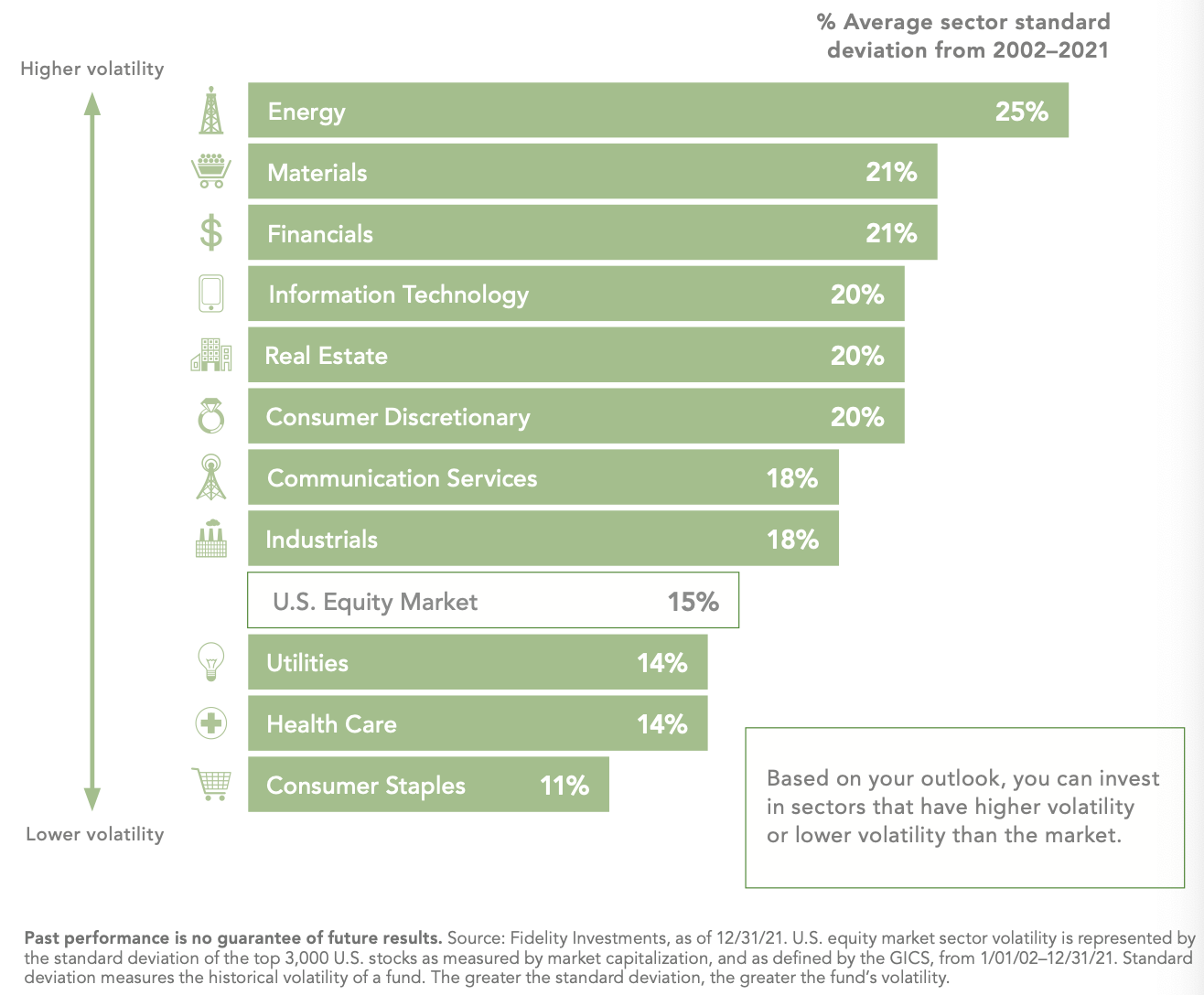
According to Fidelity [2], different industries had different levels of volatility compared to the market average. From January 1, 2002, to December 31, 2021, suppose the US equity market volatility averaged 15%, the energy sector was the most volatile, while the consumer staples sector was the least, suggesting that the energy sector was more economically sensitive than the consumer essentials sector.
And a sector's performance varies as the economy rotates into different phases. For example, the consumer, health care, and utility sectors may perform better in a recession relative to other sectors.
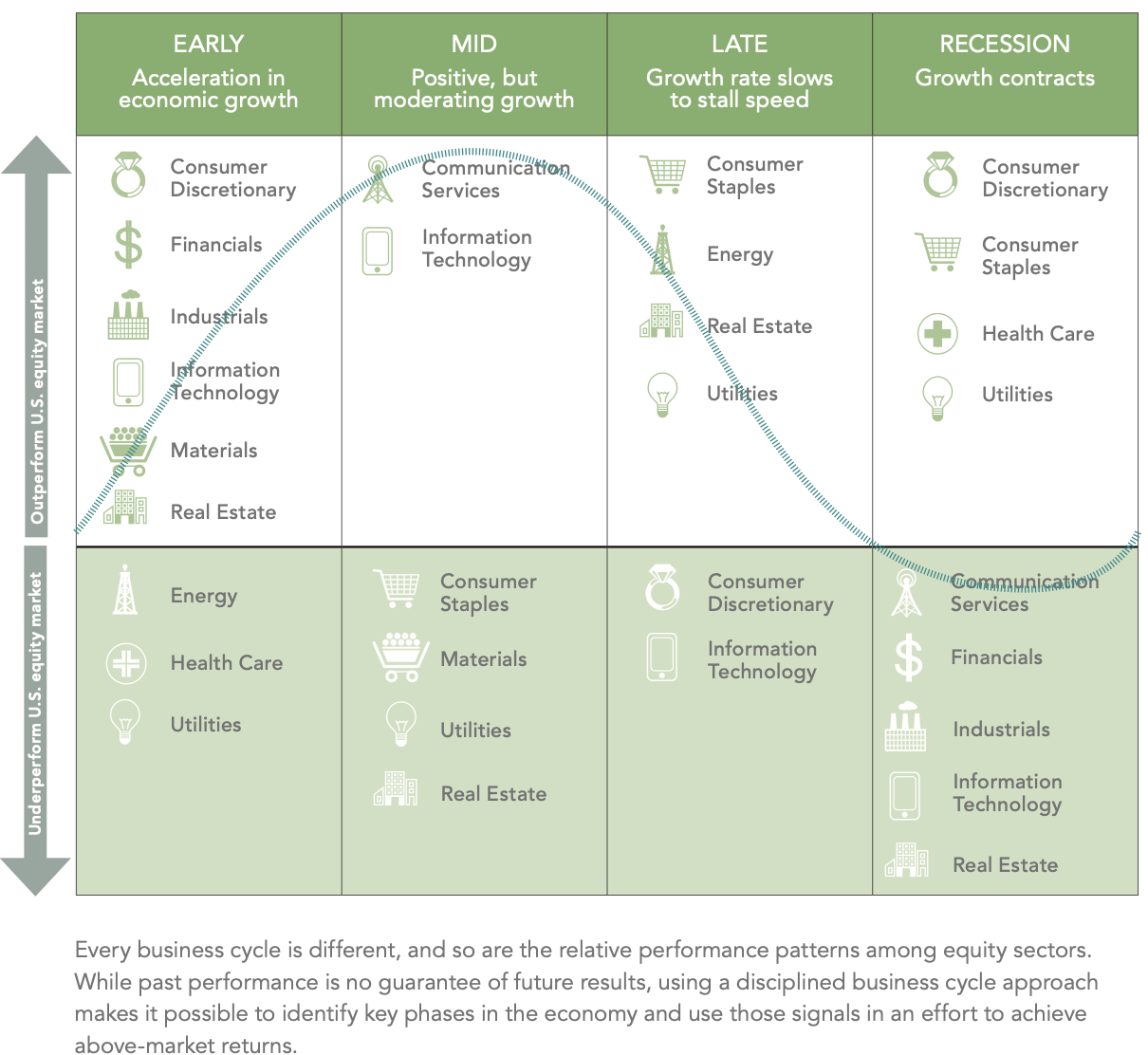
Investors who are interested in thematic investing or even sector investing need to understand economic cycles and choose funds based on their risk tolerance.
What role do thematic funds play in portfolios?
According to BlackRock [3], there are three primary ways investors can construct a portfolio using thematic funds.
1. Core-satellite. A core portfolio of traditional diversified stock and bond funds makes up the bulk of the portfolio, while thematic funds, like "satellite", are primarily invested in the equities side of the portfolio along with the core portfolio.
2. Replace part of the equity exposure with thematic strategies. Investors can consider replacing some or all of global equity exposure with thematic exposure. BlackRock believes this approach is best suited for investors who construct their portfolios geographically.
3. Make thematics the core. It allows investors to tailor their long-term strategic allocation to what matters most to them. It is best suited for investors who truly believe in long-term structural trends.
What are the risks?
Despite the appeal of thematic funds to enhance potential investment returns, investors should also be aware of their risks [4].
Trend shifts and volatility: Thematic funds, especially those focusing on highly sought-after and economically sensitive themes, can be volatile when the trend changes and investors flock to exit.
Hype risk: Some funds may chase after hot themes, but they are just sales gimmicks. In addition, certain stocks picked may not match the theme.
Liquidity risk: Some particularly niche thematic funds may have very low liquidity, either because few investors are interested in these themes, or because the component stocks are not actively traded.
[1] Global Industry Classification Standard, 2018.
[2] Fidelity, Investing in Equities with Sectors, 2022.
[3] BlackRock, Making the most of thematic funds, January 2021.
[4] Morningstar, Are Thematic Funds Worthy of the Hype or a Risky Distraction? January 2021.
This presentation is for informational and educational use only and is not a recommendation or endorsement of any particular investment or investment strategy. Investment information provided in this content is general in nature, strictly for illustrative purposes, and may not be appropriate for all investors. Read more