Crypto Mining Guide: How it Affects Prices
Key Takeaways
Learn how crypto mining works and why it remains a crucial part of blockchain infrastructure.
Discover the risks, costs, and requirements to get started with mining cryptocurrencies like Bitcoin.
Explore Bitcoin mining stocks as lower-risk alternatives with $0 commission trading* on Moomoo SG.
Learn how crypto mining works and why it remains a crucial part of blockchain infrastructure.
Discover the risks, costs, and requirements to get started with mining cryptocurrencies like Bitcoin.
Explore Bitcoin mining stocks as lower-risk alternatives with $0 commission trading* on Moomoo SG.

What is Crypto Mining?
Crypto mining is the process of validating transactions and securing blockchain networks by solving complex cryptographic puzzles. In return, miners are rewarded with newly created coins like Bitcoin as compensation. It plays a key role in Proof of Work (PoW) systems like Bitcoin.
History of Crypto Mining
Crypto mining began in 2009 with Bitcoin, where individual enthusiasts mined using personal laptops. Early miners earned 50 BTC per block, a lucrative reward during Bitcoin’s infancy. As competition grew, miners shifted to high-powered graphics processing units (GPUs), and eventually to specialized hardware known as Application-Specific Integrated Circuits (ASICs). By 2025, mining has become a professionalized industry, with large-scale operations dominating due to increased computational requirements and halving events, like the 2024 Bitcoin halving, which reduced block rewards to 3.125 BTC.
Crypto Mining Benchmark
In the crypto world, hash rate is the primary benchmark. It represents the computing power used to mine and process transactions. A higher hash rate indicates a more secure and competitive network, particularly in Bitcoin mining.

How Does Crypto Mining Work?
Mining involves verifying crypto transactions and grouping them into blocks. Miners compete to solve a mathematical puzzle first, known as Proof-of-Work (PoW), to add a block of transactions to the blockchain. Once solved, the block is added to the blockchain, and the miner receives a block reward, often in Bitcoin or the mined token. This incentivizes network security and decentralization.
The first miner to solve the puzzle earns a block reward and transaction fees. For Bitcoin, this requires powerful Application-Specific Integrated Circuits (ASICs) to perform billions of calculations per second. Miners join pools to combine computational power, increasing the likelihood of earning consistent rewards. The process is energy-intensive, requiring stable infrastructure and significant electricity.
How Crypto Mining Affects Crypto Prices?
Crypto mining can influence cryptocurrency prices in several ways:
Token Supply: Mining creates new coins. If the rate of new coin creation slows down—like during a Bitcoin Halving event, it reduces supply, which can push prices higher due to increased scarcity.
Mining Activity: A high level of mining can show strong network security, but if too many coins are mined and demand doesn’t keep up, prices may fall due to oversupply.
Mining Difficulty: As more miners compete, mining becomes harder. Higher difficulty means fewer new coins are created, potentially reducing supply and driving prices up.
Mining Costs: When electricity and equipment costs rise, miners need to sell at higher prices to break even. This sets a price floor—prices often don’t fall below production cost for long, and will eventually increase.

Is Crypto Mining legal in Singapore?
Crypto mining is not specifically regulated in Singapore. However, if miners conduct activities that fall under the Payment Services Act—such as transmitting or exchanging digital payment tokens—they may be subject to licensing requirements by the Monetary Authority of Singapore (MAS).
While the government supports blockchain innovation, the government does not incentivise mining due to energy limitations when high electricity costs and environmental concerns can make large-scale mining less viable.
Why Mine Crypto in Singapore?
Bitcoin mining in Singapore is challenging due to high electricity costs, averaging $0.26/kWh, compared to regions like Paraguay with rates as low as $0.028/kWh. Although electricity costs are high in Singapore, some still choose to mine Bitcoin in a small scale or contribute via mining pools, which is more practical than solo mining. As a crypto hub with a strong regulatory framework and digital asset awareness, Singapore provides stable conditions for crypto-related businesses or investors.

Is Bitcoin Mining Profitable?
Bitcoin mining profitability depends on 3 factors:
Electricity rates
Hardware efficiency (ASICs vs GPUs)
Bitcoin's price and mining difficulty to justify the mining cost
With a modern ASIC like the Antminer S21 (390 TH/s, 7,215 watts), profitability requires electricity rates below $0.05/kWh, which is difficult to achieve in Singapore. The 2024 Bitcoin halving reduced block rewards to 3.125 BTC, meaning miners need Bitcoin prices above $45,000 to break even, assuming efficient setups and low-cost energy. Mining pools can help, but home miners often struggle to cover costs. Therefore, bitcoin mining profitability is low in Singapore, but indirect exposure through mining stocks or cloud mining remains attractive. When engaging in bitcoin trading in Singapore, prudence is essential amid market volatility
What Do You Need to Start Mining Crypto?
Starting crypto mining requires specialized equipment, software, and a strategy to manage costs and risks. Here’s what you need:
Mining Hardware
Mining requires powerful machines:
ASICs (such as the Bitmain Antminer S21 with high hash rate and efficiency for Bitcoin)
GPUs (for altcoins like Ethereum Classic or Monero)
Cooling systems and power supplies are essential for heat and performance control.
Mining Pools
Mining pools combine computational power to increase reward chances, splitting profits based on contributed hash rate. Popular pools like F2Pool and Antpool charge 1–3% fees. They offer stable payouts via models like Pay-Per-Share (PPS) or Pay-Per-Last-N-Shares (PPLNS), making them essential for small-scale miners. Instead of mining solo, many join mining pools—groups that share computational power and split rewards, offering more stable returns.
What Does It Cost to Mine Cryptocurrencies?
Mining costs for cryptocurrencies include:
Electricity: The largest expense, often 60–75% of total costs. At SGD 0.35/kWh in Singapore, running a 7,215-watt ASIC 24/7 costs an estimated SGD 2,025/month.
Mining Systems:
ASICs range from SGD 2,700–SGD 20,250, with GPUs for altcoins costing an estimated SGD 675–SGD 2,295 each.
Maintenance cost (e.g., cooling, part replacements) adds an estimated SGD 135–SGD 675 annually.
Network Infrastructure: Stable, high-speed internet and cooling systems (e.g., immersion cooling) are critical to avoid downtime, costing an estimated SGD 675–SGD 2,700 for home setups.
Risks of Crypto Mining in 2025
Crypto mining comes with its own risks and challenges, for instance:
Low Mining Success Rate: High network difficulty reduces solo miners’ chances of earning rewards. For example, a single ASIC with 68 TH/s has a 1 in 1.47 million chance of mining a Bitcoin block.
Block Validation Efficiency Limits: Outdated hardware can reduce efficiency and rising network hash rates (e.g., 197 EH/s for FoundryUSA) require continuous hardware upgrades to stay competitive.
High Resource Consumption: Mining consumes significant electricity, rising hardware maintenance and operational costs and environmental concerns. Inefficient cooling can also shorten hardware lifespan.
Effective risk management for crypto trading requires a structured approach to volatility, regulatory changes, and security threats.
Exploring Bitcoin Mining Stocks for Beginners
For those wary of mining’s high risks and costs, Bitcoin mining stocks offer indirect exposure to the crypto market. These companies operate large-scale mining facilities, leveraging economies of scale. These Bitcoin mining stocks are listed in U.S. Exchanges, and they are available to be invested with $0 commission* via Moomoo SG.
Hut 8 (NASDAQ: HUT)
Hut 8 (HUT) is a Canadian-based miner with operations in North America, focusing on Bitcoin mining and high-performance computing. As one of North America’s largest digital asset miners, Hut 8 runs high-efficiency operations focused on sustainable energy and holds a significant portion of mined BTC as reserves.
MARA Holdings (NASDAQ: MARA)
MARA Holdings (MARA) is a leading U.S.-based Bitcoin mining company. In May 2025, it produced 950 BTC, setting a record with 282 blocks mined. The company operates large-scale mining data centers and boasts one of the highest BTC outputs per megawatt in the United States. MARA continues to focus on scaling its operations and improving mining efficiency through advanced infrastructure and strategic growth.
Clean Spark (NASDAQ: CLSK)
CleanSpark (CLSK) emphasizes sustainable mining, using renewable energy in Georgia and Texas. Operating over 21 EH/s, it prioritizes a carbon-neutral mining strategy and expansion into renewable-powered mining farms, making it attractive for investors seeking environmentally conscious miners and ESG investors.

FAQs on Crypto Mining
Is Bitcoin mining illegal in Singapore?
No, Bitcoin mining is not illegal in Singapore. There are no specific laws banning mining right now. However, if you make a profit from mining, you may need to pay income tax.
Also, if your company allows cryptocurrency trading and provides digital payment services, you will need a license under the Payment Services Act.
Keep in mind, electricity is expensive in Singapore, so large-scale mining might not be profitable. In some cases, if the mining involves certain types of tokens, it could be considered a regulated financial activity under Singapore’s Securities and Futures Act 2001 (“SFA”)
How long will it take to mine 1 Bitcoin?
Mining one Bitcoin depends on the hash rate, network difficulty, and pool participation. As of 2025, mining 1 BTC solo could take years, depending on hardware, hash rate, and network difficulty. Most individuals rely on mining pools or stock investments for better ROI, since mining pools offer smaller, regular payouts, but earning 1 BTC could still take months.
Does Bitcoin mining actually pay?
Yes, but only if electricity is cheap and mining equipment is efficient. ROI also depends heavily on Bitcoin’s market price and mining rewards at the time. In Singapore, high costs make profitability challenging unless Bitcoin prices surge significantly.
Crypto Trading with Moomoo SG in Singapore

With $0 commission on crypto trading*, Moomoo SG offers a trusted way to gain crypto exposure. Features include:
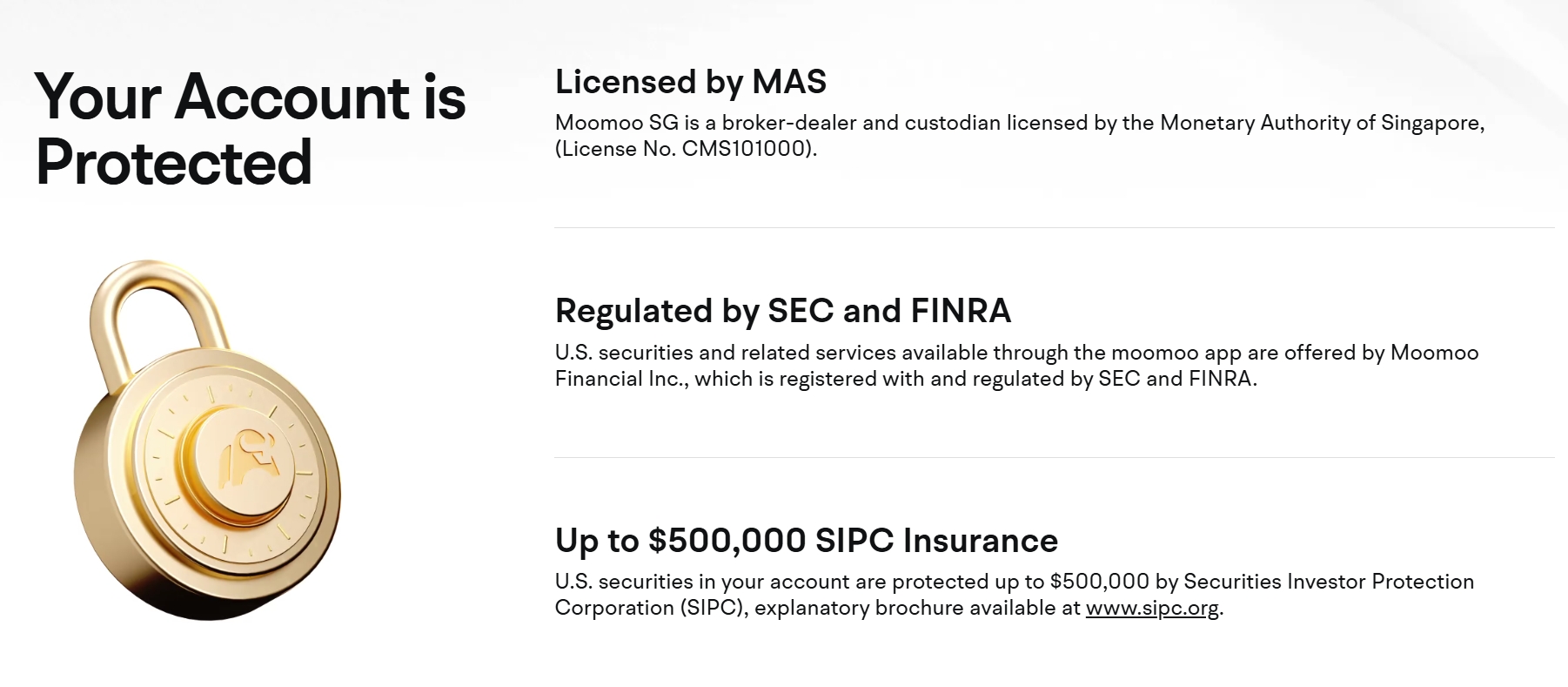
✅ MAS-regulated platform
✅ All-in-one crypto, stock, ETF trading
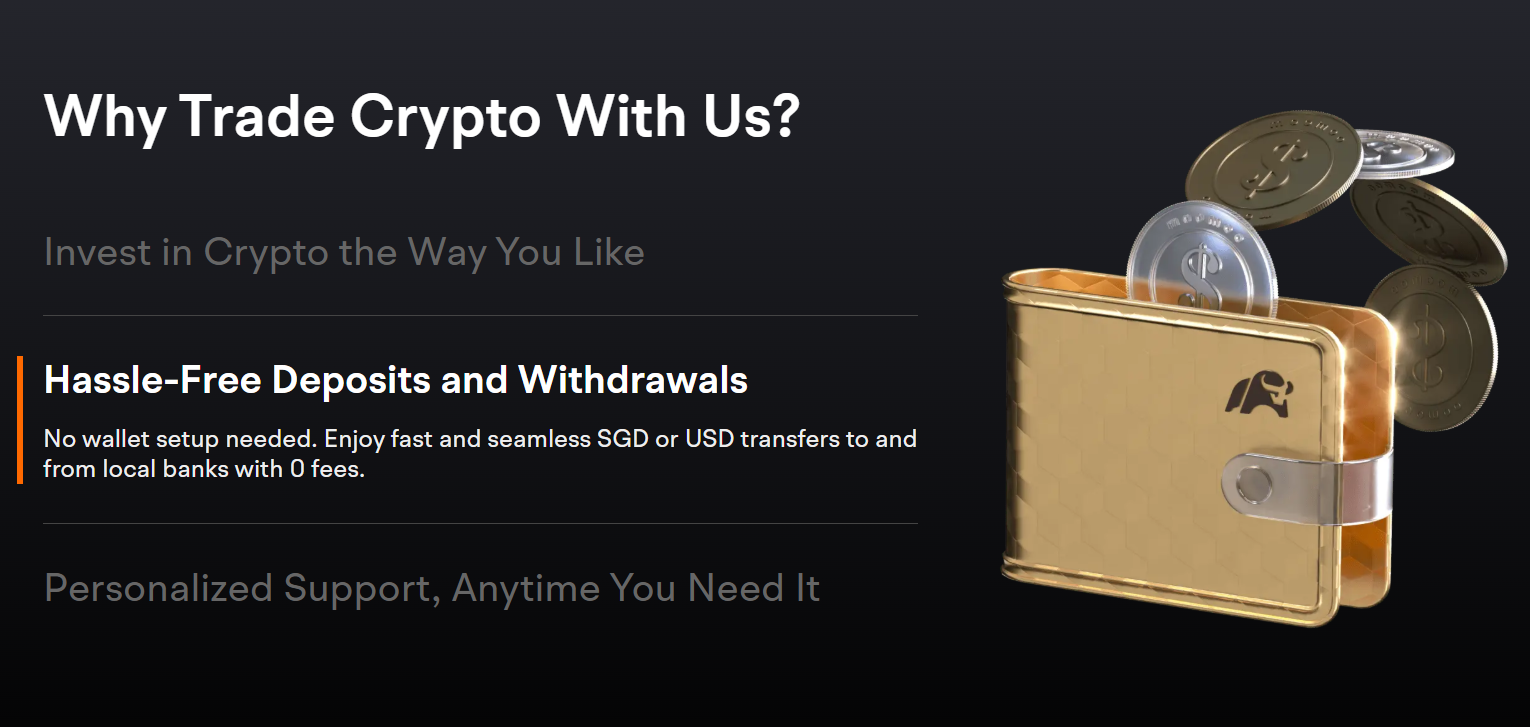
✅ 24/5 customer service support (24 hours on weekdays, 12 hours on weekends)
✅ Easy deposits and withdrawals in SGD/USD
Conclusion
Crypto mining plays a vital role in the blockchain ecosystem but comes with high upfront costs and risks in 2025, especially in Singapore, where high electricity costs and regulatory requirements limit profitability. While Bitcoin mining offers potential rewards, it requires significant investment in hardware, energy, and infrastructure. While mining directly may not suit everyone, investing in crypto mining stocks or trading cryptocurrencies via Moomoo SG can offer a simpler, more practical, and more regulated access to the crypto economy. Start your journey today with a platform built for the next generation of crypto investors.
*Disclosure
Terms and conditions and other fees apply. Cryptocurrency trading is highly volatile and risky. Investing in crypto ETF, futures, spot crypto, stocks comes with its own set of risks. Full disclaimers at www.moomoo.com/sg/support/topic5_510. This advertisement has not been reviewed by the Monetary Authority of Singapore.
This presentation is for informational and educational use only and is not a recommendation or endorsement of any particular investment or investment strategy. Investment information provided in this content is general in nature, strictly for illustrative purposes, and may not be appropriate for all investors. Read more