Time
Your Entry

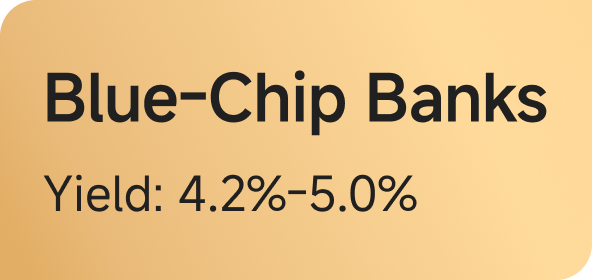
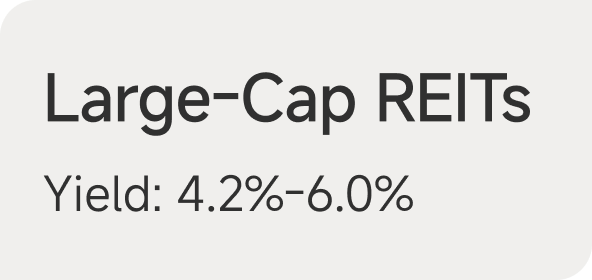
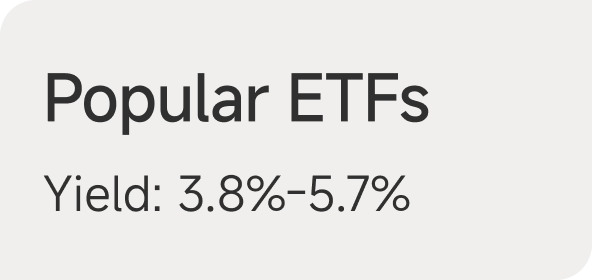

*Source: moomoo, as of 9 Nov 2026. Top 3 Singapore banks and S-REITs ranked by market cap; top 3 Singapore equity high-dividend ETFs ranked by AUM. Yield ranges reflect the 2025 dividend yields of featured securities in each category.
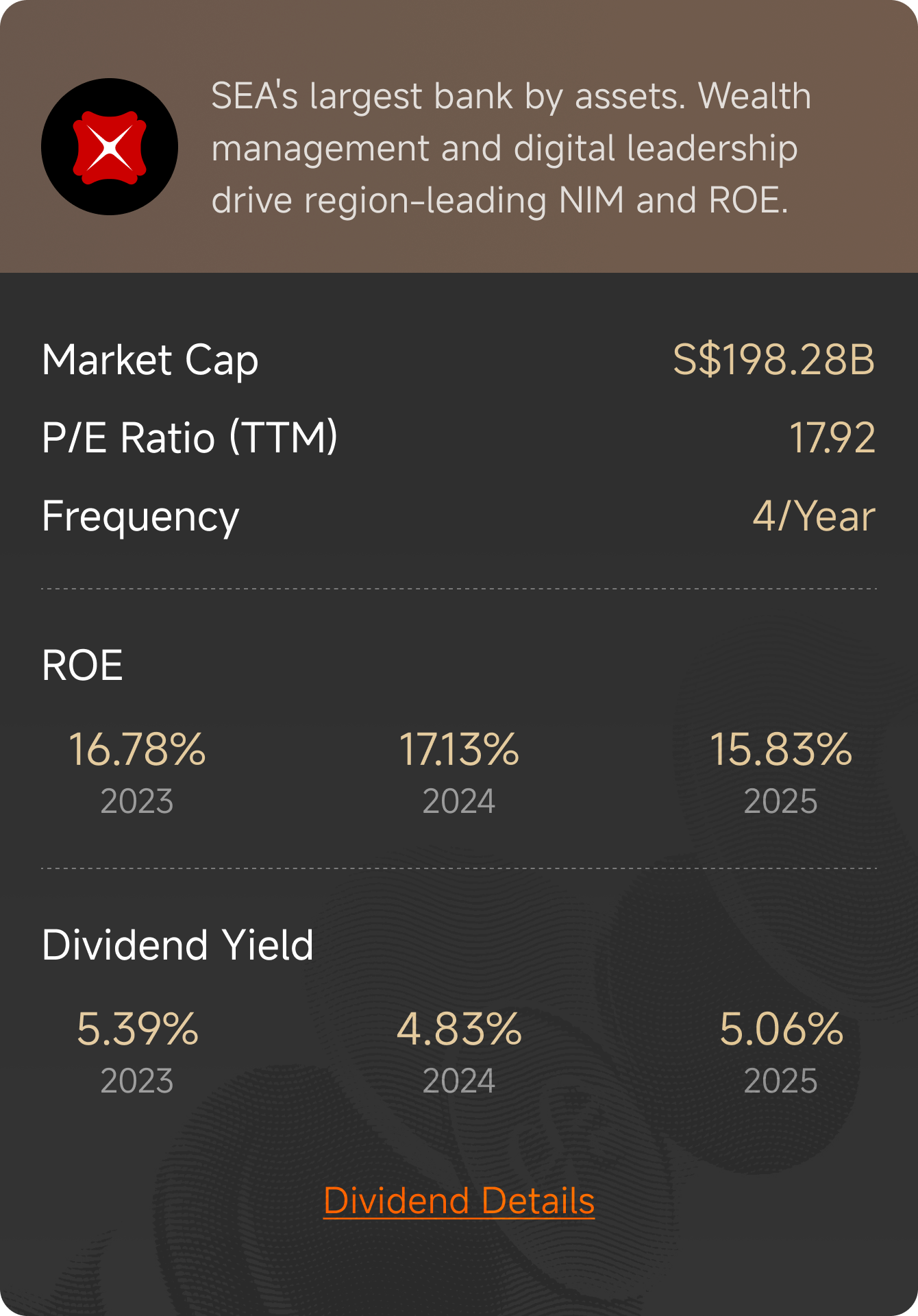
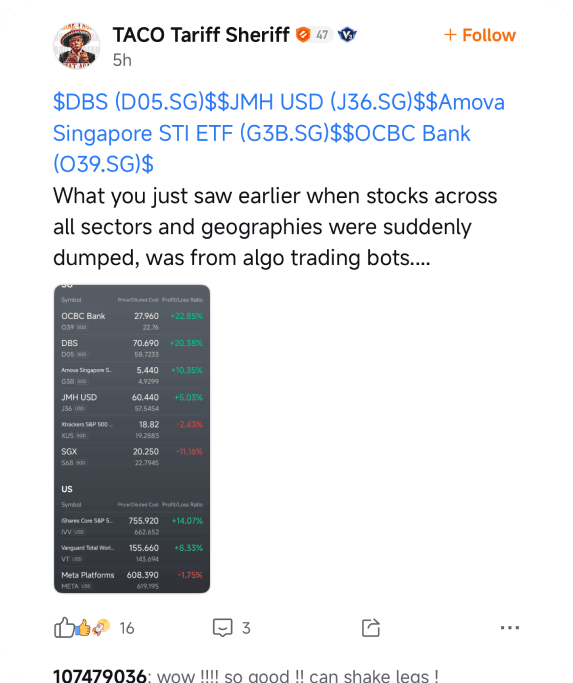
DBS (D05)
--%
1Y %CHG
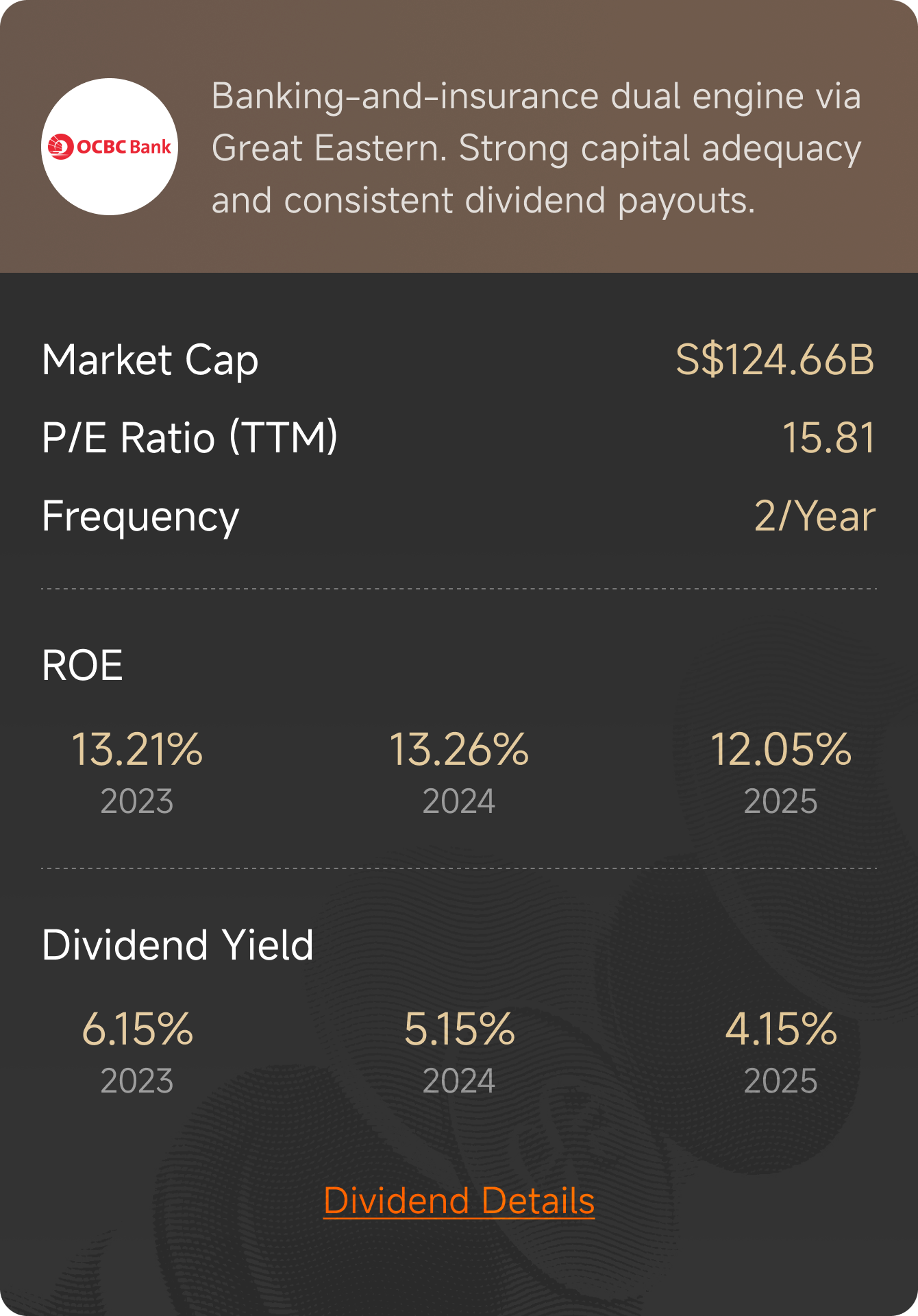
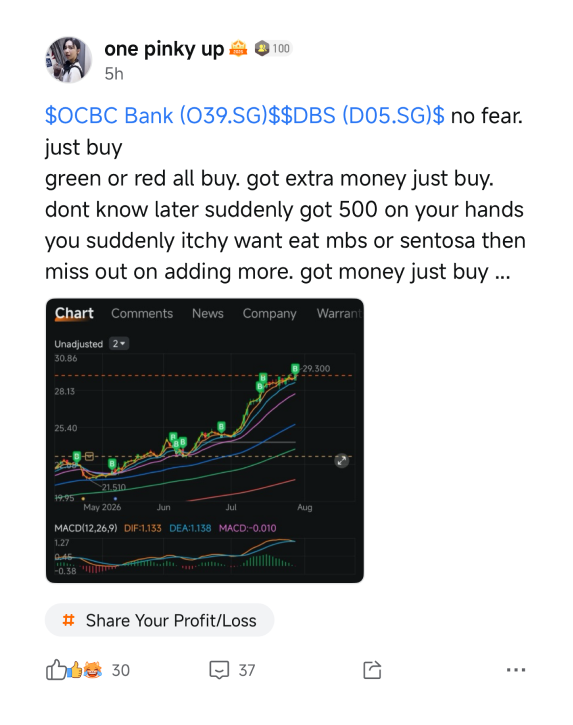
OCBC Bank (O39)
--%
1Y %CHG
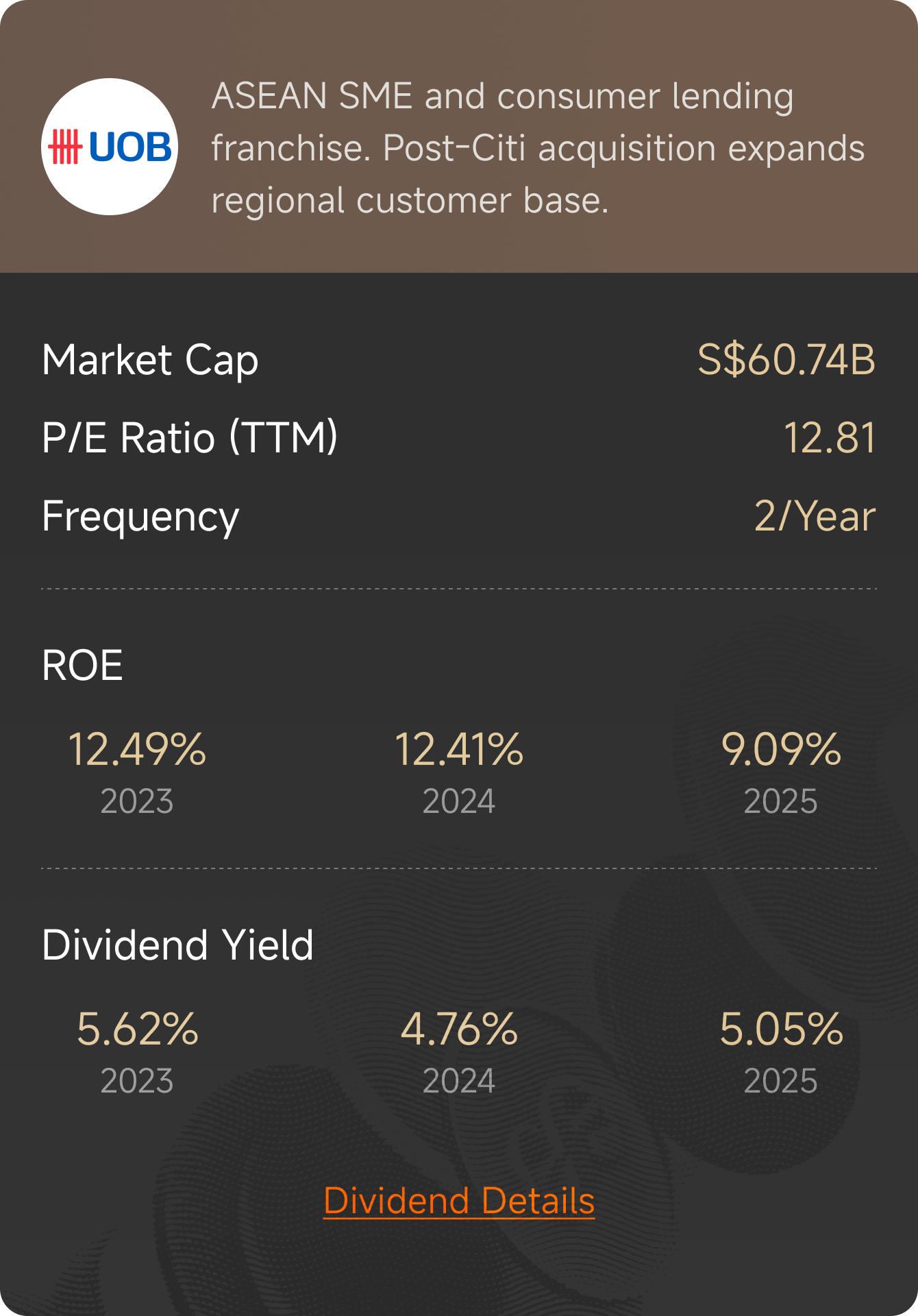
UOB (U11)
--%
1Y %CHG




Time
Your Entry

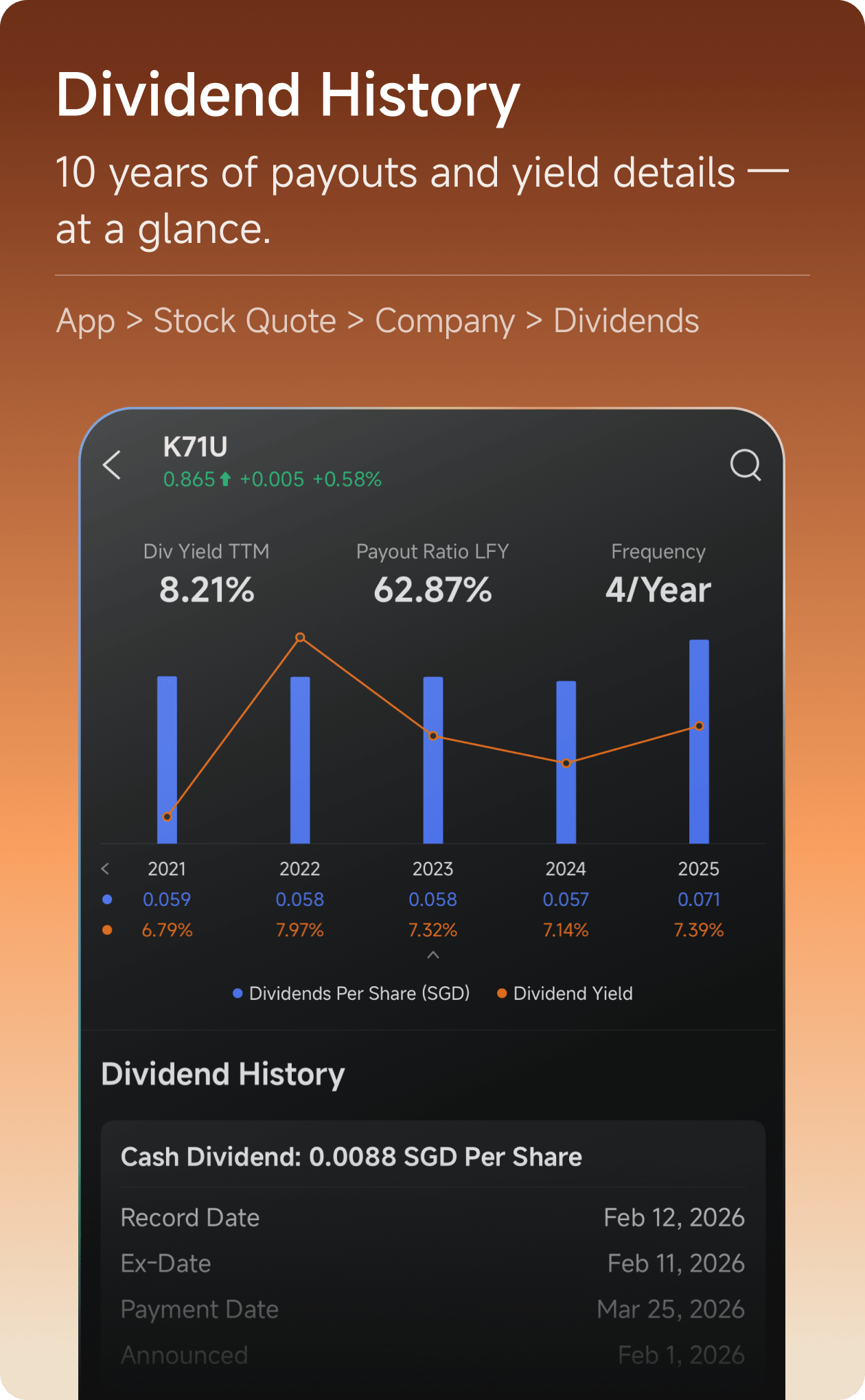
Informed Decisions

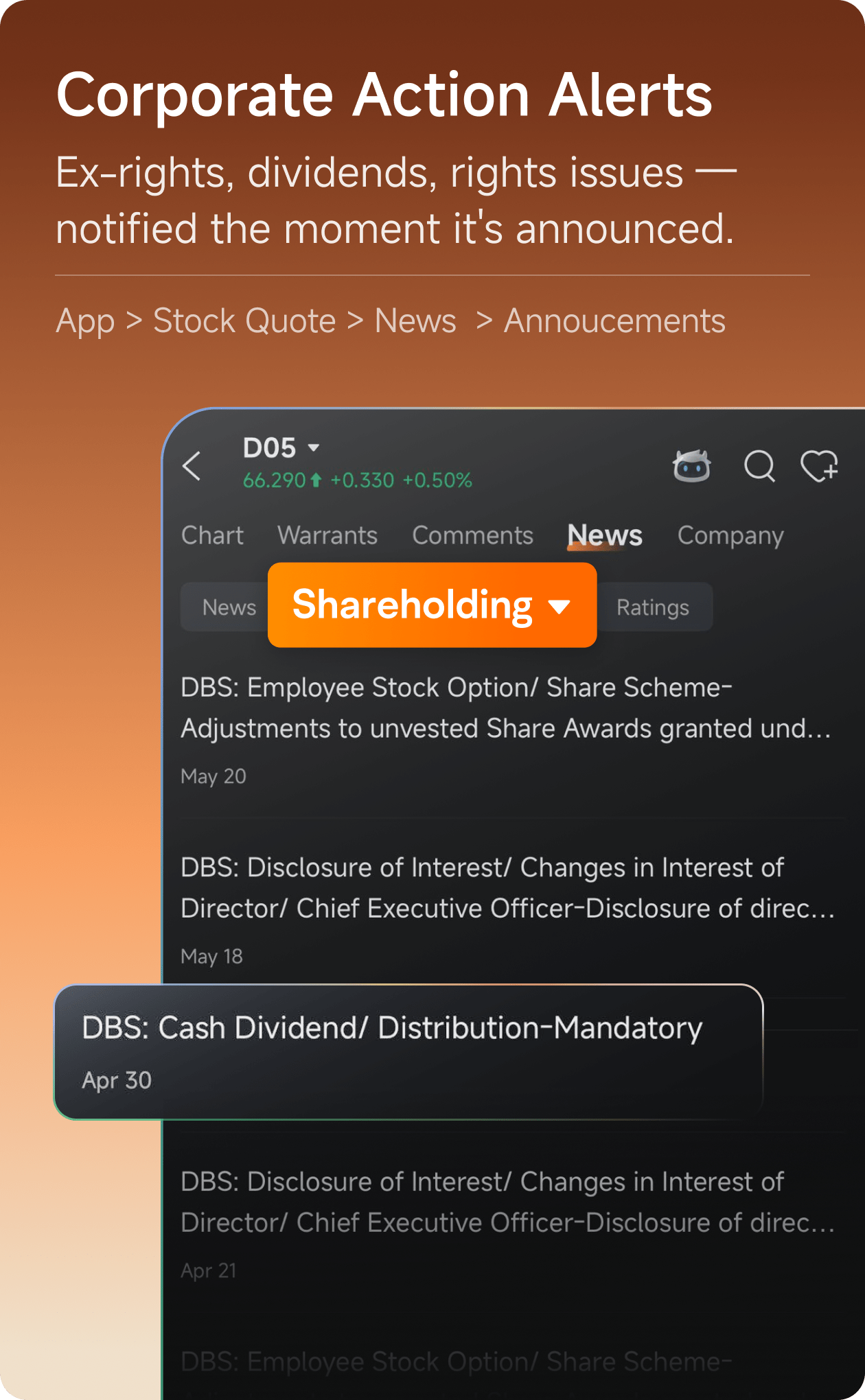
Stay Notified

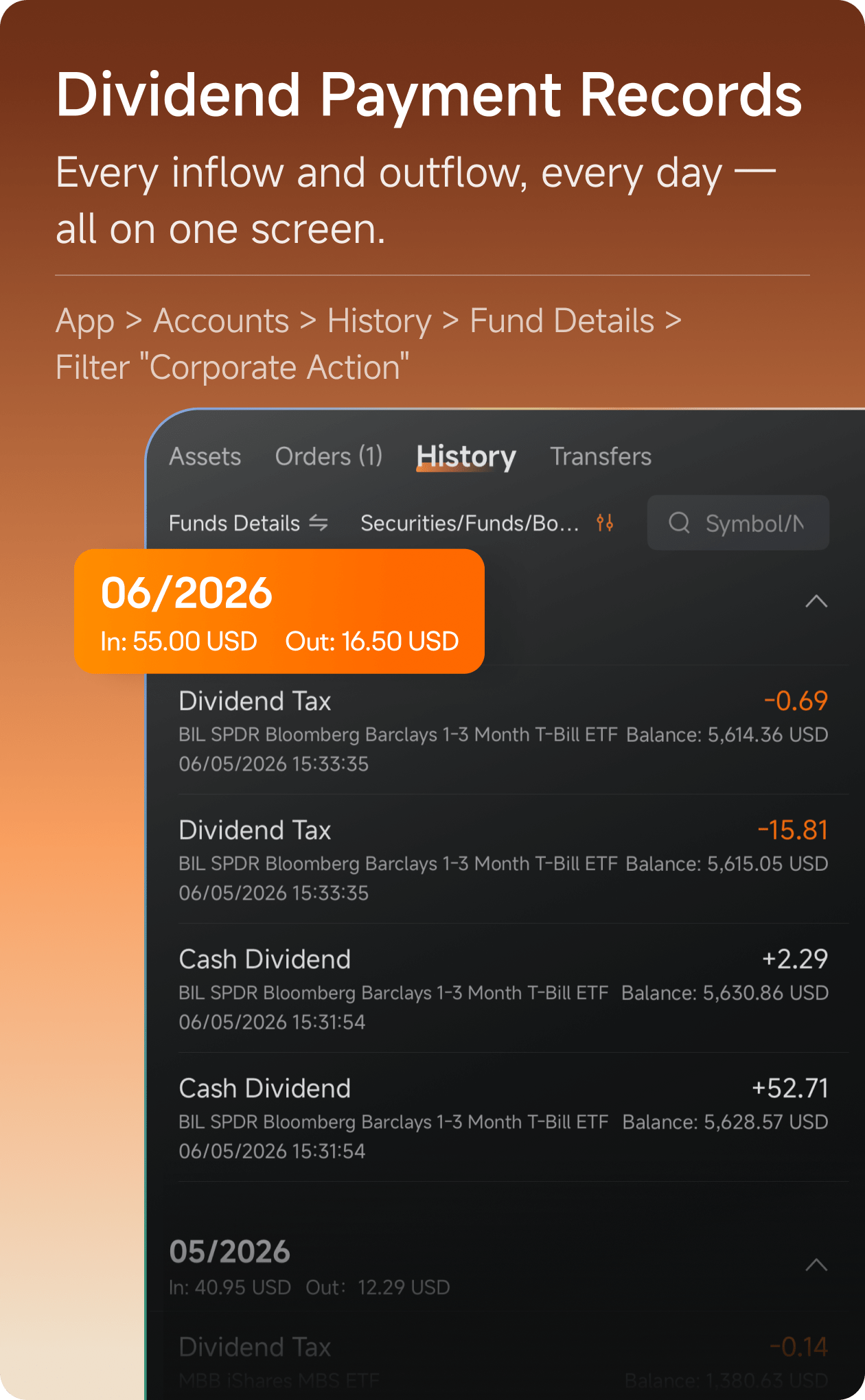
Track Payments
FAQs
1. Do I need to pay tax on dividend income received in Singapore?
Singapore operates under a One-Tier Tax System. Corporate tax is paid at the company level, and dividends distributed to shareholders are exempt from personal income tax — applicable to Singapore citizens, PRs, and foreigners alike.
Note: Some REITs holding overseas properties may be subject to withholding tax in those jurisdictions (not Singapore tax), which reduces the net amount received. Tax rates vary by country and income type. Please refer to the respective REIT's annual report for details.
2. Are dividends stable? Could they suddenly stop paying?
No dividend is "guaranteed", but Singapore blue-chip companies have an exceptionally consistent payout track record.
REIT mechanism: Singapore law requires S-REITs to distribute at least 90% of distributable income to maintain tax transparency status. A complete suspension of distributions is rare — except in cases of major financial distress. DPU amounts may fluctuate modestly with business performance.
3. If the stock price drops, does dividend investing still make sense?
Cash flow: As long as the company continues to operate and distribute dividends, your cash inflow is unaffected by short-term price movements.
Total return: Continuing to collect dividends during a price dip — and potentially adding to your position at lower prices — allows you to use income to offset short-term volatility and improve long-term total returns over time.
4. Is now a good time to buy dividend stocks?
No one can accurately predict the best entry point. Dividend investing is a long-term approach, and "ideal timing" is typically only clear in hindsight.
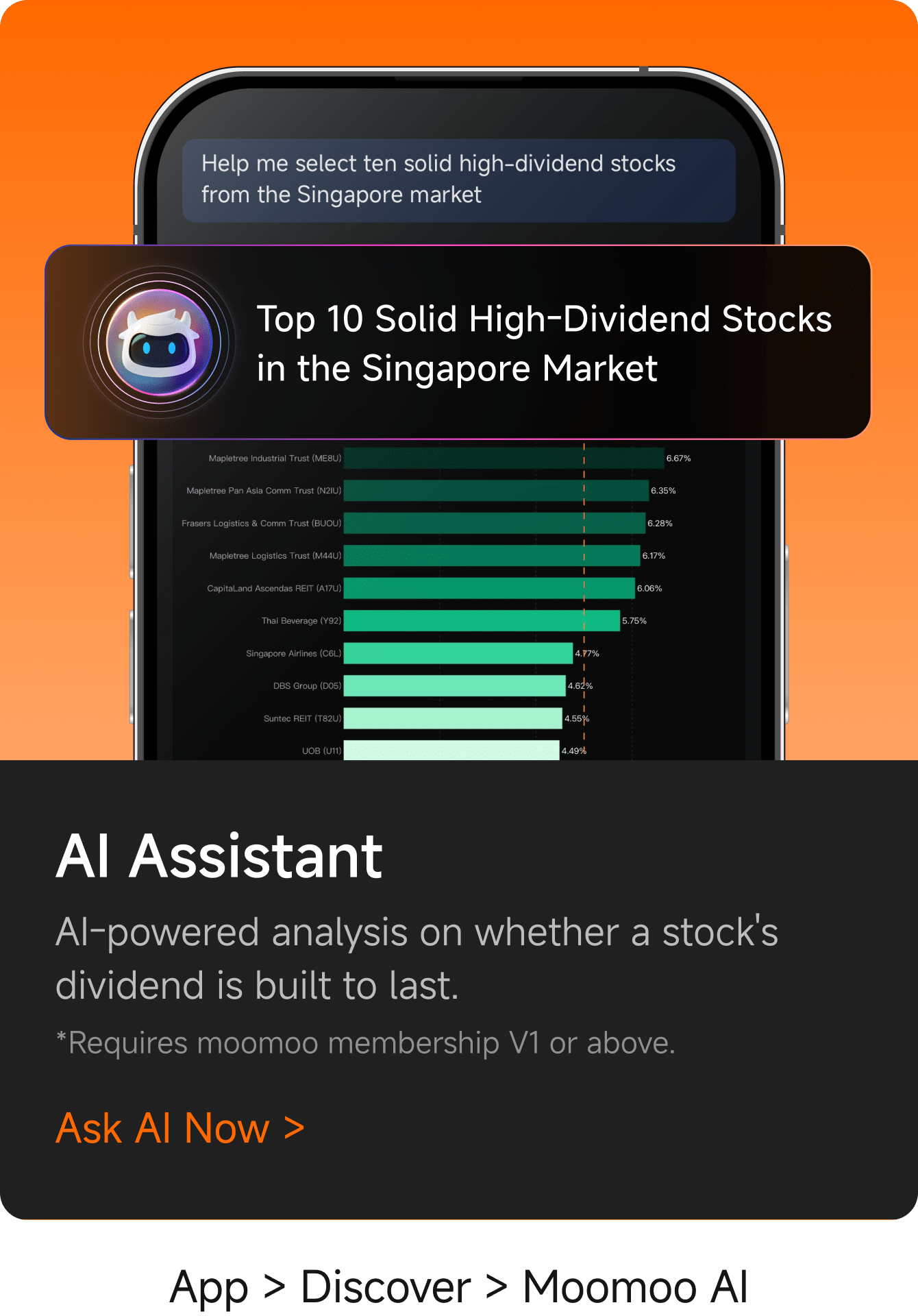
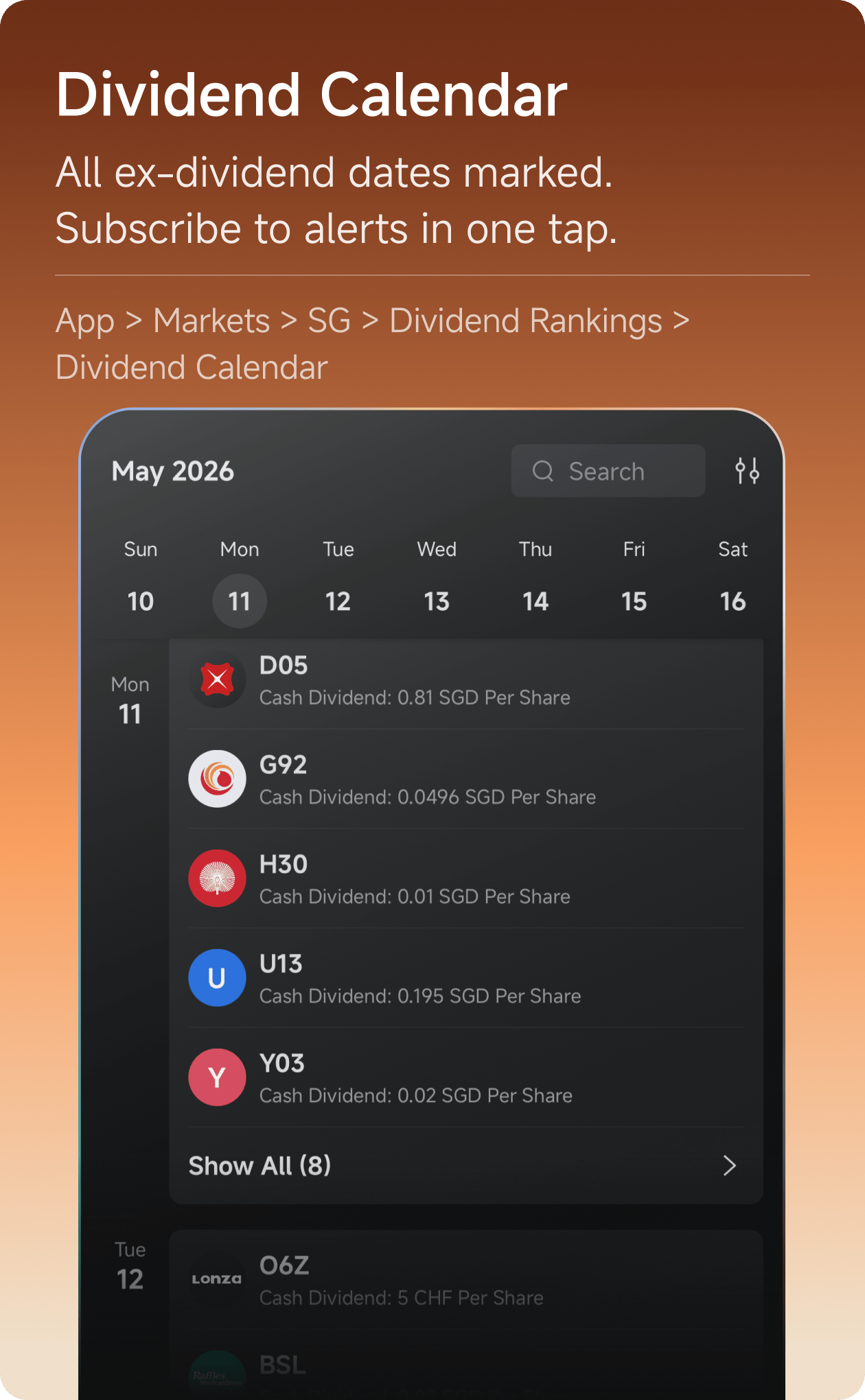
Reference: Consider stocks with yields above their historical average and build positions gradually. Use moomoo price alerts to be notified when your target price is reached, or refer to the moomoo Dividend Calendar to plan purchases around ex-dividend dates.
5. Is a higher yield always better? What is a "Dividend Trap"?
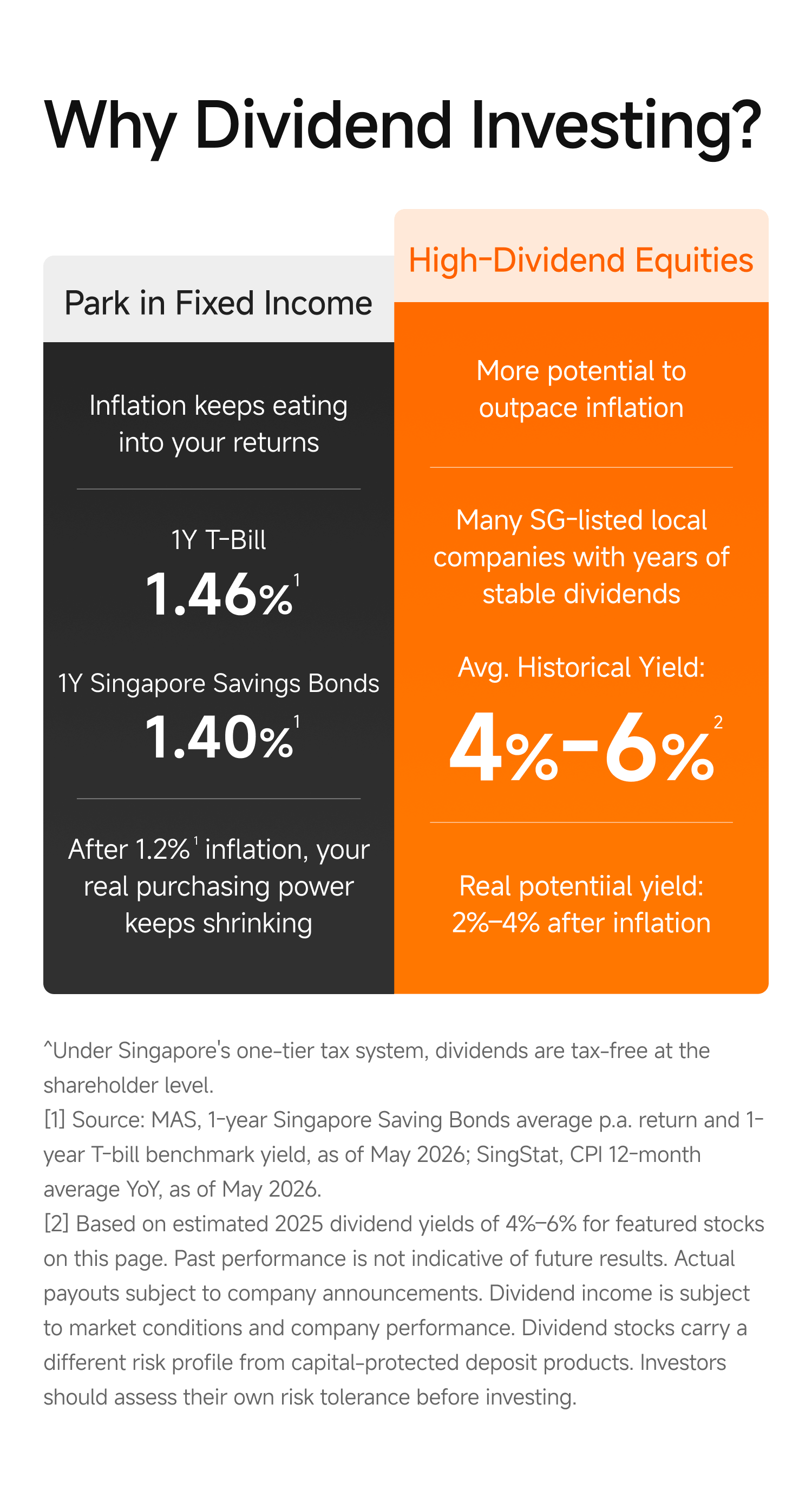
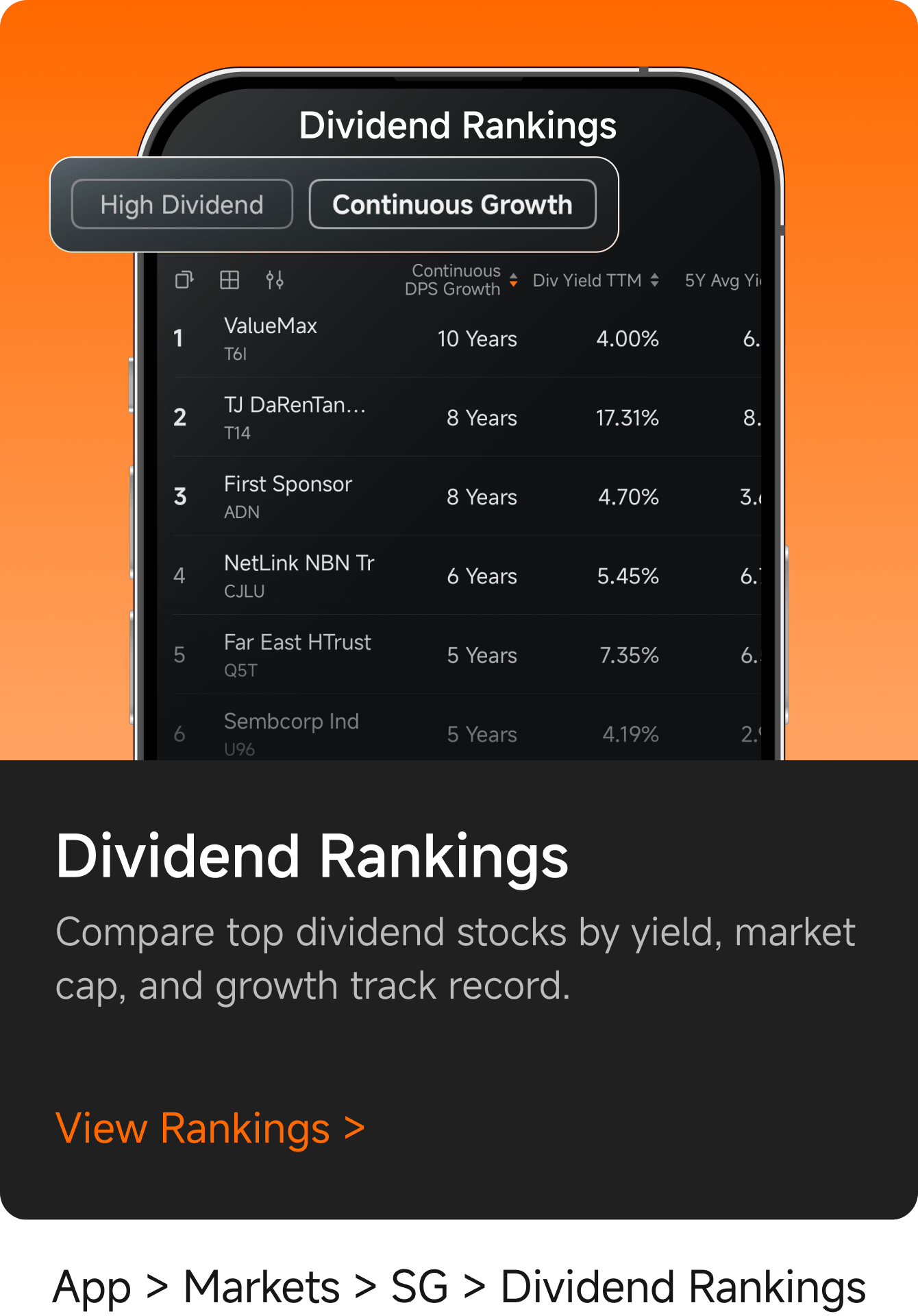
Not necessarily. An abnormally high yield is often the result of a sharp drop in stock price, not increased company generosity. The key risk signal is a yield significantly above the stock's own historical average or sector peers — which typically reflects negative market expectations already priced into the share.
Reference: Look for companies with stable or growing dividends over consecutive years, rather than simply chasing the highest current yield. The moomoo Dividend rankings allows you to screen by both yield and consecutive growth years for a more balanced view.
6. How much capital is needed to generate meaningful dividend income?
Based on an illustrative 5% yield (for reference only; past performance is not indicative of future results):
$20,000 ~$1,000/year ~$83/month
$50,000 ~$2,500/year ~$208/month
$100,000 ~$5,000/year ~$417/month
$200,000 ~$10,000/year ~$833/month
$500,000 ~$25,000/year ~$2,083/month
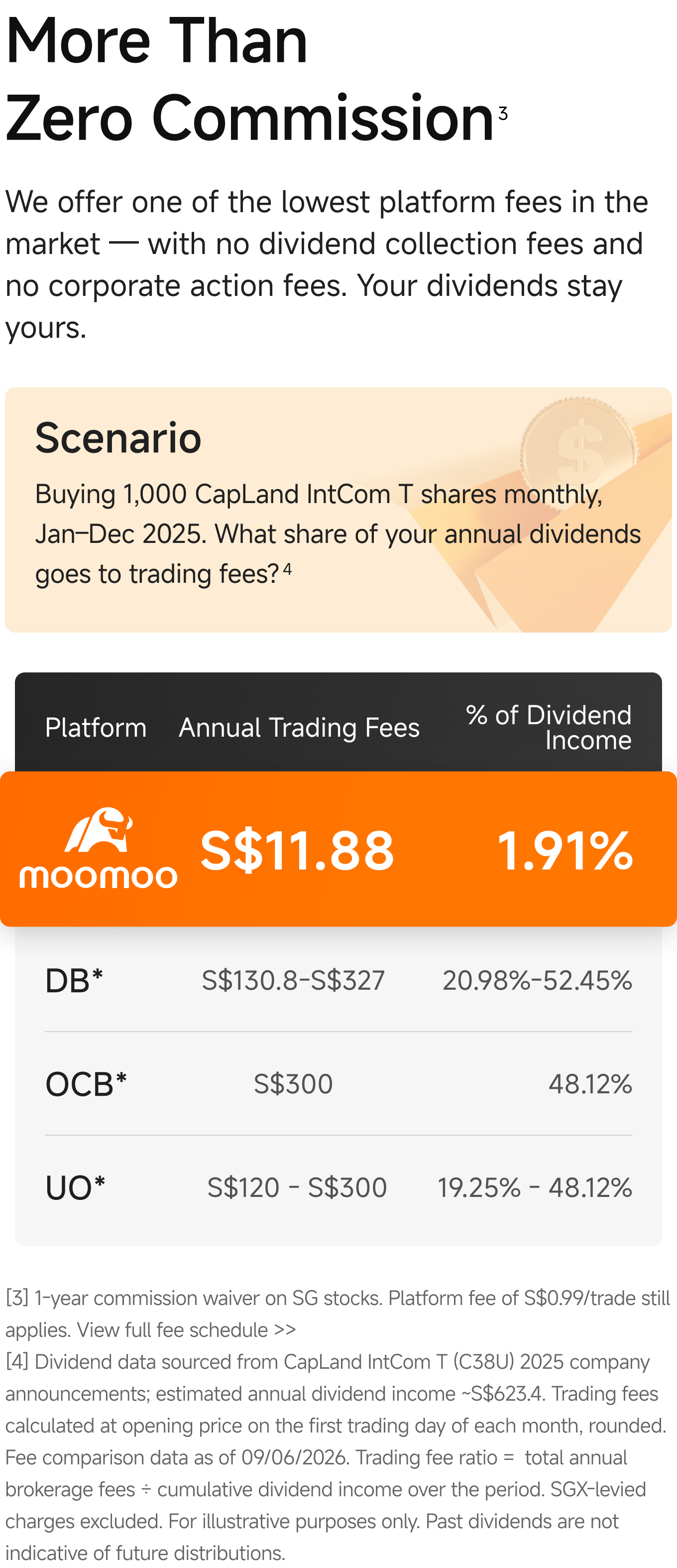
*T&Cs and other fees apply.
This information is for general circulation only. It does not form part of any offer or recommendation, or have any regard to the investment objectives, financial situation or needs of any specific person. Any past performance does not guarantee future performance. Full disclaimers at www.moomoo.com/sg/support/topic5_510. This advertisement has not been reviewed by the Monetary Authority of Singapore.
© 2026 moomoo
