What Are Options: A Complete Guide for Malaysian Investors
Exploring Option Trading in Malaysia
Thinking about diving into options trading? This guide is specially crafted for Malaysian investors, offering a detailed look at how experienced traders use options to diversify and strengthen their portfolios. We'll break down how options work, their risks and rewards, and provide practical insights to help you build better trading strategies in the Malaysian market.
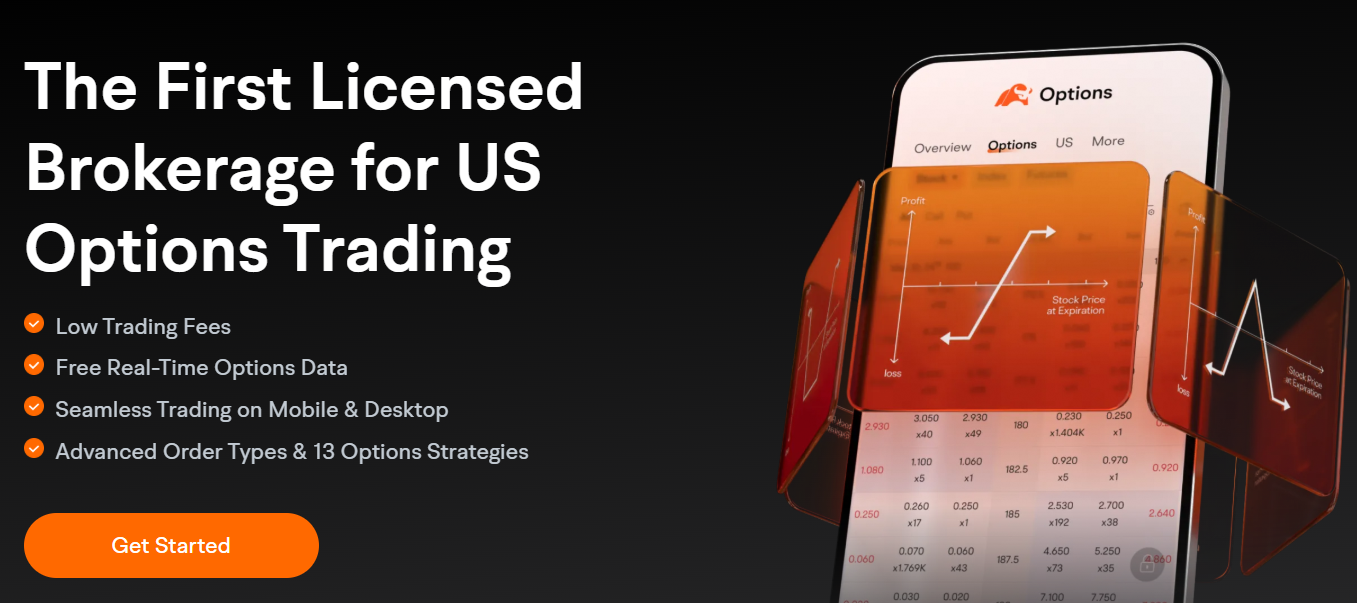
What is An Option?
An option is a financial contract that gives the buyer the right (but not the obligation) to buy or sell a specific stock at a fixed price before a set expiration date. For Malaysian investors, buying an option means having the flexibility to act based on market trends, while sellers must fulfill the contract if the buyer decides to use their option.
Key Terms for Malaysian Traders:
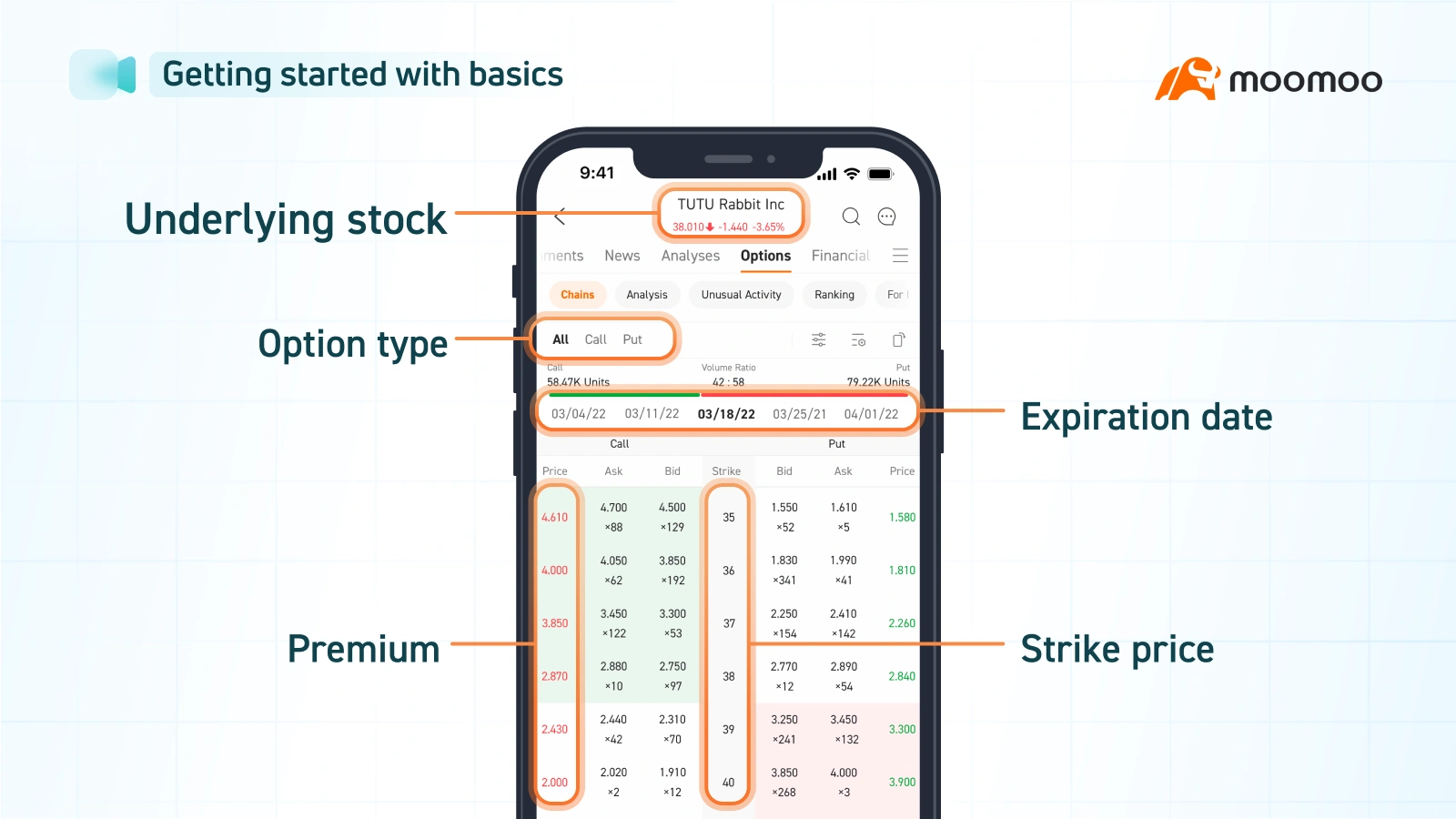
Underlying Asset: The stock specified in the options contract (options are "derivatives" because their value depends on this asset).
Strike Price: The fixed price at which the asset can be bought or sold.
Expiration Date: The final date by which the option can be used—after this, it's worthless.
Premium: The fee paid to buy an option (this is the income the seller receives).Note: While options can cover assets like bonds or currencies, this guide focuses on stock options.
How to Trade Options on Moomoo MY
Here's a step-by-step guide to trading options using the Moomoo platform:
1. Go to Your Watchlist: Select a stock's "Detailed Quotes" page.
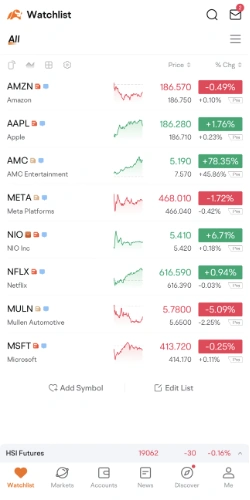
(Disclaimer: Images are for illustration only and not real-time recommendations.)
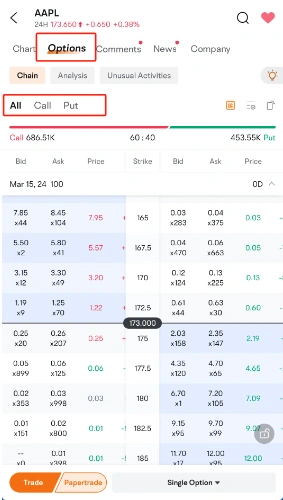
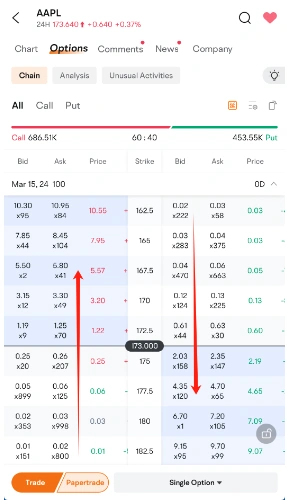
2. Access Options Chain: Tap "Options" > "Chain" at the top of the page.
3. View Expiration Dates: By default, all options for a specific expiration date are shown. Filter by "Call/Put" to see only buy or sell options.
4. Change Expiration Date: Choose your preferred date from the menu.
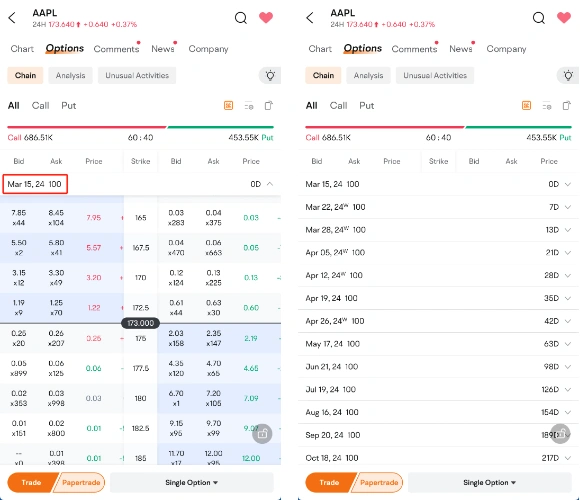
5. Identify Option Types: White indicates "out-of-the-money" options, blue indicates "in-the-money." Swipe left/right to see more details.
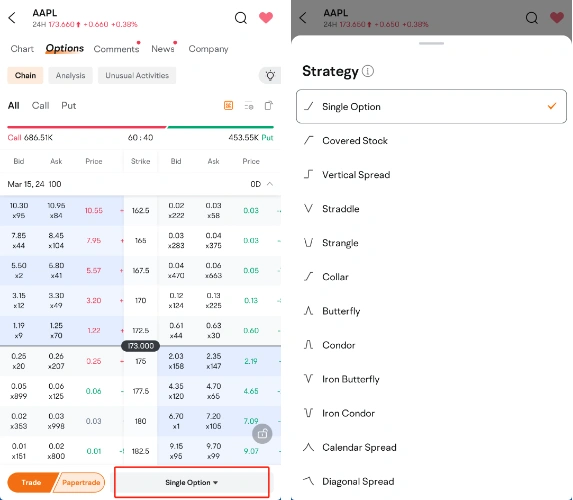
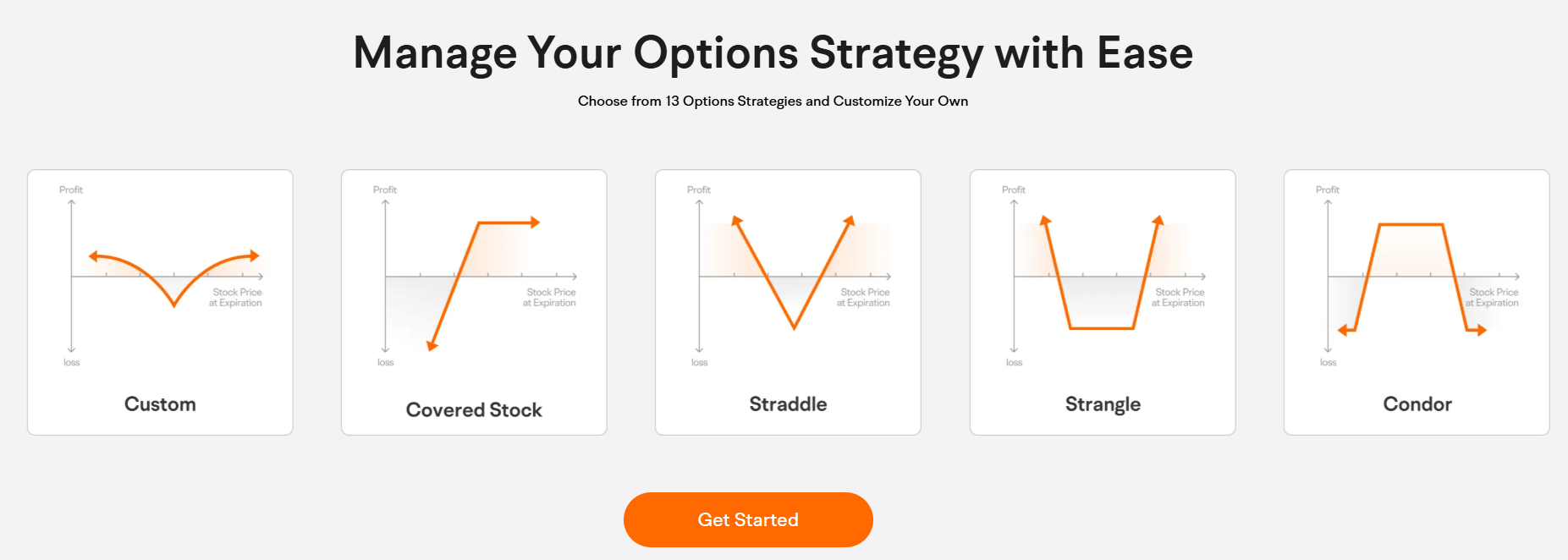
6. Explore Strategies: Use the trading strategy tools at the bottom of the screen to customize your approach.
How Do Options Work?
Every options contract involves two parties:
Seller: Creates the contract (often a trader or institution).
Buyer: Purchases the contract and gains the rights outlined in it.
When buying an option, you have two choices:
Let it expire unused (risking the loss of the premium paid).
Exercise it to buy/sell the stock on or before the expiration date.
For sellers: If the buyer exercises the option, you must fulfill the stock transaction. Many brokers automatically exercise "in-the-money" options at expiration.
Main Types of Options: Basic Information
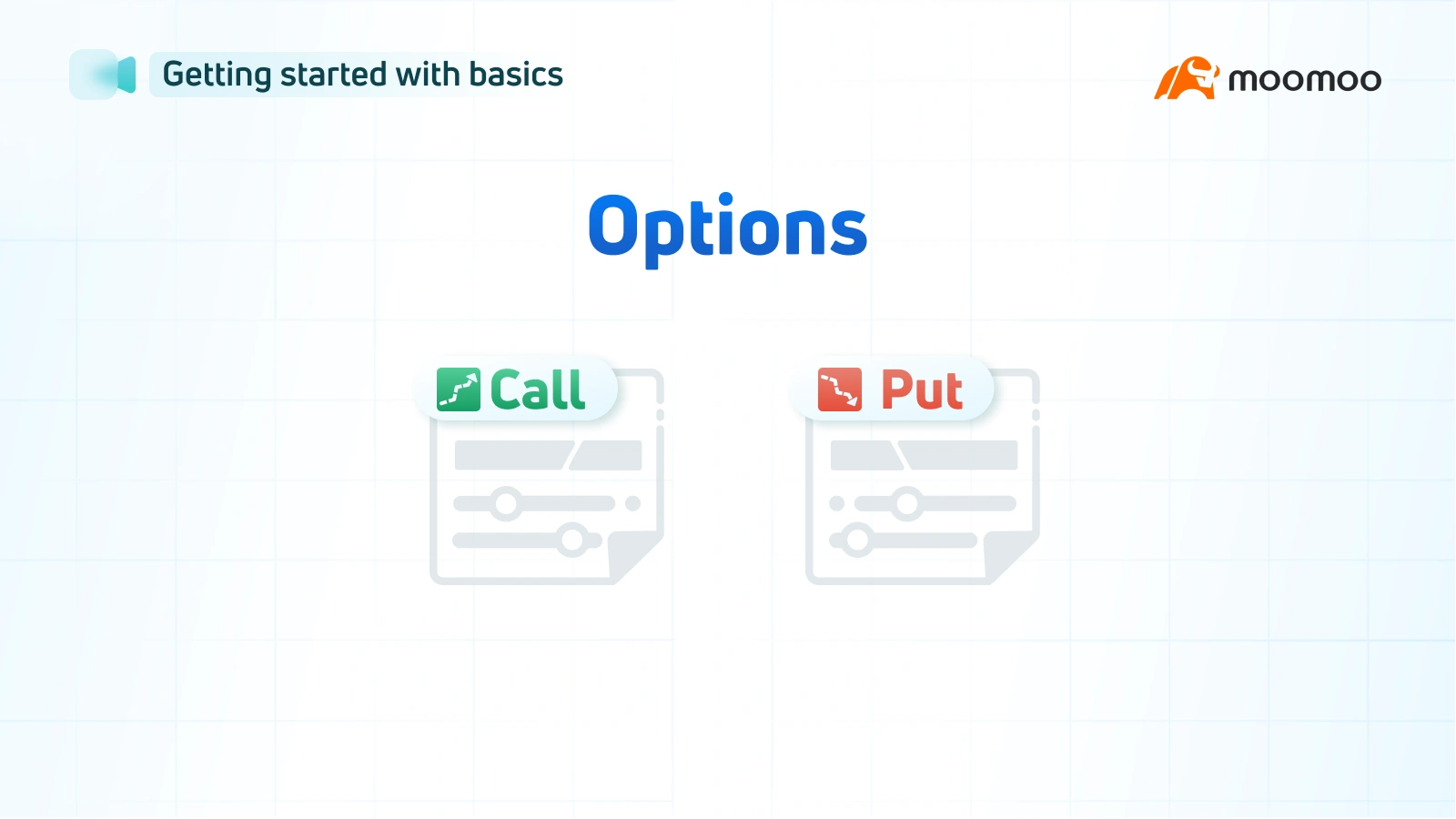
There are two main types of options, each serving different market outlooks:
1. Call Options
What they do: Give the buyer the right to buy a stock at the strike price before expiration. The seller must sell the stock if the buyer exercises the option.
When to use: Buy a call if you expect the stock price to rise.
Example:
Company A trades at RM5/share. You buy a call option with a RM7 strike price (expiring in 1 month) for a RM1 premium (total RM100 for 100 shares).
If the price rises to RM10/share, you can buy 100 shares at RM7 (total RM700 + RM100 premium = RM800) and sell them at RM10 for a RM200 profit.
Risk: If the price drops, you lose the RM100 premium.
2. Put Options
What they do: Give the buyer the right to sell a stock at the strike price before expiration. The seller must buy the stock if the buyer exercises the option.
When to use: Buy a put if you expect the stock price to fall.
Example:
Company X trades at RM10/share. You buy a put option with a RM9 strike price (expiring in 1 month) for a RM1 premium (total RM100).
If the price drops to RM5/share, you can sell 100 shares at RM9 (or sell the option itself for a profit).
Risk: If the price rises, you lose the RM100 premium.
Key Terms in Options Contracts: What You Need to Know
Before jumping into options trading, it's essential to understand the key components of an options contract. Knowing how these parts work together will help Malaysian investors build smarter trading strategies.
Premium
The premium is the price you pay to buy an options contract (or the income you earn as a seller). It's quoted per share, and each contract typically covers **100 shares**.
Example: A RM1 premium per share means a contract costs **RM1 × 100 = RM100 total**.
For buyers: This is your maximum potential loss. If the option expires worthless, you lose the entire premium.
For sellers: You keep the premium as profit *only if the option isn't exercised*. If the buyer uses the option, you could face losses larger than the premium (especially for uncovered positions like naked calls).
Tip: Premiums fluctuate with market factors like stock price, volatility, and time to expiration.
Strike Price
The strike price is the fixed price at which the underlying stock can be bought (for calls) or sold (for puts) if the option is exercised. It's set when the contract is created and stays fixed until expiration.
Example: A call option with a RM50 strike price gives you the right to buy the stock at RM50, even if the market price rises to RM60.
Expiration Date
This is the final day an option can be exercised. After this date, the contract is worthless.
American-style options (common in Malaysia): Can be exercised any time before or on the expiration date.
European-style options: Can only be exercised on the expiration date.
Moneyness: Key Terms
In-the-money (ITM): Profitable to exercise now (e.g., a call with a strike price below the stock's current price).
At-the-money (ATM): Strike price equals the current stock price.
Out-of-the-money (OTM): Not profitable to exercise now (e.g., a put with a strike price below the stock's current price).
Decision time: If an option is ITM, you must decide to:
Exercise it (take ownership of the stock),
Sell the option (lock in profits from the premium increase), or
Let it expire (if fees outweigh potential gains).
American vs. European Options: Key Differences
Feature | American Options | European Options |
Exercise Timing | Anytime before or on expiration | Only on the expiration date |
Premiums | Usually higher (due to flexibility) | Lower (less flexibility) |
Early Exercise Risk | Sellers face earlier obligation risk | Sellers only risk on expiration |
For Malaysian traders: While American options offer flexibility, early exercise is rarely optimal for retail investors. Why?
Exercising early means losing the option's time value (the extra premium from remaining days until expiration).
Holding the option allows you to react to new market information instead of committing to a trade too soon.
Why This Matters for You
Understanding these basics helps you:
Calculate risks clearly (e.g., how much you can gain/lose).
Choose the right option type (American vs. European) for your strategy.
Avoid costly mistakes, like exercising an option too early or ignoring time decay.
Start with small trades to practice applying these concepts in real market scenarios!
The Greeks: UnderstandingOptions Risk Metrics
"The Greeks" are metrics that measure how an option's price reacts to market changes:
Greek | What It Measures | Key Details |
Delta | Sensitivity to stock price changes | - Call options: 0 to +1 |
Theta | Time decay (loss of value over time) | - Negative for buyers, positive for sellers |
Gamma | Change in Delta per RM1 stock move | Higher for options nearing expiration |
Vega | Sensitivity to volatility | Higher volatility = higher option value |
Rho | Sensitivity to interest rates | Calls rise with rates; puts fall with rates |
When it comes to risk metrics in options trading, terms like "the Greeks" might initially seem confusing. Let's break down what these metrics are and how they can enhance your trading strategy.
In the options market, "the Greeks" refer to various measures that assess factors impacting the price of an options contract. These metrics are named after Greek letters, with the most common being Delta, Theta, Gamma, Vega, and Rho.
Interestingly, while Vega isn't a real Greek letter, it has become an accepted term in options trading.
Delta
Delta measures how an option's price reacts to changes in the underlying asset's price. Think of it as a hedge ratio: it shows how much the option's value will change for every RM1 move in the stock price.
Call options: Delta ranges from 0 to +1. A call with a Delta of 0.7 means its price rises/falls by RM0.70 for every RM1 change in the stock price.
Put options: Delta ranges from 0 to -1. A put with a Delta of -0.3 means its price rises/falls by RM0.30 in the opposite direction of the stock price.
Key insight: A Delta close to +1 or -1 (e.g., deep in-the-money options) acts almost like the underlying stock itself. Traders use Delta to gauge risk and hedge positions (e.g., balancing a portfolio's overall Delta to neutralize market exposure).
Theta
Theta measures time decay—how much an option's value erodes as it approaches expiration (assuming all else stays constant).
For buyers (long calls/puts): Theta is negative. Every day, the option loses value (e.g., a long call with Theta of -0.05 loses RM0.05 per day).
For sellers (short calls/puts): Theta is positive. Time decay works in their favor, as the option's value shrinks, increasing the chance it expires worthless (letting sellers keep the premium).
Example: A stock option with 30 days to expiration has higher Theta (faster decay) than one with 90 days. Unlike stocks (which have no expiration), options are a “clock is ticking” asset.
Gamma
Gamma measures how unstable Delta is—specifically, how much Delta changes when the underlying asset's price moves by RM1.
High Gamma (e.g., at-the-money options near expiration): Small stock price changes cause big Delta shifts. For example, a call with Gamma of 0.15 will see its Delta increase by 0.15 if the stock rises RM1 (and decrease by 0.15 if it falls).
Low Gamma (e.g., deep in/out-of-the-money options with long expirations): Delta changes slowly. These options are less sensitive to short-term price swings.
Why it matters: Traders adjusting hedges (e.g., in spreads or straddles) must monitor Gamma to avoid unexpected risk shifts.
Vega
Vega measures an option's sensitivity to volatility—how much its value changes with a 1% increase/decrease in implied volatility (IV).
Higher IV = higher option prices: Uncertainty (e.g., earnings announcements, market crashes) makes options more valuable, the Vega of long calls/puts is positive (they gain value as IV rises).
Lower IV = lower option prices: Stability reduces option value, short options have negative Vega (they lose value as IV rises).
Example: A long call with Vega of 0.20 will gain RM0.20 per contract if IV increases by 1%. Options with longer expirations have higher Vega (more time for volatility to impact price).
Rho
Rho measures how an option's price reacts to interest rate changes (typically the risk-free rate, like Malaysia's OPR).
Calls: Rho is positive. Higher rates increase the cost of holding the underlying stock (via margin), making calls more attractive (e.g., a call with Rho of 0.03 gains RM0.03 per contract if rates rise 1%).
Puts: Rho is negative. Higher rates reduce the “time value” of waiting to sell a stock, making puts less valuable (e.g., a put with Rho of -0.02 loses RM0.02 per contract if rates rise 1%).
Real-world impact: In low-rate environments, Rho's effect is minor. But in high-rate markets (e.g., 5%+), it can tilt call/put pricing noticeably.
Pros and Cons of Option Trading
Pros
Risk Management: Hedge losses or profit from market trends.
Flexibility: Work in rising or falling markets.
Leverage: Potentially high returns with low upfront capital (but higher risk).
Clear Risk Limits: Buyers only risk the premium paid.
Income Generation: Sellers earn premiums upfront.
Cons
Full Loss Risk: Options can expire worthless, losing your entire investment.
Unlimited Loss for Sellers: Naked call sellers face unlimited losses if the stock price surges.
Time Pressure: Expiration dates can lead to rapid losses if you delay action.
Higher Costs: Premiums add to trading expenses.
Common FAQs About Options
How Can Investors Make Money with Options?
Investors can potentially profit from options trading in two main ways. First, by buying options contracts, they can aim to sell them later at a higher price if the underlying asset's price moves as predicted. For example, purchasing a call option before a stock's price rises or a put option before it falls. Second, selling options allows traders to earn premiums upfront. If the option expires unused (out-of-the-money), sellers keep the premium as profit, benefiting from market stability or low volatility.
Key Tip: Always research thoroughly and align trades with your risk tolerance.
Is an Options Contract an Asset?
Yes, an options contract is a financial asset. It gives the holder the right to buy or sell an underlying asset (like a stock) at a fixed price within a specific timeframe. While the contract is linked to the underlying asset, it has independent value and can be bought, sold, or traded separately—just like stocks or bonds.
How Are Options Different from Futures?
Feature | Options | Futures |
Obligation | Buyers have the *right*, not the obligation, to exercise. | Both buyers and sellers are legally obligated to fulfill the contract. |
Flexibility | Buyers can choose to act or let the contract expire. | No choice—both parties must settle the contract on the set date. |
Risk Profile | Buyers risk only the premium paid; sellers face potential unlimited risk (e.g., in naked calls). | Both parties face unlimited risk based on price movements. |
Purpose | Ideal for hedging or speculating with limited risk. | Often used for locking in prices or managing large-scale risk (e.g., in commodities). |
In simple terms: Options offer flexibility with capped risk for buyers, while futures enforce strict obligations for both parties.
This presentation is for informational and educational use only and is not a recommendation or endorsement of any particular investment or investment strategy. Investment information provided in this content is general in nature, strictly for illustrative purposes, and may not be appropriate for all investors. Read more