Trump launches investigations: Is a new trade war coming?

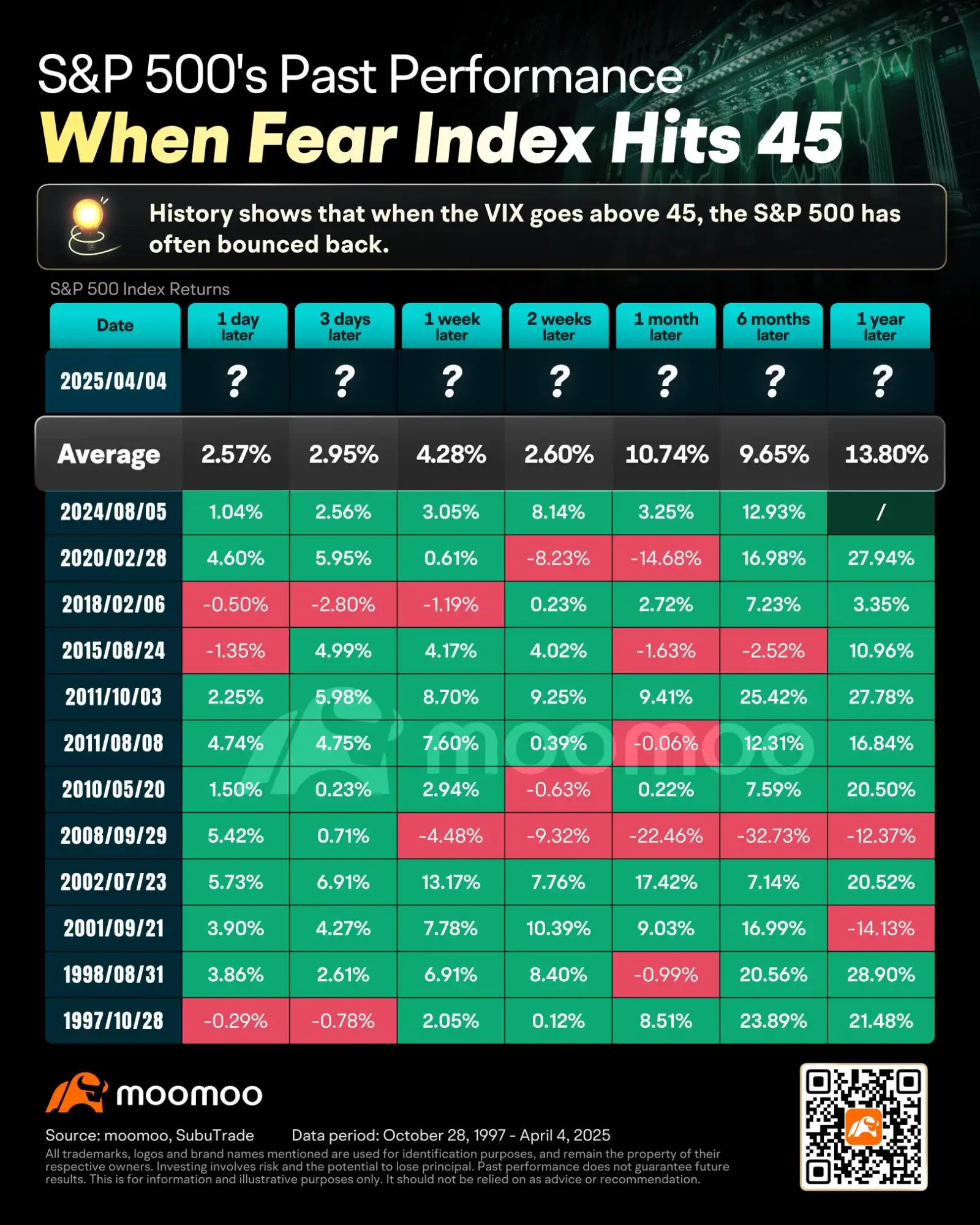
VIX Breaks 45: Opportunity or Trap? What History Tells Us?
President Trump's new global tariffs have recently caused big swings in the financial markets. In just two days last week, U.S. stock markets lost about $6.6 trillion, the biggest drop ever.
The three major stock indices had their worst week since March 2020, and the Nasdaq fell into bear market territory. The Volatility Index (VIX), which measures market fear, shot above 60, its highest point since last August.
Using VIX to Understand Market Fear
The VIX, or Fear Index, is a way to measure how nervous investors are. When there’s panic in the market, people tend to buy options, which pushes the VIX up. Some investors use the VIX to predict when stocks might hit a bottom. When the VIX gets very high, it could mean that the stock market has already dropped a lot and might be ready to go back up.
Last Friday, the VIX hit 45, and since 2000, it has only been that high a few times. Many experts believe that this situation is similar to what happened in 2011 and 2015. If the risks around tariffs start to ease, stocks could experience a period of volatility but then recover.

Besides, investors should be cautious and pay attention to the Federal Reserve’s actions and economic data.
What Should Investors Watch Next?
Right now, with Trump’s new tariffs in place, U.S. stocks are experiencing many ups and downs in 2025. There’s a lot of uncertainty around the tariffs. Although the market has already corrected itself, investors wonder if it will follow a pattern like before, where it drops first and then recovers.
Trump’s 10% global tariff has already started, and a bigger tariff will be addedon April 9, which could cause even more market drops. Some investors hope Trump will negotiate with countries to remove some tariffs, but many doubt that will happen. Trump has said that his policies won’t change.
A key piece of data is the March Consumer Price Index (CPI), which will be released on Thursday. Experts expect only a small increase in CPI, but there’s concern that prices might increase because of the tariffs.
The Federal Reserve will also release minutes from its last meeting, which could give more clues about how worried they are about rising inflation and whether they might adjust policies because of the tariff risks.
Earnings season starts this week, with big companies like JPMorgan and Wells Fargo reporting their results. Earnings expectations for the last quarter have already been lowered because of tariff concerns.
What Are Experts Saying?
Bank of America strategist Michael Hartnett says that investors could be more willing to take risks if stock prices, oil prices, bond yields, and the dollar keep falling. He suggests buying different types of investments depending on where the stock market is:
If the S&P 500 is around 5400, Buy emerging markets and real estate investment trusts (REITs) if the dollar weakens.
If the S&P 500 is between 5100 and 5200, Buy small-cap stocks, homebuilders, and tech stocks from Asia, which are more affected by policy changes.
If the S&P 500 falls to 4800-5000 and Trump’s approval rating drops, Be aggressive and buy riskier assets.
Bruce Kasman from J.P. Morgan warns that if Trump keeps his tariffs in place, it could lead to a recession in the U.S. and worldwide. The chance of a U.S. recession has gone from 40% to 60%.
Peter Boockvar from Bleakley Financial Group says that if the stock market keeps dropping and starts hurting consumer spending, the risk of a recession will increase significantly.
Disclaimer: Moomoo Technologies Inc. is providing this content for information and educational use only.Read more


Comments (15)
to post a comment
51
46