Rate Hike Expectations Shake Gold? Share Your P/L or Views!

The bullish case for gold gleams
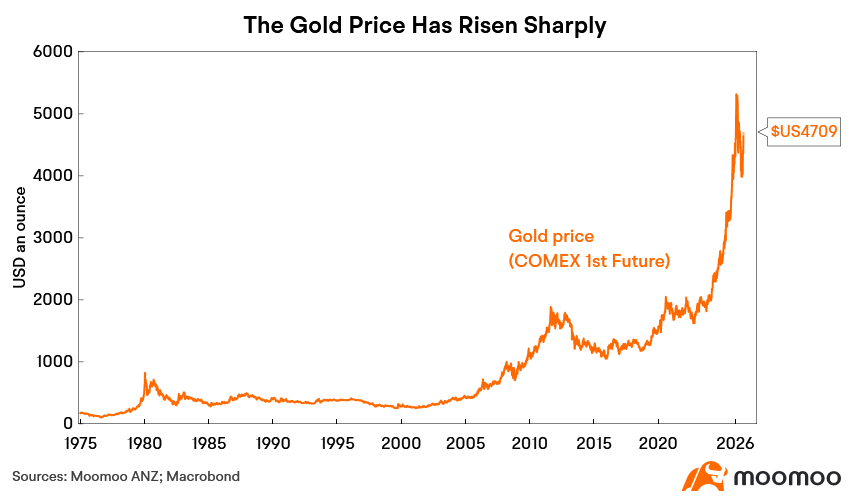
The bullish thesis for gold keeps getting stronger despite its incredible run to date. Investors are now seeing a greater role for the precious metal in asset allocation after having been underappreciated for decades. Just to show how under-appreciated, UBS’ 2026 Global Family Office Report reported that the strategic asset allocation for gold amongst family offices was as small as 2%, little changed over the past five years.
A larger role for gold in asset allocation is being advocated by many, including Bridgewater Associates’ founder Ray Dalio who suggests investors should have an allocation somewhere between 5-15%. Investment banks like Morgan Stanley suggest an even larger allocation of 20%, which would effectively swap half of the traditional bond allocation (in a 60% equity/40% bond portfolio) to gold.
While everyone’s financial situation and risk tolerance differs, the secular drivers for gold are getting stronger. In this piece I outline two underpinning structural drivers: (1) persistent inflation, government debt and fiscal dominance; (2) central bank buying and weaponisation of the USD. In a future post I will detail the diversification benefits of adding gold to a portfolio, both directly and via gold miners.
(1) Persistent inflation, government debt and fiscal dominance
“We have gold because we cannot trust governments”, US President Hoover 1931
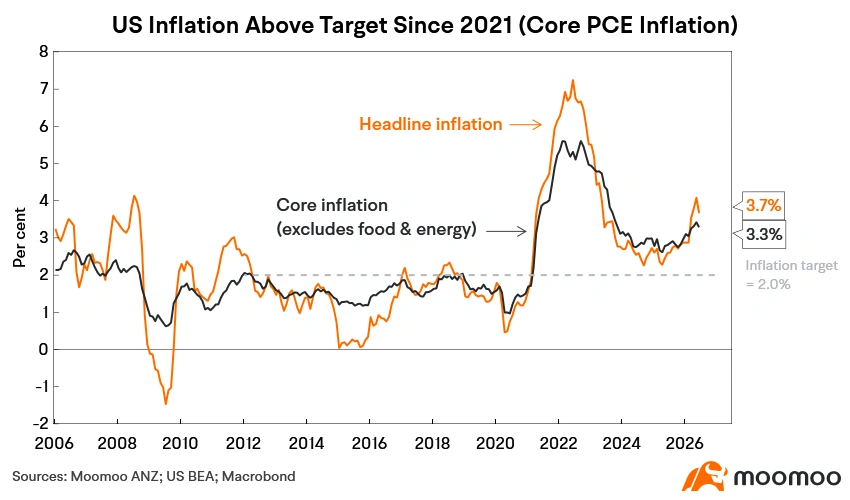
US inflation has been above target since 2021, marking the fifth year of inflation above target. And if you believe the US Fed’s forecasts, it won’t be until 2028 until inflation is at target. Clearly the Fed is reluctant to hike rates. This reluctance is underscored by the difference between the current Fed Funds rate of 3.50-3.75% to a simple monetary policy rule which suggests interest rates should be at least 100bps higher at 4.6%.
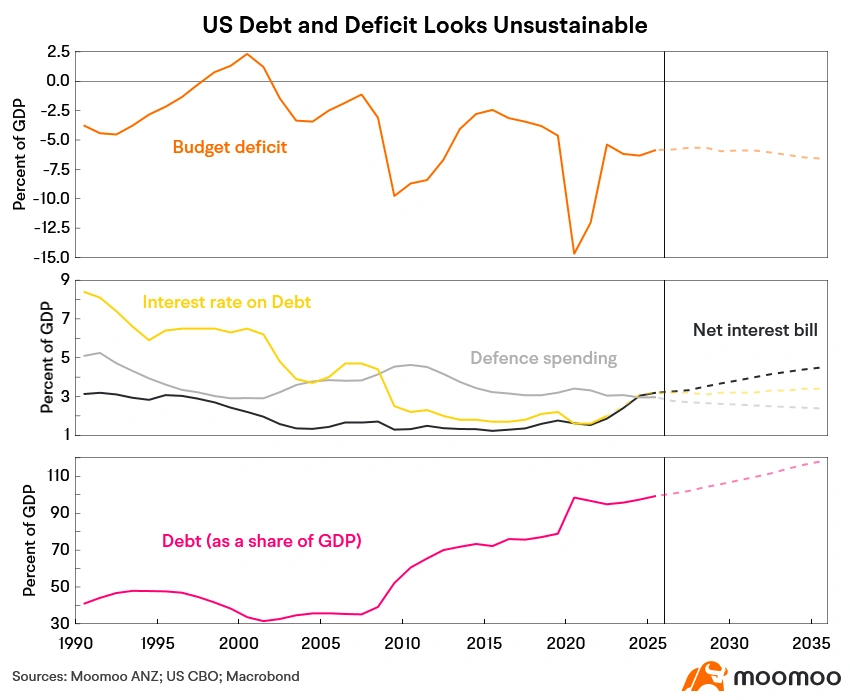
Fiscal dominance appears to be at play. Since the GFC many governments have run persistently large budget deficits with debt levels rising sharply. So sharp has the rise in US debt due to persistently large deficits of 6% of GDP, that the interest bill now exceeds defence spending. With the interest bill already high, fiscal sustainability is starting to act as a break on how high interest rates can go.
The US Treasury Secretary’s announcements of increasing the size of buybacks for 10-20 year and 20–30 year bonds certainly support this view. Effectively the US Treasury is trying to cap the level of longer-end interest rates which had surged to around 20 year highs.
Can the Fed raise rates high enough to achieve inflation at target? I doubt it, especially when you consider secular inflation drivers of: population ageing; geopolitical fragmentation; and the four investment themes of AI, defence, re-shoring, and the energy transition.
(2) Central bank buying and weaponisation of the USD
“in these difficult times of global turmoil and the search for a new financial order, gold is the only safe investment for state reserves”, Poland Central Bank Governor 2025
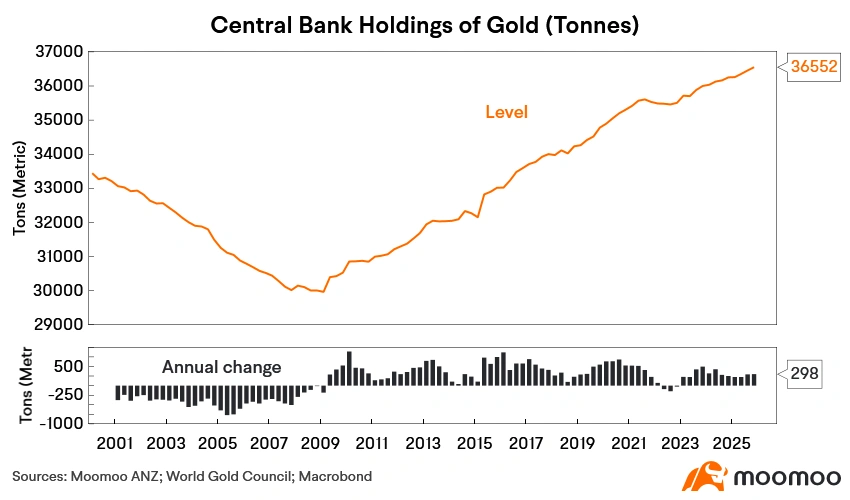
Central banks turned net buyers of gold in 2009 and have been persistent buyers since. Trends remain favourable. According to the latest OMFIF Global Public Investor 2026 survey, a net 30% of reserve managers expecting to increase their gold allocation over the next 12-24 months. Similarly, the World Gold Council’s Central Bank Survey reported 43% expect their own gold reserves will increase.
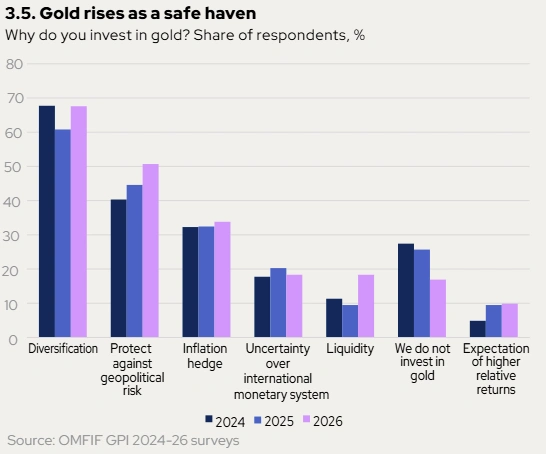
Gold’s role as a geopolitical hedge is one of the primary drivers for central bank buying, as is the diversification of reserves. When asked why central banks invest in gold, 51% of respondents in the OMFIF survey selected protecting against geopolitical risk, up 11 percentage points from 2024. Uncertainty over the future global monetary system and reserve diversification are also large factors.
Geopolitical risk came to the fore with Russia’s invasion of Ukraine. Russian assets were frozen by the G7, including its central bank reserves such as bonds that were held in custody in G7 countries. We put aside the arguments over why this occurred and merely point out that central bank reserves held in bonds are clearly less useful if the precedent has been set that they can be confiscated.
More recently, Japan and the US’s FX intervention highlighted another potential flaw for central banks in holding foreign currency bonds. Here the US was encouraging Japan not to sell its US Treasuries (seemingly to prevent pressure on US yields) and instead borrow USDs (via the Fed’s Repo facility, where Japan would pledge US Treasuries it held as collateral for borrowing USDs).
Why should a central bank still allocate a large share of reserves to US Treasuries, if they can’t sell them or have the potential threat of confiscation? These actions are likely to continue to drive central bank reserve diversification, and gold is clearly a beneficiary.
How do you see the future playing out for gold? How much are you allocating to gold?
Disclaimer: Moomoo Technologies Inc. is providing this content for information and educational use only.Read more


Comments (398)
to post a comment
421
56