All Eyes on Nvidia Earnings as the AI Trade Seeks Fresh Momentum


Parp’s NVIDIA Short Report Part 3: How the FOMO and Fugazi Backfires.
This is the 3rd and final addition of my NVIDIA bear thesis. I will link Part 1 and Part 2 here for those not caught up. I believe in some ways these first 2 parts have aged well and still remain highly relevant. In this part I am going to go over the complex financial structuring occurring among the largest tech companies to fund the AI buildout. We will also go over how it can all potentially unravel, leading to immense pain for NVIDIA and a sharp decline in its valuation in the future. We’ll be going over a couple of things I also haven’t yet mentioned along with some new developments and some brief side note. Now let’s begin.
* Off-Balance-Sheet Debt and the Risks it Poses:
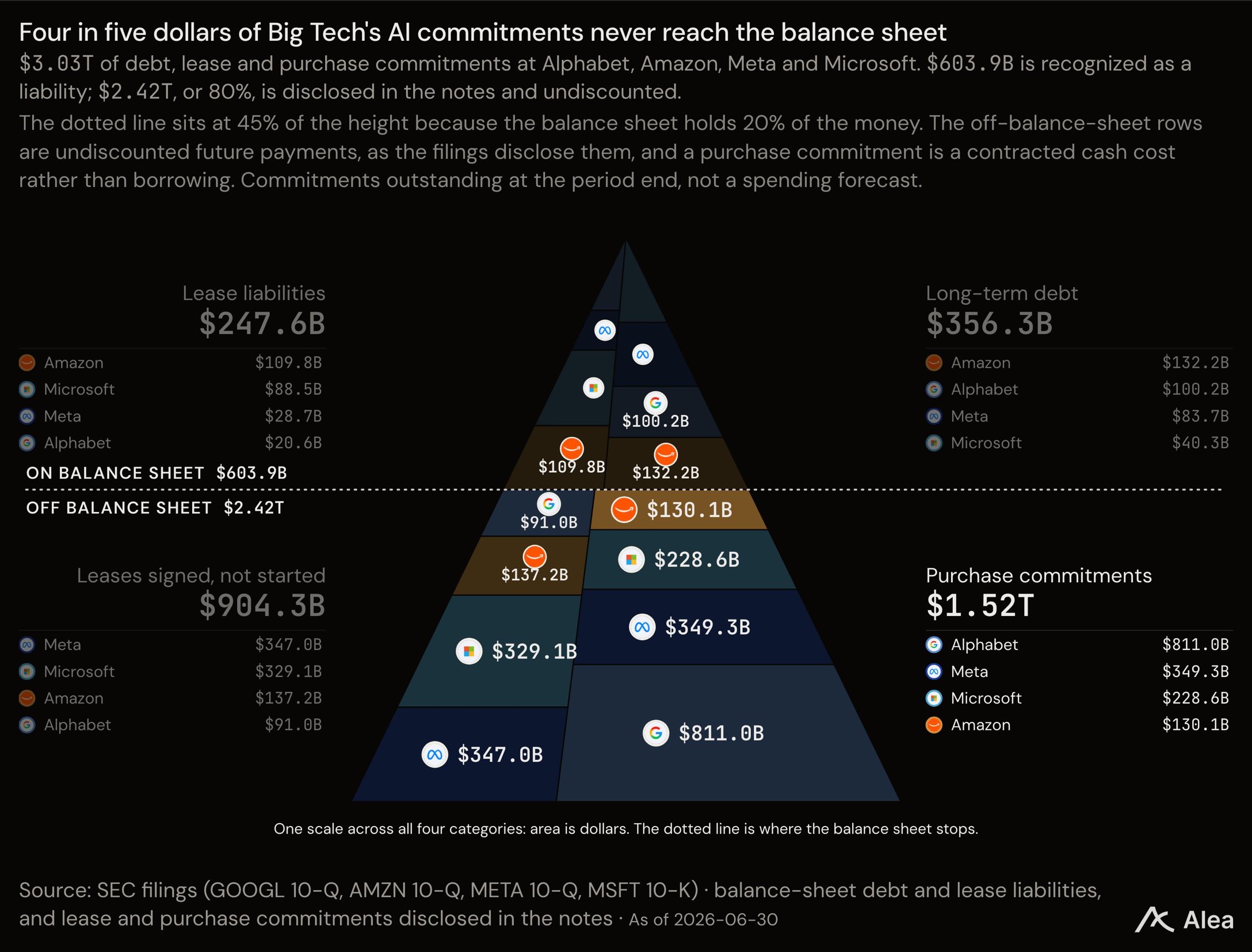
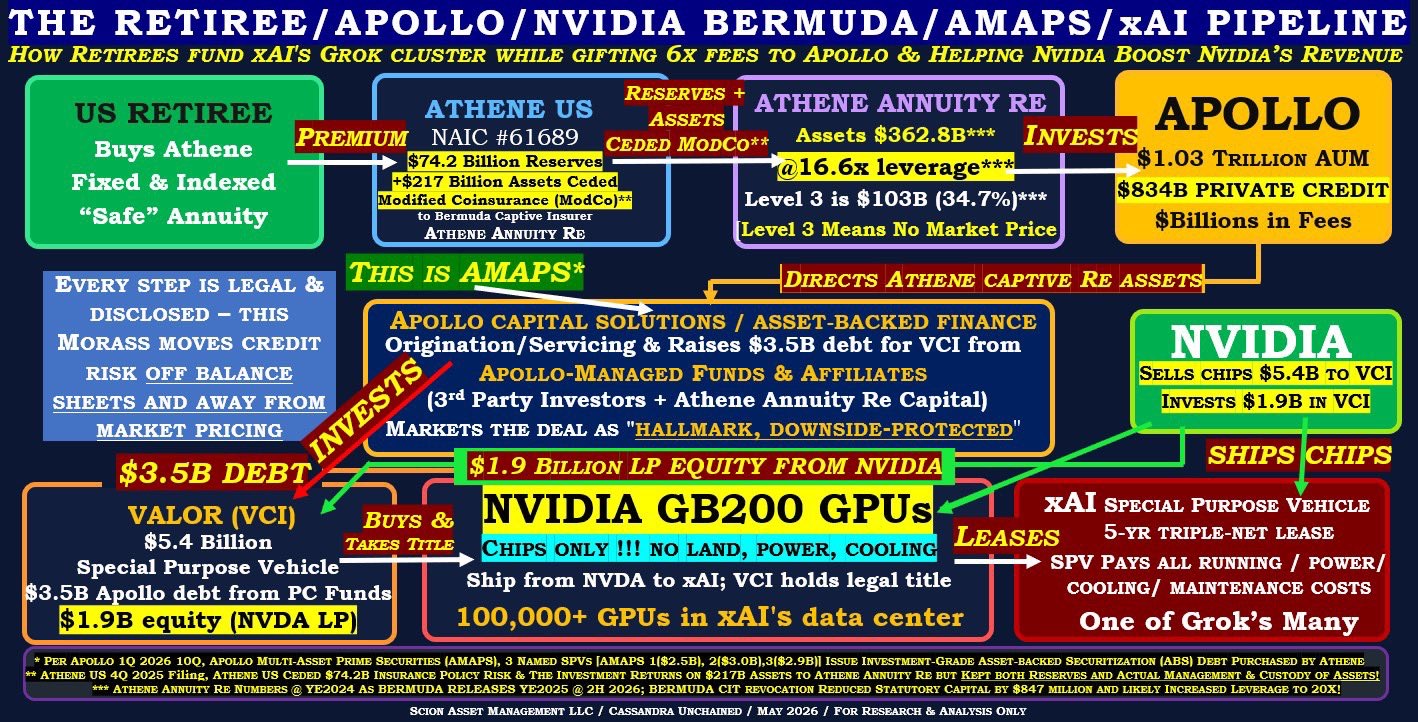
As everyone is aware by now, hyperscalers and neoclouds have taken on tremendous and unsustainable levels of debt to finance the current infrastructure buildout. A buildout that to this day still has generated little to no meaningful ROI relative to CapEx. Hyperscalers have found a way to move a very large portion of this debt off of their balance sheets through complex financial structuring. This creates the illusion that their cloud businesses are in a far better financial condition on the surface than what is actually presented. The true health of these cloud businesses is further obfuscated by the artificial extension of their hardware’s useful life expectancy, circular financing deals that are now ballooning to absurd proportions, and the subtle rebranding of regular cloud growth as AI growth. This off balance sheet debt for hyperscalers, and companies like NVIDIA, and Broadcom has already ballooned to about $3.1 trillion according to Morgan Stanley. A separate SEC filing analysis puts this number at roughly $3.03 trillion from just four companies, Alphabet, Meta, Amazon, and Microsoft. So where is this debt going you might ask? Private equity firms have been loading large amounts of this debt onto the balance sheets of life insurers and retirees are unwittingly taking on a very hefty portion of this debt as well. This effectively passes off much of the risk onto the public creating what is essentially a systemic risk. The odds of this debt being paid off decreases drastically as spending gets more aggressive, hardware depreciates, and AI becomes cheaper. (I’ll explain why Jevon’s Paradox is not a valid argument down below.) I believe eventually the credit market is going to downgrade this debt as meaningful ROI fails to materialize and the financing of this debt could eventually dry up. When the financing of this debt dries up, NVIDIA’s largest customers will likely cut back on spending very quickly. This would be a swift and painful blow for NVIDIA and could lead to excess inventory which ties into my next concern I will explain further in my next point.
* Excess Inventory Risk.
When AI spending eventually gets cut back, NVIDIA of course runs the risk of holding excess inventory. NVIDIA designs a ton of these expensive GPUs under the assumption their customers will continue to demand more and more. The moment this spending is cut, NVIDIA is essentially left holding the bag on these GPUs. Consequently if there is enough excess inventory NVIDIA will become increasingly desperate to sell it off, thus depending on the scale, could lead to lower GPU prices, resulting in a major loss for the company as they are then put into a position where they must sell these GPUs for less than the input cost of designing them. Here’s where things get interesting though. With the insane amount of spending that’s being propped up on massive amounts of debt and circular financing, if financing for this debt dries up, spending could be cut drastically and swiftly, leading to a brutal loss for NVIDIA, not just a sharp decline in revenue. Some will try to counter this by pointing to contractual purchase commitments, however the issue with that is companies like OpenAI for example are not generating nearly enough revenue to fulfill such obligations if financing were to dry up.
* China’s AI Price War, Open-Weight Models, and the Potential Existential Threat to OpenAI and Anthropic.
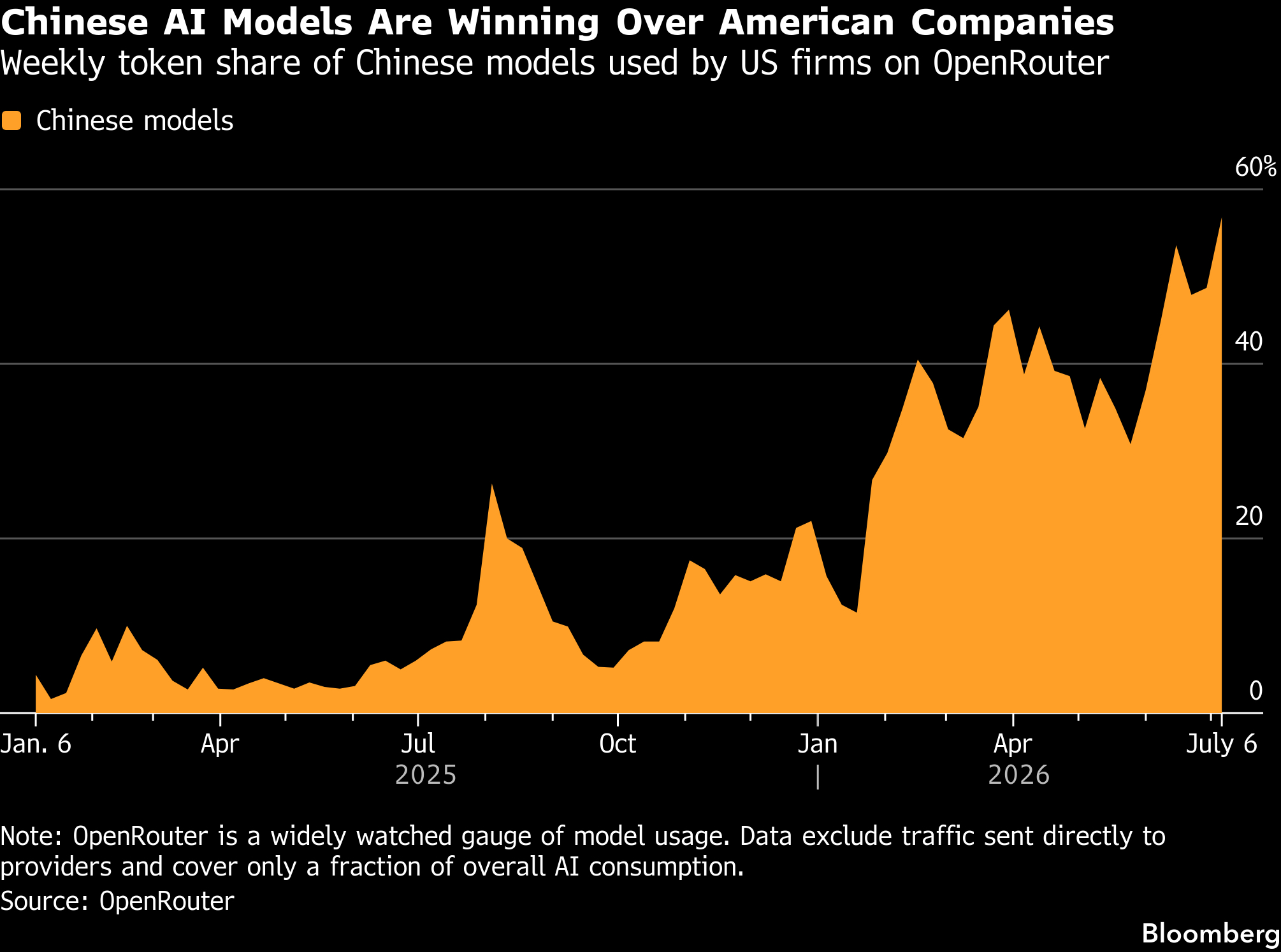
Chinese models are winning over American companies in recent months as China has been pumping out models that are almost on par with America’s top models. The cost of training these models was achieved at just a fraction of the price the big US labs spend to train their models and with a far more limited supply of NVIDIA GPUs at that. This begs the question, does training high quality AI models require nearly as many NVIDIA specific GPUs? The evidence shows the answer is possibly not. On top of this, China’s models are cheaper, thus winning over American companies who wish to utilize cheaper AI for their businesses. This is of course taking away market share from the big American AI labs such as OpenAI and Anthropic and forcing them to lower their own costs drastically just to compete. The problem with this is that the more OpenAI and Anthropic cut their costs, and the more market share that is taken from them, the lower their prospects are of ever generating enough ROI on AI to justify and sustain their current infrastructure spending. When people hear this they immediately point to Jevon’s Paradox as being a potential saving grace for these companies however there are major issues with that argument. First of all Jevon’s Paradox does not solve the issue of Chinese labs taking market share, it does not solve the lack of a meaningful ROI on AI, and we do not know how much Jevon’s Paradox will even apply itself in the AI space. It’s speculative and cannot be quantified. I believe this also ties back to my point in part 1 of my thesis that China has some major advantages in the AI race. That part of my thesis is proving to be fruitful in some ways already. What’s even more interesting is that many of these high quality AI models are open-weight, meaning anyone can simply download them and run them locally. Here’s where things get even more interesting. A recent Stanford study suggests 9 / 10 every day questions commonly given to LLMs can be answered using cheap local LLMs that can easily run locally on your computer or laptop. At the same time models are only becoming rapidly more efficient over time. This is something that I believe could end up dealing a major blow to AI labs like OpenAI and Anthropic.
* Semiconductor Cyclicality, and a Lesson From the Dot-com Era.
History has shown repeatedly that semiconductors are highly cyclical and have huge booms and busts. This was even the case during the dot-com bubble. I believe the market has been fed a dangerous misconception that somehow this time is different and the cyclicality of hardware has fundamentally changed because of AI. This completely ignores the risk of massive overbuilding, physical and financial bottlenecks, and model efficiency breakthroughs. This is a similar trap people had fallen into during the dot-com bubble when it came to investing into networking hardware companies like Cisco. They had this same one dimensional view that as the internet became bigger and more important, the demand for networking hardware must move parallel to it. This turned out to be mostly false and hardware had proven itself to be cyclical once again and was driven by corporate FOMO and circular financing deals along with hype and momentum. People also seem to confuse a bet on NVIDIA with a bet on AI as a whole which isn’t correct, it’s not that simple at all. It’s a bet on a company and its hardware. AI, the technology, can actually prosper without NVIDIA needing to be worth a trillion dollars, much like how the internet succeeded without Cisco retaining its massive valuation during the dot-com boom. The winners of the dot-com bubble were some of the few software companies who made it out alive, generally not the hardware companies. I believe it’s highly likely this applies again here in the AI bubble.
* Bearish Side Notes:
1. AI Credit Default Swaps Widening:
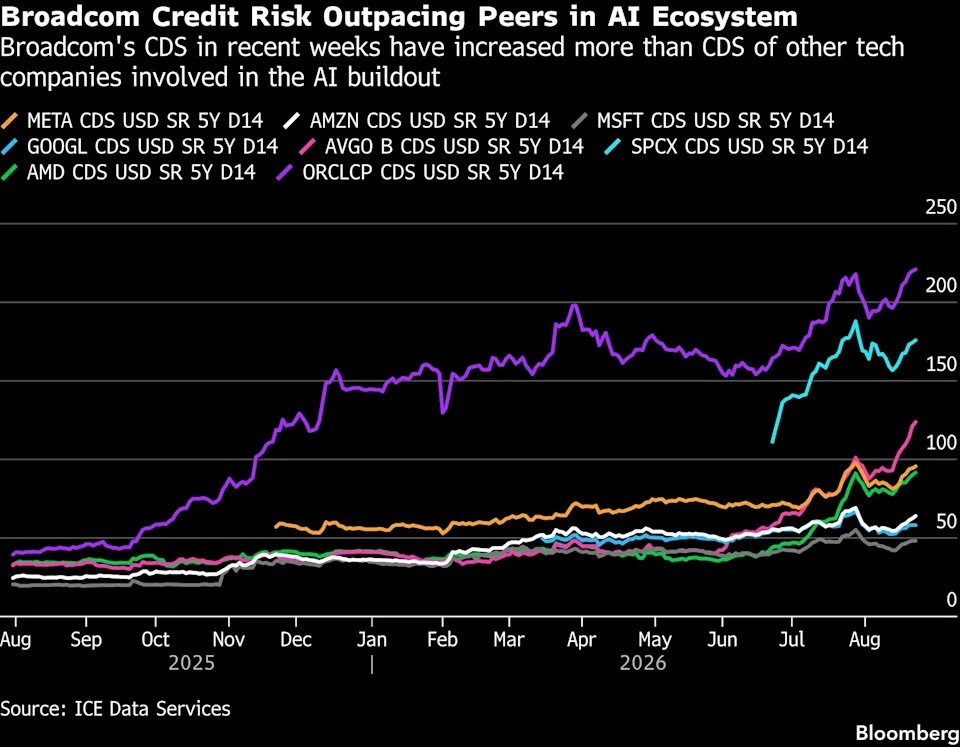
As big tech races to raise as much money as possible to fund their infrastructure buildout, their credit default swaps have widened greatly. For many of these companies the equity market appears to be largely ignoring this alarming development. It’s a pretty strong indicator of how extreme and unsustainable this current level of spending has become. It’s clear there is now strong institutional interest in hedging/betting against these companies via CDS.
2. Why I Believe NVIDIA’s P/E Ratio Isn’t that Important:
Many people look at NVIDIA’s current P/E ratio along with other semiconductor stocks and mistake it as a sign the company is undervalued, however I believe this is wrong for a couple of reasons. The first reason being that semiconductors are highly cyclical as I had explained above earlier. Cyclical companies of course should trade at lower multiples as earnings are very difficult to project further into the future. The next issue is the “E” in P/E here is being artificially inflated by a lot of circular financing deals. This indicates to me NVIDIA is actually likely trading at a higher multiple than what is shown here on the surface.
3. Hallmark Signs of Mania:
One of the hallmarks of mania is the rapid rise in rates and complexity of fraud, and currently, they’re going up. This is a quote from The Big Short; however, this holds very true today. There has been a steep rise in the rates of fraud in recent years and fraud has become far more complex thanks to AI. Another strong signal is the market ignoring extremely bearish macroeconomic headwinds. The market has been trying very hard to pass off rising inflation and elevated oil prices along with the extreme geopolitical risks. Lately people have been in the mood to gamble at an unprecedented rate. Since the second part of my short report, Warren Buffett has gone as far as to double down on his claim that today’s market is like a casino and that prices are going to look very silly. He also said that the hyperscalers are “playing a game they do not want to play”.
4. Photonic Chips:
As we all know innovation never ends. As AI evolves, so too does the hardware used to power it. A genuine potential threat to NVIDIA is emerging, and that is photonic chips. Photonic chips threaten NVIDIA by replacing copper wiring with light-based data transfer, which breaks the physical heat and power limits that constrain data centers. Of course, it’s tough to say when this will become a bigger and more meaningful problem for NVIDIA, but I believe it’s another one of many serious threats to the long term bull thesis for NVIDIA.
5. Record Margin Debt:
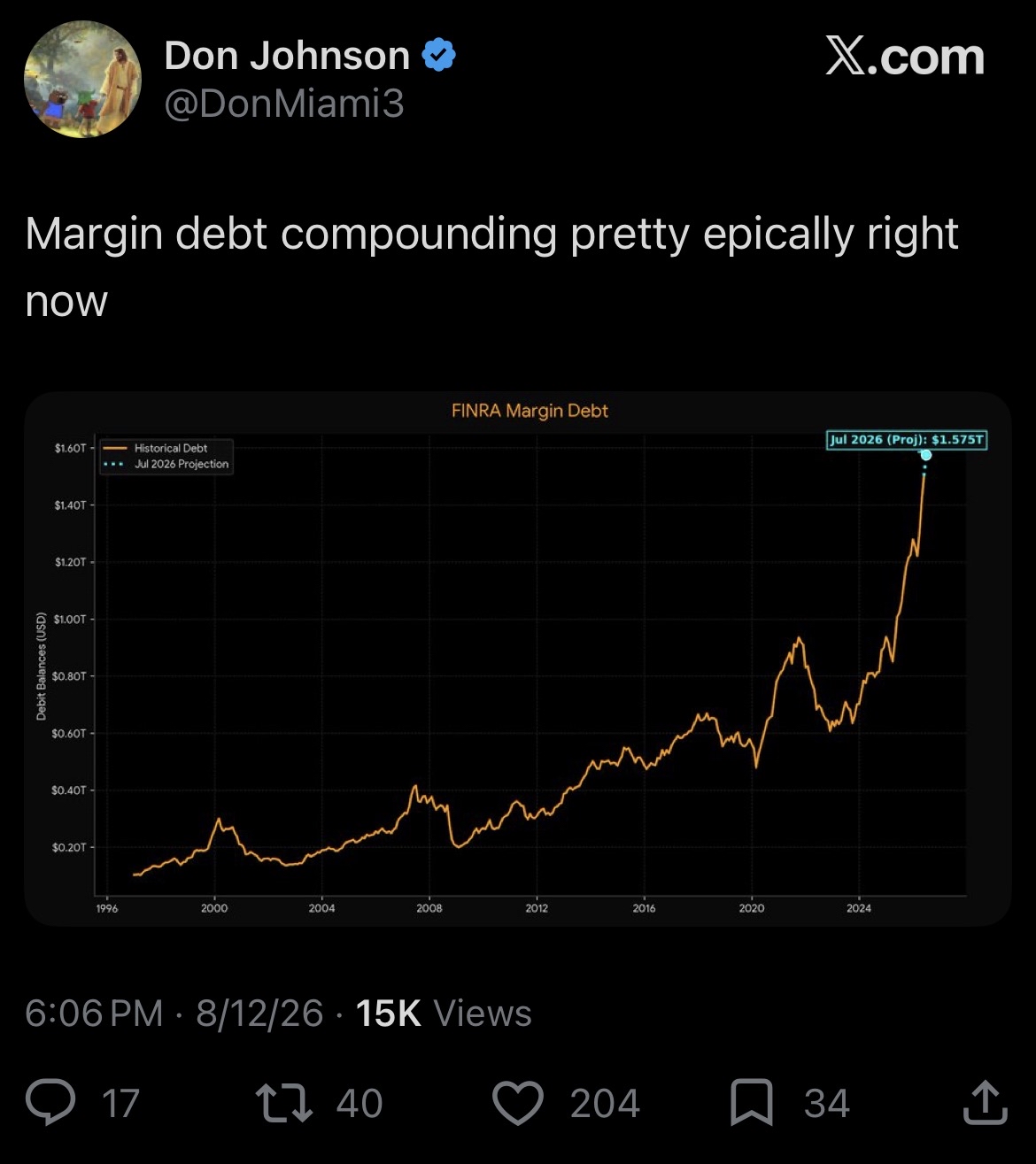
Total margin debt continues to rip higher as investors FOMO into AI related stocks. Some are even using this borrowed money to purchase leveraged ETFs of these AI names. Some are even going as for as to dabble in 0 DTE options. Essentially people are now borrowing more and more money to invest in companies that are borrowing even more money to invest into a technology that till this day still generates little to no meaningful returns. I fail to see how something like that can end well.
6. Warnings From Legendary Investors, Institutions, and Central Bankers:
Legendary investors such as Warren Buffett, Michael Burry, Ray Dalio, Steve Eisman, and Paul Tudor Jones have expressed concerning views on the current state of the market and some have outright called out the AI bubble. However it’s not just them, now central bankers across the globe, the IMF, the US Treasury, the BIS, the ECB, and major hedge funds have expressed concerns and warnings regarding the AI bubble over recent months. When all of these names are warning of a market bubble, it’s worth taking very seriously.
* Final Thoughts, Timelines, and Price Targets.
My timeline and price targets are the same as before. I believe NVIDIA will fall somewhere between $50 - $80 within the next 4 - 12 months. This will be highly dependent on when data center financing and AI CapEx get cut back, how quickly, and when Wall Street decides to front-run this. I believe from a risk to reward perspective the downside risk is asymmetric and the upside is limited due to many financial and physical bottlenecks. I believe nearly everyone who is going to be a part of the semiconductor trade is already in it. NVIDIA is already trading just under 5% of annual global GDP with a market cap of roughly $5 trillion. It’s priced to perfection which means there is very little room for disappointment, and disappointment is an inevitable outcome as time goes on. I will finish off my thesis with a quote.
“If we delivered a bad quarter, if we were off by just a hair, if it just looked a little bit creaky, the whole world would've fallen apart."
- Jensen Huang, CEO of Nvidia
I will provide links to all sources down below in the comments. If they do not appear, or would like a specific source for something, just ask me and I will send it to you. Thank you for reading.
Disclaimer: Community is offered by Moomoo Technologies Inc. and is for educational purposes only.Read more


Comments (6)
to post a comment
34
6