Advanced Strategy: How to Maximize Your TFSA Benefits in 2025?
The Tax-Free Savings Account (TFSA) portfolio is showing signs of recovery after tough years in 2022 and 2023. The Canadian stock market (TSX) had a strong year in 2024, rising 18.46% and hitting a record high of 25,843.20 in December. This growth has helped restore confidence for many investors.
For 2025, the Canada Revenue Agency (CRA) kept the TFSA contribution limit at $7,000, matching the second-highest limit ever. If you’ve been eligible to contribute since 2009, your total TFSA room now adds up to $102,000.
In this article, we’ll share simple strategies to make the most of your TFSA in 2025 and grow your wealth:
What is the economic outlook for 2025?
What you need to know about your TFSA
What investments are best for you?
How to self-direct your TFSA
What to do after reaching the contribution limit?
What is the economic outlook for 2025
When it comes to investment performance, the state of the economy is a crucial factor to consider.
According to BDC, Canadian investors are facing a mixed economic outlook for 2025, with some reasons for cautious optimism despite ongoing challenges.
In 2024, rising costs and inflation were major issues, but the outlook is improving. Inflation is expected to stay within the Bank of Canada’s target range of about 2% in 2025. This should encourage the Bank to continue lowering interest rates, bringing them closer to a neutral level of 2.75% by mid-2025, and possibly ending the year at 2.5%.
It took time for interest rate hikes to impact the economy and help reduce inflation in 2024. In 2025, the reverse will happen as interest rate cuts gradually take effect, supporting growth.
As a result, the Canadian economy is expected to grow modestly by around 1.5% in 2025. While this is still below its full potential, it’s an improvement over 2024. Lower interest rates should boost consumer spending, real estate investment, and business investments, helping the economy grow more than it did in 2024.
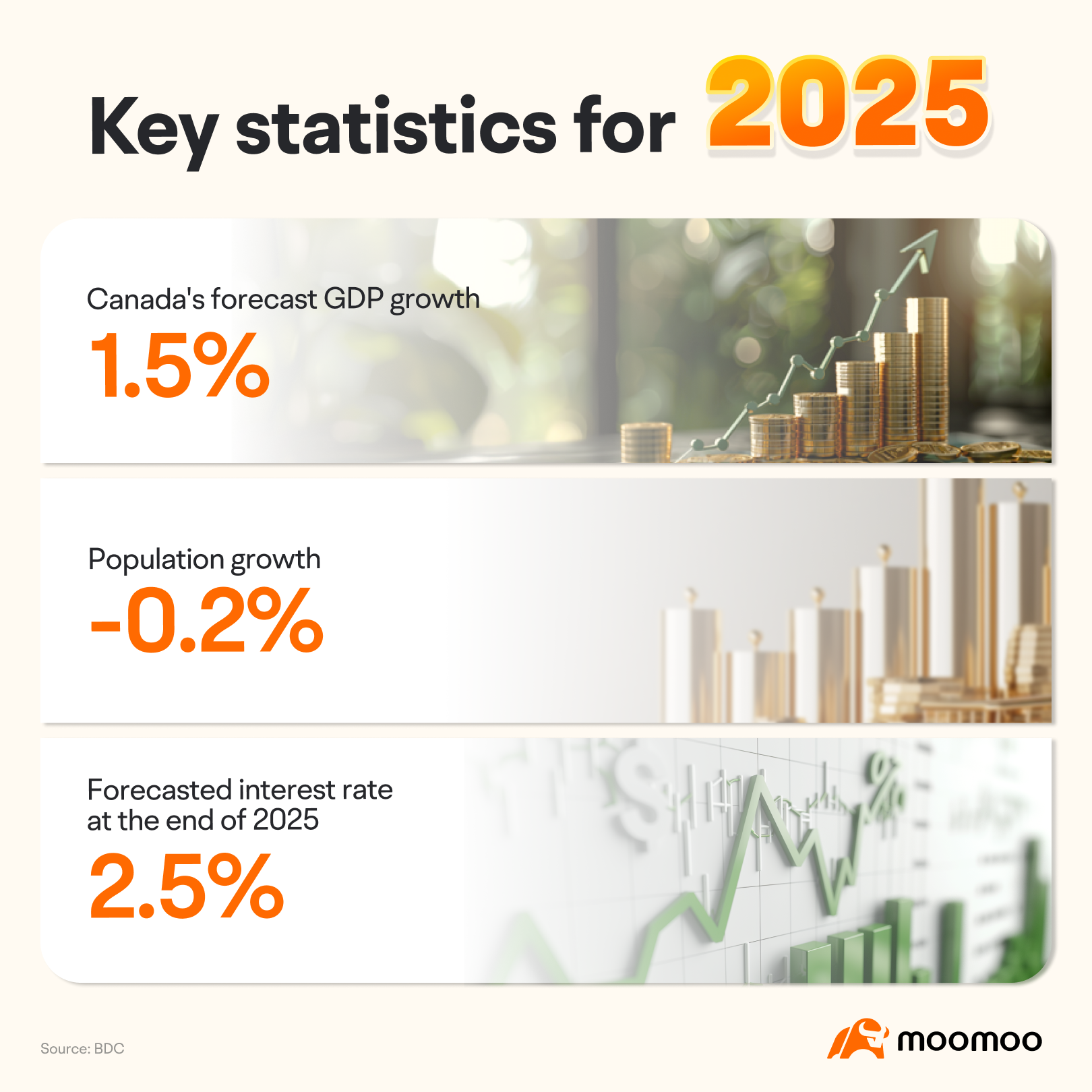
You may be wondering how should you allocate your TFSA accounts to maximize your returns as the markets change from the upcoming interest rate cut.
What you need to know about your TFSA
Before getting started picking which stocks, ETFs, bonds or funds to include in your TFSA, it's essential to know your TFSA like the back of your hand. How to contribute, how to withdraw, and how to maximize your tax benefits alongside your RRSP, FHSA, and non-registered accounts.
Read this basics article: Everything you need to know for your TFSA
Fortunately, once you know the ins and outs of your TFSA, you can confidently use your it to reach your investment goals.
Here is a quick overview:
A Tax-Free Savings Account is a special type of savings account created in 2009 to help Canadians save and invest for their future tax-free.
You must be 18 years old and a resident of Canada to open a TFSA.
There is total contribution limit, and each year it increases by an annual contribution limit which is set by the CRA (e.g. 2025 contribution is $7,000).
You can contribute any amount up to the total contribution limit in a given year, not just the annual limit.
You can withdraw your money anytime, tax-free, without penalty or fees.
You can self-direct your TFSA, or ask your brokerage to set it up as a managed fund, such as a mutual fund.
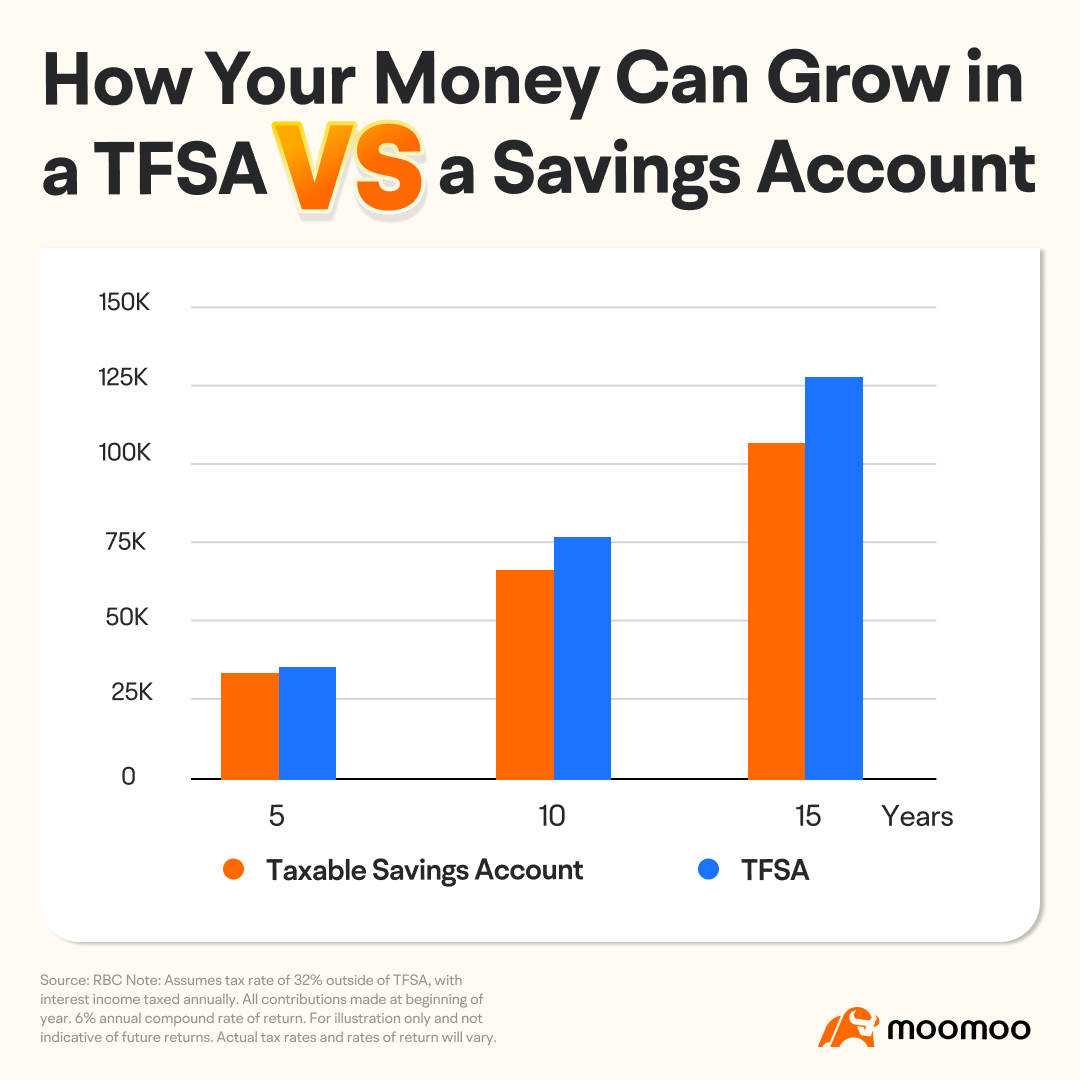
It's worth noting that your TFSA can be used to hold a variety of investments, such as stocks, ETFs, mutual funds, bonds, guaranteed investment certificates (GICs) and more. You can even trade options and other derivative products from your self-directed TFSA. These investments vary in terms of risk, with stocks and options having more risk than bonds and GICs.
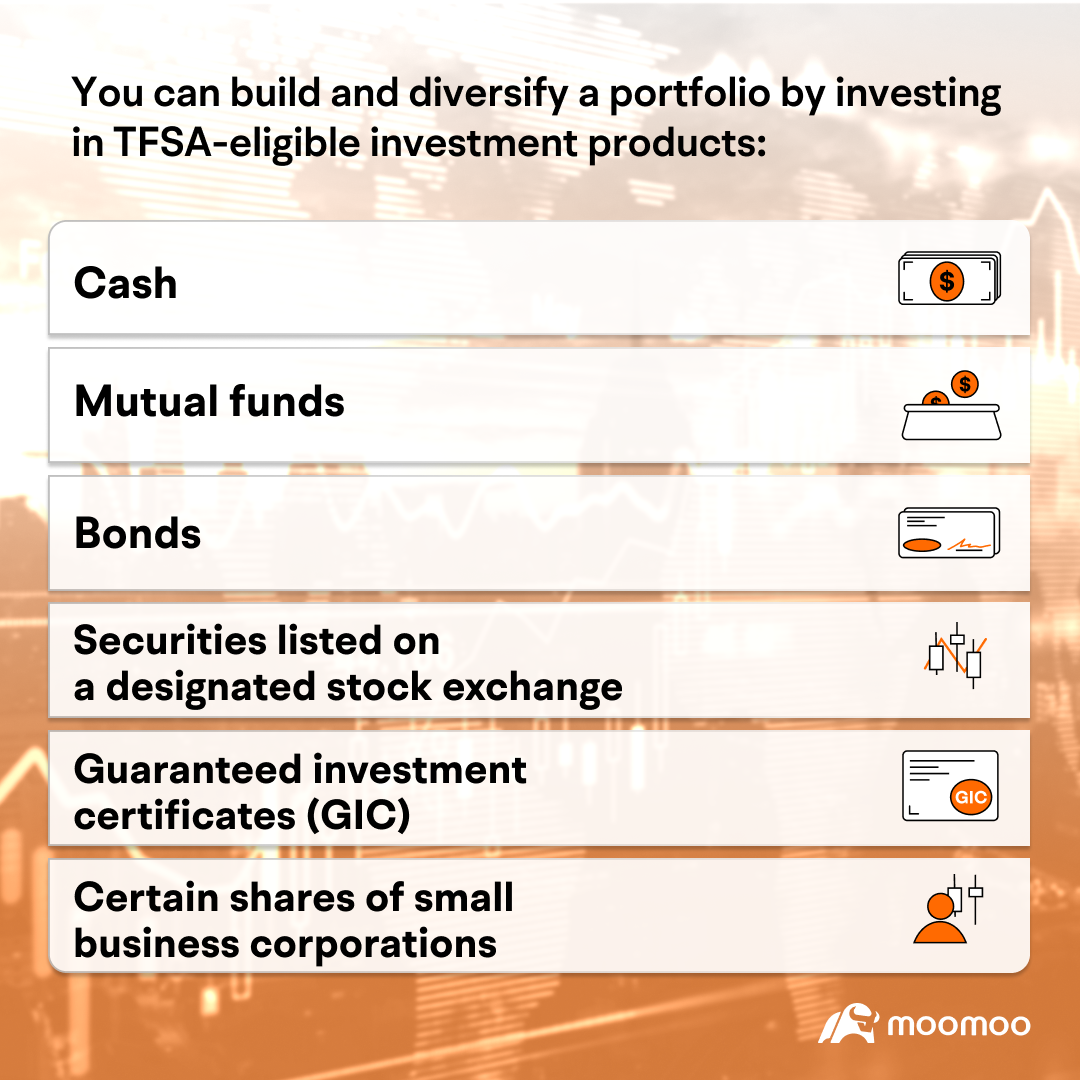
To make the most of your TFSA account, consider your own investment goals before diving into any investment strategy.
There are several factors to consider:
Risk Tolerance: Know the risk level you are comfortable with when investing. If you invest in assets that are too risky for your risk tolerance, you may experience significant losses that could jeopardize your financial goals.
Time Horizon: Are you investing for 3, 5, 10 or 20 years? Do you need to withdraw any funds in the next 3 years? Determine if you are investing short-term or long-term.
Contribution Room: It's important to monitor your TFSA contribution room to avoid over-contributing, as excess contributions may incur penalties.
What investments are best for you?
Now that you know about your TFSA and your own investment goals, let's take a look at the different types of assets and how to allocate them in your TFSA.
Navigating the financial markets can be challenging, especially during times of uncertainty. The reality is that none of us have a crystal ball that can accurately predict where the markets are headed. That's why it's crucial to ensure that your TFSA is well-diversified by allocating different asset types to your portfolio.
Having a well-diversified TFSA portfolio is key to mitigating risk and enhancing your returns.
Step 1: Create your investment strategy
Allocating the assets in your TFSA portfolio is the first step to creating your investment strategy. The most common allocating is separating your portfolio into two parts: Low-risk bonds or money market funds, and high-risk stocks or ETFs, commonly referred to as Bonds vs. Stocks.
Here is how to get started creating your strategy:
Allocate a percentage to high-risk and low-risk assets, such as 60%-40%.
Select a variety of investment terms for your low-risk assets, ranging from 1-year to 10-year bonds. Or, choose a money market fund with a variety of low-risk assets.
Select some broad market index funds or ETFs, such as an S&P 500 index fund.
Research industries that will likely grow or be profitable in the near future.
Search for any industry specific ETFs.
Use the heatmap tool to find growing industries. (e.g. REITs in Canada)
Research individual stocks you believe will likely grow in the future, or provide stable dividends and returns.
Take a look at the company's business model and management team.
Review the last few earnings reports (incl. notes) to evaluate the growth potential.
Compare the company's strengths, weaknesses and PE ratio to competitors.
Note: The information above is only for educational purposes and should not be construed as investment advice.
If you have a lower risk tolerance, adding more passive income, such as bonds and dividend paying stocks to your TFSA portfolio may be a wise decision.
Step 2: Reinvest in your TFSA portfolio
Many investors choose high-yield stocks to benefit from both dividend income and capital appreciation. If these stocks are purchased within a TFSA account, investors can receive a 'quadruple return' that may surprise them. But where do the extra two returns come from?
Reinvest Dividends: Alongside attractive dividend yields, TFSA investors have the option to reinvest dividends four times a year. By doing so, they can harness the power of compound interest. Their investments and dividends grow simultaneously, leading to significant gains in the long run.
Tax-Free Compounding: When you don’t pay any tax on your investment income (capital gains, interest, and dividends), you save as much as 10-20% more of your returns. When compounded over a lifetime, that can be worth thousands of dollars or more saved from tax.
Step 3: Rebalance your TFSA
In 2025, a 60-40 mix of stocks and bonds appears to be a good way to match the potential risks and rewards of stocks while providing a cushion of security with bonds. However, you may find that it doesn't meet your investment objectives, or perhaps you under or overestimated your risk tolerance. Rebalancing is an essential part of making sure your portfolio is a good fit for you.
Tip: Try to keep track of the different assets in your TSFA, and write down some notes classifying each investment according to ensure your portfolio closely follows your strategy over time.
How to self-direct your TFSA
To truly make the most of your TFSA, investing in the right product is just the beginning. It's important to understand how to maintain your account.
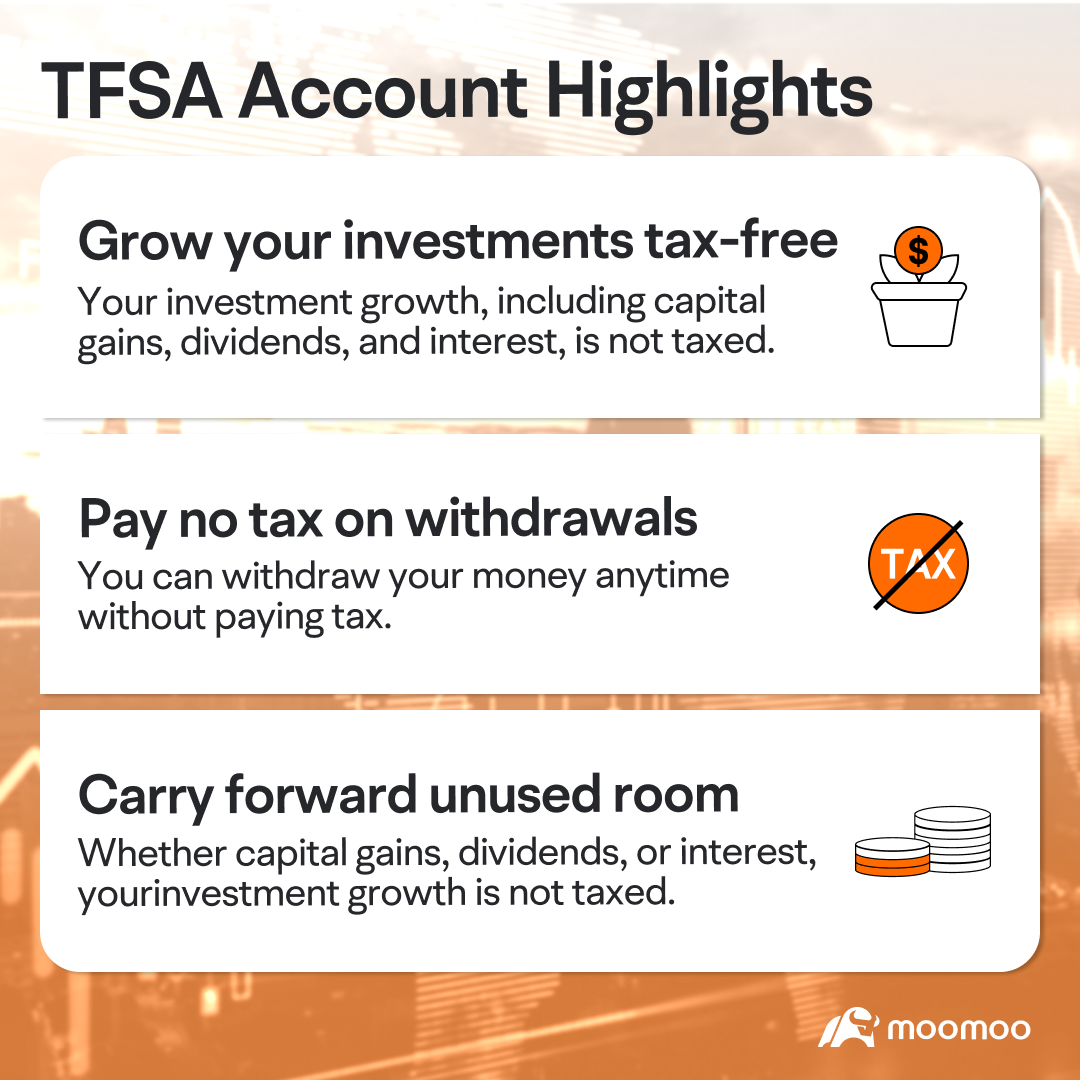
The greatest benefit of using a TFSA to invest is that you can go tax-free all the way - once tax is deducted from your income, money growth and withdrawals within the account are tax-free for life. Every tax-free dollar invested through a TFSA counts.
However, there are a few pitfalls worth noting to avoid any losses or penalties in a tax-free account.
To truly make the most of your TFSA, investing in the right product is just the beginning. It's important to understand how to maintain your account.
The greatest benefit of using a TFSA to invest is that you can go tax-free all the way - once tax is deducted from your income, money growth and withdrawals within the account are tax-free for life. Every tax-free dollar invested through a TFSA counts.
However, there are a few pitfalls worth noting to avoid any losses or penalties in a tax-free account. Keep the following points in mind:
Avoid Over-Contributing: Over-contributions to TFSAs are subject to a 1% penalty tax per month. If you over-contribute, withdraw the excess amount right away.
Do Not Withdraw: While TFSA withdrawals are tax-free, it's important to only withdraw when necessary or for emergencies. Each time you withdraw, you lose contribution room and have to wait until the following year to contribute again.
No Day Trading: It's important to avoid using your TFSA for day trading as it's designed to be for long-term financial goals. The CRA may consider day trading a business. You could be subject to substantial taxes on your profits.
Never Borrow to Invest in a TFSA: One of the temptations with TFSAs may be to borrow money to contribute and invest within the account, hoping that the tax-free growth will outpace the interest on the loan. However, this strategy can be risky. Consider using a margin account instead where the interest is tax deductible.
What to do after reaching the contribution limit?
If you want to invest more but have already hit your TFSA contribution limit, what should you do?
First off, congratulations for maxing out your TFSA account! On January 1st of next year, you will get another bump in your contribution limit for 2026, maybe another $7,000 to invest in your TFSA.
If you can't wait to invest, you can consider one of the following:
You can give money to your spouse to invest in a TFSA. It's important to note that there are no joint TFSAs in Canada. If you have reached your contribution limit but your spouse or common-law partner has not, consider giving them money to contribute to their TFSA. This can help maximize your tax-free savings as a couple.
Contribute towards your Registered Retirement Savings Plan (RRSP). While the RRSP has more restrictions for making contributions and withdrawals compared to a TFSA, it is a great way to find additional tax savings and grow your investments tax-free for your retirement.
Open a non-registered cash or margin account. While there are no tax advantages to these accounts, you can deposit any amount of funds and continue making progress towards your investment goals.
Your TFSA is a powerful tax-efficient way to save and invest for your future.
If you've learned more about TFSA strategies after reading this article, take action and start making the most of your TFSA today. See how it can help you achieve your short-term and long-term financial aspirations. With the right approach and a commitment to financial planning, your TFSA can help you reach your financial goals.
If you are ready to test your knowledge, try out the multiple-choice questions below.
This presentation is for informational and educational use only and is not a recommendation or endorsement of any particular investment or investment strategy. Investment information provided in this content is general in nature, strictly for illustrative purposes, and may not be appropriate for all investors. Read more